• Home
  • Latest
  • Fortune 500
  • Finance
  • Tech
  • Leadership
  • Lifestyle
  • Rankings
  • Multimedia

Trendingnow

1

Despite having a $165 million net worth, Scarlett Johansson says work-life balance doesn’t exist—and the first step to success is admitting that

2

The Bezos family just donated $100 million to help achieve one of Mayor Zohran Mamdani’s top campaign promises

3

Microsoft AI chief gives it 18 months—for all white-collar work to be automated by AI

1

Despite having a $165 million net worth, Scarlett Johansson says work-life balance doesn’t exist—and the first step to success is admitting that

2

The Bezos family just donated $100 million to help achieve one of Mayor Zohran Mamdani’s top campaign promises

3

Microsoft AI chief gives it 18 months—for all white-collar work to be automated by AI
EconomyU.S. economy

Most of Wall Street points to high oil prices as the driver of inflation. A maverick Johns Hopkins economist says they’re chasing the wrong culprit

Shawn Tully
By
Shawn Tully
Shawn Tully
Senior Editor-at-Large
Down Arrow Button Icon
Shawn Tully
By
Shawn Tully
Shawn Tully
Senior Editor-at-Large
Down Arrow Button Icon
April 14, 2026, 3:00 AM ET
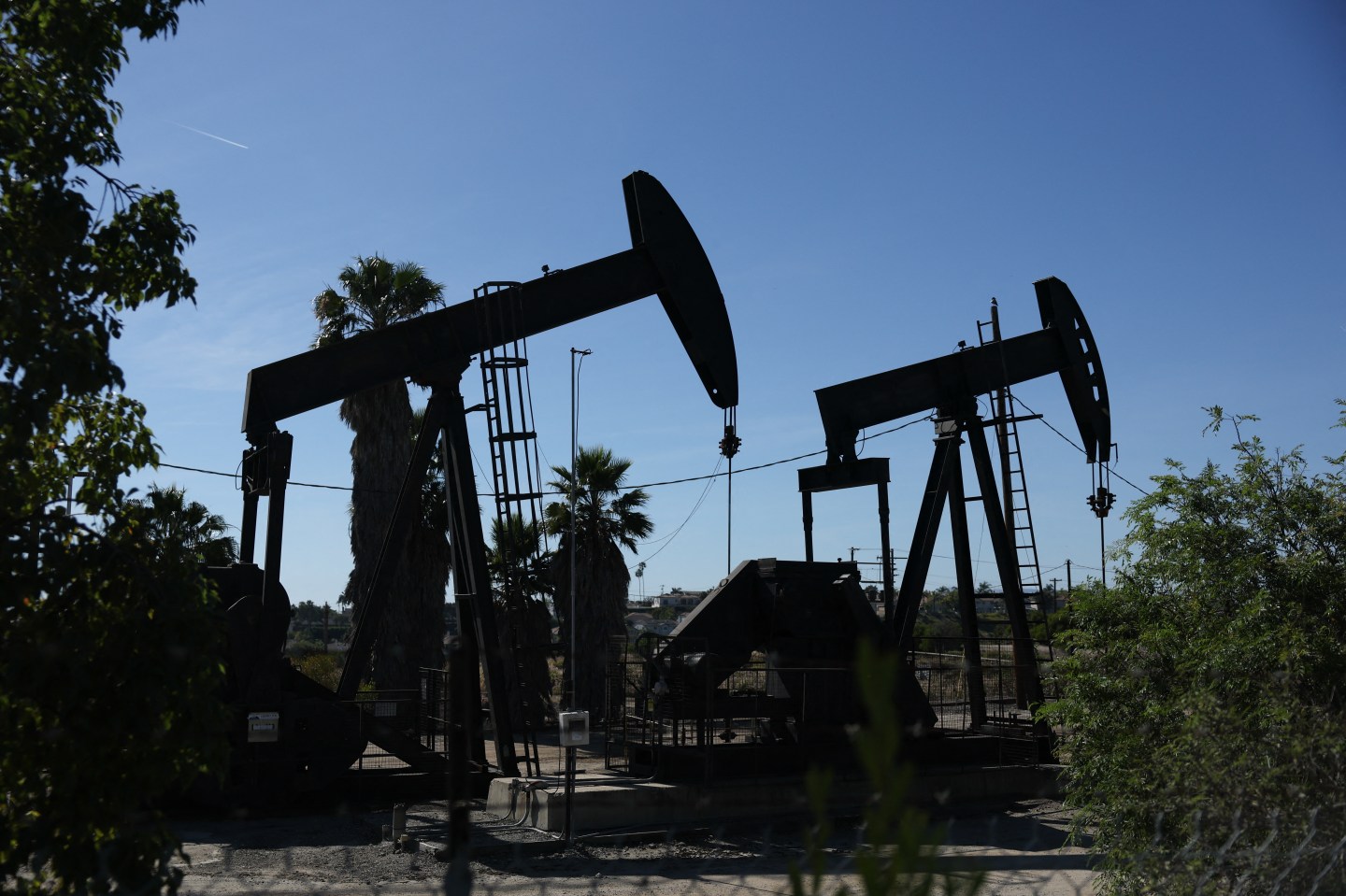
Pump jacks at the Inglewood Oil Field in Los Angeles County, March 17, 2026. While many have blamed inflation on the oil shock, one economist thinks that explanation doesn’t hold up.
Pump jacks at the Inglewood Oil Field in Los Angeles County, March 17, 2026. While many have blamed inflation on the oil shock, one economist thinks that explanation doesn’t hold up.Patrick T. Fallon—AFP/Getty Images

Following the Commerce Department’s release on the morning of April 10 showing that March consumer prices rose at 3.3% year over year in March, this writer received well over a dozen emails from Wall Street analysts, market strategists, and economists making the same main point: It’s the jump in oil prices triggered by Iran’s closure of the Strait of Hormuz that’s primarily responsible for the “hot” consumer price index (CPI) reading. They posit that as long as the cost of gas at the pump and the sundry petroleum and petrochemical derivative products—from plastics to fertilizers—remain elevated, the trajectory will remain far above the Fed’s target tempo of 2%. These experts also invariably forecast a sharp downtrend in the inflation curve once the conflict ends.

Recommended Video

But a maverick economist asserts that these prestigious commentators are missing the problem’s true cause, and that while prices are jumping at the same time oil is spiking, it only appears that the petroleum squeeze is to blame. He’s Steve Hanke, the veteran “hardcore monetarist” who is a professor of applied economics at Johns Hopkins University and has been nicknamed “the Money Doctor.” “Everyone’s been writing about how oil prices are causing inflation. It only looks that way. The two are correlated, but the first doesn’t cause the second at all,” declares Hanke. He points out that although Wall Street regarded the new 3.3% figure as a surprise and as a result of the war, Hanke wasn’t surprised. He notes that the three-month annualized rate that occurred back in February was also exactly 3.3%. “Inflation was accelerating before the war, and it will keep accelerating after the war’s over and oil prices fall,” the big-time contrarian told Fortune. “It’s at the point now where the genie is clearly out of the bottle and won’t be put back in anytime soon.”

Hanke contends that it’s growth in the money supply, not price shocks like the one we’re now witnessing, that determine the overall course of the price level. “If gasoline and other oil products get more expensive, people have less to spend on rent, restaurants, and everything else,” he says. “Supply-chain disruptions only change relative prices, they have no impact on overall inflation.” It’s the explosion in the money supply he asserts, that’s the real villain. That’s just what the monetarist view predicts. “It’s commercial banks that create 80% of new money,” says Hanke. “The Fed only creates the other 20%. It’s the big surge in that banking credit that’s pushing up prices.” He adds that a rise in the money supply translates into higher prices only following a significant lag. The monetary takeoff happened over two years ago, and he’s been warning of its aftermath ever since.

He points out that the Fed was en route to slaying inflation in 2023, when commercial credit created by banks was negative. But that metric reversed course the following year, entering positive territory in March of 2024, then racing to hit a pace of 6.6% in February. “That’s an enormous increase, and the current rate’s higher than the golden mean for achieving 2% inflation,” says Hanke. Once again, it’s bank lending that accounts for the lion’s share of the leap in the money supply. “The banks opened up lending in response to the administration’s signal that it would loosen regulations and reserve requirements, among other things,” he adds.

Japan in the 1970s is a great example of how loose money policy, not the oil crisis, sparked inflation

Hanke argues the giant price surge in this country during the 1970s also arose from monetary excess, not the worst oil crunch in modern history. For example, he points out that prior to the second chapter of the crisis in 1979 and 1980, the money supply was waxing at a torrid 11.2% in period before the crisis, twice the level consistent with a 2% CPI, spawning 13.2% inflation. Had growth been moderate, he argues, the moonshot in prices wouldn’t have happened.

As proof, Hanke cites Japan’s experience during the same period half a century ago. In 1974, the first oil cataclysm ignited by the Yom Kippur War got almost universally tagged for driving inflation from 4.9% to 23.2%. But Hanke contends that the seeds were actually planted in mid-1971, when the Bank of Japan gunned the money supply at 25.2%. Here’s the evidence he’s right. In July of 1974, the BOJ reversed course, chopping the pace of money expansion in half. By 1978, inflation had dropped to 4.2%. That year, the revolution in Iran sent oil prices skyward again. But the BOJ’s moderation—contrary to the scenario in the U.S.—kept prices in check; inflation defied the shock by actually declining to 3.7%. “The oil crisis occurred, and inflation went below where it was before the shock because of all the tightening,” says Hanke.

Hanke calls the Japan example “a natural experiment, and they’re hard to find in economics.” He laments that the U.S. didn’t heed that lesson, nor the fallout from our own excesses in the last oil squeeze. It’s allowing money supply to run hot that will saddle Americans with inflation no matter what happens in the Gulf. The oil crisis will end with the war; it’s the inflation predicament that has legs.

Subscribe to Fortune Gulf Brief. Every Tuesday, this new newsletter will deliver clear-eyed, authoritative intelligence on the deals, decisions, policies, and power shifts shaping one of the world’s most consequential regions, written for the people who need to act on it. Sign up here.
About the Author
Shawn Tully
By Shawn TullySenior Editor-at-Large

Shawn Tully is a senior editor-at-large at Fortune, covering the biggest trends in business, aviation, politics, and leadership.

See full bioRight Arrow Button Icon

Latest in Economy

Finance
Lorem ipsum dolor sit amet, consectetur adipiscing elit, sed do eiusmod tempor incididunt ut labore et dolore magna aliqua. Ut enim ad minim veniam
By Fortune Editors
October 20, 2025
Finance
Lorem ipsum dolor sit amet, consectetur adipiscing elit, sed do eiusmod tempor incididunt ut labore et dolore magna aliqua. Ut enim ad minim veniam
By Fortune Editors
October 20, 2025
Finance
Lorem ipsum dolor sit amet, consectetur adipiscing elit, sed do eiusmod tempor incididunt ut labore et dolore magna aliqua. Ut enim ad minim veniam
By Fortune Editors
October 20, 2025
Finance
Lorem ipsum dolor sit amet, consectetur adipiscing elit, sed do eiusmod tempor incididunt ut labore et dolore magna aliqua. Ut enim ad minim veniam
By Fortune Editors
October 20, 2025
Finance
Lorem ipsum dolor sit amet, consectetur adipiscing elit, sed do eiusmod tempor incididunt ut labore et dolore magna aliqua. Ut enim ad minim veniam
By Fortune Editors
October 20, 2025
Finance
Lorem ipsum dolor sit amet, consectetur adipiscing elit, sed do eiusmod tempor incididunt ut labore et dolore magna aliqua. Ut enim ad minim veniam
By Fortune Editors
October 20, 2025

Most Popular

Finance
Lorem ipsum dolor sit amet, consectetur adipiscing elit, sed do eiusmod tempor incididunt ut labore et dolore magna aliqua. Ut enim ad minim veniam
By Fortune Editors
October 20, 2025
Finance
Lorem ipsum dolor sit amet, consectetur adipiscing elit, sed do eiusmod tempor incididunt ut labore et dolore magna aliqua. Ut enim ad minim veniam
By Fortune Editors
October 20, 2025
Finance
Lorem ipsum dolor sit amet, consectetur adipiscing elit, sed do eiusmod tempor incididunt ut labore et dolore magna aliqua. Ut enim ad minim veniam
By Fortune Editors
October 20, 2025
Finance
Lorem ipsum dolor sit amet, consectetur adipiscing elit, sed do eiusmod tempor incididunt ut labore et dolore magna aliqua. Ut enim ad minim veniam
By Fortune Editors
October 20, 2025
Finance
Lorem ipsum dolor sit amet, consectetur adipiscing elit, sed do eiusmod tempor incididunt ut labore et dolore magna aliqua. Ut enim ad minim veniam
By Fortune Editors
October 20, 2025
Finance
Lorem ipsum dolor sit amet, consectetur adipiscing elit, sed do eiusmod tempor incididunt ut labore et dolore magna aliqua. Ut enim ad minim veniam
By Fortune Editors
October 20, 2025
Fortune Secondary Logo
Rankings
  • 100 Best Companies
  • Fortune 500
  • Global 500
  • Fortune 500 Europe
  • Most Powerful Women
  • World's Most Admired Companies
  • See All Rankings
  • Lists Calendar
Sections
  • Finance
  • Fortune Crypto
  • Features
  • Leadership
  • Health
  • Commentary
  • Success
  • Retail
  • Mpw
  • Tech
  • Lifestyle
  • CEO Initiative
  • Asia
  • Politics
  • Conferences
  • Europe
  • Newsletters
  • Personal Finance
  • Environment
  • Magazine
  • Education
Customer Support
  • Frequently Asked Questions
  • Customer Service Portal
  • Privacy Policy
  • Terms Of Use
  • Single Issues For Purchase
  • International Print
Commercial Services
  • Advertising
  • Fortune Brand Studio
  • Fortune Analytics
  • Fortune Conferences
  • Business Development
  • Group Subscriptions
About Us
  • About Us
  • Press Center
  • Work At Fortune
  • Terms And Conditions
  • Site Map
  • About Us
  • Press Center
  • Work At Fortune
  • Terms And Conditions
  • Site Map
  • Facebook icon
  • Twitter icon
  • LinkedIn icon
  • Instagram icon
  • Pinterest icon

Latest in Economy

lirr
EconomyRailroads
Spring Hamptons traffic nightmare as Long Island Rail Road workers go on strike
By Philip Marcelo, Nick Lichtenberg and The Associated PressMay 16, 2026
4 hours ago
delivery
Retailecommerce
Walmart’s upper hand over Amazon in the $1 trillion e-commerce race: 90% of Americans live within 10 miles of a superstore
By Anne D'Innocenzio and The Associated PressMay 16, 2026
4 hours ago
milei
North AmericaInflation
Argentinians wage inflation strike on red meat sending beef consumption to 20-year low
By Clara Preve and The Associated PressMay 16, 2026
4 hours ago
bhaskar
Economydisruption
The prophet of the ‘Wired Belt’ says capitalism is finally eating itself
By Bhaskar ChakravortiMay 16, 2026
8 hours ago
cyborg
Future of WorkProductivity
AI’s cyborg problem: you have to embrace it to really succeed but 90% of people can’t or don’t want to
By Nick LichtenbergMay 16, 2026
9 hours ago
America’s productivity boom started before AI, and a Stanford economist who decoded the Great Resignation says working from home is the reason why
Future of Workremote work
America’s productivity boom started before AI, and a Stanford economist who decoded the Great Resignation says working from home is the reason why
By Marco Quiroz-GutierrezMay 15, 2026
21 hours ago

Most Popular

Despite having a $165 million net worth, Scarlett Johansson says work-life balance doesn’t exist—and the first step to success is admitting that
Success
Despite having a $165 million net worth, Scarlett Johansson says work-life balance doesn’t exist—and the first step to success is admitting that
By Preston ForeMay 13, 2026
3 days ago
The Bezos family just donated $100 million to help achieve one of Mayor Zohran Mamdani’s top campaign promises
Politics
The Bezos family just donated $100 million to help achieve one of Mayor Zohran Mamdani’s top campaign promises
By Jake AngeloMay 12, 2026
4 days ago
Microsoft AI chief gives it 18 months—for all white-collar work to be automated by AI
AI
Microsoft AI chief gives it 18 months—for all white-collar work to be automated by AI
By Jake AngeloMay 16, 2026
6 hours ago
Current price of oil as of May 15, 2026
Personal Finance
Current price of oil as of May 15, 2026
By Joseph HostetlerMay 15, 2026
1 day ago
Meet the 20-year-old CEO who launched a company in high school to solve Gen Z's entry-level job crisis
Future of Work
Meet the 20-year-old CEO who launched a company in high school to solve Gen Z's entry-level job crisis
By Jake AngeloMay 16, 2026
9 hours ago
Debbie Gibson, Geezer Butler of Black Sabbath want you to adopt a beagle rescued from an experimental lab in Wisconsin
North America
Debbie Gibson, Geezer Butler of Black Sabbath want you to adopt a beagle rescued from an experimental lab in Wisconsin
By Scott Bauer and The Associated PressMay 13, 2026
3 days ago

© 2026 Fortune Media IP Limited. All Rights Reserved. Use of this site constitutes acceptance of our Terms of Use and Privacy Policy | CA Notice at Collection and Privacy Notice | Do Not Sell/Share My Personal Information
FORTUNE is a trademark of Fortune Media IP Limited, registered in the U.S. and other countries. FORTUNE may receive compensation for some links to products and services on this website. Offers may be subject to change without notice.