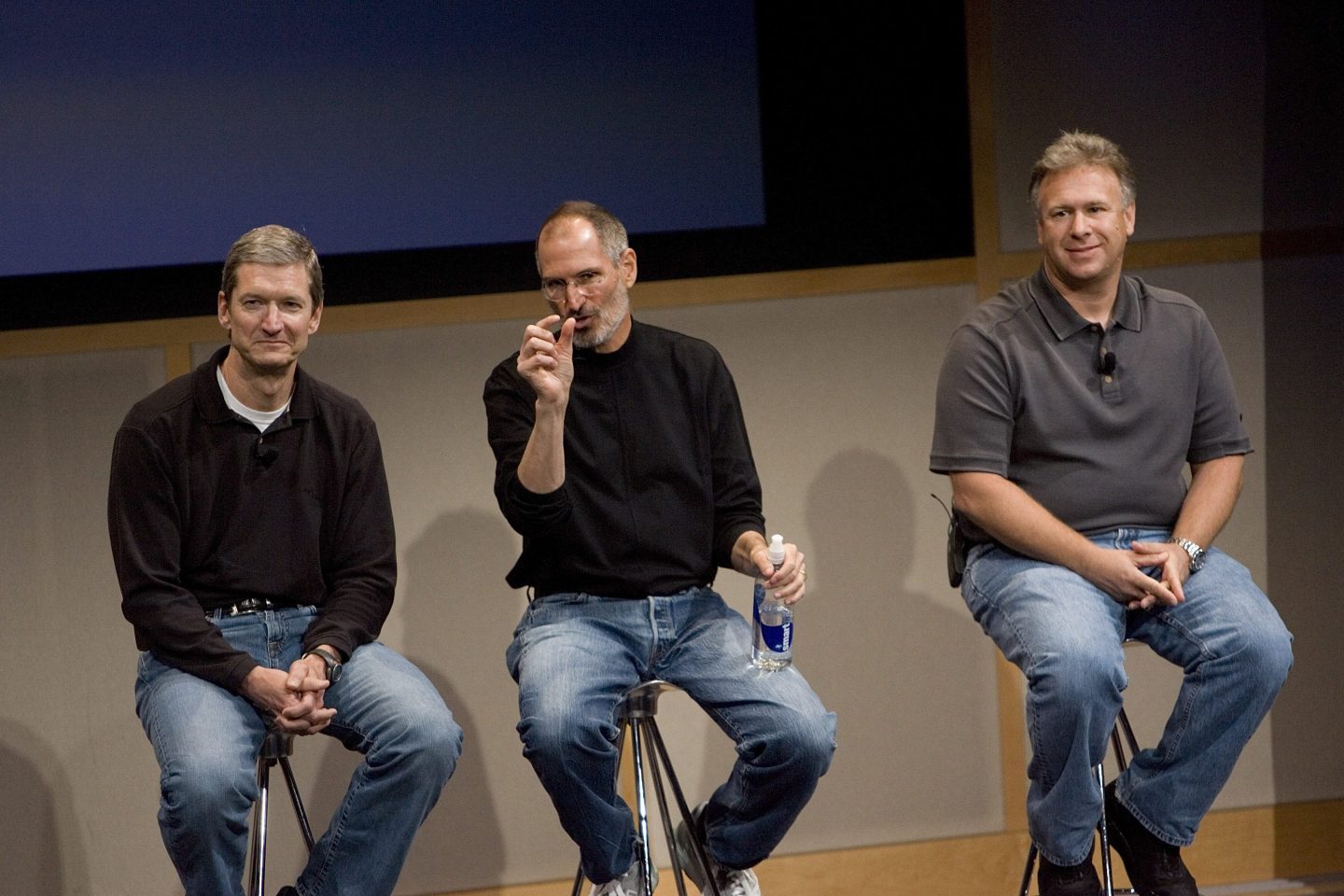
Tim Cook and Steve Jobs couldn’t have been more different, according to the Apple cofounder’s biographer Walter Isaacson.
Jobs was a creative genius who spearheaded the development of Apple’s signature products including the Mac, iPhone, and iPod. But he was also a hothead, known for pushing people to their limits and sometimes creating conflict on purpose in meetings to see if it would yield a better outcome, according to Isaacson.
By contrast, Cook, who announced he was retiring as Apple CEO this week, was levelheaded and serious. An engineer with a business degree from Duke, he had worked for 12 years at IBM, Jobs’ sworn enemy, before joining Apple. Yet Cook and Jobs got along great.
“He had the same vision I did, and we could interact at a high strategic level, and I could just forget about a lot of things unless he came and pinged me,” Jobs said of Cook, according to Isaacson’s biography of the Apple cofounder.
Jobs had only one criticism of Cook: He was “not a product person, per se.”
Despite this, Cook has cemented his legacy as one of Apple’s most successful CEOs as he steps down in September.
Tim Cook’s CEO strategy
Under his tenure, Apple’s market cap has skyrocketed from about $350 billion when he took over to $4 trillion today. It’s now the third most valuable company in the world by market cap. Much of that is because of Cook’s strategy.
His supply-chain mastery helped save the company huge sums of money by selling products quickly and eliminating a backlog of unsold devices. And his decision to sideline Intel’s chips in favor of the company’s own M1 processors in the Mac lineup made the company’s products faster and added battery life while also cutting costs.
While many of Apple’s bestselling products under Cook were developed during the Jobs era, including the iPhone, the Mac, and the iPad, Cook oversaw Apple’s expansion into wearables with the Apple Watch and AirPods, launched in 2014 and 2016, respectively. The wearable category was a $35 billion business for Apple as of 2025 and made up about 8.5% of the company’s revenue.
Cook vs. Jobs
Despite their differences, Cook was immediately taken with Jobs’ charisma when he met him in 1998, and said within five minutes he wanted to throw caution to the wind and leave his safe job at Compaq to join Apple, according to the biography of Jobs.
“My intuition told me that joining Apple would be a once-in-a-lifetime opportunity to work for a creative genius,” Cook told Isaacson.
But he was also filling a gap for Jobs. The Apple CEO had been running operations at the company for nearly a year because his previous head of operations had quit owing to the pressure, according to Isaacson.
Cook made his own mark early on in his role as operations leader by cutting Apple’s key suppliers from 100 to 24, and negotiating to get better deals for the company. He also closed warehouses to cut down on inventory stockpiles that were costing the company money.
In contrast to Jobs’ volatility, Cook always operated with a calm demeanor. He was known for a strong work ethic, rising daily at 4:30 a.m. to go to the gym before arriving at the office by 6 a.m. He also had a penchant for setting up Sunday meetings to prepare for the week ahead.
Thanks to the trust Jobs had in him to execute his vision, he designated Cook to run Apple while he took several medical leaves after having been diagnosed with a rare form of pancreatic cancer in 2004. In the end, Jobs suggested Cook succeed him as CEO during a board meeting just before he died in October 2011 at the age of 56.
It was a final act of confidence by the Apple cofounder in the man who would go on to make his company one of the most valuable in history.