• Home
  • Latest
  • Fortune 500
  • Finance
  • Tech
  • Leadership
  • Lifestyle
  • Rankings
  • Multimedia

Exclusive

An hour in the Oval Office with President Trump Fortune Editor-in-Chief: Alyson Shontell sat down with President Trump in the Oval Office for an hour. Tariffs, Intel, AI, Boeing, Iran—and the question every CEO eventually has to answer: who's next?

An hour in the Oval Office with President Trump Fortune Editor-in-Chief: Alyson Shontell sat down with President Trump in the Oval Office for an hour. Tariffs, Intel, AI, Boeing, Iran—and the question every CEO eventually has to answer: who's next?

An hour in the Oval Office with President Trump Fortune Editor-in-Chief: Alyson Shontell sat down with President Trump in the Oval Office for an hour. Tariffs, Intel, AI, Boeing, Iran—and the question every CEO eventually has to answer: who's next?

An hour in the Oval Office with President Trump Fortune Editor-in-Chief: Alyson Shontell sat down with President Trump in the Oval Office for an hour. Tariffs, Intel, AI, Boeing, Iran—and the question every CEO eventually has to answer: who's next?

An hour in the Oval Office with President Trump Fortune Editor-in-Chief: Alyson Shontell sat down with President Trump in the Oval Office for an hour. Tariffs, Intel, AI, Boeing, Iran—and the question every CEO eventually has to answer: who's next?

An hour in the Oval Office with President Trump Fortune Editor-in-Chief: Alyson Shontell sat down with President Trump in the Oval Office for an hour. Tariffs, Intel, AI, Boeing, Iran—and the question every CEO eventually has to answer: who's next?

An hour in the Oval Office with President Trump Fortune Editor-in-Chief: Alyson Shontell sat down with President Trump in the Oval Office for an hour. Tariffs, Intel, AI, Boeing, Iran—and the question every CEO eventually has to answer: who's next?

An hour in the Oval Office with President Trump Fortune Editor-in-Chief: Alyson Shontell sat down with President Trump in the Oval Office for an hour. Tariffs, Intel, AI, Boeing, Iran—and the question every CEO eventually has to answer: who's next?

An hour in the Oval Office with President Trump Fortune Editor-in-Chief: Alyson Shontell sat down with President Trump in the Oval Office for an hour. Tariffs, Intel, AI, Boeing, Iran—and the question every CEO eventually has to answer: who's next?

An hour in the Oval Office with President Trump Fortune Editor-in-Chief: Alyson Shontell sat down with President Trump in the Oval Office for an hour. Tariffs, Intel, AI, Boeing, Iran—and the question every CEO eventually has to answer: who's next?

MagazineIran

High gas prices are just the beginning: How the Iran war is changing the global energy map

Jordan Blum
By
Jordan Blum
Jordan Blum
Editor, Energy
Down Arrow Button Icon
Jordan Blum
By
Jordan Blum
Jordan Blum
Editor, Energy
Down Arrow Button Icon
May 19, 2026, 3:00 AM ET
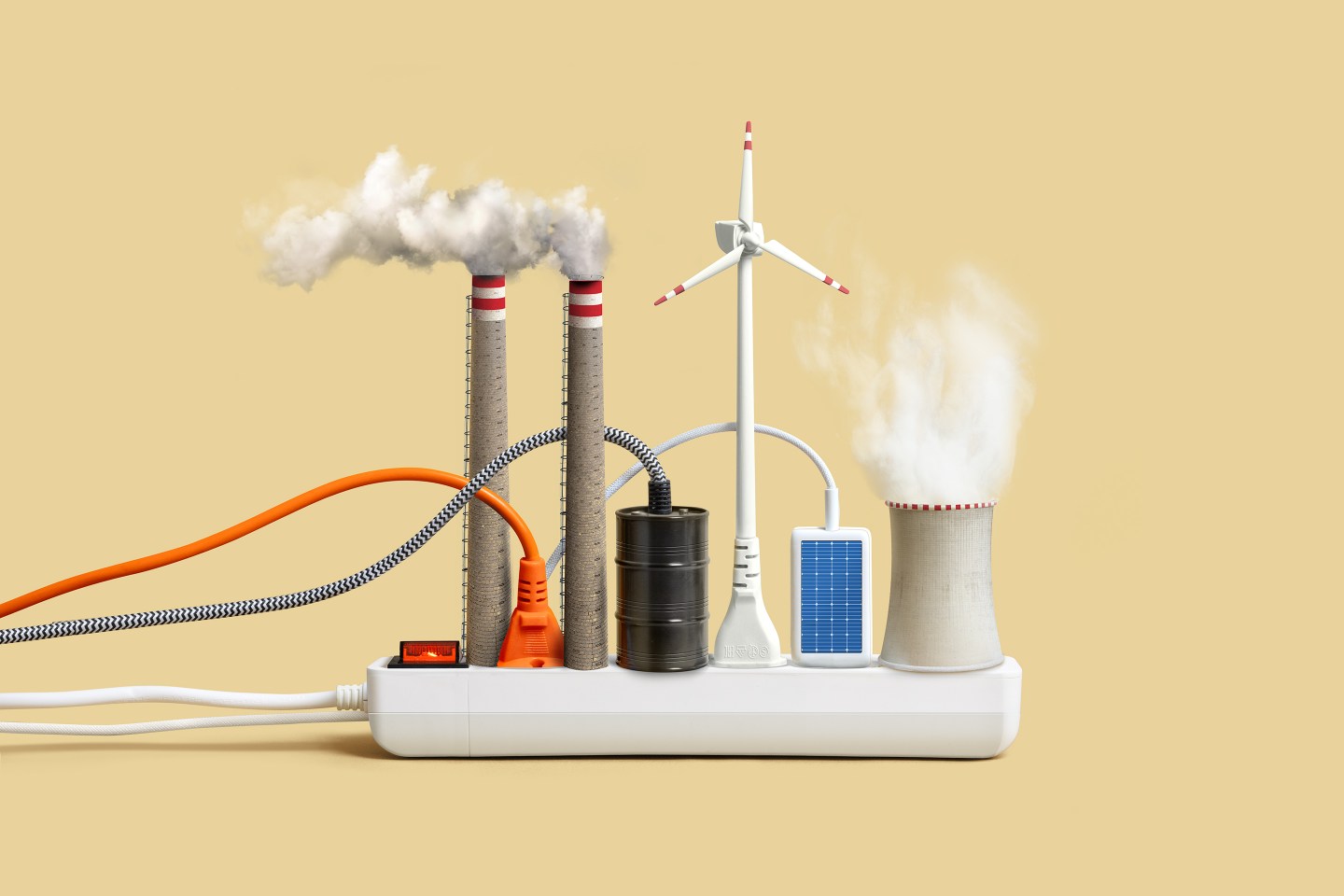
Illustration by Doug Chayka for Fortune

The U.S.-Israel war with Iran has caused the largest global energy-supply shock ever: Some 20% of the world’s oil and liquefied natural gas (LNG) flows have been cut off at the Strait of Hormuz.

Recommended Video

From gas rationing in Bangladesh, to farmers in Africa without fertilizer, to Americans struggling to afford filling their gas tanks, the supply-chain bottleneck is affecting every part of the world. But while an end to the current crisis is inevitable, its ripple effects will be shaking up the geopolitical and energy landscape long after it’s over.

One thing is not going to change: global energy usage. Power demand is rising by close to 4% a year, driven by growing populations, more electrification, and the AI data center boom. The worldwide energy feast will only grow, even as the recipes and cooks evolve.

Here are some of the biggest shifts underway.

The U.S. is officially an energy superpower

Prior to 2015, U.S. crude exports were largely illegal—a legacy of the 1970s Arab oil embargo—and the country lacked the infrastructure to ship natural gas. The shale boom changed everything. Within a two-month span just over a decade ago, the United States exported its first cargoes of both crude oil and LNG.

Since then, the U.S. has quickly transformed from an energy importer heavily reliant on the Middle East to the global leader in energy supplies. That market dominance is expected to grow further in the war’s aftermath. Already the leader by far in global LNG exports, the U.S. even briefly overtook Saudi Arabia during the war as the top oil shipper.

20%

Portion of the world’s oil and LNG flows that have been cut off at the Strait of Hormuz

4%

Approximate increase in global power demand each year
Sources: IEA; U.S. EIA

Arguably no one has a better view of this than Charif Souki, a former restaurateur who was raised in Lebanon. He founded the inaugural U.S. LNG exporter, Cheniere Energy, in 1996, earning the title of “godfather of LNG” in the U.S. (Souki has departed, but Cheniere, No. 223 on the Fortune 500, remains the industry leader today.)

“We finally have assumed our role as the energy superpower,” Souki told Fortune. “And that’s here to stay. That’s not going to change. It’s going to dictate how the rest of the world functions.”

Renewables are winning—but so is coal

Some have celebrated renewables as the winners from the war—and they are in the sense that the crisis has prompted countries to hasten wind and solar energy development. Nuclear power will also see a rebound.

But another winner is coal—the dirtiest of the primary fossil fuels.

India, South Korea, Indonesia, Thailand, Vietnam, the Philippines, and others have boosted coal-fired power since February. “They have the coal, and they don’t have to beg anybody for it,” Souki said. “People are going to use coal regardless of environmental issues, because that’s what they have.”

This embrace of coal is a short-term fix—extending the life spans of older coal-burning plants rather than spawning a wave of new ones. (A similar dynamic is playing out in the U.S., aided by Trump administration subsidies for coal to power AI data centers.)

Clean energy sources—including wind, solar, nuclear, and hydro—now make up close to 40% of worldwide power generation, representing remarkable growth on the supply side. But when counting actual global energy consumption—including transportation, heating, and industry—clean energy’s share falls to 20% or less. Fossil fuels still make up roughly 80% of the total energy mix, with oil and coal holding steady and natural gas growing.

Combustion engines aren’t going away anytime soon

Electric vehicles have seen a sales bump: European EV sales surged about 40% since the war began, and now make up a third of all new-car sales. In China, EVs represent more than half of new-car sales, and the global average is 25% and rising. Investments in sustainable aviation fuel also are expected to grow after jet fuel shortages. But whether the war triggers a faster worldwide shift away from combustion engines remains to be seen.

Global oil demand has kept growing—albeit more slowly—and is projected to plateau around 2030. That plateau may arrive more swiftly, but demand won’t plunge. The world’s transportation system—planes, trains, and automobiles—will lean heavily on liquid gold for decades. Oil remains by far the world’s top-traded commodity by value; natural gas is a distant second.

In the U.S., EVs make up less than 10% of new-car sales. And Bob McNally, former White House energy advisor under George W. Bush and founder of Rapidan Energy Group, is skeptical that the current crisis will lead to lasting change.

“Some people are saying this oil-price spike will do what the Paris Agreement and EV mandates haven’t,” McNally told Fortune, “which is to convince everybody to destroy demand for gasoline.

“But busts follow booms,” he added. “When oil prices drop, I think demand for EVs will wane. You’re on this roller coaster of oil prices.”

The old oil cartel order is breaking down

When the war began, a cornered Iran lashed out by attacking its neighbors in the Gulf Cooperation Council (GCC), a 45-year-old coalition of energy-rich Arab monarchies including Saudi Arabia, Kuwait, Qatar, Bahrain, Oman, and the United Arab Emirates.

Only the Saudis and Kuwaitis will remain in both the GCC and Organization of the Petroleum Exporting Countries (OPEC) now that the UAE has announced it is leaving the oil-pricing cartel. It left partly because of its frustrations with Iran and a feud with Saudi Arabia, but mostly because it had already been chafing at the restrictions on oil production its membership imposed; it wants to churn out more oil.

The weakened 65-year-old cartel will remain with its five original members—Iran, Iraq, and Venezuela, as well as the Saudis and Kuwaitis—and six oil-producing African nations. While the UAE’s departure strengthens the more U.S.-aligned GCC, it also introduces more oil price volatility. After all, OPEC was created in part for the member nations to assert control over their natural resources after decades of dominance by Western oil companies and governments. The recent U.S. attacks on Iran and Venezuela, both within a 60-day period, underscore how oil remains entangled with geopolitical conflict and sovereignty.

GCC countries will work to reduce dependence on the Strait of Hormuz, finding other routes and building pipelines. Saudi Arabia’s East-West Crude Oil Pipeline allowed it to export more shipments through the Red Sea, keeping prices from spiking further.

“They are not going to stay vulnerable to blackmail very long,” Souki said. “Everybody is going to work very hard at figuring out alternative sources. In five years, it won’t be recognizable.”

The geopolitical losers

The U.S.’s entanglement in the Middle East may give China a strategic advantage when it comes to global competition and influence—but it’s not an uncomplicated win for China, which remains heavily dependent on energy imports from the region.

Roughly half of all Asian energy imports from the Middle East flow to China. And despite its long-standing ties with Iran, China is quickly learning it relies more on the Saudis and UAE for its energy supplies. What has shielded China from worse damage is its world-leading oil storage supply—more than triple the size of the U.S. Strategic Petroleum Reserve.

“China may lose access to some cheap subsidized oil, and that’s no fun,” McNally said. “But for Vladimir Putin, it’s a strategic loss.”

Indeed, on paper, Russia is a near-term winner, selling more oil at higher prices to energy-hungry Asian nations. But Russia, which is more closely aligned with Iran than with China, is increasingly isolated as its invasion of Ukraine is rivaling World War II in longevity.

“Have you seen a prime minister or a president or a king going to Moscow lately?” Souki said with a laugh.

Undoubtedly, the biggest losers of the war are the developing countries, especially in Asia. More than 85% of the oil and natural gas flowing through the Strait of Hormuz goes to Asia, and many nations there have had to issue emergency energy rationing mandates. “It’s a tragedy,” Souki said. “They are the unintended victims.”

A new energy world order

President Trump did not get the war he wanted, and the country remains bogged down in the Hormuz crisis. But the new energy world order that emerges from this imbroglio will bear the president’s stamp—and the U.S. stands to benefit.

While the Middle East will remain an oil and gas juggernaut, the epicenter of the energy world may shift to the Americas, where oil and gas volumes and exports are increasing. Canada is growing as the world’s fourth-largest oil producer. Argentina is leaning on U.S. drilling and fracking tech, while Exxon Mobil recently turned Guyana into a new oil power. At the White House’s metaphorical gunpoint, Venezuela is again growing its oil industry.

The U.S. and Japan are subsidizing a deepwater crude terminal in the Gulf of Mexico. And North America’s LNG export capacity is projected to more than double from 2024 to 2028.

“If you take everything from Alaska to Argentina, you can start to think of it as a bloc,” Souki said. “We kind of put our imprint on that and said, ‘It’s ours. Don’t mess with it.'”

This article appears in the June/July 2026 issue of Fortune with the headline “Crude awakening: The Iran War’s real energy legacy is still to come.”
The CEO-in-Chief speaks. Fortune sits down with President Trump on tariffs, the Intel stake, Boeing's record orders, and what the markets should expect next. Read the interview
About the Author
Jordan Blum
By Jordan BlumEditor, Energy

Jordan Blum is the Energy editor at Fortune, overseeing coverage of a growing global energy sector for oil and gas, transition businesses, renewables, and critical minerals.

See full bioRight Arrow Button Icon

Latest from the Magazine

Finance
Lorem ipsum dolor sit amet, consectetur adipiscing elit, sed do eiusmod tempor incididunt ut labore et dolore magna aliqua. Ut enim ad minim veniam
By Fortune Editors
October 20, 2025
Finance
Lorem ipsum dolor sit amet, consectetur adipiscing elit, sed do eiusmod tempor incididunt ut labore et dolore magna aliqua. Ut enim ad minim veniam
By Fortune Editors
October 20, 2025
Finance
Lorem ipsum dolor sit amet, consectetur adipiscing elit, sed do eiusmod tempor incididunt ut labore et dolore magna aliqua. Ut enim ad minim veniam
By Fortune Editors
October 20, 2025
Finance
Lorem ipsum dolor sit amet, consectetur adipiscing elit, sed do eiusmod tempor incididunt ut labore et dolore magna aliqua. Ut enim ad minim veniam
By Fortune Editors
October 20, 2025
Finance
Lorem ipsum dolor sit amet, consectetur adipiscing elit, sed do eiusmod tempor incididunt ut labore et dolore magna aliqua. Ut enim ad minim veniam
By Fortune Editors
October 20, 2025
Finance
Lorem ipsum dolor sit amet, consectetur adipiscing elit, sed do eiusmod tempor incididunt ut labore et dolore magna aliqua. Ut enim ad minim veniam
By Fortune Editors
October 20, 2025

Most Popular

Finance
Lorem ipsum dolor sit amet, consectetur adipiscing elit, sed do eiusmod tempor incididunt ut labore et dolore magna aliqua. Ut enim ad minim veniam
By Fortune Editors
October 20, 2025
Finance
Lorem ipsum dolor sit amet, consectetur adipiscing elit, sed do eiusmod tempor incididunt ut labore et dolore magna aliqua. Ut enim ad minim veniam
By Fortune Editors
October 20, 2025
Finance
Lorem ipsum dolor sit amet, consectetur adipiscing elit, sed do eiusmod tempor incididunt ut labore et dolore magna aliqua. Ut enim ad minim veniam
By Fortune Editors
October 20, 2025
Finance
Lorem ipsum dolor sit amet, consectetur adipiscing elit, sed do eiusmod tempor incididunt ut labore et dolore magna aliqua. Ut enim ad minim veniam
By Fortune Editors
October 20, 2025
Finance
Lorem ipsum dolor sit amet, consectetur adipiscing elit, sed do eiusmod tempor incididunt ut labore et dolore magna aliqua. Ut enim ad minim veniam
By Fortune Editors
October 20, 2025
Finance
Lorem ipsum dolor sit amet, consectetur adipiscing elit, sed do eiusmod tempor incididunt ut labore et dolore magna aliqua. Ut enim ad minim veniam
By Fortune Editors
October 20, 2025
Fortune Secondary Logo
Rankings
  • 100 Best Companies
  • Fortune 500
  • Global 500
  • Fortune 500 Europe
  • Most Powerful Women
  • World's Most Admired Companies
  • See All Rankings
  • Lists Calendar
Sections
  • Finance
  • Fortune Crypto
  • Features
  • Leadership
  • Health
  • Commentary
  • Success
  • Retail
  • Mpw
  • Tech
  • Lifestyle
  • CEO Initiative
  • Asia
  • Politics
  • Conferences
  • Europe
  • Newsletters
  • Personal Finance
  • Environment
  • Magazine
  • Education
Customer Support
  • Frequently Asked Questions
  • Customer Service Portal
  • Privacy Policy
  • Terms Of Use
  • Single Issues For Purchase
  • International Print
Commercial Services
  • Advertising
  • Fortune Brand Studio
  • Fortune Analytics
  • Fortune Conferences
  • Business Development
  • Group Subscriptions
About Us
  • About Us
  • Press Center
  • Work At Fortune
  • Terms And Conditions
  • Site Map
  • About Us
  • Press Center
  • Work At Fortune
  • Terms And Conditions
  • Site Map
  • Facebook icon
  • Twitter icon
  • LinkedIn icon
  • Instagram icon
  • Pinterest icon

Latest from the Magazine

High gas prices are just the beginning: How the Iran war is changing the global energy map
MagazineIran
High gas prices are just the beginning: How the Iran war is changing the global energy map
By Jordan BlumMay 19, 2026
44 minutes ago
Anduril CEO Brian Schimpf
MagazineDefense
Inside Anduril: Meet the quiet engineer-CEO building America’s $31 billion weapons startup
By Allie GarfinkleMay 6, 2026
13 days ago
A Michigan farm town voted down plans for a giant OpenAI-Oracle data center. Weeks later, construction began
MagazineData centers
A Michigan farm town voted down plans for a giant OpenAI-Oracle data center. Weeks later, construction began
By Sharon GoldmanMay 6, 2026
13 days ago
The American Express CEO defied haters who said he’d never have the top job—winning with millennials and Gen Z and trouncing the competition
MagazineAmerican Express
The American Express CEO defied haters who said he’d never have the top job—winning with millennials and Gen Z and trouncing the competition
By Shawn TullyMay 6, 2026
13 days ago
Photo of Marc Benioff
Magazinecommunication
Salesforce CEO Marc Benioff turned his earnings call into a vodcast. Why other Fortune 500 CEOs might follow
By Rachel VentrescaMay 6, 2026
13 days ago
A top Blackstone executive is becoming an unlikely LinkedIn star thanks to his running videos
Magazinecommunication
A top Blackstone executive is becoming an unlikely LinkedIn star thanks to his running videos
By Rachel VentrescaApril 21, 2026
28 days ago

Most Popular

The Bezos family just donated $100 million to help achieve one of Mayor Zohran Mamdani’s top campaign promises
Politics
The Bezos family just donated $100 million to help achieve one of Mayor Zohran Mamdani’s top campaign promises
By Jake AngeloMay 12, 2026
6 days ago
While Trump insisted the Iran war would end ‘soon,’ an account in his name was buying millions in oil, defense and gold
Economy
While Trump insisted the Iran war would end ‘soon,’ an account in his name was buying millions in oil, defense and gold
By Eva RoytburgMay 18, 2026
13 hours ago
Current price of oil as of May 18, 2026
Personal Finance
Current price of oil as of May 18, 2026
By Joseph HostetlerMay 18, 2026
19 hours ago
EXCLUSIVE: An hour in the Oval Office with the CEO-in-Chief, President Trump
Politics
EXCLUSIVE: An hour in the Oval Office with the CEO-in-Chief, President Trump
By Alyson ShontellMay 18, 2026
1 day ago
Microsoft AI chief gives it 18 months—for all white-collar work to be automated by AI
AI
Microsoft AI chief gives it 18 months—for all white-collar work to be automated by AI
By Jake AngeloMay 16, 2026
3 days ago
The top foreign holders of U.S. debt may soon dump Treasury bonds and bring their money back home, potentially spiking borrowing costs
Economy
The top foreign holders of U.S. debt may soon dump Treasury bonds and bring their money back home, potentially spiking borrowing costs
By Jason MaMay 17, 2026
2 days ago

© 2026 Fortune Media IP Limited. All Rights Reserved. Use of this site constitutes acceptance of our Terms of Use and Privacy Policy | CA Notice at Collection and Privacy Notice | Do Not Sell/Share My Personal Information
FORTUNE is a trademark of Fortune Media IP Limited, registered in the U.S. and other countries. FORTUNE may receive compensation for some links to products and services on this website. Offers may be subject to change without notice.