Already space is an industry nearly the size of automobiles. In eight years it may be a $20-billion-plus business—with just one customer. The “fallout” of products promises to be fabulous. But the impact on the economy also has a disturbing side.
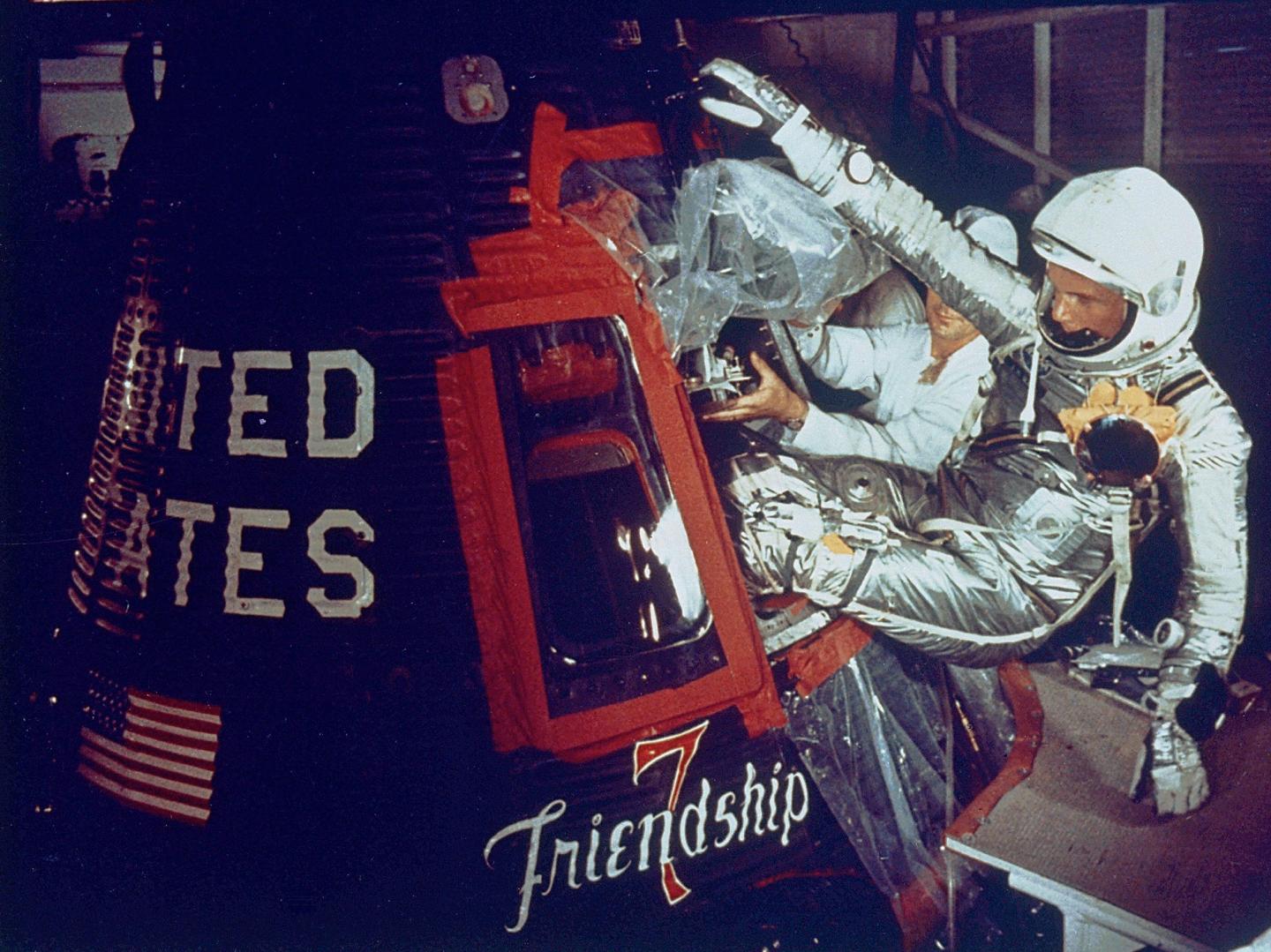
Back in 1962, the U.S. government still had the leverage and controlled the purse strings when it came to the burgeoning space industry. NASA worked with AT&T on early satellite infrastructure, but the Kennedy administration and Congress soon became wary of the telecom’s growing ambitions. This led the way for the Communications Satellite Act of 1962, which passed just a couple of months after Gilbert Burck wrote in Fortune about the public-private dynamics that were unfolding—and ultimately, the public offering of the federally chartered Communications Satellite Corporation (C.S.C., or COMSAT) two years later. Lockheed Martin acquired (and soon dissolved) COMSAT at the turn of the century, right around the time that Elon Musk founded SpaceX, in 2002.
Burck’s Fortune piece is a dense treasure trove of prescient declarations. It’s both a time capsule of a moment when the scope of the space industry was just coming into focus, as well as a prediction of the astronomical economic possibility of technologies that transcend human limits (see also: AI). Burck itemizes potential applications of that tech both on Earth and in space, foretelling “better products and ways of doing things from generating power to calculating probabilities, from packing eggs to treating ailments, real and imaginary.” He also highlights migration to “other worlds” as a major driver of space endeavors.
This week, SpaceX filed its IPO prospectus. The S-1 defines SpaceX’s purpose: “to build the systems and technologies necessary to make life multiplanetary, to understand the true nature of the universe, and to extend the light of consciousness to the stars.” Oh, and also: “a permanent human colony on Mars with at least one million inhabitants.”
The SpaceX filing also reveals the extreme control that one man—CEO, CTO, and chairman, Elon Musk—will continue to wield over the company, given its planned corporate governance structure. Class B shares will supercharge Musk’s voting power to 79% and insulate him from being fired, unless, as my colleague Shawn Tully writes, he votes against himself.
Sixty-four years ago, the government passed legislation to make satellite communications effectively a regulated monopoly. (In the Cold War era, national security concerns of course played a large role in this, too.) Today, NASA is SpaceX’s customer, and Musk is making sure almost nothing can keep him in check.