• Home
  • Latest
  • Fortune 500
  • Finance
  • Tech
  • Leadership
  • Lifestyle
  • Rankings
  • Multimedia

Trendingnow

1

As CEO of the $96 billion Sam’s Club, Latriece Watkins is testing her mettle at the warehouse retailer that produced CEOs for Walmart, Target, and Walgreens

2

Jeff Bezos wants the bottom half of earners to pay zero income tax—he says nurses making just $75K should save $12K a year

3

As AI slashes white-collar jobs, Salesforce CEO Marc Benioff says almost no one is being hired—except in sales

1

As CEO of the $96 billion Sam’s Club, Latriece Watkins is testing her mettle at the warehouse retailer that produced CEOs for Walmart, Target, and Walgreens

2

Jeff Bezos wants the bottom half of earners to pay zero income tax—he says nurses making just $75K should save $12K a year

3

As AI slashes white-collar jobs, Salesforce CEO Marc Benioff says almost no one is being hired—except in sales
CommentaryVenture Capital

I raised $15 million without VC in one of tech’s most capital-intensive sectors. Here’s what I learned

By
Hebron Sher
Hebron Sher
Down Arrow Button Icon
By
Hebron Sher
Hebron Sher
Down Arrow Button Icon
May 29, 2026, 5:30 AM ET
hs
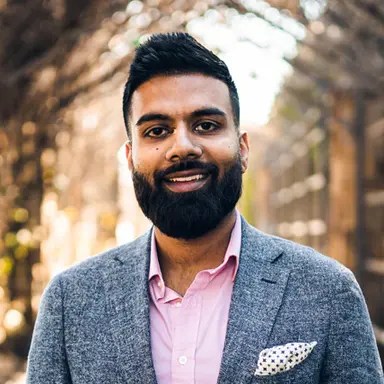
Hebron Sher is the co-founder and CEO of Zevo.courtesy of Zevo

Over the last few years, the mobility industry convinced itself that EV adoption was inevitable.

Recommended Video

Billions of dollars poured into companies built around that assumption. Automakers rushed to electrify lineups. Investors chased growth projections that assumed consumers would naturally transition from gas-powered vehicles to EV ownership. Founders sold a story that the future was obviously and inevitably electric.

Then EV incentives disappeared, demand slowed and some of the industry’s biggest bets started collapsing under their own weight. None of that surprised me.

I founded Zevo, a peer-to-peer EV platform, in 2022. We have since raised nearly $15 million entirely from private capital, primarily high-net-worth individuals writing personal checks rather than institutional investment firms. That funding path was intentional. I did not believe mobility needed more hype. I believed it needed more discipline.

Building in this sector taught me that the EV adoption problem and the funding problem were connected. Both were driven by the same mistake of believing the narrative before proving the economics. Consumers were supposed to buy EVs because the future was electric. Founders were supposed to raise from funds because scale would follow. 

In both cases, the numbers should have mattered more than the story.

EV economics were hiding in plain sight

For too long, the EV conversation centered too much on sustainability, climate messaging and the belief that consumers would eventually adopt EVs because they felt morally or culturally compelled. But the demand I saw was more practical. Many people cared less about whether their vehicle helped save the world than whether it offered a better driving experience, lower costs, easier access or a way to earn income.

To solve this, we approached EV adoption as a two-sided marketplace problem. Drivers needed affordable, flexible access without ownership, while owners were sitting on depreciating, underused assets. The model worked only if both sides could see the economics immediately. If a renter could access a vehicle more affordably, and an owner could generate income from an asset they already owned, there was a market. 

That same standard guided our fundraising. We were not selling inevitability. We showed whether the model worked.

This was critical because mobility is an unforgiving business. Cars are expensive, insurance is complicated and supply chains are unpredictable. Weak models don’t become strong just because more capital is poured into them. Institutional money can be powerful for the right company at the right stage. But in a capital-intensive category like mobility, it can also reward founders for selling the size of the market before proving the behavior inside it.

That is the trap I wanted to avoid.

Capital is changing

Raising private capital taught me important lessons applicable beyond mobility. We were forced to stay nearer to operations and reality. Without an infinite runway, there was less room to subsidize behavior that might not become sustainable. The business had to stay focused on what customers actually needed and what they were willing to pay for.

I also realized that capital did not have to come from traditional venture hubs. There is still a tendency in tech to assume serious funding has to flow through San Francisco or New York, but capital is increasingly available in markets that historically sat outside the center of the venture ecosystem. North Texas is a good example. Much of our funding has come from Dallas, a rapidly growing financial ecosystem with a deep pool of private capital and a growing appetite for technology investments.

Just as important, I learned not to confuse private capital with unsophisticated capital. In many cases, I found, the opposite is true. Many of the investors I met with were extremely successful owners and operators themselves. They had built companies, managed assets, taken risks and made payroll, so they not only understood cash flow, margins and risk, but they were no-nonsense. They did not need a theatrical presentation, and they were capable of making conviction bets with their own capital.

I learned the right private investors can force more discipline because they ask practical questions before they buy the story. That made the conversation more direct and the closing process simpler.

The broader lesson

The broader lesson I learned is not that EVs were overhyped or that institutional funding is the wrong path for every founder. The EV transition is real, and traditional capital sources will continue to play an important role in building it.

But founders should be careful when a market story starts to sound inevitable. Inevitability can make companies lazy, investors less disciplined and entire industries mistake hype for adoption.

The next phase of mobility will not be won by companies that tell the biggest story. It will be won by companies that make the economics work for real people in real use cases. Consumers do not adopt new technology because a market narrative says they should. Investors should not fund companies that way either.

The opinions expressed in Fortune.com commentary pieces are solely the views of their authors and do not necessarily reflect the opinions and beliefs of Fortune.


About the Author
By Hebron Sher
See full bioRight Arrow Button Icon

Latest in Commentary

Finance
Lorem ipsum dolor sit amet, consectetur adipiscing elit, sed do eiusmod tempor incididunt ut labore et dolore magna aliqua. Ut enim ad minim veniam
By Fortune Editors
October 20, 2025
Finance
Lorem ipsum dolor sit amet, consectetur adipiscing elit, sed do eiusmod tempor incididunt ut labore et dolore magna aliqua. Ut enim ad minim veniam
By Fortune Editors
October 20, 2025
Finance
Lorem ipsum dolor sit amet, consectetur adipiscing elit, sed do eiusmod tempor incididunt ut labore et dolore magna aliqua. Ut enim ad minim veniam
By Fortune Editors
October 20, 2025
Finance
Lorem ipsum dolor sit amet, consectetur adipiscing elit, sed do eiusmod tempor incididunt ut labore et dolore magna aliqua. Ut enim ad minim veniam
By Fortune Editors
October 20, 2025
Finance
Lorem ipsum dolor sit amet, consectetur adipiscing elit, sed do eiusmod tempor incididunt ut labore et dolore magna aliqua. Ut enim ad minim veniam
By Fortune Editors
October 20, 2025
Finance
Lorem ipsum dolor sit amet, consectetur adipiscing elit, sed do eiusmod tempor incididunt ut labore et dolore magna aliqua. Ut enim ad minim veniam
By Fortune Editors
October 20, 2025

Most Popular

Finance
Lorem ipsum dolor sit amet, consectetur adipiscing elit, sed do eiusmod tempor incididunt ut labore et dolore magna aliqua. Ut enim ad minim veniam
By Fortune Editors
October 20, 2025
Finance
Lorem ipsum dolor sit amet, consectetur adipiscing elit, sed do eiusmod tempor incididunt ut labore et dolore magna aliqua. Ut enim ad minim veniam
By Fortune Editors
October 20, 2025
Finance
Lorem ipsum dolor sit amet, consectetur adipiscing elit, sed do eiusmod tempor incididunt ut labore et dolore magna aliqua. Ut enim ad minim veniam
By Fortune Editors
October 20, 2025
Finance
Lorem ipsum dolor sit amet, consectetur adipiscing elit, sed do eiusmod tempor incididunt ut labore et dolore magna aliqua. Ut enim ad minim veniam
By Fortune Editors
October 20, 2025
Finance
Lorem ipsum dolor sit amet, consectetur adipiscing elit, sed do eiusmod tempor incididunt ut labore et dolore magna aliqua. Ut enim ad minim veniam
By Fortune Editors
October 20, 2025
Finance
Lorem ipsum dolor sit amet, consectetur adipiscing elit, sed do eiusmod tempor incididunt ut labore et dolore magna aliqua. Ut enim ad minim veniam
By Fortune Editors
October 20, 2025
Fortune Secondary Logo
Rankings
  • 100 Best Companies
  • Fortune 500
  • Global 500
  • Fortune 500 Europe
  • Most Powerful Women
  • World's Most Admired Companies
  • See All Rankings
  • Lists Calendar
Sections
  • Finance
  • Fortune Crypto
  • Features
  • Leadership
  • Health
  • Commentary
  • Success
  • Retail
  • Mpw
  • Tech
  • Lifestyle
  • CEO Initiative
  • Asia
  • Politics
  • Conferences
  • Europe
  • Newsletters
  • Personal Finance
  • Environment
  • Magazine
  • Education
Customer Support
  • Frequently Asked Questions
  • Customer Service Portal
  • Privacy Policy
  • Terms Of Use
  • Single Issues For Purchase
  • International Print
Commercial Services
  • Advertising
  • Fortune Brand Studio
  • Fortune Analytics
  • Fortune Conferences
  • Business Development
  • Group Subscriptions
About Us
  • About Us
  • Press Center
  • Work At Fortune
  • Terms And Conditions
  • Site Map
  • About Us
  • Press Center
  • Work At Fortune
  • Terms And Conditions
  • Site Map
  • Facebook icon
  • Twitter icon
  • LinkedIn icon
  • Instagram icon
  • Pinterest icon
Hebron Sher is the co-founder and CEO of Zevo, a peer-to-peer EV and electrified asset sharing platform. Through its micro-lease model, Zevo helps owners turn underutilized electric vehicles into income-generating assets while giving renters flexible access without long-term ownership. Sher has scaled the company outside traditional venture capital, raising directly from private investors and focusing on capital efficiency, asset utilization, and the infrastructure needed for high-cost electrified assets — from EVs and autonomous vehicles to robotics and embodied AI.

Latest in Commentary

t
CommentaryCoding
Girls Who Code CEO: 70% of teen girls want to work in cybersecurity. We’re losing them before they start
By Tarika BarrettMay 29, 2026
10 hours ago
r
CommentaryLayoffs
Big Tech is laying off developers. My company just hired its first. We’re both right about AI
By Rob CollieMay 29, 2026
10 hours ago
lentz
CommentaryCareers
I built a Fortune 1000 career most people wouldn’t walk away from. Then I did
By Christine LentzMay 29, 2026
11 hours ago
s
CommentaryMarketing
What Schlitz beer can teach us about AI adoption
By Julia Dhar, Kristy R. Ellmer and Philip JamesonMay 29, 2026
11 hours ago
hs
CommentaryVenture Capital
I raised $15 million without VC in one of tech’s most capital-intensive sectors. Here’s what I learned
By Hebron SherMay 29, 2026
13 hours ago
dd
CommentaryCareers
Conference Board: We’ve just hit a peak at job satisfaction. AI threatens to completely ruin that for the unlucky 50%
By Matt Rosenbaum and Allan SchweyerMay 29, 2026
13 hours ago

Most Popular

As CEO of the $96 billion Sam’s Club, Latriece Watkins is testing her mettle at the warehouse retailer that produced CEOs for Walmart, Target, and Walgreens
Magazine
As CEO of the $96 billion Sam’s Club, Latriece Watkins is testing her mettle at the warehouse retailer that produced CEOs for Walmart, Target, and Walgreens
By Emma HinchliffeMay 27, 2026
3 days ago
Jeff Bezos wants the bottom half of earners to pay zero income tax—he says nurses making just $75K should save $12K a year
Success
Jeff Bezos wants the bottom half of earners to pay zero income tax—he says nurses making just $75K should save $12K a year
By Preston ForeMay 21, 2026
8 days ago
As AI slashes white-collar jobs, Salesforce CEO Marc Benioff says almost no one is being hired—except in sales
Success
As AI slashes white-collar jobs, Salesforce CEO Marc Benioff says almost no one is being hired—except in sales
By Emma BurleighMay 28, 2026
1 day ago
The river that supplies 40 million Americans is down to 23% — and about to make a $25 million bet on one fish
Environment
The river that supplies 40 million Americans is down to 23% — and about to make a $25 million bet on one fish
By Dorany Pineda, Brittany Peterson and The Associated PressMay 27, 2026
2 days ago
Current price of oil as of May 28, 2026
Personal Finance
Current price of oil as of May 28, 2026
By Joseph HostetlerMay 28, 2026
1 day ago
Jamie Dimon said the American Dream was slipping away. JPMorgan just put $40 million on the table to fix it
Banking
Jamie Dimon said the American Dream was slipping away. JPMorgan just put $40 million on the table to fix it
By Nick LichtenbergMay 27, 2026
2 days ago

© 2026 Fortune Media IP Limited. All Rights Reserved. Use of this site constitutes acceptance of our Terms of Use and Privacy Policy | CA Notice at Collection and Privacy Notice | Do Not Sell/Share My Personal Information
FORTUNE is a trademark of Fortune Media IP Limited, registered in the U.S. and other countries. FORTUNE may receive compensation for some links to products and services on this website. Offers may be subject to change without notice.