
• Home
  • Latest
  • Fortune 500
  • Finance
  • Tech
  • Leadership
  • Lifestyle
  • Rankings
  • Multimedia

Trendingnow

1

The U.S. and Iran can't agree on fully reopening the Strait of Hormuz. The solution could be straight out of the Old Testament

2

Wyoming officials say Meta’s 715,000-square-foot data center is responsible for contaminating its water system with a rare bacterium

3

'The first time ever in my career': Senior Citi executive on why the ultrawealthy want to diversify away from America

1

The U.S. and Iran can't agree on fully reopening the Strait of Hormuz. The solution could be straight out of the Old Testament

2

Wyoming officials say Meta’s 715,000-square-foot data center is responsible for contaminating its water system with a rare bacterium

3

'The first time ever in my career': Senior Citi executive on why the ultrawealthy want to diversify away from America
C-Suitechief executive officer (CEO)

Stitch Fix’s CEO inherited a broken tech darling. He’s fixing it like a traditional retail exec

Phil Wahba
By
Phil Wahba
Phil Wahba
Senior Writer
Down Arrow Button Icon
Phil Wahba
By
Phil Wahba
Phil Wahba
Senior Writer
Down Arrow Button Icon
July 10, 2026, 3:00 AM ET
Stitch Fix CEO Matt Baer is overseeing a revitalization of the online styling services provider.
Stitch Fix CEO Matt Baer is overseeing a revitalization of the online styling services provider.Courtesy of Stitch Fix
Add Fortune on Google for similar content.

A decade ago, Stitch Fix was a hot tech company promising to revolutionize how consumers shopped for clothes. Its personal shopping subscription service used algorithms to determine customers’ preferences with enough accuracy that they would keep most of the items shipped to them in a so-called fix. 

Recommended Video

But its profile as a tech-driven disruptor of apparel retail couldn’t sustain a business ultimately undermined by weak merchandising fundamentals. Now its CEO Matt Baer, three years into his tenure, is using his big-box and department store background to reset Stitch Fix—and prove its pioneering model still works when rooted in retail 101. 

“Transformations take time, and we had the appropriate amount of patience through this process because the goal is for durable profitable growth,” Baer told Fortune this week.

The rise, and unraveling, of a data-driven bet

Stitch Fix was founded in 2011 by retail consultant Katrina Lake. (She still serves as chair of the company’s board.) Her idea was to mix data and remote personal stylists to customize a wardrobe suited to a shopper’s unique tastes and send them the clothes in a subscription box.

In the early days, the company found a clientele among Americans who simply didn’t like shopping or didn’t feel confident building outfits. Its data analytics and algorithms beat traditional clothing brands to the punch in personalized shopping for the digital age. Revenue tripled between 2016 and 2021 to $2.1 billion, helped in part by a pandemic that led more people to shop from home. The company became a Wall Street darling, and Stitch Fix’s market cap hit an all-time high that year of $11 billion.

But after the pandemic, the bottom fell out. Shoppers left in droves, bored by what they saw as predictable assortment—a sign its data edge wasn’t translating into compelling merchandising—and a site that was slow to evolve. That was on top of new subscription service competitors, improved apparel offerings at big retailers like Walmart and Target, and natural attrition due to many consumers returning to physical stores post-COVID. Existing customers weren’t sticking around, and Stitch Fix was spending a fortune attracting new ones, only for them to disappear quickly. In the first year following its COVID boom, the company lost 400,000 users, reflecting a business in decline. From peak to trough, between 2021 to 2025, revenue dropped 40% to $1.27 billion.

“You can acquire a really large absolute number of clients but that doesn’t mean you’re building a healthy business,” Baer says.

Back to retail basics

In 2023, Stitch Fix hired Baer, a former Walmart and Macy’s e-commerce executive, to stabilize the business and refocus the company. 

Baer’s new emphasis on retail fundamentals is recasting Stitch Fix’s identity from a tech company that sold clothing to an apparel company that’s tech-forward.

“What we’ve been leaning into is how to take that DNA of tech and innovation and marry that with retail’s best practices,” says Baer. 

That has meant leaning into classic retail levers like strengthening its private label; Stitch Fix’s in-house brands now account for about 40% to 50% of sales and carry higher margins.

It has also meant improving the shopping experience, in part, by expanding Stitch Fix further into new categories like active wear, footwear, and accessories like handbags and eyewear, where Baer thinks the company can command a similar market position to what it has in apparel. “We were leaving a billion dollars of market share on the table,” he says. 

He has also given shoppers more flexibility in how they build a ‘fix,’ including item selection and delivery cadence. 

Stitch Fix has rolled out tech updates too, but they’re all in the service of the retail experience. It recently launched AI-backed technology that allows customers to superimpose an item of clothing on a photo of themselves to see what it would look like. The company is deploying AI (alongside humans) to identify trends; it’s also using the tech to cut the design time for its private label brands to weeks from months.

Proving the model still works

There are plenty of green shoots that suggest Stitch Fix has not only stabilized but has set itself up for longer-term growth. In its most recent quarter, Stitch Fix reported a fifth straight three-month period of year-over-year revenue growth, rising 4.7%. It posted a record revenue per active client of $578, which supports the idea that Stitch Fix is getting more business out of its regular customers. More crucially, Stitch Fix’s active client count is finally on the rise again, hitting 2.39 million at the end of last quarter. That follows a painful period in which the company cut $500 million from its cost structure, an effort that included steps such as ending full-time employment for stylists.

Still, Stitch Fix has a lot to prove to Wall Street, with its market capitalization of about $500 million only 5% of what it was at its peak five years ago, despite the recent improvements. But Baer says the company is getting there by zeroing on what it does best. “Our transformation is rooted in understanding what made us unique and special initially and unlocking that opportunity even further with the most recent technology,” he says.

At its core, Stitch Fix aimed to ease Americans’ shopping fatigue; it’s a problem that still needs solving. “The data is pretty clear: you’ve got 90% of the U.S. population that isn’t excited about shopping for apparel in stores,” he says. “There is a significant population of people out there who need help with style and want to understand what is on trend.”

Subscribe to Fortune Gulf Brief. Every Tuesday, this new newsletter delivers clear-eyed, authoritative intelligence on the deals, decisions, policies, and power shifts shaping one of the world’s most consequential regions, written for the people who need to act on it. Sign up here.
About the Author
Phil Wahba
By Phil WahbaSenior Writer
LinkedIn iconTwitter icon

Phil Wahba is a senior writer at Fortune primarily focused on leadership coverage, with a prior focus on retail.

See full bioRight Arrow Button Icon
Add Fortune on Google for similar content.

Latest in C-Suite

Finance
Lorem ipsum dolor sit amet, consectetur adipiscing elit, sed do eiusmod tempor incididunt ut labore et dolore magna aliqua. Ut enim ad minim veniam
By Fortune Editors
October 20, 2025
Finance
Lorem ipsum dolor sit amet, consectetur adipiscing elit, sed do eiusmod tempor incididunt ut labore et dolore magna aliqua. Ut enim ad minim veniam
By Fortune Editors
October 20, 2025
Finance
Lorem ipsum dolor sit amet, consectetur adipiscing elit, sed do eiusmod tempor incididunt ut labore et dolore magna aliqua. Ut enim ad minim veniam
By Fortune Editors
October 20, 2025
Finance
Lorem ipsum dolor sit amet, consectetur adipiscing elit, sed do eiusmod tempor incididunt ut labore et dolore magna aliqua. Ut enim ad minim veniam
By Fortune Editors
October 20, 2025
Finance
Lorem ipsum dolor sit amet, consectetur adipiscing elit, sed do eiusmod tempor incididunt ut labore et dolore magna aliqua. Ut enim ad minim veniam
By Fortune Editors
October 20, 2025
Finance
Lorem ipsum dolor sit amet, consectetur adipiscing elit, sed do eiusmod tempor incididunt ut labore et dolore magna aliqua. Ut enim ad minim veniam
By Fortune Editors
October 20, 2025

Most Popular

Finance
Lorem ipsum dolor sit amet, consectetur adipiscing elit, sed do eiusmod tempor incididunt ut labore et dolore magna aliqua. Ut enim ad minim veniam
By Fortune Editors
October 20, 2025
Finance
Lorem ipsum dolor sit amet, consectetur adipiscing elit, sed do eiusmod tempor incididunt ut labore et dolore magna aliqua. Ut enim ad minim veniam
By Fortune Editors
October 20, 2025
Finance
Lorem ipsum dolor sit amet, consectetur adipiscing elit, sed do eiusmod tempor incididunt ut labore et dolore magna aliqua. Ut enim ad minim veniam
By Fortune Editors
October 20, 2025
Finance
Lorem ipsum dolor sit amet, consectetur adipiscing elit, sed do eiusmod tempor incididunt ut labore et dolore magna aliqua. Ut enim ad minim veniam
By Fortune Editors
October 20, 2025
Finance
Lorem ipsum dolor sit amet, consectetur adipiscing elit, sed do eiusmod tempor incididunt ut labore et dolore magna aliqua. Ut enim ad minim veniam
By Fortune Editors
October 20, 2025
Finance
Lorem ipsum dolor sit amet, consectetur adipiscing elit, sed do eiusmod tempor incididunt ut labore et dolore magna aliqua. Ut enim ad minim veniam
By Fortune Editors
October 20, 2025
Fortune Secondary Logo
Rankings
  • 100 Best Companies
  • Fortune 500
  • Global 500
  • Fortune 500 Europe
  • Most Powerful Women
  • World's Most Admired Companies
  • See All Rankings
  • Lists Calendar
Sections
  • Finance
  • Fortune Crypto
  • Features
  • Leadership
  • Health
  • Commentary
  • Success
  • Retail
  • Mpw
  • Tech
  • Lifestyle
  • CEO Initiative
  • Asia
  • Politics
  • Conferences
  • Europe
  • Newsletters
  • Personal Finance
  • Environment
  • Magazine
  • Education
Customer Support
  • Frequently Asked Questions
  • Customer Service Portal
  • Privacy Policy
  • Terms Of Use
  • Single Issues For Purchase
  • International Print
Commercial Services
  • Advertising
  • Fortune Brand Studio
  • Fortune Analytics
  • Fortune Conferences
  • Business Development
  • Group Subscriptions
About Us
  • About Us
  • Press Center
  • Work At Fortune
  • Terms And Conditions
  • Site Map
  • About Us
  • Press Center
  • Work At Fortune
  • Terms And Conditions
  • Site Map
  • Facebook icon
  • Twitter icon
  • LinkedIn icon
  • Instagram icon
  • Pinterest icon

Latest in C-Suite

Volkswagen’s CEO suggests ‘more intelligent solutions than closing plants’ amid turnaround effort and touts cost cuts
C-SuiteAutos
Volkswagen’s CEO suggests ‘more intelligent solutions than closing plants’ amid turnaround effort and touts cost cuts
By The Associated PressJuly 12, 2026
7 hours ago
Peter Thiel and other tech billionaires are publicly shielding their children from the products that made them rich
Big TechTech
Peter Thiel and other tech billionaires are publicly shielding their children from the products that made them rich
By Marco Quiroz-GutierrezJuly 12, 2026
11 hours ago
Manufacturing worker on factory floor
SuccessFlexible work
Fortune 500 Land O’Lakes is letting workers choose what days and times they work—and the flex jobs are getting 25% more applicants than full-time gigs
By Emma BurleighJuly 12, 2026
11 hours ago
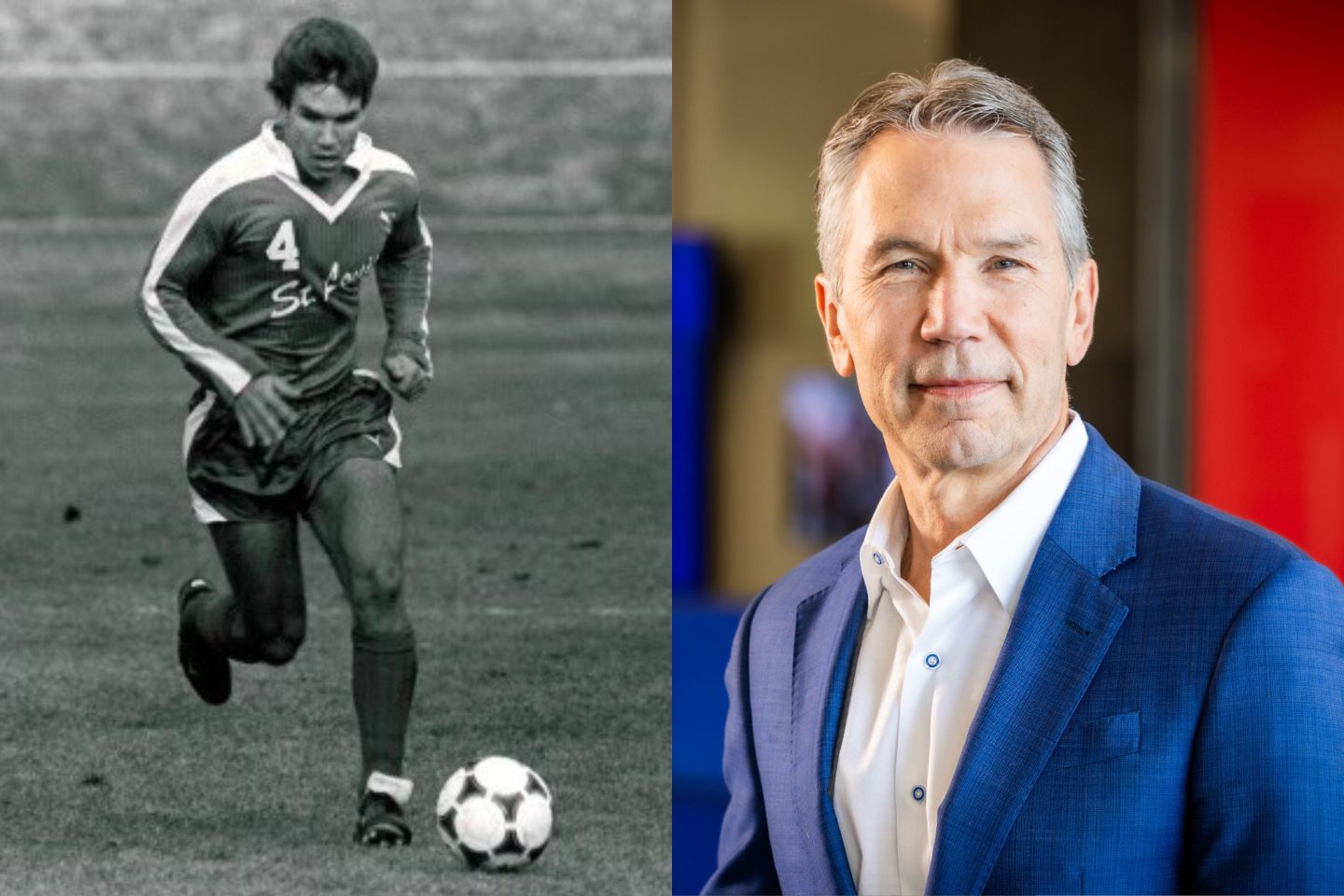
On the left, a black and white photo of Jim Kavanaugh playing soccer in the 1980s. On the right, a modern headshot of Kavanaugh wearing a blue suit jacket
SuccessCareers
This former U.S. soccer player built a $20 billion-a-year company. Now, he says resilience matters more than talent—and points to Lionel Messi as proof
By Preston ForeJuly 12, 2026
15 hours ago
Americans are quietly abandoning the daily habit that billionaires say set them up for success—and it could have lasting consequences
Successlifestyle
Americans are quietly abandoning the daily habit that billionaires say set them up for success—and it could have lasting consequences
By Preston ForeJuly 11, 2026
1 day ago
Ulta is betting $400 million that an NYC megastore will help it compete with Sephora—and that flagships still work
C-SuiteRetail
Ulta is betting $400 million that an NYC megastore will help it compete with Sephora—and that flagships still work
By Phil WahbaJuly 11, 2026
2 days ago

Most Popular

The U.S. and Iran can't agree on fully reopening the Strait of Hormuz. The solution could be straight out of the Old Testament
Middle East
The U.S. and Iran can't agree on fully reopening the Strait of Hormuz. The solution could be straight out of the Old Testament
By Jason MaJuly 11, 2026
23 hours ago
Wyoming officials say Meta’s 715,000-square-foot data center is responsible for contaminating its water system with a rare bacterium
Environment
Wyoming officials say Meta’s 715,000-square-foot data center is responsible for contaminating its water system with a rare bacterium
By Sasha RogelbergJuly 10, 2026
2 days ago
'The first time ever in my career': Senior Citi executive on why the ultrawealthy want to diversify away from America
Banking
'The first time ever in my career': Senior Citi executive on why the ultrawealthy want to diversify away from America
By Nick LichtenbergJuly 11, 2026
1 day ago
A Trump Account could make your kid a millionaire by 45—but financial experts say the app's projections come with a catch
Personal Finance
A Trump Account could make your kid a millionaire by 45—but financial experts say the app's projections come with a catch
By Sydney LakeJuly 12, 2026
11 hours ago
The U.S. spent $30 billion to ditch textbooks for laptops and tablets: The result is the first generation less cognitively capable than their parents
Innovation
The U.S. spent $30 billion to ditch textbooks for laptops and tablets: The result is the first generation less cognitively capable than their parents
By Sasha RogelbergJuly 12, 2026
10 hours ago
Global oil demand is falling, and crude prices are down. But here's why gasoline, diesel and other refined products are still costly
Energy
Global oil demand is falling, and crude prices are down. But here's why gasoline, diesel and other refined products are still costly
By Cathy Bussewitz and The Associated PressJuly 11, 2026
1 day ago

© 2026 Fortune Media IP Limited. All Rights Reserved. Use of this site constitutes acceptance of our Terms of Use and Privacy Policy | CA Notice at Collection and Privacy Notice | Do Not Sell/Share My Personal Information
FORTUNE is a trademark of Fortune Media IP Limited, registered in the U.S. and other countries. FORTUNE may receive compensation for some links to products and services on this website. Offers may be subject to change without notice.