The average interest rate for a 30-year, fixed-rate conforming mortgage loan in the U.S. is 6.331%, a decrease of about 5 basis points from the day before, according to data from mortgage data company Optimal Blue.
Meanwhile, the average rate for a 15-year, fixed-rate conforming mortgage loan is 5.689%, down about 2 basis points for the same period.
Compare mortgage rates for April 8, 2026
Here’s a quick look at week-over-week rate changes.
Fortune reviewed the latest Optimal Blue data available on April 7, reflecting rates for loans locked in as of April 6.
What you’d pay in interest with where rates are at today
We ran the numbers through the mortgage calculator provided by the federal government’s Office of Financial Readiness. At the current rate of 6.331%, on a 30-year mortgage where you borrow $300,000, you’d pay roughly $370,678.04 in interest over the life of the loan.
On a 15-year mortgage with the same loan amount used for the estimate, you’d pay roughly $146,659.78 in interest over the life of the loan at the current rate of 5.689%.
Read on to see how mortgage rates have changed day by day.
30-year conventional mortgage: Down about 5 basis points
This may be the most popular mortgage type in the United States.
The current average 30-year mortgage rate is 6.331%. That’s down from 6.383% on the last day’s report.
15-year conventional mortgage: Down about 2 basis points
This type of mortgage is popular with homeowners seeking to minimize interest payments over the life of their loan.
The current average 15-year mortgage rate is 5.689%. That’s down from 5.705% on the last day’s report.
30-year jumbo mortgage: Up about 10 basis points
A jumbo mortgage is one that exceeds the conforming loan limits set by the Federal Housing Finance Agency. While the limit can vary in certain high-cost-of-living-areas, in most of the U.S., it’s $832,750 for 2026.
The current average rate on a 30-year jumbo loan is 6.571%. That’s up from 6.466% on the last day’s report.
30-year FHA mortgage: Down about 1 basis point
This type of mortgage is oftentimes more accessible to borrowers with slightly lower credit scores than conventional mortgages. Lenders are protected because these loans are insured by the Federal Housing Administration.
The current average rate on a 30-year FHA home loan is 6.093%. That’s down from 6.099% on the last day’s report.
30-year VA mortgage: Down about 5 basis points
These loans are, in general, available to U.S. military members and veterans and surviving spouses. One attractive feature is that they have no minimum down payment requirement, unlike most other mortgage types.
The current average rate on a 30-year VA home loan is 5.929%. That’s down from 5.979% on the last day’s report.
30-year USDA mortgage: Up about 4 basis points
A USDA loan is meant to help low- to moderate-income borrowers purchase a home in an eligible rural area. Like VA loans, USDA loans have no minimum down payment requirement.
The current average rate on a 30-year USDA home loan is 6.010%. That’s up from 5.967% on the last day’s report.
What the Federal Reserve is doing in 2026
Market observers know that mortgage interest rates often move in tandem with the federal funds rate, which is set by the Federal Reserve (and is what banks charge each other to borrow money overnight).
When the Fed hikes its benchmark rate, mortgage rates often rise accordingly. And when the Fed decreases the federal funds rate, mortgage rates often dip.
At its most recent meeting March 17-18, the Federal Open Market Committee left the federal funds rate at 3.50% – 3.75%. The FOMC has another meeting scheduled for April 28-29.
In 2020, the Fed cut its benchmark rate to effectively zero, trying to prevent a recession as the coronavirus wreaked havoc. In that environment, mortgage rates hit historical lows, bottoming out with an average rate of 2.65% in January 2021.
However, experts agree mortgage rates that low are unlikely to happen again in the foreseeable future, barring a disaster of pandemic-level proportions.
Trends with mortgage applications
Mortgage applications dipped the week ending March 27, according to the Mortgage Bankers Association. Specifically, applications were down 10.4% overall compared to the week prior.
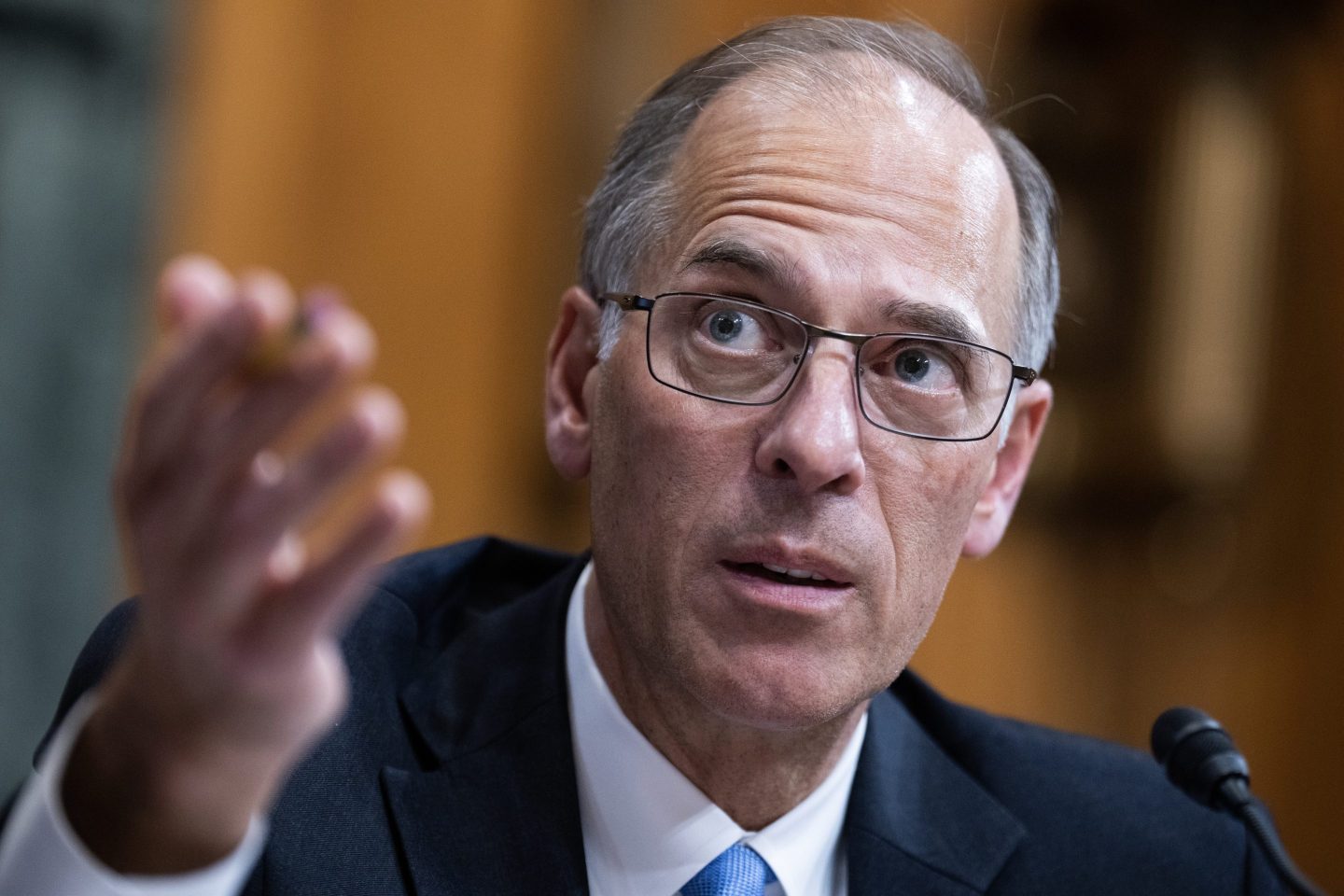
“Refinance application volumes declined sharply again last week, dropping 17%, and are down more than 40% compared to last month,” Mike Fratantoni, MBA’s SVP and chief economist, said in a news release. “Seasonally adjusted purchase application volume also declined over the week, but only by 3%.”
But it’s not all grim news. Fratatoni added:
“The headwinds of higher rates are being offset somewhat by the buyer’s market in many parts of the country—there are more homes for sale than buyers have seen in some time.”
Recent reporting on the housing market from Fortune
Stay informed on what’s happening with housing in the U.S. as well as trends in the economy, with reporting from the Fortune newsroom:
- Gen Z is rewriting the American Dream, and their parents are funding it—using tuition money for down payments, instead
- Gen Z fled San Francisco for Texas and Florida. Now they’re turning ‘welcomer cities’ into the next big tech towns
- Jamie Dimon says the American Dream is ‘slipping out of reach’—and JPMorgan is spending billions to fix it
- Bill Ackman told spooked investors to get over the Iran war and buy Fannie and Freddie. Stocks surged 40% the next day
- The ROAD Act passed by the Senate aims to expand America’s housing supply. It’s likely to shrink it instead
- There are now nearly 50% more home sellers than buyers as mismatch widens to a record 630,000. But it’s only a buyer’s market if you can afford it
- Gen Zers are flocking to these Midwest housing markets where homes are about 30% cheaper than the coasts
Why you should comparison shop
It’s worth applying with multiple lenders to find which will offer the lowest rate and which seems like it can provide the service you’ll expect going forward.
On the savings front, Freddie Mac notes that when interest rates are high, homebuyers who apply with multiple lenders might save $600 to $1,200 per year compared to those who do not.
It’s also smart to shop around and consider different loan types to find the one that serves your situation the best. For example, if your credit score is nearly perfect, you might get a great deal on a conventional mortgage. But if your credit score is under 600, you might be denied for a conventional mortgage but still have a chance at approval for an FHA home loan.
Frequently asked questions
Are a mortgage’s interest rate and APR the same?
They’re related, but not the same. Your APR includes the interest you’ll pay and any fees factored in as well.
What’s a good mortgage rate in April 2026?
We’ve been seeing the average rate for a 30-year, conventional home loan hovering above 6.00% recently. If you get a rate just above 6.00%, that’s pretty good in this market.
Will mortgage rates go down?
Nothing is set in stone. Mortgage rates might go down if the Fed decides on a cut to the federal funds rate in 2026. But additional factors impacting mortgage rates include inflation, the national debt, and demand for home loans.