• Home
  • Latest
  • Fortune 500
  • Finance
  • Tech
  • Leadership
  • Lifestyle
  • Rankings
  • Multimedia

Exclusive

An hour in the Oval Office with President Trump Fortune Editor-in-Chief: Alyson Shontell sat down with President Trump in the Oval Office for an hour. Tariffs, Intel, AI, Boeing, Iran—and the question every CEO eventually has to answer: who's next?

An hour in the Oval Office with President Trump Fortune Editor-in-Chief: Alyson Shontell sat down with President Trump in the Oval Office for an hour. Tariffs, Intel, AI, Boeing, Iran—and the question every CEO eventually has to answer: who's next?

An hour in the Oval Office with President Trump Fortune Editor-in-Chief: Alyson Shontell sat down with President Trump in the Oval Office for an hour. Tariffs, Intel, AI, Boeing, Iran—and the question every CEO eventually has to answer: who's next?

An hour in the Oval Office with President Trump Fortune Editor-in-Chief: Alyson Shontell sat down with President Trump in the Oval Office for an hour. Tariffs, Intel, AI, Boeing, Iran—and the question every CEO eventually has to answer: who's next?

An hour in the Oval Office with President Trump Fortune Editor-in-Chief: Alyson Shontell sat down with President Trump in the Oval Office for an hour. Tariffs, Intel, AI, Boeing, Iran—and the question every CEO eventually has to answer: who's next?

An hour in the Oval Office with President Trump Fortune Editor-in-Chief: Alyson Shontell sat down with President Trump in the Oval Office for an hour. Tariffs, Intel, AI, Boeing, Iran—and the question every CEO eventually has to answer: who's next?

An hour in the Oval Office with President Trump Fortune Editor-in-Chief: Alyson Shontell sat down with President Trump in the Oval Office for an hour. Tariffs, Intel, AI, Boeing, Iran—and the question every CEO eventually has to answer: who's next?

An hour in the Oval Office with President Trump Fortune Editor-in-Chief: Alyson Shontell sat down with President Trump in the Oval Office for an hour. Tariffs, Intel, AI, Boeing, Iran—and the question every CEO eventually has to answer: who's next?

An hour in the Oval Office with President Trump Fortune Editor-in-Chief: Alyson Shontell sat down with President Trump in the Oval Office for an hour. Tariffs, Intel, AI, Boeing, Iran—and the question every CEO eventually has to answer: who's next?

An hour in the Oval Office with President Trump Fortune Editor-in-Chief: Alyson Shontell sat down with President Trump in the Oval Office for an hour. Tariffs, Intel, AI, Boeing, Iran—and the question every CEO eventually has to answer: who's next?

Magazine

An executive risk handbook

Geoff Colvin
By
Geoff Colvin
Geoff Colvin
Senior Editor-at-Large
Down Arrow Button Icon
Geoff Colvin
By
Geoff Colvin
Geoff Colvin
Senior Editor-at-Large
Down Arrow Button Icon
October 3, 2005, 6:00 AM ET
20051003-Katrina-An-Executive-Risk-Handbook
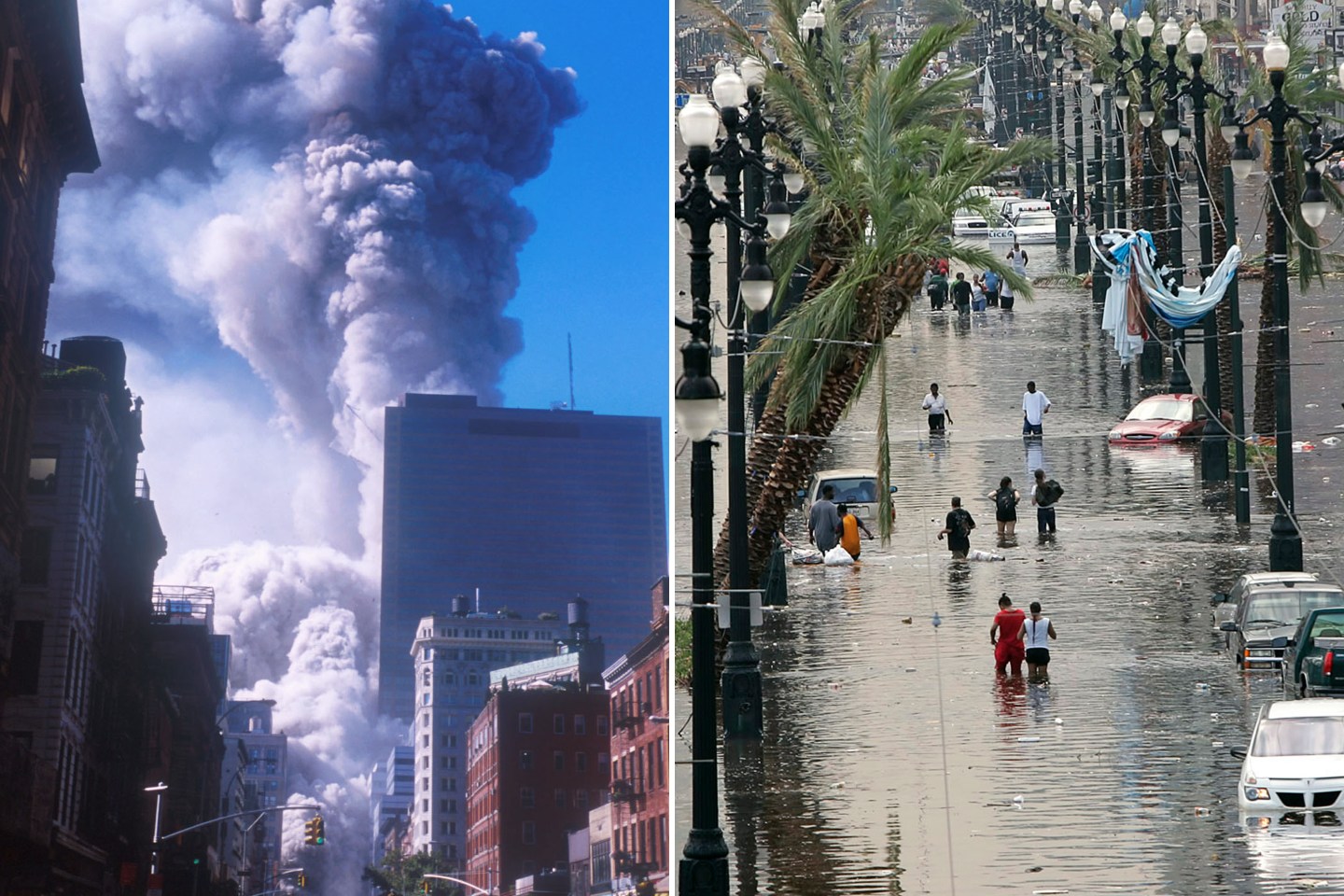
Left: 394273 06: Smoke billows from the World Trade Center's twin towers after they were struck by commercial airliners in a suspected terrorist attack September 11, 2001 in New York City. (Photo by Ezra Shaw/Getty Images) Right: A view of Canal Street that is flooded with water in New Orleans August 30, 2005. The historic city of New Orleans was steadily filling with water from nearby Lake Ponchartrain on Tuesday after its defenses were breached by the ferocity of hurricane Katrina. With the floodwaters rising in many areas, threatening the French Quarter, residents were plucked from the roofs of their homes, bodies were seen floating in the streets and rescuers searched the city in boats and helicopters. REUTERS/Rick Wilking RTW/JKLeft: Ezra Shaw—Getty Images; Right: Rick Wilking—Reuters

The tallest building in New Orleans, 51 evacuated floors of very expensive office space, is known as 1 Shell Square, because Shell Oil has so many of its operations headquartered there. Shell is famous for popularizing the corporate use of a technique called scenario planning to anticipate dangerous occurrences—and now it has been forced out of its own building by just such an event.

Ironic? Not really. Like most big companies, Shell has a contingency plan for physical disasters, which it implemented when Katrina hit, and no fancy scenarios were required to figure it all out. Far from being the kind of out there event that scenario planning is designed to reveal, a major hurricane making landfall at New Orleans was the most predictable and predicted disaster in recent memory. You can’t stop such an event, you can only deal with it, which Shell (like most major companies affected) is managing to do.

The larger point is that while Katrina was a monster among storms, it was a pipsqueak in the realm of risk analysis. The most important thing for managers to realize about Katrina is this: If it gets you thinking more intensively about risk, that’s great—but it is exactly the wrong kind of risk for you to focus on.

Understanding corporate risk has become a legitimate discipline in the past decade, with thousands of companies adopting “risk management” programs and hundreds appointing chief risk officers. To the CEOs who’ve done those things: Bravo—you realize that risk is one of the most powerful factors driving your stock price, and you were probably stunned when you confronted the total amount of risk your company faces. What amazes me is how many companies still don’t take full advantage of what risk management has taught us—specifically, five lessons that every company could apply to better understand and control its risks.

1. Turbocharge your imagination.

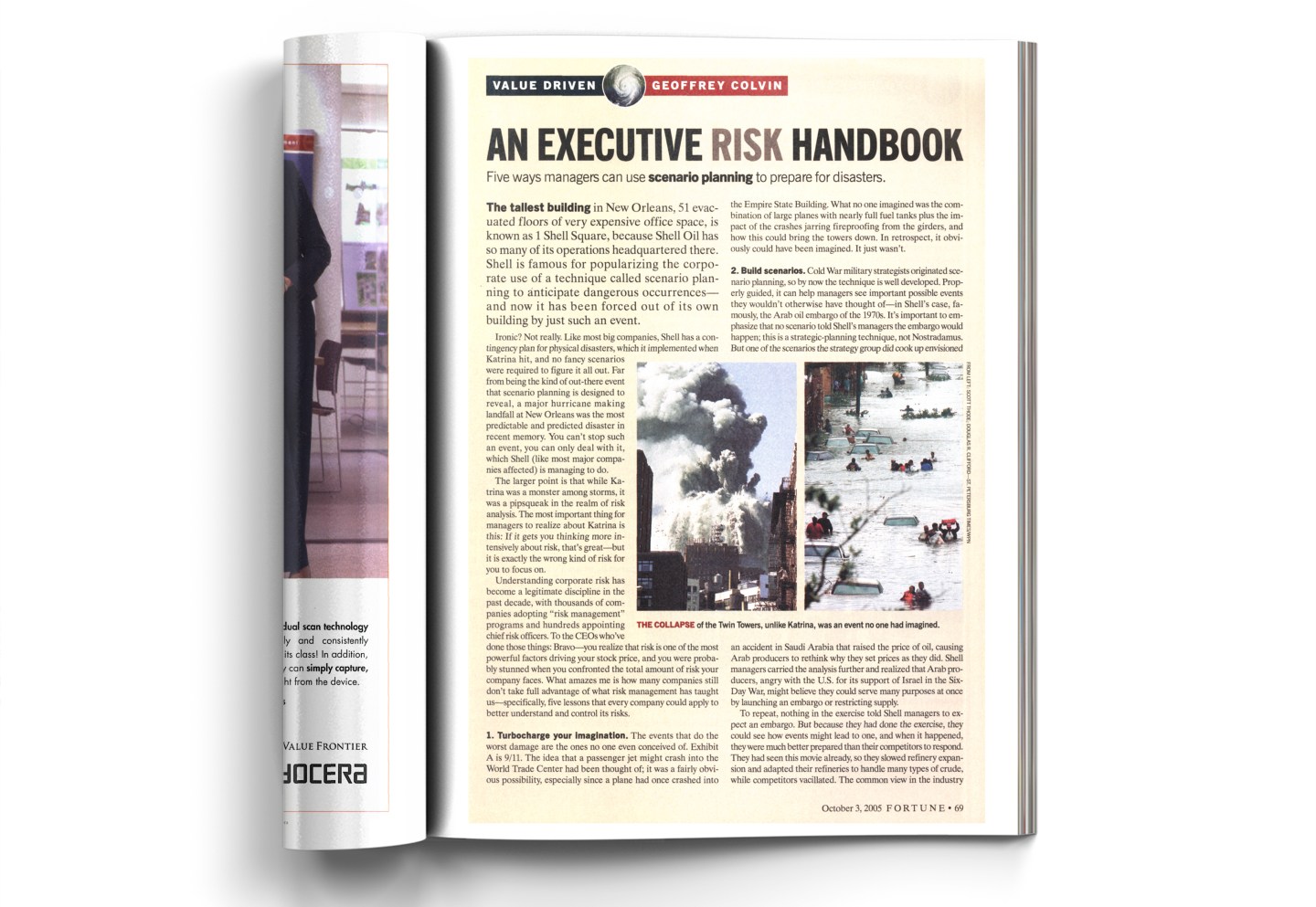
The events that do the worst damage are the ones no one even conceived of. Exhibit A is 9/11. The idea that a passenger jet might crash into the World Trade Center had been thought of; it was a fairly obvious possibility, especially since a plane had once crashed into the Empire State Building. What no one imagined was the combination of large planes with nearly full fuel tanks plus the impact of the crashes jarring fireproofing from the girders, and how this could bring the towers down. In retrospect, it obviously could have been imagined. It just wasn’t.
20051003-Katrina-Pg.-69
Fortune

2. Build scenarios.

Cold War military strategists originated scenario planning, so by now the technique is well developed. Properly guided, it can help managers see important possible events they wouldn’t otherwise have thought of—in Shell’s case, famously, the Arab oil embargo of the 1970s. It’s important to emphasize that no scenario told Shell’s managers the embargo would happen; this is a strategic-planning technique, not Nostradamus. But one of the scenarios the strategy group did cook up envisioned an accident in Saudi Arabia that raised the price of oil, causing Arab producers to rethink why they set prices as they did. Shell managers carried the analysis further and realized that Arab producers, angry with the U.S. for its support of Israel in the SixDay War, might believe they could serve many purposes at once by launching an embargo or restricting supply.

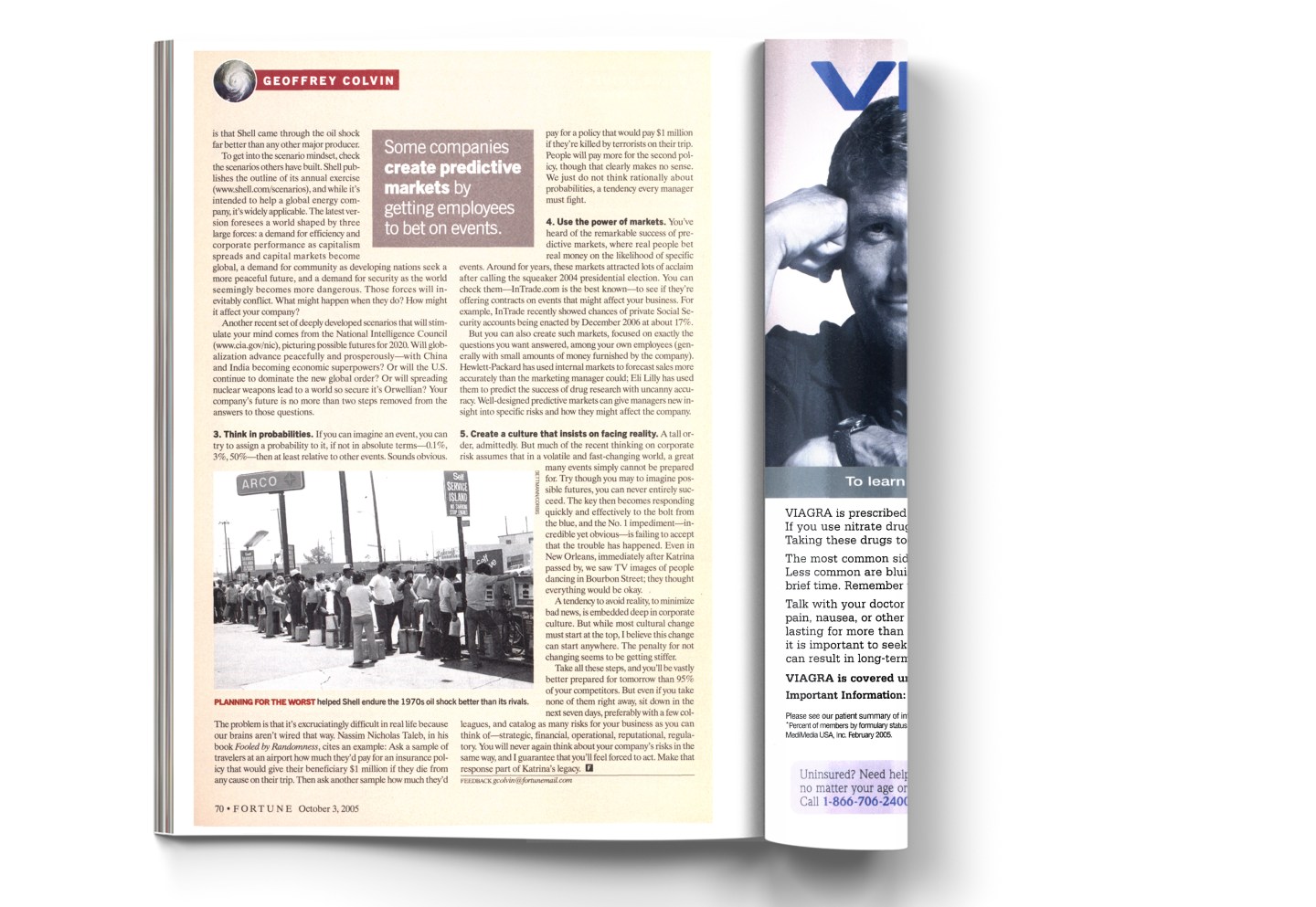
To repeat, nothing in the exercise told Shell managers to expect an embargo. But because they had done the exercise, they could see how events might lead to one, and when it happened, they were much better prepared than their competitors to respond. They had seen this movie already, so they slowed refinery expansion and adapted their refineries to handle many types of crude, while competitors vacillated. The common view in the industry is that Shell came through the oil shock far better than any other major producer.

To get into the scenario mindset, check the scenarios others have built. Shell publishes the outline of its annual exercise, and while it’s intended to help a global energy company, it’s widely applicable. The latest version foresees a world shaped by three large forces: a demand for efficiency and corporate performance as capitalism spreads and capital markets become global, a demand for community as developing nations seek a more peaceful future, and a demand for security as the world seemingly becomes more dangerous. Those forces will inevitably conflict. What might happen when they do? How might it affect your company?

Another recent set of deeply developed scenarios that will stimulate your mind comes from the National Intelligence Council, picturing possible futures for 2020. Will globalization advance peacefully and prosperously with China and India becoming economic superpowers? Or will the U.S. continue to dominate the new global order? Or will spreading nuclear weapons lead to a world so secure it’s Orwellian? Your company’s future is no more than two steps removed from the answers to those questions.
20051003-Katrina-Pg.-70
Fortune

3. Think in probabilities.

If you can imagine an event, you can try to assign a probability to it, if not in absolute terms—0.1%, 3%, 50%—then at least relative to other events. Sounds obvious.

The problem is that it’s excruciatingly difficult in real life because our brains aren’t wired that way. Nassim Nicholas Taleb, in his book Fooled by Randomness, cites an example: Ask a sample of travelers at an airport how much they’d pay for an insurance policy that would give their beneficiary $1 million if they die from any cause on their trip. Then ask another sample how much they’d pay for a policy that would pay $1 million if they’re killed by terrorists on their trip. People will pay more for the second policy, though that clearly makes no sense. We just do not think rationally about probabilities, a tendency every manager must fight.

4. Use the power of markets.

You’ve heard of the remarkable success of predictive markets, where real people bet real money on the likelihood of specific events. Around for years, these markets attracted lots of acclaim after calling the squeaker 2004 presidential election. You can check them—InTrade.com is the best known—to see if they’re offering contracts on events that might affect your business. For example, InTrade recently showed chances of private Social Security accounts being enacted by December 2006 at about 17%.

Some companies create predictive markets by getting employees to bet on events.

But you can also create such markets, focused on exactly the questions you want answered, among your own employees (generally with small amounts of money furnished by the company). Hewlett-Packard has used internal markets to forecast sales more accurately than the marketing manager could; Eli Lilly has used them to predict the success of drug research with uncanny accuracy. Well-designed predictive markets can give managers new insight into specific risks and how they might affect the company.

5. Create a culture that insists on facing reality.

A tall order, admittedly. But much of the recent thinking on corporate risk assumes that in a volatile and fast-changing world, a great many events simply cannot be prepared for. Try though you may to imagine possible futures, you can never entirely succeed. The key then becomes responding quickly and effectively to the bolt from the blue, and the No. 1 impediment—incredible yet obvious—is failing to accept that the trouble has happened. Even in New Orleans, immediately after Katrina passed by, we saw TV images of people dancing in Bourbon Street; they thought everything would be okay.

A tendency to avoid reality, to minimize bad news, is embedded deep in corporate culture. But while most cultural change must start at the top, I believe this change can start anywhere. The penalty for not changing seems to be getting stiffer.

Take all these steps, and you’ll be vastly better prepared for tomorrow than 95% of your competitors. But even if you take none of them right away, sit down in the next seven days, preferably with a few colleagues, and catalog as many risks for your business as you can think of—strategic, financial, operational, reputational, regulatory. You will never again think about your company’s risks in the same way, and I guarantee that you’ll feel forced to act. Make that response part of Katrina’s legacy.

A version of this article appears in the Oct. 3, 2005 issue of Fortune.

The Fortune Archives newsletter unearths the Fortune stories that have had a lasting impact on business and culture between 1930 and today. Subscribe to receive it for free in your inbox every Sunday morning.
About the Author
Geoff Colvin
By Geoff ColvinSenior Editor-at-Large
LinkedIn iconTwitter icon

Geoff Colvin is a senior editor-at-large at Fortune, covering leadership, globalization, wealth creation, the infotech revolution, and related issues.

See full bioRight Arrow Button Icon

Latest from the Magazine

Finance
Lorem ipsum dolor sit amet, consectetur adipiscing elit, sed do eiusmod tempor incididunt ut labore et dolore magna aliqua. Ut enim ad minim veniam
By Fortune Editors
October 20, 2025
Finance
Lorem ipsum dolor sit amet, consectetur adipiscing elit, sed do eiusmod tempor incididunt ut labore et dolore magna aliqua. Ut enim ad minim veniam
By Fortune Editors
October 20, 2025
Finance
Lorem ipsum dolor sit amet, consectetur adipiscing elit, sed do eiusmod tempor incididunt ut labore et dolore magna aliqua. Ut enim ad minim veniam
By Fortune Editors
October 20, 2025
Finance
Lorem ipsum dolor sit amet, consectetur adipiscing elit, sed do eiusmod tempor incididunt ut labore et dolore magna aliqua. Ut enim ad minim veniam
By Fortune Editors
October 20, 2025
Finance
Lorem ipsum dolor sit amet, consectetur adipiscing elit, sed do eiusmod tempor incididunt ut labore et dolore magna aliqua. Ut enim ad minim veniam
By Fortune Editors
October 20, 2025
Finance
Lorem ipsum dolor sit amet, consectetur adipiscing elit, sed do eiusmod tempor incididunt ut labore et dolore magna aliqua. Ut enim ad minim veniam
By Fortune Editors
October 20, 2025

Most Popular

Finance
Lorem ipsum dolor sit amet, consectetur adipiscing elit, sed do eiusmod tempor incididunt ut labore et dolore magna aliqua. Ut enim ad minim veniam
By Fortune Editors
October 20, 2025
Finance
Lorem ipsum dolor sit amet, consectetur adipiscing elit, sed do eiusmod tempor incididunt ut labore et dolore magna aliqua. Ut enim ad minim veniam
By Fortune Editors
October 20, 2025
Finance
Lorem ipsum dolor sit amet, consectetur adipiscing elit, sed do eiusmod tempor incididunt ut labore et dolore magna aliqua. Ut enim ad minim veniam
By Fortune Editors
October 20, 2025
Finance
Lorem ipsum dolor sit amet, consectetur adipiscing elit, sed do eiusmod tempor incididunt ut labore et dolore magna aliqua. Ut enim ad minim veniam
By Fortune Editors
October 20, 2025
Finance
Lorem ipsum dolor sit amet, consectetur adipiscing elit, sed do eiusmod tempor incididunt ut labore et dolore magna aliqua. Ut enim ad minim veniam
By Fortune Editors
October 20, 2025
Finance
Lorem ipsum dolor sit amet, consectetur adipiscing elit, sed do eiusmod tempor incididunt ut labore et dolore magna aliqua. Ut enim ad minim veniam
By Fortune Editors
October 20, 2025
Fortune Secondary Logo
Rankings
  • 100 Best Companies
  • Fortune 500
  • Global 500
  • Fortune 500 Europe
  • Most Powerful Women
  • World's Most Admired Companies
  • See All Rankings
  • Lists Calendar
Sections
  • Finance
  • Fortune Crypto
  • Features
  • Leadership
  • Health
  • Commentary
  • Success
  • Retail
  • Mpw
  • Tech
  • Lifestyle
  • CEO Initiative
  • Asia
  • Politics
  • Conferences
  • Europe
  • Newsletters
  • Personal Finance
  • Environment
  • Magazine
  • Education
Customer Support
  • Frequently Asked Questions
  • Customer Service Portal
  • Privacy Policy
  • Terms Of Use
  • Single Issues For Purchase
  • International Print
Commercial Services
  • Advertising
  • Fortune Brand Studio
  • Fortune Analytics
  • Fortune Conferences
  • Business Development
  • Group Subscriptions
About Us
  • About Us
  • Press Center
  • Work At Fortune
  • Terms And Conditions
  • Site Map
  • About Us
  • Press Center
  • Work At Fortune
  • Terms And Conditions
  • Site Map
  • Facebook icon
  • Twitter icon
  • LinkedIn icon
  • Instagram icon
  • Pinterest icon

Latest from the Magazine

High gas prices are just the beginning: How the Iran war is changing the global energy map
MagazineIran
High gas prices are just the beginning: How the Iran war is changing the global energy map
By Jordan BlumMay 19, 2026
9 hours ago
Anduril CEO Brian Schimpf
MagazineDefense
Inside Anduril: Meet the quiet engineer-CEO building America’s $31 billion weapons startup
By Allie GarfinkleMay 6, 2026
13 days ago
A Michigan farm town voted down plans for a giant OpenAI-Oracle data center. Weeks later, construction began
MagazineData centers
A Michigan farm town voted down plans for a giant OpenAI-Oracle data center. Weeks later, construction began
By Sharon GoldmanMay 6, 2026
13 days ago
The American Express CEO defied haters who said he’d never have the top job—winning with millennials and Gen Z and trouncing the competition
MagazineAmerican Express
The American Express CEO defied haters who said he’d never have the top job—winning with millennials and Gen Z and trouncing the competition
By Shawn TullyMay 6, 2026
13 days ago
Photo of Marc Benioff
Magazinecommunication
Salesforce CEO Marc Benioff turned his earnings call into a vodcast. Why other Fortune 500 CEOs might follow
By Rachel VentrescaMay 6, 2026
13 days ago
A top Blackstone executive is becoming an unlikely LinkedIn star thanks to his running videos
Magazinecommunication
A top Blackstone executive is becoming an unlikely LinkedIn star thanks to his running videos
By Rachel VentrescaApril 21, 2026
28 days ago

Most Popular

While Trump insisted the Iran war would end ‘soon,’ an account in his name was buying millions in oil, defense and gold
Economy
While Trump insisted the Iran war would end ‘soon,’ an account in his name was buying millions in oil, defense and gold
By Eva RoytburgMay 18, 2026
21 hours ago
The Bezos family just donated $100 million to help achieve one of Mayor Zohran Mamdani’s top campaign promises
Politics
The Bezos family just donated $100 million to help achieve one of Mayor Zohran Mamdani’s top campaign promises
By Jake AngeloMay 12, 2026
7 days ago
Current price of oil as of May 18, 2026
Personal Finance
Current price of oil as of May 18, 2026
By Joseph HostetlerMay 18, 2026
1 day ago
EXCLUSIVE: An hour in the Oval Office with the CEO-in-Chief, President Trump
Politics
EXCLUSIVE: An hour in the Oval Office with the CEO-in-Chief, President Trump
By Alyson ShontellMay 18, 2026
1 day ago
Spirit Airlines apologizes to all the Americans who can't afford any summer vacation flights as it shuts down
Travel & Leisure
Spirit Airlines apologizes to all the Americans who can't afford any summer vacation flights as it shuts down
By Rio Yamat and The Associated PressMay 18, 2026
1 day ago
Current price of silver as of Monday, May 18, 2026
Personal Finance
Current price of silver as of Monday, May 18, 2026
By Joseph HostetlerMay 18, 2026
1 day ago

© 2026 Fortune Media IP Limited. All Rights Reserved. Use of this site constitutes acceptance of our Terms of Use and Privacy Policy | CA Notice at Collection and Privacy Notice | Do Not Sell/Share My Personal Information
FORTUNE is a trademark of Fortune Media IP Limited, registered in the U.S. and other countries. FORTUNE may receive compensation for some links to products and services on this website. Offers may be subject to change without notice.