• Home
  • Latest
  • Fortune 500
  • Finance
  • Tech
  • Leadership
  • Lifestyle
  • Rankings
  • Multimedia

Exclusive

An hour in the Oval Office with President Trump.

An hour in the Oval Office with President Trump.

An hour in the Oval Office with President Trump.

An hour in the Oval Office with President Trump.

An hour in the Oval Office with President Trump.

An hour in the Oval Office with President Trump.

An hour in the Oval Office with President Trump.

An hour in the Oval Office with President Trump.

An hour in the Oval Office with President Trump.

An hour in the Oval Office with President Trump.

Russia
Europe

The sad legacy of Russian orphans lies behind Putin’s troops kidnapping tens of thousands of Ukrainian children

By
Clementine Fujimura
Clementine Fujimura
and
The Conversation
The Conversation
Down Arrow Button Icon
By
Clementine Fujimura
Clementine Fujimura
and
The Conversation
The Conversation
Down Arrow Button Icon
July 7, 2023, 10:09 AM ET
Vladimir Putin and child
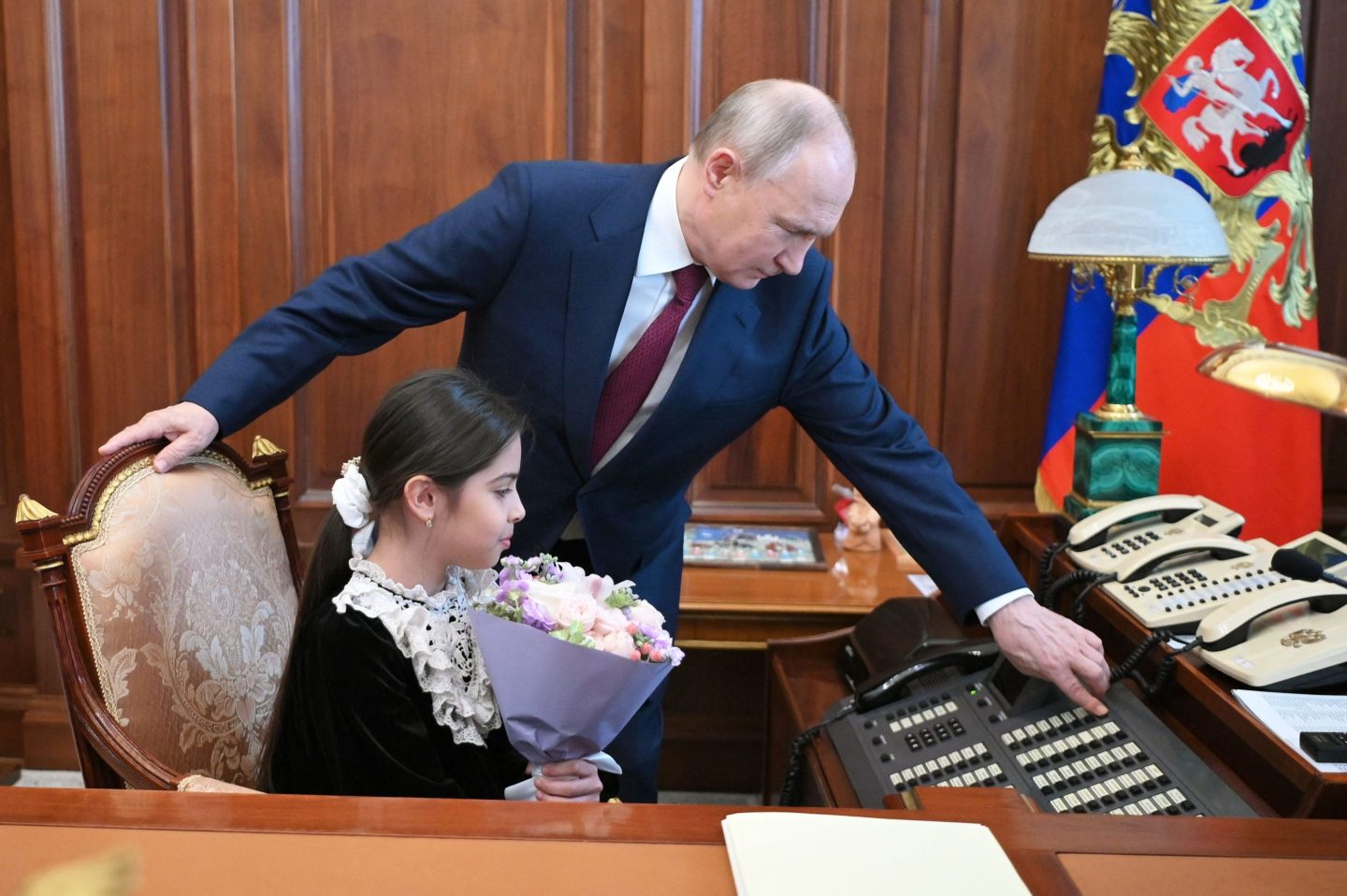
Russian President Vladimir Putin meets with Raisat Akipova, an 8-year-old girl from Derbent, at the Kremlin in Moscow on July 4, 2023. Alexander Kazakov—SPUTNIK/AFP/Getty Images

Since Russia launched a full-scale invasion of Ukraine in February 2022, Russian soldiers have forcibly taken an estimated 16,000 Ukrainian children to Russia. Over 300 children have since returned home, but it is not clear what happened to most of the rest.

Recommended Video

The mass abductions led prosecutors at the International Criminal Court to issue arrest warrants in March 2023 for Russian President Vladimir Putin and Russia’s children’s rights commissioner, Maria Lvova-Belova. Moscow counters that the children it has brought to Russia – its estimates are as many as 744,000 Ukrainian children – have been evacuated from conflict zones.

I am an anthropologist who studies marginalized communities, including youth subcultures in Russia and other places, including the United States and parts of Europe.

The kidnapping of Ukrainian children offers a reminder of how Putin and other Russian leaders have historically used children as pawns in international politics.

A Soviet promise to children

I explore the lives of homeless and abandoned Russian children, including kids in orphanages and other similar institutions in Moscow, in my 2005 co-authored book, “Russia’s Abandoned Children: An Intimate Understanding.”

My research included numerous trips to Russian orphanages between 1990 and 2000, as well as time spent living and volunteering in an orphanage and shelter for babies.

It’s helpful to understand that before the Soviet Union collapsed in 1991, the Soviet government presented a myth that all children – including those in institutions – would receive excellent care. The Soviet government promised these children that their futures were promising and that they would receive an education and have help getting a job.

Other than adults who worked in these Soviet orphanages or psychiatric hospitals, no one was allowed to see what went on inside.

The myth of these orphaned children’s perfect childhood calmed citizens’ potential concerns, my research shows.

However, the public began to realize Russian orphans’ plight once the Soviet Union broke apart. Orphans and otherwise abandoned children in orphanages began to escape the institutions when possible. They formed their own version of kinship groups, gathering on city streets and in underground train stations.

I discovered in my research that many abandoned children preferred being homeless to living in orphanages.

This trend of youth vagrancy became a sore spot for the Russian government, as it tried to grow its economy and rebrand itself in the West.

Russia’s struggle to care for kids

Russia’s decision to end adoptions to American families in 2012 offers another example of how the Russian government has used children for nefarious purposes in the past few decades.

The Russian government first opened the doors for international adoption in 1991. Citizens from the U.S. and other Western countries eagerly responded, welcoming the new openness of Russia.

This helped boost Russia’s image in the West as a kinder country than it was during the Cold War. At the time, around 371,700 Russian children were growing up in state institutions. Most of these kids had at least one living parent.

In some cases, government deemed some parents unfit for the job and moved the kids to an institution.

U.S. citizens adopted more than 60,000 Russian orphans from the early 1990s until 2013.

During my time spent with teachers, doctors and children in Russian orphanages and shelters, it was clear that Russia struggled to care for abandoned and otherwise institutionalized children, including those taken from parents.

There were also widespread reports of the children being neglected and mistreated.

In the orphanage I studied, children did not eat fresh fruits and vegetables, and the caretakers often lamented the food’s lack of nutritional value. I was asked to bring vitamins, diaper rash cream and other basic necessities.

The fact that the Russian government could not handle its orphans was a source of embarrassment. Putin, who served as president from 2000 through 2008 and again starting in 2012, saw the need to change the narrative of the poor Russian orphan, if only for the sake of the country’s public image.

‘It’s hard to believe’

In 2008, a Russian toddler born with the name Dima Yakovlev died of heatstroke while left unattended in his adoptive father’s parked car in the Washington, D.C., area.

This news made international headlines. Some Russian officials pointed out the lack of oversight and abuse that adopted Russian children experienced in the U.S. This narrative helped weaken the U.S. in the eyes of Russian citizens, thereby strengthening the image of the Russian government.

“When we give our children to the West and they die, for some reason the West always tells us it was just an accident,” Russian politician Tatyana Yakovleva reportedly said in 2009. “It’s hard to believe.”

This case and other news stories about a few U.S. adoptive families treating Russian children poorly coincided with another political controversy.

Russian police arrested attorney Sergei Magnitsky on questionable grounds. Magnitsky had uncovered a tax fraud worth US$230 million. Magnitsky died while in custody in 2009, before he could stand trial.

In 2012, the U.S. Congress approved new legislation, called the Magnitsky Act, which identifies and imposes sanctions on Russian officials who are accused of human rights violations.

A halt to adoptions

In 2012, Putin signed the law banning international adoptions to the U.S.

Putin’s law, which went into effect in early 2013, halted thousands of adoptions already in progress with American families.

U.S. scholars and journalists have argued that Putin’s adoption ban was a direct retaliation to the Magnitsky Act and was not about Putin’s concern for Russian orphans. Putin promised to improve the Russian child welfare system in 2013. Some outside analysis by groups like the World Bank have documented positive changes at Russian institutions for children, such as more funding. But there remain challenges – including the fact that Russia has a much higher rate of institutionalized children than other middle- to high-income countries.

A similar playbook

In the face of evolving battlefield failures in Ukraine, Putin has pivoted to a familiar playbook of using and abusing children, continuing to call for the “evacuation” of Ukrainian children, both from Ukrainian orphanages and from their families. These children are being moved to Russian orphanages and camps, where they learn how to be Russian.

In order to become citizens of Russia, these children have been forced to abandon their Ukrainian heritage, both physically and mentally, and to get a new education in Russian propaganda and history.

Russian citizens, in turn, are once again presented with the myth that children in Ukraine are being saved from the war and offered a better life.

But for Ukrainian families and orphanage staff involved, these abductions amount to a form of torture, with parents and caretakers clamoring to find their children and bring them home.

Clementine Fujimura is Professor of Anthropology, Area Studies and Russian, United States Naval Academy.

This article is republished from The Conversation under a Creative Commons license. Read the original article.


Join us at the Fortune Workplace Innovation Summit May 19–20, 2026, in Atlanta. The next era of workplace innovation is here—and the old playbook is being rewritten. At this exclusive, high-energy event, the world’s most innovative leaders will convene to explore how AI, humanity, and strategy converge to redefine, again, the future of work. Register now.
About the Authors
By Clementine Fujimura
See full bioRight Arrow Button Icon
By The Conversation
See full bioRight Arrow Button Icon

Latest in

Finance
Lorem ipsum dolor sit amet, consectetur adipiscing elit, sed do eiusmod tempor incididunt ut labore et dolore magna aliqua. Ut enim ad minim veniam
By Fortune Editors
October 20, 2025
Finance
Lorem ipsum dolor sit amet, consectetur adipiscing elit, sed do eiusmod tempor incididunt ut labore et dolore magna aliqua. Ut enim ad minim veniam
By Fortune Editors
October 20, 2025
Finance
Lorem ipsum dolor sit amet, consectetur adipiscing elit, sed do eiusmod tempor incididunt ut labore et dolore magna aliqua. Ut enim ad minim veniam
By Fortune Editors
October 20, 2025
Finance
Lorem ipsum dolor sit amet, consectetur adipiscing elit, sed do eiusmod tempor incididunt ut labore et dolore magna aliqua. Ut enim ad minim veniam
By Fortune Editors
October 20, 2025
Finance
Lorem ipsum dolor sit amet, consectetur adipiscing elit, sed do eiusmod tempor incididunt ut labore et dolore magna aliqua. Ut enim ad minim veniam
By Fortune Editors
October 20, 2025
Finance
Lorem ipsum dolor sit amet, consectetur adipiscing elit, sed do eiusmod tempor incididunt ut labore et dolore magna aliqua. Ut enim ad minim veniam
By Fortune Editors
October 20, 2025

Most Popular

Finance
Lorem ipsum dolor sit amet, consectetur adipiscing elit, sed do eiusmod tempor incididunt ut labore et dolore magna aliqua. Ut enim ad minim veniam
By Fortune Editors
October 20, 2025
Finance
Lorem ipsum dolor sit amet, consectetur adipiscing elit, sed do eiusmod tempor incididunt ut labore et dolore magna aliqua. Ut enim ad minim veniam
By Fortune Editors
October 20, 2025
Finance
Lorem ipsum dolor sit amet, consectetur adipiscing elit, sed do eiusmod tempor incididunt ut labore et dolore magna aliqua. Ut enim ad minim veniam
By Fortune Editors
October 20, 2025
Finance
Lorem ipsum dolor sit amet, consectetur adipiscing elit, sed do eiusmod tempor incididunt ut labore et dolore magna aliqua. Ut enim ad minim veniam
By Fortune Editors
October 20, 2025
Finance
Lorem ipsum dolor sit amet, consectetur adipiscing elit, sed do eiusmod tempor incididunt ut labore et dolore magna aliqua. Ut enim ad minim veniam
By Fortune Editors
October 20, 2025
Finance
Lorem ipsum dolor sit amet, consectetur adipiscing elit, sed do eiusmod tempor incididunt ut labore et dolore magna aliqua. Ut enim ad minim veniam
By Fortune Editors
October 20, 2025
Fortune Secondary Logo
Rankings
  • 100 Best Companies
  • Fortune 500
  • Global 500
  • Fortune 500 Europe
  • Most Powerful Women
  • World's Most Admired Companies
  • See All Rankings
  • Lists Calendar
Sections
  • Finance
  • Fortune Crypto
  • Features
  • Leadership
  • Health
  • Commentary
  • Success
  • Retail
  • Mpw
  • Tech
  • Lifestyle
  • CEO Initiative
  • Asia
  • Politics
  • Conferences
  • Europe
  • Newsletters
  • Personal Finance
  • Environment
  • Magazine
  • Education
Customer Support
  • Frequently Asked Questions
  • Customer Service Portal
  • Privacy Policy
  • Terms Of Use
  • Single Issues For Purchase
  • International Print
Commercial Services
  • Advertising
  • Fortune Brand Studio
  • Fortune Analytics
  • Fortune Conferences
  • Business Development
  • Group Subscriptions
About Us
  • About Us
  • Press Center
  • Work At Fortune
  • Terms And Conditions
  • Site Map
  • About Us
  • Press Center
  • Work At Fortune
  • Terms And Conditions
  • Site Map
  • Facebook icon
  • Twitter icon
  • LinkedIn icon
  • Instagram icon
  • Pinterest icon

© 2026 Fortune Media IP Limited. All Rights Reserved. Use of this site constitutes acceptance of our Terms of Use and Privacy Policy | CA Notice at Collection and Privacy Notice | Do Not Sell/Share My Personal Information
FORTUNE is a trademark of Fortune Media IP Limited, registered in the U.S. and other countries. FORTUNE may receive compensation for some links to products and services on this website. Offers may be subject to change without notice.


Latest in

charlie
CommentarySoftware
Anaplan CEO: AI isn’t eating software. It’s sorting it
By Charlie GottdienerMay 18, 2026
16 minutes ago
Wallet makers are the quiet backbone of the crypto industry. Now they want to be banks
NewslettersFortune Crypto
Wallet makers are the quiet backbone of the crypto industry. Now they want to be banks
By Jeff John RobertsMay 18, 2026
35 minutes ago
President Donald Trump speaks in front of the American flag to the press as he departs the White House on May 12, 2026 in Washington, DC.
EconomyPolitics
President Trump says the White House’s dealmaking era ends with him: ‘It’s not going to happen again’
By Eleanor PringleMay 18, 2026
1 hour ago
Carl Fritjofsson smiles in a blue t-shirt
Startups & VentureTerm Sheet
The AI boom is pulling Europe’s hottest startups to the U.S.—whether they planned to move or not
By Lily Mae LazarusMay 18, 2026
1 hour ago
Trump’s leadership model has a succession problem
C-SuiteNext to Lead
Trump’s leadership model has a succession problem
By Ruth UmohMay 18, 2026
2 hours ago
The top high-yield savings rates: Up to 5.00% on May 18, 2026
Personal FinanceSavings accounts
The top high-yield savings rates: Up to 5.00% on May 18, 2026
By Glen Luke FlanaganMay 18, 2026
2 hours ago

Most Popular

Microsoft AI chief gives it 18 months—for all white-collar work to be automated by AI
AI
Microsoft AI chief gives it 18 months—for all white-collar work to be automated by AI
By Jake AngeloMay 16, 2026
2 days ago
The top foreign holders of U.S. debt may soon dump Treasury bonds and bring their money back home, potentially spiking borrowing costs
Economy
The top foreign holders of U.S. debt may soon dump Treasury bonds and bring their money back home, potentially spiking borrowing costs
By Jason MaMay 17, 2026
18 hours ago
The Bezos family just donated $100 million to help achieve one of Mayor Zohran Mamdani’s top campaign promises
Politics
The Bezos family just donated $100 million to help achieve one of Mayor Zohran Mamdani’s top campaign promises
By Jake AngeloMay 12, 2026
6 days ago
'No one was coming to save me': How Reese Witherspoon built a $900 million company from a problem Hollywood wouldn't fix
Success
'No one was coming to save me': How Reese Witherspoon built a $900 million company from a problem Hollywood wouldn't fix
By Sydney LakeMay 17, 2026
1 day ago
Former top Russian official admits the country is over Putin and can 'imagine a future without him' — even elites bail as Kremlin seizes their assets 
Politics
Former top Russian official admits the country is over Putin and can 'imagine a future without him' — even elites bail as Kremlin seizes their assets 
By Jason MaMay 16, 2026
2 days ago
SpaceX heads into a record-shattering IPO with the 'deepest moat that exists today' as investors vow to 'never bet against Elon'
Innovation
SpaceX heads into a record-shattering IPO with the 'deepest moat that exists today' as investors vow to 'never bet against Elon'
By Jason MaMay 16, 2026
2 days ago