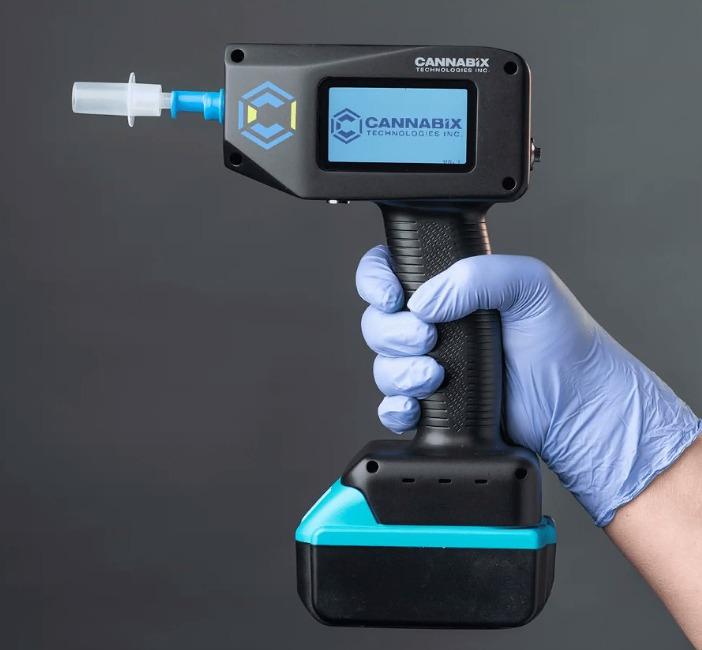
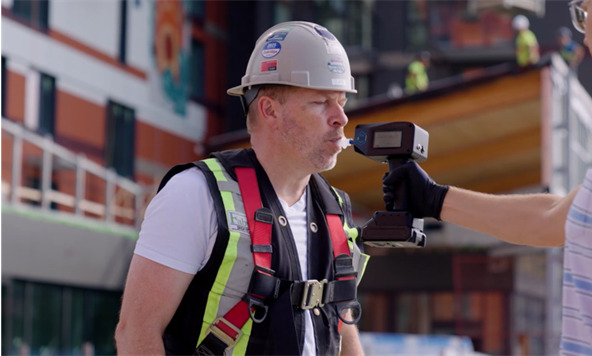
VANCOUVER, Canada, March 24, 2026 (EZ Newswire) -- Cannabix Technologies Inc. (CSE: BLO) (OTC: BLOZF), a developer of the Marijuana Breath Test (“MBT”) system for law enforcement and workplace applications, along with Omega Laboratories, announce significant progress in the development and validation of a portable breath-based THC collection and laboratory analysis method for more accurate assessment of recent marijuana use. As laws regarding marijuana shift across North America and beyond, the discussion around ensuring responsible use has moved from “if” to “how.” Yet amid regulatory changes and evolving public attitudes, a critical question remains unresolved: how do we know when someone is actually under the influence?
Current drug testing methods like oral fluid, urine, or hair are not designed to answer this. While they can confirm marijuana use days, weeks, or even months after consumption, they offer no clear picture of impairment in the moment. The only method currently available would be to utilize blood which would be highly invasive. This mismatch poses growing challenges for employers, law enforcement, and public safety policymakers. In a world where cannabis is legal but operating heavy machinery while high is not, the distinction between past use and present influence isn’t just important it’s essential.
The Science of Recency: A Complex Puzzle
Unlike alcohol, which metabolizes in predictable curves, is very volatile, and can be breath-tested with relative precision, tetrahydrocannabinol (THC), the primary psychoactive compound in cannabis behaves differently. It's fat-soluble, meaning it can remain detectable in the body long after its intoxicating effects have worn off. This makes conventional drug tests ill-suited for scenarios where the timing of consumption matters.
“There’s a clear need for tools that don’t just detect marijuana,” says Bryan Loree, CFO and Director at Cannabix Technologies. “We need tools that can detect recent use ideally within a few hours.”
Cannabix has developed a breath-based collection device to be used with laboratory-based mass spectrometry analysis, which aims to address this challenge. By focusing on detecting delta-9 THC specifically within a time window that aligns with psychoactive effects, the company is contributing to a new approach in marijuana testing designed for more relevant assessment of recent use.
From Lab to Real World Device and Results: Engineering a Breath Detection Breakthrough
Solving the recency problem isn’t just a matter of building a new gadget; it requires novel science. The challenge lies in isolating THC in exhaled breath, where concentrations are extremely low measured in picograms (trillionths of a gram) and non-volatile.