Julie Gibson Clark doesn’t use expensive medical treatments, gadgets, or a team of scientists to “biohack” her age. She sticks to a vegetable-rich diet, exercises, and meditates. Her biggest health expenditures are a $27-a-month gym membership and a $79-a-month supplement subscription.
So the 55-year-old single mom in Phoenix was surprised to learn she ranks at No. 2 on the worldwide leaderboard of an online competitive longevity game, the Rejuvenation Olympics, which tracks and ranks about 4,000 participants’ pace of what’s sometimes called “biological” aging. It’s based on epigenetic DNA tests—which give an insight into how environment and lifestyle can influence how people’s genes work. Clark ages at 0.665 of a year for every additional chronological year, according to her most recent test, which takes into account the average of participants’ pace of aging scores after six months or more.
Clark is ahead of one of the country’s most famous biohackers on the leaderboard examining these averages: Bryan Johnson, the multimillionaire biotech entrepreneur who spends a reported $2 million a year on a reverse-aging regimen that includes dozens of pills a day and a team of 30 doctors, cocreated the leaderboard. He is currently in sixth place.
As the longevity market takes off—it’s now valued at over $26 billion and predicted to almost double in less than a decade—a proliferation of boutique health care clinics offering full-body scans, preventive medicine advice, supplement subscriptions, and exercise regimens have popularized the preoccupation with longevity beyond the niche that has long been obsessed with it in Silicon Valley. The denizens of this booming high-end health care sector have skewed male—but women’s numbers and influence are growing.
Fortune interviewed several of the women succeeding in staving off the effects of aging, and found that many of them rejected the term and concept of “biohacking.” They described how they are defining longevity goals in their own terms—often as an extension of holistic approaches to health. Some are driven by feeling shut out of traditional medicine and research, and led to take their health into their own hands. And many say they’re motivated by a desire to stick around for those they love and care for.
“Like brushing your teeth”
Clark has neither the time nor the resources to go to the lengths of the tech world’s famous biohackers—former Twitter CEO Jack Dorsey reportedly meditates two hours a day, walks five miles, and takes daily saunas and ice baths; Dave Asprey, founder of Bulletproof, swears by high-tech treatments such as biovibration platforms and cryotherapy chambers, and he has often said he intends to live to 180.
Clark says her regimen is more than a “hack” to her. “I don’t like that term,” Clark, a recruiter who says she makes less than $100,000, tells Fortune. She considers herself “health-conscious,” but when she learned about her ranking on the leaderboard (she submitted her biomarkers via a clinical study from NOVOS, a longevity product company whose supplements she has taken), “I was like, wow,” she says, adding, “That also confirmed this stuff has to just kind of be like brushing your teeth.”
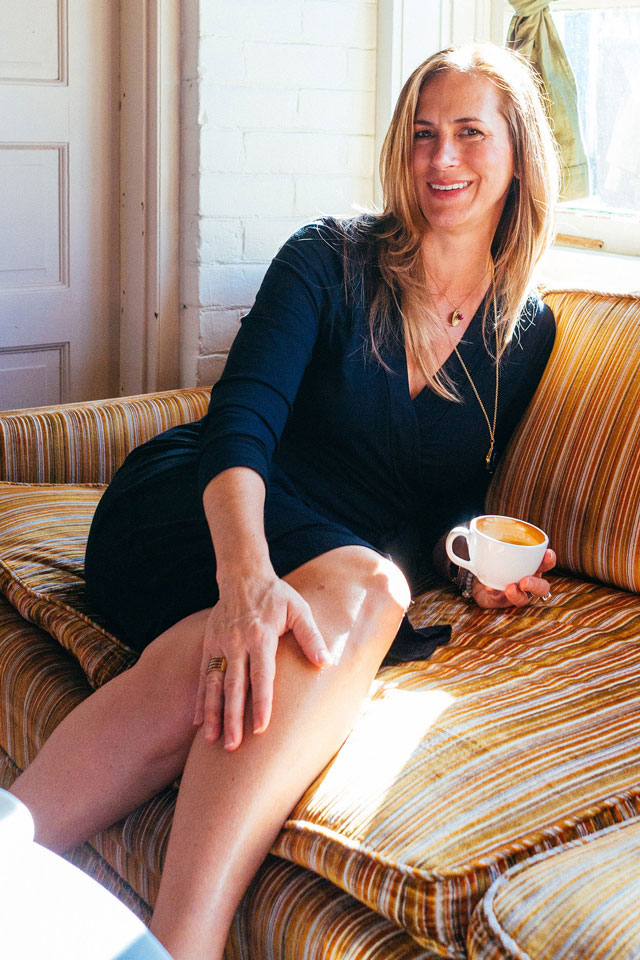
Clark starts her day between 4:45 and 5 a.m. She sends her 17-year-old son off to school and then hits the gym for strength and cardio workouts. She fasts for about 16 hours overnight, eating her first meal between 10 and 11 a.m. At least three times a week, Clark uses a sauna for 20 minutes before a cold shower. While working, she eats 16 ounces of vegetables a day, a mix of raw celery, radishes, carrots, peppers, and blanched broccoli along with a salad or soup. She meditates for 20 minutes in the early afternoon.
Clark’s efforts to radically improve her health began over a decade ago after a scare: She was struggling to get up in the morning, feeling constantly fatigued, and losing her hair. She eventually tested positive for heavy metal poisoning—in part from her time as a ceramics major in college when she didn’t wear a mask while mixing toxic glazes. As she treated her condition, she began to focus more intensely on her health.
Her teenage son, she says, offers a constant source of motivation. “I want to be there for him as long as possible,” she tells Fortune. “I want to minimize any negative repercussions of aging.”
The ethos behind the craze to live longer
The roaring growth of the over $4 trillion wellness industry over the last decade has been largely fueled by women consumers. But within that larger wellness framework, the competitive, performance-focused longevity movement that has grown massively in recent years has skewed more male.
“When we talked about the longevity economy, it was really focused on Fountain of Youth magic pills and alpha males wanting to live forever,” says Abby Levy, managing partner and founder at Primetime Partners, who invests in wellness companies with a focus on those that support healthy aging. “That was the backdrop.”
Some have criticized biohackers’ seeming belief that aging can be treated as a preventable disease instead of an inevitability, and pointed out that genetic determinants, more than treatments and lifestyle choices, account for a large part of how the ravages of aging manifest. And it should be noted that biological age tests are relatively new, and many on the market vary in exactly what they are testing; therefore they “differ in validity” and in accuracy, says Dr. Andrea Maier, director of the Centre for Healthy Longevity at the National University of Singapore and founder of Chi Longevity and the Healthy Longevity Society, which creates evidence-based standards for longevity clinics.
Still, the longevity space has created a set of stars, many with their own longevity companies or careers as authors and speakers on the topic. Johnson, as well as David Sinclair and Peter Diamandis, have drawn media attention and some derision as they dedicate their time and fortunes to biohacking their way back into their twenties, sometimes using controversial and unproven treatments. Johnson recently came under fire for his young blood treatments, where he had his son’s blood plasma infused into his body with the hope of mitigating aging, despite an FDA consumer warning against the practice because of potential health risks and a lack of clinical evidence.

Statistics on the gender breakdown of the industry’s customer base are hard to come by, especially given the novelty of the field. Still, the client bases of several large startups in the space show that the industry skews male. TruDiagnostic, which tests biological age, says that of its customer base of 30,000 “optimizers” since the company’s launch in 2020, men make up 57% and women make up 43%. Dr. Oliver Zolman, Johnson’s primary reverse-aging doctor, tells Fortune that his clients are two-thirds men. At Groq Health, an app tracking biological health metrics, men make up 64% of customers.
When Nichola Conlon began attending longevity science conferences about a decade ago, she tells Fortune, the gender breakdown was striking. “It was very, very male-dominant…there were not many women in the space,” says Conlon, the founder of Nuchido, a company that provides supplements aimed at reversing aging. “The early type of people it attracted were people that were maybe massively trying to get an edge on their performance or their cognitive function or things like that. That sort of space just seemed to attract men.”
Dr. Ezekiel Emanuel hypothesizes that male biohackers in their forties and fifties are motivated by fear and ego. “There’s a real threat to masculinity at that age. Things begin to decline,” he tells Fortune. “There’s also some sense of trying to compete with the next guy.” The codirector of the Healthcare Transformation Institute at the University of Pennsylvania Perelman School of Medicine and a senior fellow at the Center for American Progress, Emanuel famously penned an op-ed on why he hopes to die at 75 and has been a skeptical voice on the overall longevity movement. “Everyone would like to be young forever,” he tells Fortune, “But it isn’t going to happen.”
The Boston-based nutrition scientist Michael Lustgarten, 50, tells Fortune that he sees dying as a kind of failure—though he acknowledges, “Failure is for sure, unless I can figure out a way to biohack my way out of it.” Lustgarten, author of Conquer Aging or Die Trying, and scientist at the Jean Mayer USDA Human Nutrition Research Center on Aging at Tufts University, tells Fortune that he is consistently biologically between 16 and 20 years younger than his chronological age based on averages from various tests. He eats 90% of his diet within an hour and a half three days a week and tests his epigenetic age seven times a year. He has undergone 47 blood tests since 2015, eats 85 grams of fiber daily, and wakes up around 5 a.m. each morning.
“I’m talking about flattening the curve for as long as possible, or flattening it as much as physically possible,” he tells Fortune. “When it comes to what gets you out of bed in the morning, for me, it’s the idea of living as long as I physically can, in as good of health as I can and helping others to do the same.”
Experimenting on himself—and sharing what he learns with nearly 22,000 followers on his YouTube channel—can be somewhat addictive, he explains. “The happiness that I get is figuring out stuff that nobody’s figured out, or very few people have figured out,” he says. “That’s my drug.”
Women as “the drivers of this movement”
As the longevity movement expands, women are engaging more with it—but often it’s for different reasons than the male biohackers. That has been evident for Melanie Goldey, the CEO of Tally Health, which offers customers epigenetic age tests and preventative health plans. While men dominated the company’s 270,000 waitlist pre-launch at the beginning of 2023, its current client base is moving closer to parity: currently 53% male and 47% female. With a focus on appealing to women, especially those of menopausal age, Goldey markets her products by emphasizing extending health span, instead of defying age to conform to societal beauty standards that favor youthful looks—dewy, smooth skin instead of wrinkles.
“I think that women will be, from a growth perspective, the drivers of this movement,” Goldey says. “Women drive a lot of purchasing decisions.” Indeed, women account for a lot of health spending, and they still make up the bulk of caretakers in a family, with many finding themselves sandwiched between needing to care for children and an aging parent.
Especially as women age in the workforce, many feel like they have to compensate in other ways to stay ahead and respected by the pack. “There’s a much higher bar for women to appear younger,” Heather Tinsley-Fix, a senior advisor at the American Association of Retired People, previously told Fortune. “Women face a much higher bar with regard to ageism; they experience it earlier and more frequently than men.”
Amy Hardison, who is number five on the Rejuvenation Olympics leaderboard and is aging at at 0.73 of a year for every chronological year, never took daily supplements or thought that much about ways to extend her life span beyond the seemingly obvious: Eat healthy, stay moving, and stay connected to others to combat the health risks of loneliness. The 63-year-old wants to live as long as possible to stay in the lives of her four children and 11 grandchildren, and remain mentally and physically well as long as she can.
“I have 20 years, maybe 25 years or so, and it’s just, what do I want to do to make those the best possible?” Hardison says. “84, 85, 86 is plenty for me.”
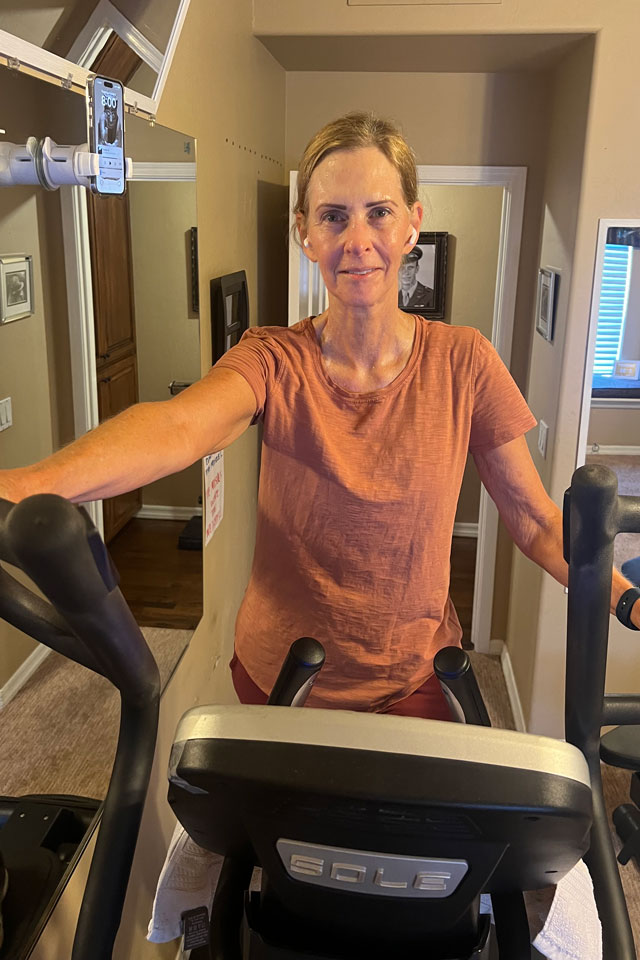
Hardison cooks her own minimally processed food. She also swears by her one-hour daily aerobic exercise routine, including swimming and peddling on an elliptical bike—a discipline she says she has maintained for the last 50 years. And she prioritizes quality time with her kids and grandkids. She isn’t chasing youth, she says: “I just cherish the experience of life, and I cherish the perspective that comes from being older.”
When her son-in-law recommended she join a trial for the NOVOS supplement, she gave it a go with some ambivalence. She agreed to submit her results for the Rejuvenation Olympics, but it took her two months to realize that being on the leaderboard meant something significant.
“It was pretty ironic, actually, that I even did it because I’ve never been into even taking vitamins and supplements,” she says. “Being 63, I have lived through several decades, and I have seen things come and go. So, I don’t get too excited about the latest and greatest.”
Nichol Bradford, an investor in wellness with a particular interest in the psychology of aging, tells Fortune that she doesn’t consider herself a “biohacker,” even though she spends $700 a month to take 106 pills a day, gets her blood drawn every six months, and has taken every biological age test in the book. “Biohacking is incredibly male,” Bradford says. For her, she says, longevity is not a competition.

The experience of taking care of an elder with progressive heart disease has offered an ongoing reality check, Bradford says. “I have sort of like a weekly reminder of what it looks like if you don’t take the chance to age well,” she says. “As I pass the 50-year mark, It’s really about vitality…making sure that I have the vitality to match the things that I’m creating in my life and the impact that I’m having on the world.”
A decade later, Conlon is far from the only woman at longevity conferences and research panels. Bradford wants to live to 115, she says, and she wouldn’t be surprised if she surpasses it. For her part, Clark says she looks forward to supporting her son as he grows into an adult. She also plans to travel across the globe when her son leaves home—confident in her ability to stay active.
“Eventually the wheels will fall off the bus, and I’m like, well, mine aren’t falling off anytime soon,” she says. “So I’m going to do everything I can to keep the bus in good order.”