
• Home
  • Latest
  • Fortune 500
  • Finance
  • Tech
  • Leadership
  • Lifestyle
  • Rankings
  • Multimedia

Trendingnow

1

As Big Tech showers employees with perks to win the talent war, Nvidia built a nearly $5 trillion company by making people pay for their own lunch

2

MacKenzie Scott alone accounted for one-third of America's $19.2 billion in megagifts last year

3

Today, Emily Blunt is worth $80 million thanks to her Hollywood career—but she actually wanted to be a UN Spanish translator on $80K

1

As Big Tech showers employees with perks to win the talent war, Nvidia built a nearly $5 trillion company by making people pay for their own lunch

2

MacKenzie Scott alone accounted for one-third of America's $19.2 billion in megagifts last year

3

Today, Emily Blunt is worth $80 million thanks to her Hollywood career—but she actually wanted to be a UN Spanish translator on $80K
Brainstorm Green

What’s next for nuclear power?

Geoff Colvin
By
Geoff Colvin
Geoff Colvin
Senior Editor-at-Large
Down Arrow Button Icon
Geoff Colvin
By
Geoff Colvin
Geoff Colvin
Senior Editor-at-Large
Down Arrow Button Icon
March 24, 2011, 9:00 AM ET
Add Fortune on Google for similar content.

The disaster at Fukushima is raising antinuclear sentiment around the world. But can society afford to live without this carbon-free energy source? Six experts weigh in.


The human suffering in the Japanese disaster is obviously the overwhelming fact in the situation. Longer term, its effects will shape people’s well-being less severely but more widely. As the rubble clears, a bit of positive news emerging is that the incident’s impact on the global economy will be slight. Historic as the catastrophe was, most forecasters expect it to slow growth only 0.1% to 0.2% this year. The far more significant effect will be how the world responds to the disaster, which will influence our lives for years to come.

Most profoundly affected will be nuclear power, and the danger is that the world’s response to the events at Fukushima may not be rational. As The Black Swan author Nassim Nicholas Taleb points out in this special package of articles, we humans don’t deal well with risk. We underestimate the chances of catastrophic events until they happen; then, because the world is so connected, the setbacks are much harder to handle. NRG Energy (NRG) chief David Crane, one of six experts interviewed here, notes that America hasn’t approved a new nuclear plant in more than 30 years. That’s a legacy of Three Mile Island, a “minor accident” (in the view of Intellectual Ventures founder Nathan Myhrvold, also heard from here) in which no one died. Coal power, through mining deaths and emissions, has been far more harmful, but less dramatically so. Hundreds of new coal plants have been built over the past 30 years.

A settled assessment of Fukushima will take months or even years. An emerging consensus, by no means unanimous, suggests that nuclear power will move ahead; the world needs more energy and fewer greenhouse gases. Because billions of people rising out of poverty will be consuming more energy, and because the ways in which we produce that energy will carry consequences for the planet’s future, the stakes in understanding Fukushima properly are extraordinarily high. The voices in the following pages can help. –Geoff Colvin

Stewart Brand

“What the U.S. does or doesn’t do in the wake of Japan is important but not the main event.”


Those of a certain age may remember Stewart Brand as the editor of the Whole Earth Catalog, the counterculture bible that first appeared in 1968. It’s the only catalogue ever to win the National Book Award. Brand is also co-founder of the consultancy GBN and the author of Whole Earth Discipline: An Ecopragmatist Manifesto, in which he outlines his support for nuclear power as a vital weapon in the war against climate change. Fortune’s David Whitford asked him what he’s thinking now.

My thoughts are only partially complete. I’m paying close attention. One thing we know is that a 9.0 earthquake did not harm the nuclear reactors in Japan. What did get them was the tsunami that was just a bit higher than what they had prepared for. I’m impressed that so far they’ve not had really significant releases of radioactive stuff. And I’m really impressed with the reporting on the crisis. When you compare how the media have handled this calamity with what happened in ’86 at Chernobyl and before that at Three Mile Island, there’s a lot less panic and a lot more detailed, knowledgeable public instruction going on.

I think that is very good news, particularly because people in the U.S. and parts of Europe are starting to change their minds about nuclear. Before, it was, “Should we just shut these damn things down?” Now, I think, it’s more in the mode of, “Should we go ahead with a nuclear renaissance, and if so, what kind of details need to be focused on?”

In Fukushima, we’re looking at a 40-year-old boiling-water reactor whose cooling capability, it turns out, was not as redundant as it needed to be. Newer reactor designs, like the Westinghouse AP1000, have passive cooling systems. They don’t need extra power; nobody has to do anything.

We should learn from Japan. What new training do we want to provide for plant operators? What new equipment and systems have to be installed? What new requirements should the NRC enforce? If the discussion is technical rather than theological, I think nuclear will go forward.

We’ve already come a long way. There have been no more Three Mile Islands because the industry paid close attention to what happened there. For the same reason, there will be no more Fukushimas. But, you know, probably in China or India or somewhere, there’ll be some other nuclear event, and it will be a big, serious problem that everybody will look at with either horror or close attention or both. Basically, high concentrations of energy — whether it’s in gasoline or natural gas going through pipes underneath your neighborhood — are dangerous stuff. Nuclear is more in Black Swan territory, where you have infrequent but big events. Other sources of energy fall into the routine-death domain, both for civilians and workers, so you’re always seeing cost-benefit analyses.

The sad thing for me is that in the U.S. we’re more concerned about these damn nuclear plants than about what happened in Japan with this absolutely horrifying tsunami and earthquake. I think that nuclear is a significant part of their problems, but it is far from the worst problem.

My perspective is mainly global. What the U.S. does or doesn’t do in the wake of Japan is important but not the main event. The main event is in the developing world, where billions of people are getting out of poverty and moving to cities, and they want electricity. They’re either going to get that electricity from coal or they’re going to get it from nuclear. My personal preference for the atmosphere is that it not be coal.

So I was glad to read that even after what’s happened in Japan, China and India remain committed to nuclear power. We used to think, Well, one more major nuclear accident and that’s it for the nuclear industry. Everybody said that. Now we’ve had one more major nuclear accident, and from what I can see so far, to our surprise, that’s not it for the nuclear industry. It looks as if this will be seen as a cautionary story. Meanwhile the big calamity — the earthquake-and tsunami-scale calamity that is climate change — is still overshadowing everybody and everything.

What’s next for nuclear power? Six experts weigh in:

  • Stewart Brand, author, Whole Earth Catalog
  • Michael Brune, executive director, Sierra Club
  • David Crane, CEO, NRG Energy
  • Aileen Mioko Smith, executive director, Green Action
  • Nathan Myhrvold, founder, Intellectual Ventures
  • Nassim Nicholas Taleb, author, The Black Swan
About the Author
Geoff Colvin
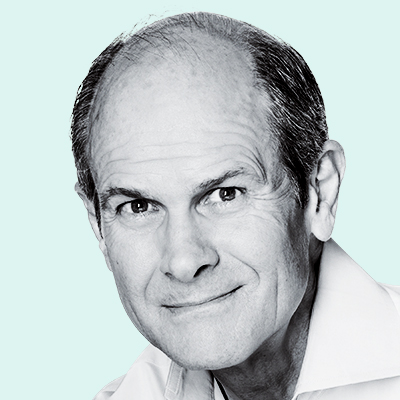
By Geoff ColvinSenior Editor-at-Large
LinkedIn iconTwitter icon

Geoff Colvin is a senior editor-at-large at Fortune, covering leadership, globalization, wealth creation, the infotech revolution, and related issues.

See full bioRight Arrow Button Icon
Add Fortune on Google for similar content.

Latest in

Finance
Lorem ipsum dolor sit amet, consectetur adipiscing elit, sed do eiusmod tempor incididunt ut labore et dolore magna aliqua. Ut enim ad minim veniam
By Fortune Editors
October 20, 2025
Finance
Lorem ipsum dolor sit amet, consectetur adipiscing elit, sed do eiusmod tempor incididunt ut labore et dolore magna aliqua. Ut enim ad minim veniam
By Fortune Editors
October 20, 2025
Finance
Lorem ipsum dolor sit amet, consectetur adipiscing elit, sed do eiusmod tempor incididunt ut labore et dolore magna aliqua. Ut enim ad minim veniam
By Fortune Editors
October 20, 2025
Finance
Lorem ipsum dolor sit amet, consectetur adipiscing elit, sed do eiusmod tempor incididunt ut labore et dolore magna aliqua. Ut enim ad minim veniam
By Fortune Editors
October 20, 2025
Finance
Lorem ipsum dolor sit amet, consectetur adipiscing elit, sed do eiusmod tempor incididunt ut labore et dolore magna aliqua. Ut enim ad minim veniam
By Fortune Editors
October 20, 2025
Finance
Lorem ipsum dolor sit amet, consectetur adipiscing elit, sed do eiusmod tempor incididunt ut labore et dolore magna aliqua. Ut enim ad minim veniam
By Fortune Editors
October 20, 2025

Most Popular

Finance
Lorem ipsum dolor sit amet, consectetur adipiscing elit, sed do eiusmod tempor incididunt ut labore et dolore magna aliqua. Ut enim ad minim veniam
By Fortune Editors
October 20, 2025
Finance
Lorem ipsum dolor sit amet, consectetur adipiscing elit, sed do eiusmod tempor incididunt ut labore et dolore magna aliqua. Ut enim ad minim veniam
By Fortune Editors
October 20, 2025
Finance
Lorem ipsum dolor sit amet, consectetur adipiscing elit, sed do eiusmod tempor incididunt ut labore et dolore magna aliqua. Ut enim ad minim veniam
By Fortune Editors
October 20, 2025
Finance
Lorem ipsum dolor sit amet, consectetur adipiscing elit, sed do eiusmod tempor incididunt ut labore et dolore magna aliqua. Ut enim ad minim veniam
By Fortune Editors
October 20, 2025
Finance
Lorem ipsum dolor sit amet, consectetur adipiscing elit, sed do eiusmod tempor incididunt ut labore et dolore magna aliqua. Ut enim ad minim veniam
By Fortune Editors
October 20, 2025
Finance
Lorem ipsum dolor sit amet, consectetur adipiscing elit, sed do eiusmod tempor incididunt ut labore et dolore magna aliqua. Ut enim ad minim veniam
By Fortune Editors
October 20, 2025
Fortune Secondary Logo
Rankings
  • 100 Best Companies
  • Fortune 500
  • Global 500
  • Fortune 500 Europe
  • Most Powerful Women
  • World's Most Admired Companies
  • See All Rankings
  • Lists Calendar
Sections
  • Finance
  • Fortune Crypto
  • Features
  • Leadership
  • Health
  • Commentary
  • Success
  • Retail
  • Mpw
  • Tech
  • Lifestyle
  • CEO Initiative
  • Asia
  • Politics
  • Conferences
  • Europe
  • Newsletters
  • Personal Finance
  • Environment
  • Magazine
  • Education
Customer Support
  • Frequently Asked Questions
  • Customer Service Portal
  • Privacy Policy
  • Terms Of Use
  • Single Issues For Purchase
  • International Print
Commercial Services
  • Advertising
  • Fortune Brand Studio
  • Fortune Analytics
  • Fortune Conferences
  • Business Development
  • Group Subscriptions
About Us
  • About Us
  • Press Center
  • Work At Fortune
  • Terms And Conditions
  • Site Map
  • About Us
  • Press Center
  • Work At Fortune
  • Terms And Conditions
  • Site Map
  • Facebook icon
  • Twitter icon
  • LinkedIn icon
  • Instagram icon
  • Pinterest icon

Latest in

Best private student loans for medical school
Personal Financestudent loans and debt
Best private student loans for medical school
By Joseph HostetlerJuly 2, 2026
5 hours ago
Michael Burry just shorted Caterpillar’s 172% AI rally. One analyst says his bet won’t even matter
Investingstock prices
Michael Burry just shorted Caterpillar’s 172% AI rally. One analyst says his bet won’t even matter
By Marco Quiroz-GutierrezJuly 2, 2026
6 hours ago
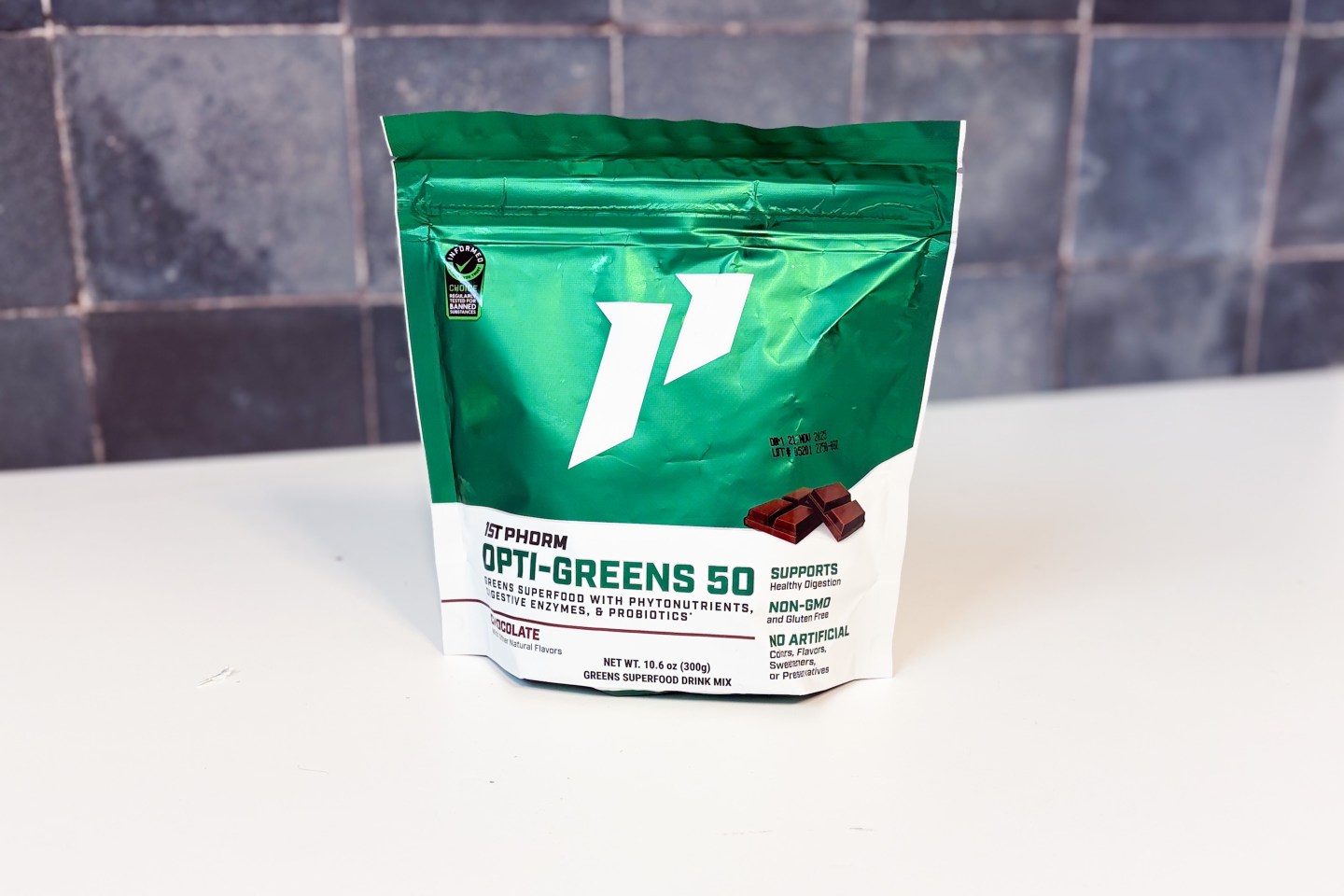
Opti-Greens 50 Review (2026): Insights from Hands-On Testing
HealthDietary Supplements
Opti-Greens 50 Review (2026): Insights from Hands-On Testing
By Christina SnyderJuly 2, 2026
6 hours ago
U.S. Treasury Secretary Scott Bessent
EconomyDebt
AI’s $2.2 trillion deficit fix is already half fake, economists say
By Tristan BoveJuly 2, 2026
7 hours ago
s
Personal FinanceSports
The sports economy is unaffordable at the bar, let alone the stadium
By Catherina GioinoJuly 2, 2026
7 hours ago
m
Politicsfraud
Trump fights fraud by freezing funding for New York’s Medicaid Fraud Control Unit
By Ali Swenson, Geoff Mulvihill and The Associated PressJuly 2, 2026
7 hours ago

Most Popular

As Big Tech showers employees with perks to win the talent war, Nvidia built a nearly $5 trillion company by making people pay for their own lunch
Big Tech
As Big Tech showers employees with perks to win the talent war, Nvidia built a nearly $5 trillion company by making people pay for their own lunch
By Marco Quiroz-GutierrezJuly 1, 2026
2 days ago
MacKenzie Scott alone accounted for one-third of America's $19.2 billion in megagifts last year
Success
MacKenzie Scott alone accounted for one-third of America's $19.2 billion in megagifts last year
By Sydney LakeJune 25, 2026
8 days ago
Today, Emily Blunt is worth $80 million thanks to her Hollywood career—but she actually wanted to be a UN Spanish translator on $80K
Success
Today, Emily Blunt is worth $80 million thanks to her Hollywood career—but she actually wanted to be a UN Spanish translator on $80K
By Orianna Rosa RoyleJuly 2, 2026
19 hours ago
Mark Zuckerberg feeds his cows macadamia nuts and beer to create the 'highest-quality beef in the world' on his $300 million estate in Hawaii
Success
Mark Zuckerberg feeds his cows macadamia nuts and beer to create the 'highest-quality beef in the world' on his $300 million estate in Hawaii
By Sasha RogelbergJuly 2, 2026
9 hours ago
Current price of oil as of July 1, 2026
Personal Finance
Current price of oil as of July 1, 2026
By Joseph HostetlerJuly 1, 2026
2 days ago
Americans are escaping the U.S. for New Zealand where house prices have hit a new low—but only wealthy Americans with $3 million spare can invest
Success
Americans are escaping the U.S. for New Zealand where house prices have hit a new low—but only wealthy Americans with $3 million spare can invest
By Emma BurleighJuly 2, 2026
11 hours ago

© 2026 Fortune Media IP Limited. All Rights Reserved. Use of this site constitutes acceptance of our Terms of Use and Privacy Policy | CA Notice at Collection and Privacy Notice | Do Not Sell/Share My Personal Information
FORTUNE is a trademark of Fortune Media IP Limited, registered in the U.S. and other countries. FORTUNE may receive compensation for some links to products and services on this website. Offers may be subject to change without notice.