• Home
  • Latest
  • Fortune 500
  • Finance
  • Tech
  • Leadership
  • Lifestyle
  • Rankings
  • Multimedia

Trendingnow

1

Egg companies made $1.22 billion in profit off a $6 carton — now they’re buying their way out of a price-fixing case with 53 million donated eggs

2

As Big Tech showers employees with perks to win the talent war, Nvidia built a nearly $5 trillion company by making people pay for their own lunch

3

Mark Zuckerberg feeds his cows macadamia nuts and beer to create the 'highest-quality beef in the world' on his $300 million estate in Hawaii

1

Egg companies made $1.22 billion in profit off a $6 carton — now they’re buying their way out of a price-fixing case with 53 million donated eggs

2

As Big Tech showers employees with perks to win the talent war, Nvidia built a nearly $5 trillion company by making people pay for their own lunch

3

Mark Zuckerberg feeds his cows macadamia nuts and beer to create the 'highest-quality beef in the world' on his $300 million estate in Hawaii

Rethinking China’s cities

By
Brian Dumaine
Brian Dumaine
Down Arrow Button Icon
By
Brian Dumaine
Brian Dumaine
Down Arrow Button Icon
December 3, 2012, 5:00 AM ET
Add Fortune on Google for similar content.
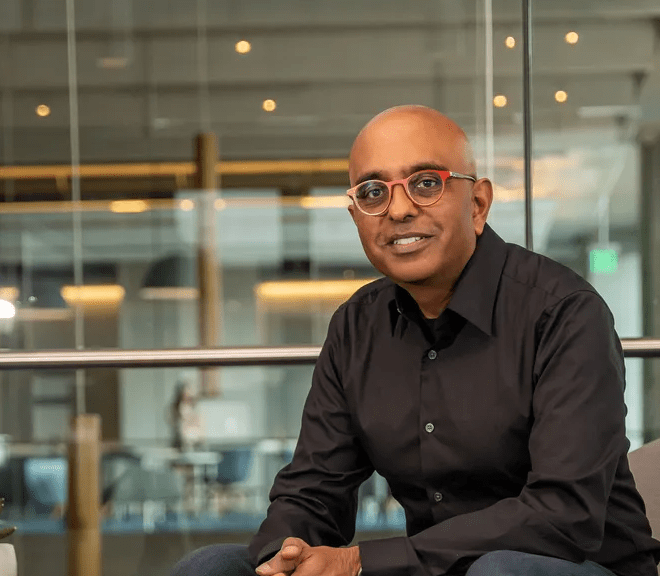
Peter Calthorpe, here in his Berkeley office, believes in more-human-scale cities.

FORTUNE — AS china modernizes its agricultural sector over the next 25 years, the number of its farmers will shrink dramatically. And many of those workers will move to cities. Overall, it’s expected that China will need to house some 300 million additional people in urban areas. To put that in perspective: Providing housing for that many people is roughly the equivalent of building from scratch all the cities and towns in the U.S. and doing it in only a quarter of a century. The price tag for all this construction is an estimated $160 trillion — more than 10 times the size of America’s GDP.

This unprecedented demographic shift presents the Chinese with a chance to rethink their cities, making them more sustainable. That’s something that’s not lost on Peter Calthorpe, a world-class urban designer who has been hired to develop plans for six new cities in China. His Berkeley-based firm, Calthorpe Associates — which has redesigned urban landscapes in California, Dubai, and Rotterdam, to name a few — focuses on creating mixed-use, pedestrian-oriented places that are affordable and energy-efficient. Here Calthorpe shares his views on sustainability, which will be a core topic at 
Fortune’s 2013 Global Forum
 in Chengdu, China, with senior editor-at-large Brian Dumaine.

Q: Some in China now believe that the new cities they’re building need to be radically different from the status quo. What’s driving that?

A: How the Chinese build their cities is deeply linked to what they think a middle-class life should be. If China’s middle class — currently 250 million strong — pursues an automobile-oriented American lifestyle, they’ll inherit an unsustainable society. If the Chinese build what they are constructing now — what I call “high-density sprawl,” made of so-called superblocks of apartment towers surrounded by huge highways — they’ll be in trouble.

Meaning the quality of life will suffer?

Exactly. It would create huge environmental and social impacts. Increased carbon emissions are just the tip of the iceberg. This kind of development will put a tremendous stress on energy supplies, water, and air quality, while at the same time creating more stressful and expensive lifestyles.

So the nation’s leaders understand this and are willing to change direction?

They understand that their current urban forms aren’t working. Consider the long commutes, gridlock, and crowded subways. The urban Chinese live in neighborhoods where buildings average 10 stories, whereas in America it’s two stories. At such high densities, auto-based cities just don’t work. The Chinese are also very concerned about their dependence on the imported oil that a car-centric culture dictates. Something has to give.

Calthorpe favors pedestrian-friendly areas, like this neighborhood in Chongqing.

Is there a better model?

As the Chinese create more and more superblocks of apartments and giant shopping centers, they’re destroying a whole stratum of their traditional walkable society. The Chinese used to live on the streets in wonderfully social ways, being able to stroll or ride their bikes to cafés and small shops. This creates an affordable, vital urban lifestyle.

In their urban design there is little room for old-style walkable communities. Beijing is building freeways hand over fist but, as we’ve learned here, the more you build, the more traffic you induce. That’s a vicious cycle the Chinese are quite aware of. Beijing used to have 60% of its commuters on bikes; now it’s just 16%.

So what’s the alternative look like?

Five years ago the Chinese started five pilot eco-developments that were largely about clean energy. Now they’re drilling down more deeply, asking themselves how a more human-scaled urban pattern affects people’s lifestyles and traffic patterns. They’ve been experimenting with the idea of supporting alternatives to the car but haven’t come to conclusions. What they do know is that they like the idea of small blocks and more pedestrian traffic but want to test it first.

But aren’t there strong forces working against this kind of change?

Yes. Cars, for example, don’t work well in the kind of urban density the Chinese are building, but the automobile has become a symbol of middle-class success. Some in China want a massive, growing car industry, but how do you square that with sustainable development? Also, city governments make most of their money by selling big tracts of land for development, and this encourages more superblocks surrounded by even bigger roads.

What is actually happening on the ground?

The Kunming region in southwest China is planning a new town of 1.5 million called Chenggong. The town’s central district, which will have 200,000 residents plus 300,000 jobs, already includes the new administrative center for the region, Yunnan University, and a high-speed rail station. Its original plan, however, followed a typical superblock pattern. Now the mayor has asked my firm to redesign it. My idea is to make the city more human-scaled.

Each superblock has repetitious, high-rise apartment towers with a total of around 5,000 units. My design is made up of small urban blocks with green courtyards, each having only 500 units, where you can walk or bike to eat and shop — where neighbors can actually recognize one another. The buildings will vary from four stories to 30 stories. And this design will house the same number of people per acre while leaving enough open space for parks and greenways.

One of the things we’re finding is that the city government can make more money selling land this way, because they now have more customers. When you build in this pattern, smaller developers can participate — not just the big guys who put up the superblocks.

Integrating mass transit into urban design is also something you’re doing in China, right?

Take Chongqing. The city has asked us to look at an area just north of the historic city center, where already 2 million are living — but another 3 million are expected to move there. We redesigned the area with dense clusters of buildings near the new metro stations and made sure we created a balance between where the jobs and housing are so we can reduce commuting distances.

If your vision pans out, what will China look like in the future?

We’re going to see a very different China 20 years from now. I think they’re at a watershed moment where the old model of superblocks and cars is unsustainable. We’ll see cities with auto-free streets, more mass transit, and more bikes. Overall they will be more livable. It’s a daunting task, yet the impact will be monumental if we can move the needle even a little.

This story is from the December 3, 2012 issue of Fortune.

About the Author
By Brian Dumaine
See full bioRight Arrow Button Icon
Add Fortune on Google for similar content.

Latest in

Finance
Lorem ipsum dolor sit amet, consectetur adipiscing elit, sed do eiusmod tempor incididunt ut labore et dolore magna aliqua. Ut enim ad minim veniam
By Fortune Editors
October 20, 2025
Finance
Lorem ipsum dolor sit amet, consectetur adipiscing elit, sed do eiusmod tempor incididunt ut labore et dolore magna aliqua. Ut enim ad minim veniam
By Fortune Editors
October 20, 2025
Finance
Lorem ipsum dolor sit amet, consectetur adipiscing elit, sed do eiusmod tempor incididunt ut labore et dolore magna aliqua. Ut enim ad minim veniam
By Fortune Editors
October 20, 2025
Finance
Lorem ipsum dolor sit amet, consectetur adipiscing elit, sed do eiusmod tempor incididunt ut labore et dolore magna aliqua. Ut enim ad minim veniam
By Fortune Editors
October 20, 2025
Finance
Lorem ipsum dolor sit amet, consectetur adipiscing elit, sed do eiusmod tempor incididunt ut labore et dolore magna aliqua. Ut enim ad minim veniam
By Fortune Editors
October 20, 2025
Finance
Lorem ipsum dolor sit amet, consectetur adipiscing elit, sed do eiusmod tempor incididunt ut labore et dolore magna aliqua. Ut enim ad minim veniam
By Fortune Editors
October 20, 2025

Most Popular

Finance
Lorem ipsum dolor sit amet, consectetur adipiscing elit, sed do eiusmod tempor incididunt ut labore et dolore magna aliqua. Ut enim ad minim veniam
By Fortune Editors
October 20, 2025
Finance
Lorem ipsum dolor sit amet, consectetur adipiscing elit, sed do eiusmod tempor incididunt ut labore et dolore magna aliqua. Ut enim ad minim veniam
By Fortune Editors
October 20, 2025
Finance
Lorem ipsum dolor sit amet, consectetur adipiscing elit, sed do eiusmod tempor incididunt ut labore et dolore magna aliqua. Ut enim ad minim veniam
By Fortune Editors
October 20, 2025
Finance
Lorem ipsum dolor sit amet, consectetur adipiscing elit, sed do eiusmod tempor incididunt ut labore et dolore magna aliqua. Ut enim ad minim veniam
By Fortune Editors
October 20, 2025
Finance
Lorem ipsum dolor sit amet, consectetur adipiscing elit, sed do eiusmod tempor incididunt ut labore et dolore magna aliqua. Ut enim ad minim veniam
By Fortune Editors
October 20, 2025
Finance
Lorem ipsum dolor sit amet, consectetur adipiscing elit, sed do eiusmod tempor incididunt ut labore et dolore magna aliqua. Ut enim ad minim veniam
By Fortune Editors
October 20, 2025
Fortune Secondary Logo
Rankings
  • 100 Best Companies
  • Fortune 500
  • Global 500
  • Fortune 500 Europe
  • Most Powerful Women
  • World's Most Admired Companies
  • See All Rankings
  • Lists Calendar
Sections
  • Finance
  • Fortune Crypto
  • Features
  • Leadership
  • Health
  • Commentary
  • Success
  • Retail
  • Mpw
  • Tech
  • Lifestyle
  • CEO Initiative
  • Asia
  • Politics
  • Conferences
  • Europe
  • Newsletters
  • Personal Finance
  • Environment
  • Magazine
  • Education
Customer Support
  • Frequently Asked Questions
  • Customer Service Portal
  • Privacy Policy
  • Terms Of Use
  • Single Issues For Purchase
  • International Print
Commercial Services
  • Advertising
  • Fortune Brand Studio
  • Fortune Analytics
  • Fortune Conferences
  • Business Development
  • Group Subscriptions
About Us
  • About Us
  • Press Center
  • Work At Fortune
  • Terms And Conditions
  • Site Map
  • About Us
  • Press Center
  • Work At Fortune
  • Terms And Conditions
  • Site Map
  • Facebook icon
  • Twitter icon
  • LinkedIn icon
  • Instagram icon
  • Pinterest icon

Latest in

ds
CommentarySoftware
I argued with the father of open source for 2 years. Now the AI fight is the same — only bigger
By David SiegelJuly 3, 2026
36 minutes ago
ashok
Commentary250 Years of Innovation
The greatest startup in history: What we can learn from America’s founders at today’s AI frontier
By Ashok N. SrivastavaJuly 3, 2026
36 minutes ago
Photo: World Cup fans drinking.
EconomyEconomics
On Wall Street, analysts increasingly don’t believe the U.S. government’s ‘misleading’ job numbers
By Jim EdwardsJuly 3, 2026
2 hours ago
U.S. President Donald Trump talks to reporters after signing an executive order dealing with automobile repairs with Environmental Protection Agency Administrator Lee Zeldin in the Oval Office at the White House on June 29, 2026 in Washington, DC.
EconomyFed
Trump is already causing a headache for his new Fed chairman, saying the central bank’s board is ‘hostile’ and ‘doing the wrong thing’
By Eleanor PringleJuly 3, 2026
2 hours ago
2
Commentary250 Years of Innovation
America’s secret weapon isn’t just innovation — It’s the freedom to fail
By Keith KrachJuly 3, 2026
3 hours ago
A $75 billion valuation, 75 million global customers and on its way to America—Revolut is London’s disruptor extraordinaire
EuropeLetter from London
A $75 billion valuation, 75 million global customers and on its way to America—Revolut is London’s disruptor extraordinaire
By Kamal AhmedJuly 3, 2026
3 hours ago

Most Popular

Egg companies made $1.22 billion in profit off a $6 carton — now they’re buying their way out of a price-fixing case with 53 million donated eggs
Law
Egg companies made $1.22 billion in profit off a $6 carton — now they’re buying their way out of a price-fixing case with 53 million donated eggs
By Wyatte Grantham-Philips and The Associated PressJuly 2, 2026
19 hours ago
As Big Tech showers employees with perks to win the talent war, Nvidia built a nearly $5 trillion company by making people pay for their own lunch
Big Tech
As Big Tech showers employees with perks to win the talent war, Nvidia built a nearly $5 trillion company by making people pay for their own lunch
By Marco Quiroz-GutierrezJuly 1, 2026
2 days ago
Mark Zuckerberg feeds his cows macadamia nuts and beer to create the 'highest-quality beef in the world' on his $300 million estate in Hawaii
Success
Mark Zuckerberg feeds his cows macadamia nuts and beer to create the 'highest-quality beef in the world' on his $300 million estate in Hawaii
By Sasha RogelbergJuly 2, 2026
20 hours ago
Current price of oil as of July 2, 2026
Personal Finance
Current price of oil as of July 2, 2026
By Joseph HostetlerJuly 2, 2026
23 hours ago
Americans are escaping the U.S. for New Zealand where house prices have hit a new low—but only wealthy Americans with $3 million spare can invest
Success
Americans are escaping the U.S. for New Zealand where house prices have hit a new low—but only wealthy Americans with $3 million spare can invest
By Emma BurleighJuly 2, 2026
22 hours ago
Economists have found an answer to slowing cognitive decline: Avoid retiring early, study finds
Economy
Economists have found an answer to slowing cognitive decline: Avoid retiring early, study finds
By Sasha RogelbergJuly 2, 2026
21 hours ago

© 2026 Fortune Media IP Limited. All Rights Reserved. Use of this site constitutes acceptance of our Terms of Use and Privacy Policy | CA Notice at Collection and Privacy Notice | Do Not Sell/Share My Personal Information
FORTUNE is a trademark of Fortune Media IP Limited, registered in the U.S. and other countries. FORTUNE may receive compensation for some links to products and services on this website. Offers may be subject to change without notice.