• Home
  • Latest
  • Fortune 500
  • Finance
  • Tech
  • Leadership
  • Lifestyle
  • Rankings
  • Multimedia

Trendingnow

1

Egg companies made $1.22 billion in profit off a $6 carton — now they’re buying their way out of a price-fixing case with 53 million donated eggs

2

Meet the Zillennials: The luckiest micro-generation in the workforce, born between 1993 and 1998

3

Economists have found an answer to slowing cognitive decline: Avoid retiring early, study finds

1

Egg companies made $1.22 billion in profit off a $6 carton — now they’re buying their way out of a price-fixing case with 53 million donated eggs

2

Meet the Zillennials: The luckiest micro-generation in the workforce, born between 1993 and 1998

3

Economists have found an answer to slowing cognitive decline: Avoid retiring early, study finds

Why AOL ended up spending millions on ‘distressed babies’

By
Stephen Gandel
Stephen Gandel
Down Arrow Button Icon
By
Stephen Gandel
Stephen Gandel
Down Arrow Button Icon
February 12, 2014, 4:10 PM ET
Add Fortune on Google for similar content.
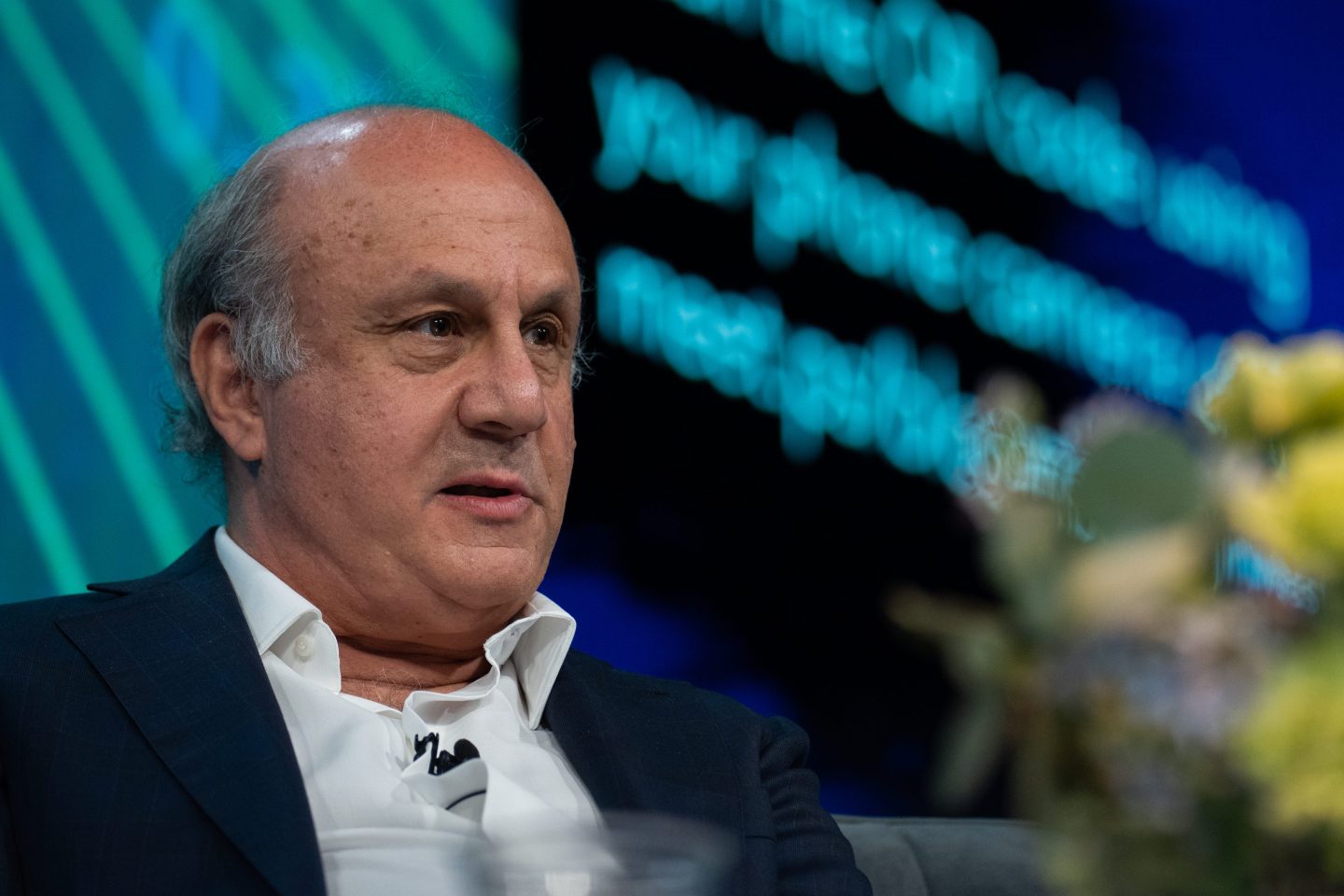
AOL CEO Tim Armstrong

FORTUNE — Tim Armstrong may not be the only one with an infirm infant problem.

The AOL CEO whined last week that two “distressed babies” had cost his company a million dollars each. That pronouncement was widely criticized, especially because it seemed Armstrong was trying to shift the baby care costs onto the Internet company’s employees. Armstrong cited it as a reason AOL (AOL) had decided to change, but later reinstated, its 401(k) match.

But among corporate health care consultants and insurance experts Armstrong’s pronouncement has raised another question: How did AOL leave itself exposed to million-dollar baby bills? It has also unearthed a potentially growing problem in corporate America. Amid rising medical costs, more and more companies may be taking on too much health care risk.

MORE: What does your employer know about your health?

According to its employee benefits page, the bulk of AOL-ers back in 2012, when the babies in question appear to have been born, had two main health insurance choices: Empire Blue Cross PPO or a plan offered by United Healthcare (UNH). Californian employees and those in some mid-Atlantic states had the option of going with another plan from Kaiser Permanente.

Companies have to give basic information to the government about the insurance they offer their employees. However, neither the Empire nor the United plans show up in the documents AOL filed for 2012. AOL did submit paperwork for a number of plans, including vision and disability insurance. According to the forms, AOL bought limited health insurance from CIGNA for 4,820 employees, nearly all of AOL’s roughly 5,000 employees. But it only paid $38,500 for that insurance in total, or $0.67 per employee per month. So whatever health coverage it got for that it wasn’t much, likely a plan that provided emergency health coverage to employees traveling overseas.

There are also the Kaiser plans, for which AOL paid $944,802. But that only covered 243 employees, or about 5% of AOL’s workforce.

MORE: Add Tim Armstrong’s ‘distressed babies’ to the pile of gaffes

What that means is that AOL didn’t actually purchase any insurance to cover the health costs of 95% of its employees.

As odd as that sounds, AOL has plenty of company. These days, health insurance consultants regularly tell companies with over 500 employees not to buy health insurance. It’s a waste of money. Instead, collect the payments that your employees would have paid an insurer. Then hire a big health insurance company to handle the paperwork. Voila, it looks like you are providing your employees health insurance, but you haven’t purchased any coverage.

And the percentage of companies that are going this route is way up. Of workers with health insurance, 61% are covered by so-called self-insured corporate plans, according to a recent study from The Kaiser Family Foundation. That’s up from 44% in 1999. Of companies with 5,000 or more employees, it’s 94%, up from 62% in 1999.

The problem with self-insurance, as the name implies, is that the company is now on the hook for all its employees’ medical bills, which it has to pay, like everything else, out of whatever it generates in sales. So, what a majority of self-insured companies do is buy something called stop-loss insurance, which caps how much they would have to pay in medical expenses per employee, per year. It works like a typical insurance deductible. Anything above the cap, the stop-loss insurance provider has to pick up.

It appears, though, that AOL either didn’t purchase stop-loss insurance or at least not very good coverage. The government has a place on its forms where companies can detail their stop-loss insurance, but companies aren’t required to fill that section out, and AOL didn’t. An AOL spokesman declined to comment.

Nonetheless, Armstrong’s comments imply that AOL did have stop-loss insurance and that it was capped at $1 million per employee. Even if that is correct, Cori Cook, who runs a health care consulting firm, says that’s crazy for a firm of AOL’s size. Cook left a job at a large administrator of self-funded insurance plans in November, mostly working for companies with a few hundred employees to just over 10,000. She says the largest stop-loss insurance cap she saw in her decade at the company was $450,000.

“It would be risky to not have some sort of stop-loss insurance,” says Cook. “Health care costs are accelerating exponentially.”

MORE: 8 young B-school professors on the rise

Other consultants say the need to buy stop-loss insurance varies by the firm, its workers, and the amount of risk a company and its executives are willing to take. Armstrong apparently was willing to take on much more health care risk than most other companies of AOL’s size; that certainly says something about his management style. According to Kaiser, 85% of companies with 1,000 to 4,999 employees had stop-loss insurance. The average cap for that group was $245,000. Even for companies with more than 5,000 employees, where stop-loss insurance drops to 40%, the average cap is still only $479,000.

Taking on that risk doesn’t make a lot of sense for AOL. The company has nearly $165 million in cash. But, presumably, AOL’s shareholders would prefer the company to be using its cash to expand the business, not covering medical bills. What’s more, it appears AOL lost its insurance bet. Armstrong’s decision to change the 401(k) plan, citing the health care costs, suggests that. The other possibility is that AOL banked its winnings from the years when its health care bet paid off, but then sought to get employees to foot the bill the one year it did not. Neither speaks well of Armstrong.

Anecdotally, consultants say, despite rising health care costs, more and more companies like AOL are opting to go without stop-loss insurance. This seems not too different from the subprime mortgage bonds that banks constructed in the run-up to the financial crisis. Bankers thought they had diversified their risk by packaging together thousands of home loans. But when housing prices fell, many of those borrowers defaulted all at once. In the same way, AOL has a relatively young workforce. That may be why it decided to take its ill-advised insurance bet.

But overall, the workforce is aging, and women are having babies later than they used to, leading to an increase in maternity costs. Cook, the consultant, said that million-dollar claims are becoming increasingly common. The financial crisis forced banks to deal with their long-tail risks, or at least it got regulators and others to wake up to them. The rest of corporate America may still be asleep.


About the Author
By Stephen Gandel
See full bioRight Arrow Button Icon
Add Fortune on Google for similar content.

Latest in

Finance
Lorem ipsum dolor sit amet, consectetur adipiscing elit, sed do eiusmod tempor incididunt ut labore et dolore magna aliqua. Ut enim ad minim veniam
By Fortune Editors
October 20, 2025
Finance
Lorem ipsum dolor sit amet, consectetur adipiscing elit, sed do eiusmod tempor incididunt ut labore et dolore magna aliqua. Ut enim ad minim veniam
By Fortune Editors
October 20, 2025
Finance
Lorem ipsum dolor sit amet, consectetur adipiscing elit, sed do eiusmod tempor incididunt ut labore et dolore magna aliqua. Ut enim ad minim veniam
By Fortune Editors
October 20, 2025
Finance
Lorem ipsum dolor sit amet, consectetur adipiscing elit, sed do eiusmod tempor incididunt ut labore et dolore magna aliqua. Ut enim ad minim veniam
By Fortune Editors
October 20, 2025
Finance
Lorem ipsum dolor sit amet, consectetur adipiscing elit, sed do eiusmod tempor incididunt ut labore et dolore magna aliqua. Ut enim ad minim veniam
By Fortune Editors
October 20, 2025
Finance
Lorem ipsum dolor sit amet, consectetur adipiscing elit, sed do eiusmod tempor incididunt ut labore et dolore magna aliqua. Ut enim ad minim veniam
By Fortune Editors
October 20, 2025

Most Popular

Finance
Lorem ipsum dolor sit amet, consectetur adipiscing elit, sed do eiusmod tempor incididunt ut labore et dolore magna aliqua. Ut enim ad minim veniam
By Fortune Editors
October 20, 2025
Finance
Lorem ipsum dolor sit amet, consectetur adipiscing elit, sed do eiusmod tempor incididunt ut labore et dolore magna aliqua. Ut enim ad minim veniam
By Fortune Editors
October 20, 2025
Finance
Lorem ipsum dolor sit amet, consectetur adipiscing elit, sed do eiusmod tempor incididunt ut labore et dolore magna aliqua. Ut enim ad minim veniam
By Fortune Editors
October 20, 2025
Finance
Lorem ipsum dolor sit amet, consectetur adipiscing elit, sed do eiusmod tempor incididunt ut labore et dolore magna aliqua. Ut enim ad minim veniam
By Fortune Editors
October 20, 2025
Finance
Lorem ipsum dolor sit amet, consectetur adipiscing elit, sed do eiusmod tempor incididunt ut labore et dolore magna aliqua. Ut enim ad minim veniam
By Fortune Editors
October 20, 2025
Finance
Lorem ipsum dolor sit amet, consectetur adipiscing elit, sed do eiusmod tempor incididunt ut labore et dolore magna aliqua. Ut enim ad minim veniam
By Fortune Editors
October 20, 2025
Fortune Secondary Logo
Rankings
  • 100 Best Companies
  • Fortune 500
  • Global 500
  • Fortune 500 Europe
  • Most Powerful Women
  • World's Most Admired Companies
  • See All Rankings
  • Lists Calendar
Sections
  • Finance
  • Fortune Crypto
  • Features
  • Leadership
  • Health
  • Commentary
  • Success
  • Retail
  • Mpw
  • Tech
  • Lifestyle
  • CEO Initiative
  • Asia
  • Politics
  • Conferences
  • Europe
  • Newsletters
  • Personal Finance
  • Environment
  • Magazine
  • Education
Customer Support
  • Frequently Asked Questions
  • Customer Service Portal
  • Privacy Policy
  • Terms Of Use
  • Single Issues For Purchase
  • International Print
Commercial Services
  • Advertising
  • Fortune Brand Studio
  • Fortune Analytics
  • Fortune Conferences
  • Business Development
  • Group Subscriptions
About Us
  • About Us
  • Press Center
  • Work At Fortune
  • Terms And Conditions
  • Site Map
  • About Us
  • Press Center
  • Work At Fortune
  • Terms And Conditions
  • Site Map
  • Facebook icon
  • Twitter icon
  • LinkedIn icon
  • Instagram icon
  • Pinterest icon

Latest in

‘Devin-kun’: Japan embraces agents as legacy code and a shrinking workforce create a perfect market for an AI software engineer 
AsiaAI agents
‘Devin-kun’: Japan embraces agents as legacy code and a shrinking workforce create a perfect market for an AI software engineer 
By Nicholas GordonJuly 3, 2026
9 hours ago
‘It’s just his AI and my AI going back and forth’: The workplace phenomenon that’s undermining human relationships
Future of WorkWorkforce
‘It’s just his AI and my AI going back and forth’: The workplace phenomenon that’s undermining human relationships
By Jacqueline MunisJuly 3, 2026
15 hours ago
Chad Hurley and Steven Chen wearing suits
SuccessWealth
YouTube’s founders split over $650 million when they sold to Google in 2006—had they held out, they could have taken a slice of $550 billion
By Preston ForeJuly 3, 2026
15 hours ago
Photo: Paris, france
Environmentclimate change
Brutal heatwave in France is killing 2,000 people per week, undertakers are overwhelmed, and health agency says there’s worse to come
By John Leicester and The Associated PressJuly 3, 2026
15 hours ago
ds
CommentarySoftware
I argued with the father of open source for 2 years. Now the AI fight is the same — only bigger
By David SiegelJuly 3, 2026
18 hours ago
ashok
Commentary250 Years of Innovation
The greatest startup in history: What we can learn from America’s founders at today’s AI frontier
By Ashok N. SrivastavaJuly 3, 2026
18 hours ago

Most Popular

Egg companies made $1.22 billion in profit off a $6 carton — now they’re buying their way out of a price-fixing case with 53 million donated eggs
Law
Egg companies made $1.22 billion in profit off a $6 carton — now they’re buying their way out of a price-fixing case with 53 million donated eggs
By Wyatte Grantham-Philips and The Associated PressJuly 2, 2026
1 day ago
Meet the Zillennials: The luckiest micro-generation in the workforce, born between 1993 and 1998
AI
Meet the Zillennials: The luckiest micro-generation in the workforce, born between 1993 and 1998
By Nick LichtenbergJuly 3, 2026
23 hours ago
Economists have found an answer to slowing cognitive decline: Avoid retiring early, study finds
Economy
Economists have found an answer to slowing cognitive decline: Avoid retiring early, study finds
By Sasha RogelbergJuly 2, 2026
2 days ago
On Wall Street, analysts increasingly don’t believe the U.S. government’s 'misleading' job numbers
Economy
On Wall Street, analysts increasingly don’t believe the U.S. government’s 'misleading' job numbers
By Jim EdwardsJuly 3, 2026
19 hours ago
$25 billion CEO says one-hour interviews are a waste of time—he puts candidates through six hours of tests and wants them to order wine at lunch
Success
$25 billion CEO says one-hour interviews are a waste of time—he puts candidates through six hours of tests and wants them to order wine at lunch
By Orianna Rosa RoyleJuly 3, 2026
23 hours ago
Current price of oil as of July 2, 2026
Personal Finance
Current price of oil as of July 2, 2026
By Joseph HostetlerJuly 2, 2026
2 days ago

© 2026 Fortune Media IP Limited. All Rights Reserved. Use of this site constitutes acceptance of our Terms of Use and Privacy Policy | CA Notice at Collection and Privacy Notice | Do Not Sell/Share My Personal Information
FORTUNE is a trademark of Fortune Media IP Limited, registered in the U.S. and other countries. FORTUNE may receive compensation for some links to products and services on this website. Offers may be subject to change without notice.