• Home
  • Latest
  • Fortune 500
  • Finance
  • Tech
  • Leadership
  • Lifestyle
  • Rankings
  • Multimedia

Trendingnow

1

As Big Tech showers employees with perks to win the talent war, Nvidia built a nearly $5 trillion company by making people pay for their own lunch

2

Mark Zuckerberg feeds his cows macadamia nuts and beer to create the 'highest-quality beef in the world' on his $300 million estate in Hawaii

3

Today, Emily Blunt is worth $80 million thanks to her Hollywood career—but she actually wanted to be a UN Spanish translator on $80K

1

As Big Tech showers employees with perks to win the talent war, Nvidia built a nearly $5 trillion company by making people pay for their own lunch

2

Mark Zuckerberg feeds his cows macadamia nuts and beer to create the 'highest-quality beef in the world' on his $300 million estate in Hawaii

3

Today, Emily Blunt is worth $80 million thanks to her Hollywood career—but she actually wanted to be a UN Spanish translator on $80K

A top accounting guru’s compelling new measure for profitability

Shawn Tully
By
Shawn Tully
Shawn Tully
Senior Editor-at-Large
Down Arrow Button Icon
Shawn Tully
By
Shawn Tully
Shawn Tully
Senior Editor-at-Large
Down Arrow Button Icon
March 10, 2014, 2:08 PM ET
Add Fortune on Google for similar content.

FORTUNE — A big challenge for investors is piercing management’s feel-good, “it’s all great if you leave out the bad stuff” earnings metrics to measure a company’s true profitability. Even the official GAAP accounting numbers frequently need plenty of scrubbing to reveal the real picture. For example, many companies claim victory by boasting that their ratio of net profits to shareholders’ equity is a big number. Investor beware: Management can hike “return on equity” by piling on debt, and high leverage makes the player riskier, not better. Another tactic, now in vogue, is moving factories that make the most profitable products to low-tax nations where the taxes may not remain low for long. That tax arbitrage provides a one- or two-time boost in earnings, but doesn’t prove management is running the basic businesses any better.

So what’s the best, gimmick-proof way to measure how profitable companies really are? Answering that question gets to Warren Buffett’s view of investing: Finding companies that consistently generate big returns on capital — not only on the capital they manage now, but the fresh earnings that flow in each year. New investments that compound at double-digit rates are the ticket to fabulous performance for shareholders.

Jack Ciesielski, author of The Analyst’s Accounting Observer, a newsletter prized by asset managers that skillfully demystifies accounting issues, has developed a fresh measure of profitability. His goal is to provide a clear view of managers’ success in investing the capital entrusted to them by shareholders. He calls it “COROA,” for cash operating return on assets. The idea is to measure management’s ability to generate pure cash returns, not cash expected in the future, on every dollar invested in plants, R&D centers, inventories, and all other assets. “It makes sense for an investor to look at a firm’s cash generation ability, relative to the cash invested it,” Ciesielski wrote in the Feb. 25 edition of his newsletter, “The Analyst’s Accounting Observer.” For Ciesielski, it’s all about cash. “What’s more important in the world than cash?” he asks. “Why, it’s more cash, of course.”

The first step is ascertaining true operating cash flows, meaning every dollar collected during the fiscal year. That’s not the number on the cash flow statement titled “cash flow from operating activities.” For Ciesielski, two factors distort that figure, making it an unreliable measure of true performance. First, official cash flow is calculated after cash income taxes, so that falling taxes can create the illusion of ongoing progress. Second, interest is also subtracted, and the size of the annual interest levy reflects the level of leverage, but has nothing to do with how well management is managing their assets.

MORE: Is the bond market rigged? 

Hence, Ciesielski advocates adding back cash taxes and cash interest to calculate pure operating cash flows. Once again, that’s the dollar amount that the company actually puts in its coffers during the year. Those are the dollars that management has available to pay dividends, buy back stock, make “investments” by purchasing companies or divisions, and funding capital expenditures, especially those that propel growth. That’s the numerator.

The denominator consists of every dollar spent on the assets that produce those operating cash flows. To calculate that figure, take “total assets” from the balance sheet, and add “accumulated depreciation” to account for the plants or fabs still making cars or semiconductors that, for accounting purposes, are fully expensed. Fortunately, cash taxes, cash interest, and accumulated depreciation must be reported each year in the 10K, and loads of new information is just now being filed. For large companies, the deadline for 10K filings was March 4. So that investors can perform extremely up-to-date analysis.

The paramount metric is COROA, the operating cash flow as a percentage of total assets. For Ciesielski, that’s the best measure of pure profitability. If the number has been high for a while, and is either staying high or improving, evidence is strong that the company is generating strong returns from its new investments. That’s the quality that Buffett looks for.

Let’s examine how one highly respected industrial conglomerate is performing, measured by COROA. Ciesielski applied his analysis to aerospace and controls manufacturer Honeywell Inc. by mining its recently released 10K, as well as reports from past years. He finds that Honeywell earned an 11.2% COROA in 2013, or $5.9 billion in operating cash flow on $52.8 billion in average assets over the twelve months. Its five-year COROA record is a tad lower than the average cash generation ratio posted in its peer group, which includes Raytheon , United Technologies , and General Dynamics .

MORE: Gold lawsuit sparks concerns of market manipulation, collusion

But it’s important to note that Honeywell’s number improved in 2013, strongly implying that its new investments are highly profitable. And it gained while Honeywell made major new investments that raised its assets by 11% from 2011 to 2013, or $5 billion. In that period, its operating cash flow rose by a remarkable $2.1 billion, or 55%. That doesn’t mean that Honeywell earned all of that increase on the new $5 billion in outlays on assets. It clearly must have managed its existing, and far larger, stock of inventories, research facilities and plants, and the workforce that runs them, extremely well. But the fat increase in operating cash flow compared to the far more modest rise in assets suggests that its new investments are highly lucrative — once again the Buffett test.

Ciesielski probes even deeper, revealing in detail how Honeywell is investing in its highest-yielding businesses. The analysis is based on where Honeywell is putting its $950 million in annual capital expenditures. If capex is going mainly to the highest-yielding businesses, then managers are doing their job. If they’re excessively supporting subpar businesses, management is wasting capital.

MORE: Weather-adjusted, February’s job report was a hiring bonanza

As the overall numbers prove, Honeywell passes the test. It operates four major divisions: automation and control, Aerospace, performance materials and technologies, and transportation systems. Aerospace and transportation provide COROAs of 28% each, while performance materials is a close third at 24%. Those are all big numbers. Automation and control trails at 14%. It appears that CEO David Cote is investing in the right places. He’s putting 12% of capex into transportation, which represents only 5.8% of total assets, but includes the fast-growing turbocharger business. He clearly sees performance materials as a comer: The unit that makes materials for computer chips and designs technologies for petroleum refining deploys 17% of the assets and gets almost half of all capex. By contrast, automation comprises over half the assets, and receives 17% of capex, reflecting its relatively modest profitability.

That strategy means transportation and materials are the big growth areas — they will rise in importance relative to automation and controls. The aerospace business should keep its current footprint, since it absorbs the same proportion of capex that it employs in assets.

Ciesielski loves the source of all this information, and the only place it’s available: companies’ 10K filings. These documents’ encyclopedic nature, he says, makes them essential reading. “They give you all the information, not just what management would like you to see,” he says. “Don’t be intimidated by 10Ks. You can do this!”


About the Author
Shawn Tully
By Shawn TullySenior Editor-at-Large

Shawn Tully is a senior editor-at-large at Fortune, covering the biggest trends in business, aviation, politics, and leadership.

See full bioRight Arrow Button Icon
Add Fortune on Google for similar content.

Latest in

Finance
Lorem ipsum dolor sit amet, consectetur adipiscing elit, sed do eiusmod tempor incididunt ut labore et dolore magna aliqua. Ut enim ad minim veniam
By Fortune Editors
October 20, 2025
Finance
Lorem ipsum dolor sit amet, consectetur adipiscing elit, sed do eiusmod tempor incididunt ut labore et dolore magna aliqua. Ut enim ad minim veniam
By Fortune Editors
October 20, 2025
Finance
Lorem ipsum dolor sit amet, consectetur adipiscing elit, sed do eiusmod tempor incididunt ut labore et dolore magna aliqua. Ut enim ad minim veniam
By Fortune Editors
October 20, 2025
Finance
Lorem ipsum dolor sit amet, consectetur adipiscing elit, sed do eiusmod tempor incididunt ut labore et dolore magna aliqua. Ut enim ad minim veniam
By Fortune Editors
October 20, 2025
Finance
Lorem ipsum dolor sit amet, consectetur adipiscing elit, sed do eiusmod tempor incididunt ut labore et dolore magna aliqua. Ut enim ad minim veniam
By Fortune Editors
October 20, 2025
Finance
Lorem ipsum dolor sit amet, consectetur adipiscing elit, sed do eiusmod tempor incididunt ut labore et dolore magna aliqua. Ut enim ad minim veniam
By Fortune Editors
October 20, 2025

Most Popular

Finance
Lorem ipsum dolor sit amet, consectetur adipiscing elit, sed do eiusmod tempor incididunt ut labore et dolore magna aliqua. Ut enim ad minim veniam
By Fortune Editors
October 20, 2025
Finance
Lorem ipsum dolor sit amet, consectetur adipiscing elit, sed do eiusmod tempor incididunt ut labore et dolore magna aliqua. Ut enim ad minim veniam
By Fortune Editors
October 20, 2025
Finance
Lorem ipsum dolor sit amet, consectetur adipiscing elit, sed do eiusmod tempor incididunt ut labore et dolore magna aliqua. Ut enim ad minim veniam
By Fortune Editors
October 20, 2025
Finance
Lorem ipsum dolor sit amet, consectetur adipiscing elit, sed do eiusmod tempor incididunt ut labore et dolore magna aliqua. Ut enim ad minim veniam
By Fortune Editors
October 20, 2025
Finance
Lorem ipsum dolor sit amet, consectetur adipiscing elit, sed do eiusmod tempor incididunt ut labore et dolore magna aliqua. Ut enim ad minim veniam
By Fortune Editors
October 20, 2025
Finance
Lorem ipsum dolor sit amet, consectetur adipiscing elit, sed do eiusmod tempor incididunt ut labore et dolore magna aliqua. Ut enim ad minim veniam
By Fortune Editors
October 20, 2025
Fortune Secondary Logo
Rankings
  • 100 Best Companies
  • Fortune 500
  • Global 500
  • Fortune 500 Europe
  • Most Powerful Women
  • World's Most Admired Companies
  • See All Rankings
  • Lists Calendar
Sections
  • Finance
  • Fortune Crypto
  • Features
  • Leadership
  • Health
  • Commentary
  • Success
  • Retail
  • Mpw
  • Tech
  • Lifestyle
  • CEO Initiative
  • Asia
  • Politics
  • Conferences
  • Europe
  • Newsletters
  • Personal Finance
  • Environment
  • Magazine
  • Education
Customer Support
  • Frequently Asked Questions
  • Customer Service Portal
  • Privacy Policy
  • Terms Of Use
  • Single Issues For Purchase
  • International Print
Commercial Services
  • Advertising
  • Fortune Brand Studio
  • Fortune Analytics
  • Fortune Conferences
  • Business Development
  • Group Subscriptions
About Us
  • About Us
  • Press Center
  • Work At Fortune
  • Terms And Conditions
  • Site Map
  • About Us
  • Press Center
  • Work At Fortune
  • Terms And Conditions
  • Site Map
  • Facebook icon
  • Twitter icon
  • LinkedIn icon
  • Instagram icon
  • Pinterest icon

Latest in

Best private student loans for medical school
Personal Financestudent loans and debt
Best private student loans for medical school
By Joseph HostetlerJuly 2, 2026
9 hours ago
Michael Burry just shorted Caterpillar’s 172% AI rally. One analyst says his bet won’t even matter
Investingstock prices
Michael Burry just shorted Caterpillar’s 172% AI rally. One analyst says his bet won’t even matter
By Marco Quiroz-GutierrezJuly 2, 2026
10 hours ago
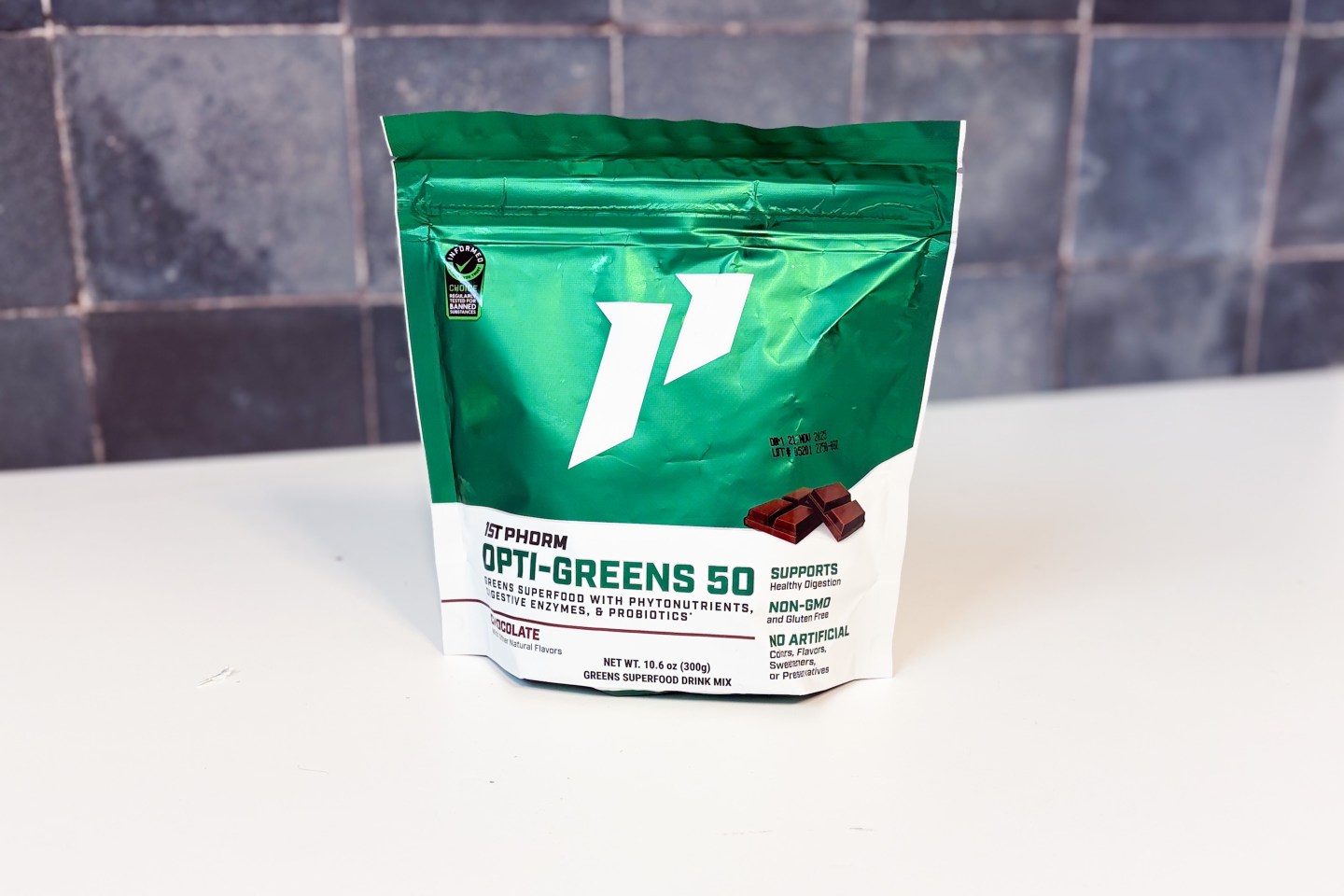
Opti-Greens 50 Review (2026): Insights from Hands-On Testing
HealthDietary Supplements
Opti-Greens 50 Review (2026): Insights from Hands-On Testing
By Christina SnyderJuly 2, 2026
10 hours ago
U.S. Treasury Secretary Scott Bessent
EconomyDebt
AI’s $2.2 trillion deficit fix is already half fake, economists say
By Tristan BoveJuly 2, 2026
11 hours ago
s
Personal FinanceSports
The sports economy is unaffordable at the bar, let alone the stadium
By Catherina GioinoJuly 2, 2026
11 hours ago
m
Politicsfraud
Trump fights fraud by freezing funding for New York’s Medicaid Fraud Control Unit
By Ali Swenson, Geoff Mulvihill and The Associated PressJuly 2, 2026
11 hours ago

Most Popular

As Big Tech showers employees with perks to win the talent war, Nvidia built a nearly $5 trillion company by making people pay for their own lunch
Big Tech
As Big Tech showers employees with perks to win the talent war, Nvidia built a nearly $5 trillion company by making people pay for their own lunch
By Marco Quiroz-GutierrezJuly 1, 2026
2 days ago
Mark Zuckerberg feeds his cows macadamia nuts and beer to create the 'highest-quality beef in the world' on his $300 million estate in Hawaii
Success
Mark Zuckerberg feeds his cows macadamia nuts and beer to create the 'highest-quality beef in the world' on his $300 million estate in Hawaii
By Sasha RogelbergJuly 2, 2026
13 hours ago
Today, Emily Blunt is worth $80 million thanks to her Hollywood career—but she actually wanted to be a UN Spanish translator on $80K
Success
Today, Emily Blunt is worth $80 million thanks to her Hollywood career—but she actually wanted to be a UN Spanish translator on $80K
By Orianna Rosa RoyleJuly 2, 2026
23 hours ago
Americans are escaping the U.S. for New Zealand where house prices have hit a new low—but only wealthy Americans with $3 million spare can invest
Success
Americans are escaping the U.S. for New Zealand where house prices have hit a new low—but only wealthy Americans with $3 million spare can invest
By Emma BurleighJuly 2, 2026
15 hours ago
Current price of oil as of July 2, 2026
Personal Finance
Current price of oil as of July 2, 2026
By Joseph HostetlerJuly 2, 2026
16 hours ago
MacKenzie Scott alone accounted for one-third of America's $19.2 billion in megagifts last year
Success
MacKenzie Scott alone accounted for one-third of America's $19.2 billion in megagifts last year
By Sydney LakeJune 25, 2026
8 days ago

© 2026 Fortune Media IP Limited. All Rights Reserved. Use of this site constitutes acceptance of our Terms of Use and Privacy Policy | CA Notice at Collection and Privacy Notice | Do Not Sell/Share My Personal Information
FORTUNE is a trademark of Fortune Media IP Limited, registered in the U.S. and other countries. FORTUNE may receive compensation for some links to products and services on this website. Offers may be subject to change without notice.