• Home
  • Latest
  • Fortune 500
  • Finance
  • Tech
  • Leadership
  • Lifestyle
  • Rankings
  • Multimedia

Trendingnow

1

As Big Tech showers employees with perks to win the talent war, Nvidia built a nearly $5 trillion company by making people pay for their own lunch

2

MacKenzie Scott alone accounted for one-third of America's $19.2 billion in megagifts last year

3

Current price of oil as of July 1, 2026

1

As Big Tech showers employees with perks to win the talent war, Nvidia built a nearly $5 trillion company by making people pay for their own lunch

2

MacKenzie Scott alone accounted for one-third of America's $19.2 billion in megagifts last year

3

Current price of oil as of July 1, 2026

Consumer misbehavior: Why we’re terrible at buying appliances

By
Chris Matthews
Chris Matthews
Down Arrow Button Icon
By
Chris Matthews
Chris Matthews
Down Arrow Button Icon
April 15, 2014, 6:48 PM ET
Add Fortune on Google for similar content.

FORTUNE — Much of economics is based on the simple idea that people prefer cheaper products to more expensive ones. But what if that’s not always the case?

Those working within the blossoming field of behavioral economics have explored the ways in which humans function (or don’t, as the case may be) as rational actors, and new studies show just how bad we can be at making the best decisions for ourselves. One such working paper, published Monday by the National Bureau of Economic Research, looks at the strange decisions Americans make when it comes to purchasing, of all things, water heaters.

Why water heaters, you ask? The authors of the paper, economists Hunt Allcott and Richard Sweeney, chose this item because the sticker price of water heaters varies considerably based on how energy efficient they are, and the total cost of the product requires consumers to understand both the sticker price and the price of the appliances’ energy use over time. The authors say water heaters are a good subject for study “precisely because they are so mundane. Consumers rarely think about their water heater until it breaks unexpectedly, at which point they want to replace it quickly, with limited time for search and information acquisition.”

This is the logic behind the “Energy Star,” a program in which companies submit their products to the EPA or Department of Energy for efficiency testing, and products that meet certain energy requirements get the “Energy Star” seal. Many of these products are so efficient that even though they are have higher sticker prices, they actually are less expensive for the consumer in the long run. Labeling these products as “Energy Star” products helps close the information gap for consumers who want to act rationally and buy the truly cheaper product.

MORE: 3 reasons the economy has some spring in its step

But Allcott and Sweeny’s work calls into question whether the Energy Star label encourages consumers to buy the least expensive (in the long run) product. The economists embedded themselves with a “large nationwide retailer” that sells about 45,000 water heaters every year. They studied the buying habits of roughly 20,000 potential customers who called about water heater purchases, examining how sales of energy-efficient models were affected by heavy incentives like $100 rebates for customers and $25 sales incentives for salespeople who sold energy-efficient models. They found that even with the rebates, which often increased the typical customer’s return on investment to 28% t0 37%, customers overwhelming chose to buy a water heater with a lower sticker price.

Consumers have an irrational bias against high upfront costs, even when they are aware that the cost of the product will be cheaper in the long run. 

The study’s findings also have implications for policymakers. Consider the public battle over incandescent lightbulbs. In 2007, President George W. Bush signed the “Energy Independence and Security Act of 2007,” which, among other things, banned the manufacture of most incandescent light bulbs in use at that time because they were too energy inefficient. Despite industry innovation in the light bulb market that reduced the total cost of lighting (bulb and electricity included), customers still went for the cheap and familiar incandescent bulbs they were used to. They needed to be nudged into submission to opt for the energy-efficient bulbs.

MORE: Long-term unemployment: What the U.S. can learn from Sweden

Yale economist William Nordhaus has studied the economics of climate change extensively, and sees “energy-cost myopia” as a prime reason the government should regulate markets for appliances. In his recent book The Climate Casino, Nordhaus compares regulations that require efficient products to those that require cars to include airbags. “Since people do not always behave in their long-run self interest, careful use of regulatory mandates can save lives (in the case of airbags) or money and CO2 emissions (in the case of effective energy regulations),” he writes.

This is the justification for many government programs, from Social Security to unemployment insurance. People don’t always behave in their best interests, and despite the high-profile complaining about the disappearance of certain lightbulbs, we’re all better off without them.
About the Author
By Chris Matthews
See full bioRight Arrow Button Icon
Add Fortune on Google for similar content.

Latest in

Finance
Lorem ipsum dolor sit amet, consectetur adipiscing elit, sed do eiusmod tempor incididunt ut labore et dolore magna aliqua. Ut enim ad minim veniam
By Fortune Editors
October 20, 2025
Finance
Lorem ipsum dolor sit amet, consectetur adipiscing elit, sed do eiusmod tempor incididunt ut labore et dolore magna aliqua. Ut enim ad minim veniam
By Fortune Editors
October 20, 2025
Finance
Lorem ipsum dolor sit amet, consectetur adipiscing elit, sed do eiusmod tempor incididunt ut labore et dolore magna aliqua. Ut enim ad minim veniam
By Fortune Editors
October 20, 2025
Finance
Lorem ipsum dolor sit amet, consectetur adipiscing elit, sed do eiusmod tempor incididunt ut labore et dolore magna aliqua. Ut enim ad minim veniam
By Fortune Editors
October 20, 2025
Finance
Lorem ipsum dolor sit amet, consectetur adipiscing elit, sed do eiusmod tempor incididunt ut labore et dolore magna aliqua. Ut enim ad minim veniam
By Fortune Editors
October 20, 2025
Finance
Lorem ipsum dolor sit amet, consectetur adipiscing elit, sed do eiusmod tempor incididunt ut labore et dolore magna aliqua. Ut enim ad minim veniam
By Fortune Editors
October 20, 2025

Most Popular

Finance
Lorem ipsum dolor sit amet, consectetur adipiscing elit, sed do eiusmod tempor incididunt ut labore et dolore magna aliqua. Ut enim ad minim veniam
By Fortune Editors
October 20, 2025
Finance
Lorem ipsum dolor sit amet, consectetur adipiscing elit, sed do eiusmod tempor incididunt ut labore et dolore magna aliqua. Ut enim ad minim veniam
By Fortune Editors
October 20, 2025
Finance
Lorem ipsum dolor sit amet, consectetur adipiscing elit, sed do eiusmod tempor incididunt ut labore et dolore magna aliqua. Ut enim ad minim veniam
By Fortune Editors
October 20, 2025
Finance
Lorem ipsum dolor sit amet, consectetur adipiscing elit, sed do eiusmod tempor incididunt ut labore et dolore magna aliqua. Ut enim ad minim veniam
By Fortune Editors
October 20, 2025
Finance
Lorem ipsum dolor sit amet, consectetur adipiscing elit, sed do eiusmod tempor incididunt ut labore et dolore magna aliqua. Ut enim ad minim veniam
By Fortune Editors
October 20, 2025
Finance
Lorem ipsum dolor sit amet, consectetur adipiscing elit, sed do eiusmod tempor incididunt ut labore et dolore magna aliqua. Ut enim ad minim veniam
By Fortune Editors
October 20, 2025
Fortune Secondary Logo
Rankings
  • 100 Best Companies
  • Fortune 500
  • Global 500
  • Fortune 500 Europe
  • Most Powerful Women
  • World's Most Admired Companies
  • See All Rankings
  • Lists Calendar
Sections
  • Finance
  • Fortune Crypto
  • Features
  • Leadership
  • Health
  • Commentary
  • Success
  • Retail
  • Mpw
  • Tech
  • Lifestyle
  • CEO Initiative
  • Asia
  • Politics
  • Conferences
  • Europe
  • Newsletters
  • Personal Finance
  • Environment
  • Magazine
  • Education
Customer Support
  • Frequently Asked Questions
  • Customer Service Portal
  • Privacy Policy
  • Terms Of Use
  • Single Issues For Purchase
  • International Print
Commercial Services
  • Advertising
  • Fortune Brand Studio
  • Fortune Analytics
  • Fortune Conferences
  • Business Development
  • Group Subscriptions
About Us
  • About Us
  • Press Center
  • Work At Fortune
  • Terms And Conditions
  • Site Map
  • About Us
  • Press Center
  • Work At Fortune
  • Terms And Conditions
  • Site Map
  • Facebook icon
  • Twitter icon
  • LinkedIn icon
  • Instagram icon
  • Pinterest icon

Latest in

Michael Burry just shorted Caterpillar’s 172% AI rally. One analyst says his bet won’t even matter
Investingstock prices
Michael Burry just shorted Caterpillar’s 172% AI rally. One analyst says his bet won’t even matter
By Marco Quiroz-GutierrezJuly 2, 2026
3 hours ago
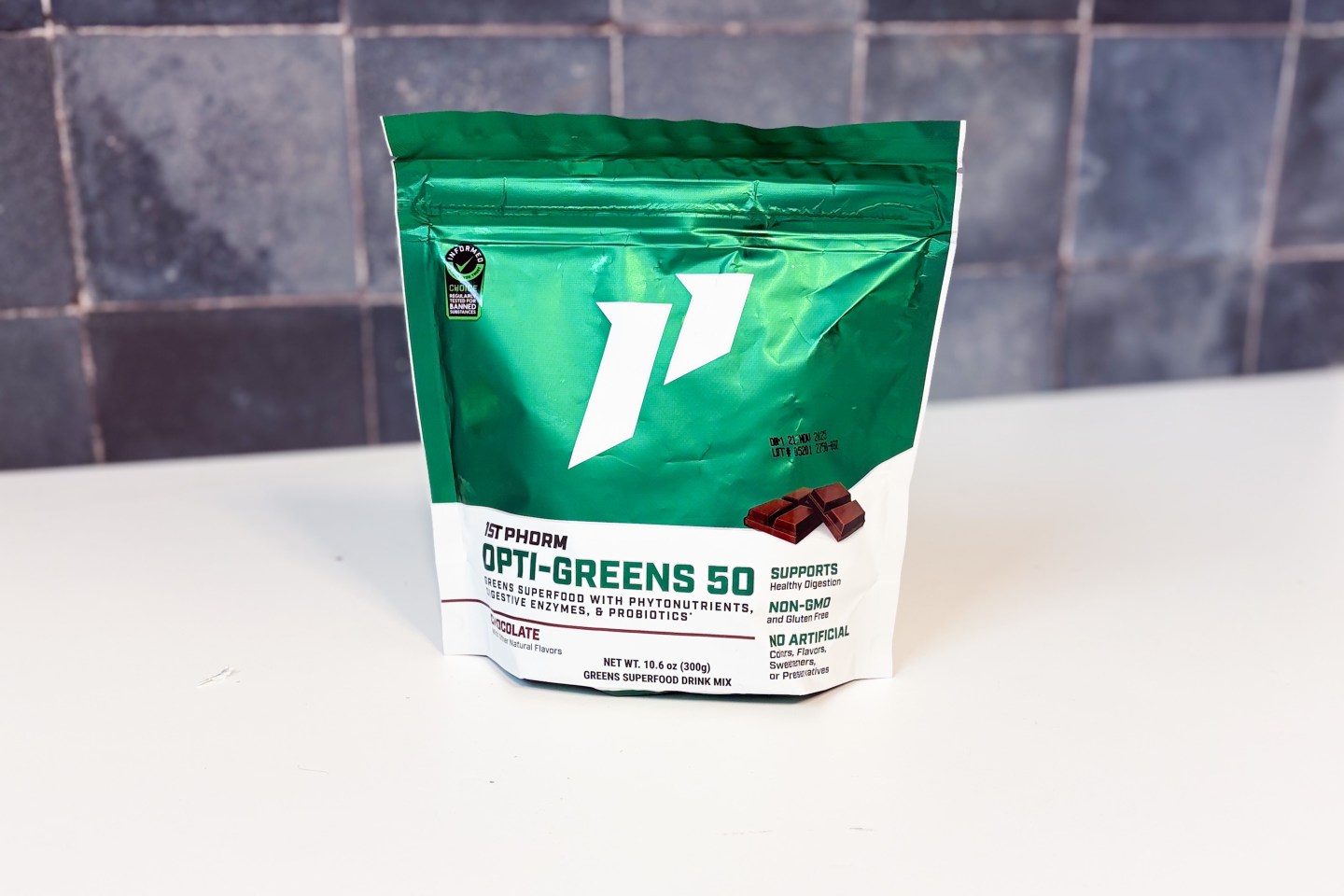
Opti-Greens 50 Review (2026): Insights from Hands-On Testing
HealthDietary Supplements
Opti-Greens 50 Review (2026): Insights from Hands-On Testing
By Christina SnyderJuly 2, 2026
3 hours ago
U.S. Treasury Secretary Scott Bessent
EconomyDebt
AI’s $2.2 trillion deficit fix is already half fake, economists say
By Tristan BoveJuly 2, 2026
4 hours ago
s
Personal FinanceSports
The sports economy is unaffordable at the bar, let alone the stadium
By Catherina GioinoJuly 2, 2026
4 hours ago
m
Politicsfraud
Trump fights fraud by freezing funding for New York’s Medicaid Fraud Control Unit
By Ali Swenson, Geoff Mulvihill and The Associated PressJuly 2, 2026
4 hours ago
Anthropic CEO Dario Amodei
AIEye on AI
Anthropic’s Fable model is back. But U.S. AI policy is still a mess
By Jeremy KahnJuly 2, 2026
4 hours ago

Most Popular

As Big Tech showers employees with perks to win the talent war, Nvidia built a nearly $5 trillion company by making people pay for their own lunch
Big Tech
As Big Tech showers employees with perks to win the talent war, Nvidia built a nearly $5 trillion company by making people pay for their own lunch
By Marco Quiroz-GutierrezJuly 1, 2026
2 days ago
MacKenzie Scott alone accounted for one-third of America's $19.2 billion in megagifts last year
Success
MacKenzie Scott alone accounted for one-third of America's $19.2 billion in megagifts last year
By Sydney LakeJune 25, 2026
8 days ago
Current price of oil as of July 1, 2026
Personal Finance
Current price of oil as of July 1, 2026
By Joseph HostetlerJuly 1, 2026
1 day ago
Trump got a $78K pension from the Screen Actors Guild in 2025 because he appeared in Home Alone 2 in 1992
Politics
Trump got a $78K pension from the Screen Actors Guild in 2025 because he appeared in Home Alone 2 in 1992
By Sasha RogelbergJuly 1, 2026
1 day ago
Today, Emily Blunt is worth $80 million thanks to her Hollywood career—but she actually wanted to be a UN Spanish translator on $80K
Success
Today, Emily Blunt is worth $80 million thanks to her Hollywood career—but she actually wanted to be a UN Spanish translator on $80K
By Orianna Rosa RoyleJuly 2, 2026
16 hours ago
CEO of $248 billion cybersecurity company says workers are about to face a ‘Darwinian moment’ thanks to AI: Evolve or get cut
Success
CEO of $248 billion cybersecurity company says workers are about to face a ‘Darwinian moment’ thanks to AI: Evolve or get cut
By Emma BurleighJuly 1, 2026
1 day ago

© 2026 Fortune Media IP Limited. All Rights Reserved. Use of this site constitutes acceptance of our Terms of Use and Privacy Policy | CA Notice at Collection and Privacy Notice | Do Not Sell/Share My Personal Information
FORTUNE is a trademark of Fortune Media IP Limited, registered in the U.S. and other countries. FORTUNE may receive compensation for some links to products and services on this website. Offers may be subject to change without notice.