• Home
  • Latest
  • Fortune 500
  • Finance
  • Tech
  • Leadership
  • Lifestyle
  • Rankings
  • Multimedia

Trendingnow

1

Egg companies made $1.22 billion in profit off a $6 carton — now they’re buying their way out of a price-fixing case with 53 million donated eggs

2

As Big Tech showers employees with perks to win the talent war, Nvidia built a nearly $5 trillion company by making people pay for their own lunch

3

Mark Zuckerberg feeds his cows macadamia nuts and beer to create the 'highest-quality beef in the world' on his $300 million estate in Hawaii

1

Egg companies made $1.22 billion in profit off a $6 carton — now they’re buying their way out of a price-fixing case with 53 million donated eggs

2

As Big Tech showers employees with perks to win the talent war, Nvidia built a nearly $5 trillion company by making people pay for their own lunch

3

Mark Zuckerberg feeds his cows macadamia nuts and beer to create the 'highest-quality beef in the world' on his $300 million estate in Hawaii
New Energy

Will this battery change everything?

By
Brian Dumaine
Brian Dumaine
Down Arrow Button Icon
By
Brian Dumaine
Brian Dumaine
Down Arrow Button Icon
September 18, 2014, 7:24 AM ET
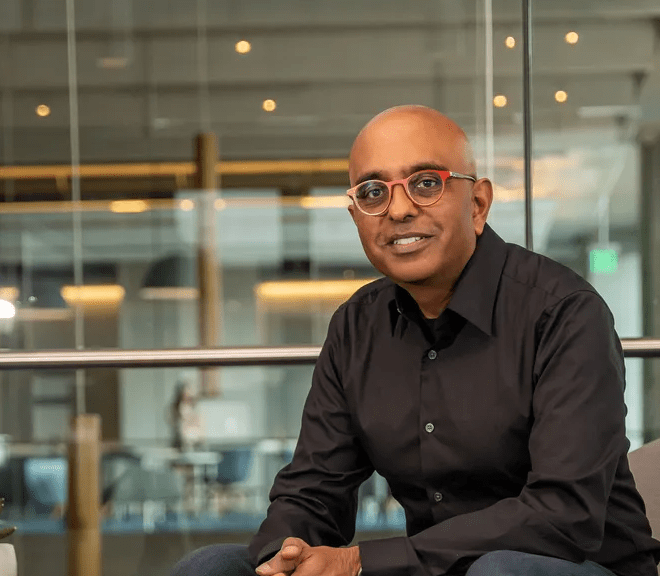
Sakti3 ann marie sastry
Bill Bowen
Add Fortune on Google for similar content.

Imagine an electric car that could travel more than 300 miles on a single charge. A pipe dream? Yes, for now. But a Michigan startup called Sakti3 just might make it a reality. In August the company announced that it was close to achieving the holy grail of power storage: a battery with about double the energy density of today’s lithium-ion technology at one-fifth the cost. Such a battery could give us the first $25,000 mass-market electric car, with a driving range that would please most customers.

The news comes at a crucial time for electric vehicle makers. According to the auto research firm Edmunds, sales of EVs, hybrids, and plug-in hybrids have accounted for just 3.6% of new-car sales so far in 2014, a tick below the 3.7% market share for 2013. In other words, sales of EVs have stalled in an otherwise hot auto market. A big part of the problem is range anxiety—the fear that you’ll run out of juice on a dark road. That’s why Tesla founder and CEO Elon Musk announced in early September that he’s building a massive $5 billion battery plant near Reno—enough to provide power packs for 500,000 cars a year. (Tesla aims to sell 35,000 cars this year.) Musk’s idea is that he can drive down battery prices enough by achieving economies of scale to create a mass-market car with adequate range.

Musk is betting big on traditional lithium-ion technology. And he may be right. One risk, however, is that some other technology may achieve through engineering what he’s trying to do through sheer volume. And that’s where Sakti3 comes in with its new solid-state battery. Tesla’s batteries, which are made by Panasonic, currently cost around $500 a kilowatt-hour. Vishal Sapru, the energy and power systems research manager at research firm Frost & Sullivan, believes that Tesla at best can get that down to $250 by the end of the decade. Sakti3 claims that its batteries will reach $100 a kWh.

Sakti3 was founded in 2008 by Ann Marie Sastry, a former engineering professor at the University of Michigan. (Sakti is Sanskrit for “power,” and the “3” is for the atomic number of lithium.) The Ann Arbor company has raised some $30 million from backers such as GM, the Japanese industrial giant Itochu, the state of Michigan, and venture capital firm Khosla Ventures. The breakthrough that has them excited? Sakti3 has developed a solid-state lithium-ion battery that uses a similar production technique to today’s flat-panel TV displays and solar cells. “We looked at different industries,” says Sastry, a hard-charging leader known for her 100-hour workweeks and compulsive attention to detail, “and we said, ‘Who’s kicking out product fast?’” The vacuum-deposition method used with the products promises to give Sakti3 a cheap, rapid manufacturing process. So far, Sakti3 has produced its cells at a small pilot production line in Michigan and has announced that the technology will be commercialized in the next year or two.

NEW
Graphic Source: Luxresearch; Frost & Sullivan

Sastry, 47, the co-author of more than 80 scientific publications and 70 awarded and filed patents, has been working on battery technology for two decades. A few years ago, she says, she “threw away the script and instead of making traditional chemical lithium batteries, decided to make them the same way you make computer chips.” Easier said than done. Traditional battery manufacturing is a messy, complex process. To take a leap forward, Sastry says she assembled a team of experts from five countries who analyzed each element of a car battery—energy, power, mass, volume, cost, safety—to figure out where savings could be made and which materials would work best.

Today’s car batteries are filled with lithium, a light metal that’s good for storing energy. To generate electricity, the lithium ions move from a negatively charged electrode through a wall of liquid called an electrolyte to a positively charged electrode. In the process, electrons are stripped off the lithium atoms, creating an electric current.

Sastry’s team decided that the sweet spot for innovation was the electrolyte. Getting rid of the liquid electrolyte and replacing it with a solid wall would eliminate a host of problems. Liquid electrolyte provides great conductivity to push lithium back and forth in the battery, but it can cause chemical reactions that over time degrade batteries or, worse, cause meltdowns and fires, such as the ones that occurred in Boeing’s 787s and in Sony and Dell laptops. Because of the risk of overheating, car batteries have to contain heavy and expensive liquid cooling tubes, electronic controls, and casing.

By developing a solid-state electrolyte, Sastry says she solved the exploding-battery problem. The solid-state design will also allow Sakti3, claims Sastry, to manufacture batteries quickly and cheaply the way TV makers do flat-panel screens today.

But it’s worth remembering that many battery companies before Sakti3 have dazzled in theory only to fizzle in the marketplace. For instance, both A123 and Ener1, two companies that were backed by U.S. government grants and that showed promising new battery technologies, ended up bankrupt and sold off to the Chinese and Russians, respectively. “Sakti3’s big challenge,” says Kevin See, a senior analyst at Lux Research, “is going to be the cost of manufacturing and the yield it’s going to get. It’s great to demonstrate a small battery in the lab, but making batteries bigger and making a lot of them is not trivial.” He also questions whether solid-state technology can provide the sudden acceleration needed for a vehicle—a problem the technology has encountered in the past.

Also, will Sakti3’s solid-state battery be tough enough? “Prototypes are run in a controlled lab environment,” says Frost & Sullivan’s Sapru. “How does the battery work in extreme environments when it’s over 100 degrees in the desert or 30 below in Alaska? How does the battery respond on bumpy roads?”

Sastry acknowledges the steep hurdles ahead. “Designing batteries is one of the most complex engineering problems on the planet,” she says. To conquer the manufacturing challenges, she plans to bring in a deep-pocketed partner. Later this year Sakti3 will announce a manufacturing agreement with a major corporation—it won’t say which for now.

Meanwhile, Sastry plans to prove her technology by starting small. The CEO says her company will first produce solid-state batteries for consumer electronics such as smartphones, aiming to double their battery life, before moving on to car packs. Down the road, Sastry believes Sakti3’s solid-state batteries could also be used for utility-scale storage to store energy generated by wind and solar power for when the wind isn’t blowing or the sun isn’t shining.

If it works, there will be huge demand for a better battery. Frost & Sullivan predicts the lithium-battery market will grow from $17.5 billion in 2013 to $76.4 billion in 2020, a 20% to 25% annual growth rate. That hasn’t been lost on Toyota, which also has a promising solid-state-battery program. So far the carmaker has installed a solid-state lithium-ion battery only in an electric scooter, though it says that by 2020 the batteries could be ready to power a 300-mile-range electric car.

Does the thought of competition from a giant corporation like Toyota keep Sastry up at night? “I’m not a big sleeper,” she says jokingly, “and I’m not a worrier. I’m a happy warrior who’s driven by doing the next new thing.” Winning the battle for battery supremacy may take all of her drive.

This story is from the October 6, 2014 issue of Fortune.
About the Author
By Brian Dumaine
See full bioRight Arrow Button Icon
Add Fortune on Google for similar content.

Latest in

Finance
Lorem ipsum dolor sit amet, consectetur adipiscing elit, sed do eiusmod tempor incididunt ut labore et dolore magna aliqua. Ut enim ad minim veniam
By Fortune Editors
October 20, 2025
Finance
Lorem ipsum dolor sit amet, consectetur adipiscing elit, sed do eiusmod tempor incididunt ut labore et dolore magna aliqua. Ut enim ad minim veniam
By Fortune Editors
October 20, 2025
Finance
Lorem ipsum dolor sit amet, consectetur adipiscing elit, sed do eiusmod tempor incididunt ut labore et dolore magna aliqua. Ut enim ad minim veniam
By Fortune Editors
October 20, 2025
Finance
Lorem ipsum dolor sit amet, consectetur adipiscing elit, sed do eiusmod tempor incididunt ut labore et dolore magna aliqua. Ut enim ad minim veniam
By Fortune Editors
October 20, 2025
Finance
Lorem ipsum dolor sit amet, consectetur adipiscing elit, sed do eiusmod tempor incididunt ut labore et dolore magna aliqua. Ut enim ad minim veniam
By Fortune Editors
October 20, 2025
Finance
Lorem ipsum dolor sit amet, consectetur adipiscing elit, sed do eiusmod tempor incididunt ut labore et dolore magna aliqua. Ut enim ad minim veniam
By Fortune Editors
October 20, 2025

Most Popular

Finance
Lorem ipsum dolor sit amet, consectetur adipiscing elit, sed do eiusmod tempor incididunt ut labore et dolore magna aliqua. Ut enim ad minim veniam
By Fortune Editors
October 20, 2025
Finance
Lorem ipsum dolor sit amet, consectetur adipiscing elit, sed do eiusmod tempor incididunt ut labore et dolore magna aliqua. Ut enim ad minim veniam
By Fortune Editors
October 20, 2025
Finance
Lorem ipsum dolor sit amet, consectetur adipiscing elit, sed do eiusmod tempor incididunt ut labore et dolore magna aliqua. Ut enim ad minim veniam
By Fortune Editors
October 20, 2025
Finance
Lorem ipsum dolor sit amet, consectetur adipiscing elit, sed do eiusmod tempor incididunt ut labore et dolore magna aliqua. Ut enim ad minim veniam
By Fortune Editors
October 20, 2025
Finance
Lorem ipsum dolor sit amet, consectetur adipiscing elit, sed do eiusmod tempor incididunt ut labore et dolore magna aliqua. Ut enim ad minim veniam
By Fortune Editors
October 20, 2025
Finance
Lorem ipsum dolor sit amet, consectetur adipiscing elit, sed do eiusmod tempor incididunt ut labore et dolore magna aliqua. Ut enim ad minim veniam
By Fortune Editors
October 20, 2025
Fortune Secondary Logo
Rankings
  • 100 Best Companies
  • Fortune 500
  • Global 500
  • Fortune 500 Europe
  • Most Powerful Women
  • World's Most Admired Companies
  • See All Rankings
  • Lists Calendar
Sections
  • Finance
  • Fortune Crypto
  • Features
  • Leadership
  • Health
  • Commentary
  • Success
  • Retail
  • Mpw
  • Tech
  • Lifestyle
  • CEO Initiative
  • Asia
  • Politics
  • Conferences
  • Europe
  • Newsletters
  • Personal Finance
  • Environment
  • Magazine
  • Education
Customer Support
  • Frequently Asked Questions
  • Customer Service Portal
  • Privacy Policy
  • Terms Of Use
  • Single Issues For Purchase
  • International Print
Commercial Services
  • Advertising
  • Fortune Brand Studio
  • Fortune Analytics
  • Fortune Conferences
  • Business Development
  • Group Subscriptions
About Us
  • About Us
  • Press Center
  • Work At Fortune
  • Terms And Conditions
  • Site Map
  • About Us
  • Press Center
  • Work At Fortune
  • Terms And Conditions
  • Site Map
  • Facebook icon
  • Twitter icon
  • LinkedIn icon
  • Instagram icon
  • Pinterest icon

Latest in

ds
CommentarySoftware
I argued with the father of open source for 2 years. Now the AI fight is the same — only bigger
By David SiegelJuly 3, 2026
40 minutes ago
ashok
Commentary250 Years of Innovation
The greatest startup in history: What we can learn from America’s founders at today’s AI frontier
By Ashok N. SrivastavaJuly 3, 2026
40 minutes ago
Photo: World Cup fans drinking.
EconomyEconomics
On Wall Street, analysts increasingly don’t believe the U.S. government’s ‘misleading’ job numbers
By Jim EdwardsJuly 3, 2026
2 hours ago
U.S. President Donald Trump talks to reporters after signing an executive order dealing with automobile repairs with Environmental Protection Agency Administrator Lee Zeldin in the Oval Office at the White House on June 29, 2026 in Washington, DC.
EconomyFed
Trump is already causing a headache for his new Fed chairman, saying the central bank’s board is ‘hostile’ and ‘doing the wrong thing’
By Eleanor PringleJuly 3, 2026
2 hours ago
2
Commentary250 Years of Innovation
America’s secret weapon isn’t just innovation — It’s the freedom to fail
By Keith KrachJuly 3, 2026
3 hours ago
A $75 billion valuation, 75 million global customers and on its way to America—Revolut is London’s disruptor extraordinaire
EuropeLetter from London
A $75 billion valuation, 75 million global customers and on its way to America—Revolut is London’s disruptor extraordinaire
By Kamal AhmedJuly 3, 2026
3 hours ago

Most Popular

Egg companies made $1.22 billion in profit off a $6 carton — now they’re buying their way out of a price-fixing case with 53 million donated eggs
Law
Egg companies made $1.22 billion in profit off a $6 carton — now they’re buying their way out of a price-fixing case with 53 million donated eggs
By Wyatte Grantham-Philips and The Associated PressJuly 2, 2026
19 hours ago
As Big Tech showers employees with perks to win the talent war, Nvidia built a nearly $5 trillion company by making people pay for their own lunch
Big Tech
As Big Tech showers employees with perks to win the talent war, Nvidia built a nearly $5 trillion company by making people pay for their own lunch
By Marco Quiroz-GutierrezJuly 1, 2026
2 days ago
Mark Zuckerberg feeds his cows macadamia nuts and beer to create the 'highest-quality beef in the world' on his $300 million estate in Hawaii
Success
Mark Zuckerberg feeds his cows macadamia nuts and beer to create the 'highest-quality beef in the world' on his $300 million estate in Hawaii
By Sasha RogelbergJuly 2, 2026
20 hours ago
Current price of oil as of July 2, 2026
Personal Finance
Current price of oil as of July 2, 2026
By Joseph HostetlerJuly 2, 2026
23 hours ago
Americans are escaping the U.S. for New Zealand where house prices have hit a new low—but only wealthy Americans with $3 million spare can invest
Success
Americans are escaping the U.S. for New Zealand where house prices have hit a new low—but only wealthy Americans with $3 million spare can invest
By Emma BurleighJuly 2, 2026
22 hours ago
Economists have found an answer to slowing cognitive decline: Avoid retiring early, study finds
Economy
Economists have found an answer to slowing cognitive decline: Avoid retiring early, study finds
By Sasha RogelbergJuly 2, 2026
21 hours ago

© 2026 Fortune Media IP Limited. All Rights Reserved. Use of this site constitutes acceptance of our Terms of Use and Privacy Policy | CA Notice at Collection and Privacy Notice | Do Not Sell/Share My Personal Information
FORTUNE is a trademark of Fortune Media IP Limited, registered in the U.S. and other countries. FORTUNE may receive compensation for some links to products and services on this website. Offers may be subject to change without notice.