As funds from the BP oil spill fines become available for environmental and economic development projects this month, an alliance of conservation groups has produced a master plan to protect the entire Gulf of Mexico coastline in the U.S.
The plan, which was shared with Fortune, would give some level of protection to 28 million acres of land along 1,600 miles of coastline across five states—Texas, Louisiana, Mississippi, Alabama, and Florida. If adopted, the result would rival in scale multi-state wilderness preserves such as the Appalachian Trail.
“If you look at something like the Appalachian Trail, it runs from Maine all the way down to Georgia … the Appalachian Mountains are one kind of giant ecosystem, and the trail is a unifying vision along that,” said Ole Amundsen, a program manager for the Conservation Fund and one of the plan’s authors.
“This is a little bit like that in terms of aspirational quality.”
Depending on voluntary deals rather than regulatory or legislative actions, the plan’s success would also be the crowning achievement of “eco-pragmatism,” a new approach to conservation.
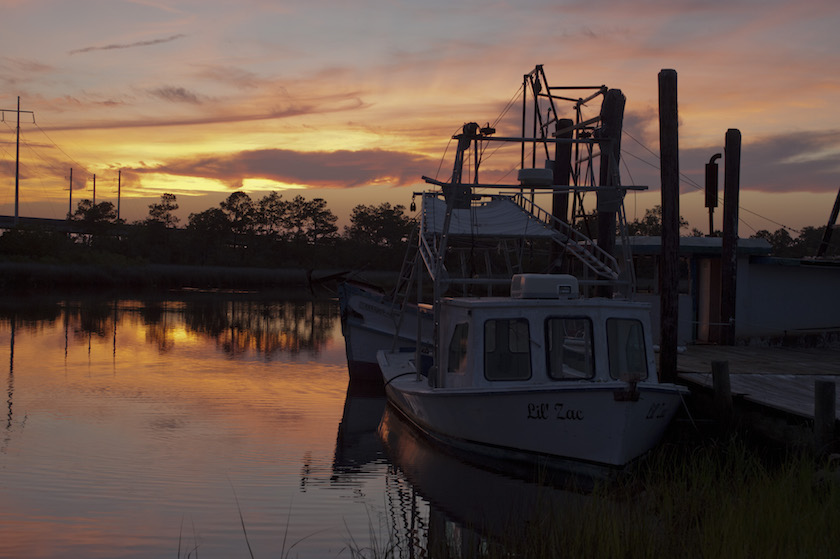
An eco-pragmatist weighs the needs of humans in an ecosystem alongside those of endangered species, and acknowledges that human survival is inextricably linked to money. The pragmatists engage with markets; economic implications are among their first considerations when making environmental plans. And, particularly in the case of the Gulf Coast, they warn there can be no economic development without environmental protection. A pristine coast is in the best interests of the Texas dove hunter, the Louisiana shrimp fisherman, the Florida luxury condo developer, and the red-bellied turtle.
Among the major proponents of this approach are national land-protection group The Nature Conservancy, led by former Goldman Sachs executive Mark Tercek and the Conservation Fund, a group led by Larry Selzer that pursues economic and environmental goals simultaneously. The Land Trust Alliance produced the “Land Conservation Vision for the Gulf of Mexico Region” in partnership with these two nonprofit groups, the hunting-oriented conservation group Ducks Unlimited, birding-oriented conservation group National Audubon Society, and more than 25 other national and regional land trusts.
Steve Shepard is Gulf Coast chair of the Mississippi chapter of the Sierra Club, a prominent environmentalist group that has no connection to the plan. Shepard agrees broadly with the land conservationists’ aims. “[It might] stop states [from] building convention centers and baseball stadiums and some of the crazy things that governors want to spend recovery money on,” said Shepard.
But Shepard also fears a Gulfwide plan could spread recovery spending too thin. Protecting land “from Brownsville to the Dry Tortugas”—the farthest reaches of Texas and the Florida keys—could “dilute” the assistance given to the areas most affected by the spill, he said.
The danger of focusing on individual parts rather than the whole, from a conservation perspective, is that whatever good is done by targeting areas for protection could be undone by careless planning of casinos, convention centers, and golf courses down the coast. Amundsen and the planners want to show their blueprint to the real-estate and golf-course developers all over the region and “trade” with them on environmental and economic goals. A farmer might make what is, to them, a small concession like not ploughing all the way to the banks of a stream. That could make a big difference to water quality. In return, the environmental group could help the farmer navigate Department of Agriculture incentive programs for green planning.
That “trading” mindset is what makes this plan so unusual. And the fact that this group is attempting to coordinate projects across five different states is what makes it so ambitious.
“Just like the Rocky Mountain states of Colorado, Wyoming, Idaho, and Montana are in the same kind of space, the Gulf Coast places these five states all in the same bread basket,” said Amundsen. “[The plan] is a way to frame that region and what the priorities are and, for the groups that are working at that level, what their next step is.”
When BP’s Deepwater Horizon exploded at the Macondo Prospect on April 20, 2010, 11 people died and as many as 5 million barrels of oil inked the sea water and washed ashore. The Coast Guard launched cleanup efforts shortly thereafter, and that process is still under way. Scientists from federal agencies are leading the Natural Resource Damage Assessment to identify acute effects of the spill, and to direct money from BP (BP) and others into projects such as rebuilding oyster beds, replanting wetlands, and cleaning beaches.
Earlier this year, a federal judge ruled that BP was guilty of gross negligence in the accident, leaving the British oil giant on the hook for penalties of up to $4,300 per barrel. While the precise number of barrels spilled is still a subject of debate, BP could be facing a civil fine of up to $17 billion. Rig operator Transocean (RIG) also faces civil penalties.

The 2012 RESTORE Act had designated the Gulf Coast Restoration Trust Fund as the recipient of 80% of these civil fines.
On November 17, specially convened councils will start to allocate roughly $160 million to $180 million from the Restoration Trust Fund to projects across the Gulf region, said Elizabeth Barber, who coordinated the partnership that produced the plan on behalf of the Land Trust Alliance. The councils are typically made up of state officials, with some federal input, and can pick from a range of conservation and development projects.
BP and rig operator Transocean settled a separate criminal case that resulted in the establishment of a different fund of $2.5 billion, which will be distributed by non-profit group National Fish and Wildlife Foundation. A round of financing announcements will likely come in November, too, said Barber.
The partnership has prepared one big bid to ensure projects chosen for funding will fit into a larger environmental strategy. In what could be seen as a first step, in August, the Conservation Fund and Nature Conservancy tapped the relatively small amount of Gulf restoration funds already available to make one of the largest ever acquisitions of private lands for public use in Texas.
The $37.7 million purchase of the 17,000-acre Powderhorn Ranch, on the coast south of Houston in August, will preserve a large tract of wetlands as a state park. It’s also an expression of the Gulf Coast partnership’s vision because it’s an important jigsaw piece, connecting two existing pieces of protected land in Matagorda Island and the Arkansas National Wildlife Refuge.
John Minton sees his family’s conservation of Longino Ranch in Sarasota County, Fla., which they’ve owned for generations, as bridging a similar gap between lands already protected in their region of the Gulf Coast.
“We see ourselves as part of a regional conservation effort to preserve a corridor around Charlotte Harbor,” Minton said. “Now, it’s over 100,000 acres of conserved land that we’re a part of.”
To ensure there would never be development on the 8,000 acres, which includes a cattle ranch and a citrus grove, Minton’s family took advantage of incentives that are key to the realization of the land trusts’ master plan: conservation easements. “Easements essentially lock in the land uses that are on the property at the time of easement being put in place,” said Minton.
In Minton’s case, the family sold two conservation easements, including one to the Conservation Foundation of the Gulf Coast, which has signed on to the master plan. In other states where development opportunities are not as valuable, landowners might use the easements for tax benefits.

These incentives will not have the same appeal if a landowner doesn’t earn enough money to have a significant tax liability, said Shepard, of the Sierra Club.
Still, the partnership says that the success of the plan—and the future of the Gulf Coast—depends on private landowners. The land trusts don’t expect to get official conservation status for all the land on their wish list; they do hope landowners will make some allowances.
While the text of the “Vision for the Gulf Region” is short on details, there is one very specific element: the map. With the coastline divided into irregularly shaped patches of various colors, the map looks like a jigsaw-puzzle cheat sheet. And that’s effectively what it is. Each patch represents a targeted piece of land, color-coded to indicate federal, state, private-conservation or private ownership. More than two thirds of the land highlighted is in private hands. As state and local decision makers puzzle out how to make the diverse projects fit together, the partners hope they will use the map as a guide.
While sometimes only by a sliver, almost all the patches are connected to other targeted lands on either side. The planners refused to settle for isolated parcels of protected land because of advances in the understanding of animal migration. Birds don’t fly direct from North to South America, it turns out. Stopovers are almost as important to the survival of many migratory species as the breeding and feeding grounds for which they are bound.
The Gulf Coast is “the landing pad the birds come in on when they’ve flown from South America and Central America,” said Amundsen, of the Conservation fund. “They go from there up the Mississippi River, disperse [across] the Midwest, and [head] up into Canada, or they veer off and start up the North Atlantic flyway.”
The Gulf spill was a catastrophe for wage-earners as well as birds, Amundsen said, and both economic and environmental goals should be addressed in the recovery.
With its massive tourist industry, Florida has long viewed its coastline as an economic resource as well as a natural one. Even before the spill, the state has periodically raised money for coastal improvement. The latest initiative sets aside tax revenue for coastal conservation and was approved in the recent November elections.
Not every beach on the 1,600 miles of Gulf Coast shoreline (16,000 if you include bays, inlets, and inland waterways) is going to be an ideal vacation spot. For one thing, offshore oil platforms are visible from many parts of the Texas and Lousiana coasts. Other industrial states have reclaimed sandy beaches, however. In Texas, there is already an effort to create the Lone Star Coastal National Recreation Area, 700,000 acres of marshland and beach around Galveston.
As on the Gulf Coast this century, heavy industry such as mining and steel making had impinged – physically and psychologically – on the Appalachian mountain range during the early part of the 20th century.
The Appalachian Trail’s development not only preserved a 2,000-mile long swath of wilderness and provided a recreational treasure for millions, it reclaimed a place in the national imagination for the Eastern mountain range.
Currently, the Gulf plan does not include a call for a navigable trail. But Amundsen noted that then-Governor George W. Bush helped develop trails in Texas, and that similar trails exist in other states.
If they ever open a Gulf Coast trail, traversable from Brownsville to Key West, we will know that the “conservation vision” was realized.