• Home
  • Latest
  • Fortune 500
  • Finance
  • Tech
  • Leadership
  • Lifestyle
  • Rankings
  • Multimedia

Trendingnow

1

Even as Elon Musk calls philanthropy ‘very hard,’ everyday Americans gave a record $617 billion—despite feeling the squeeze over the cost of living

2

Egg companies made $1.22 billion in profit off a $6 carton — now they’re buying their way out of a price-fixing case with 53 million donated eggs

3

Shark Tank's Kevin O'Leary says if he were 25 today, he'd chase these two booming opportunities in the world of AI

1

Even as Elon Musk calls philanthropy ‘very hard,’ everyday Americans gave a record $617 billion—despite feeling the squeeze over the cost of living

2

Egg companies made $1.22 billion in profit off a $6 carton — now they’re buying their way out of a price-fixing case with 53 million donated eggs

3

Shark Tank's Kevin O'Leary says if he were 25 today, he'd chase these two booming opportunities in the world of AI
FinanceCommentary

Financial crisis: Revisiting the banking rules that died by a thousand small cuts

By
Barry Eichengreen
Barry Eichengreen
Down Arrow Button Icon
By
Barry Eichengreen
Barry Eichengreen
Down Arrow Button Icon
January 16, 2015, 2:36 PM ET
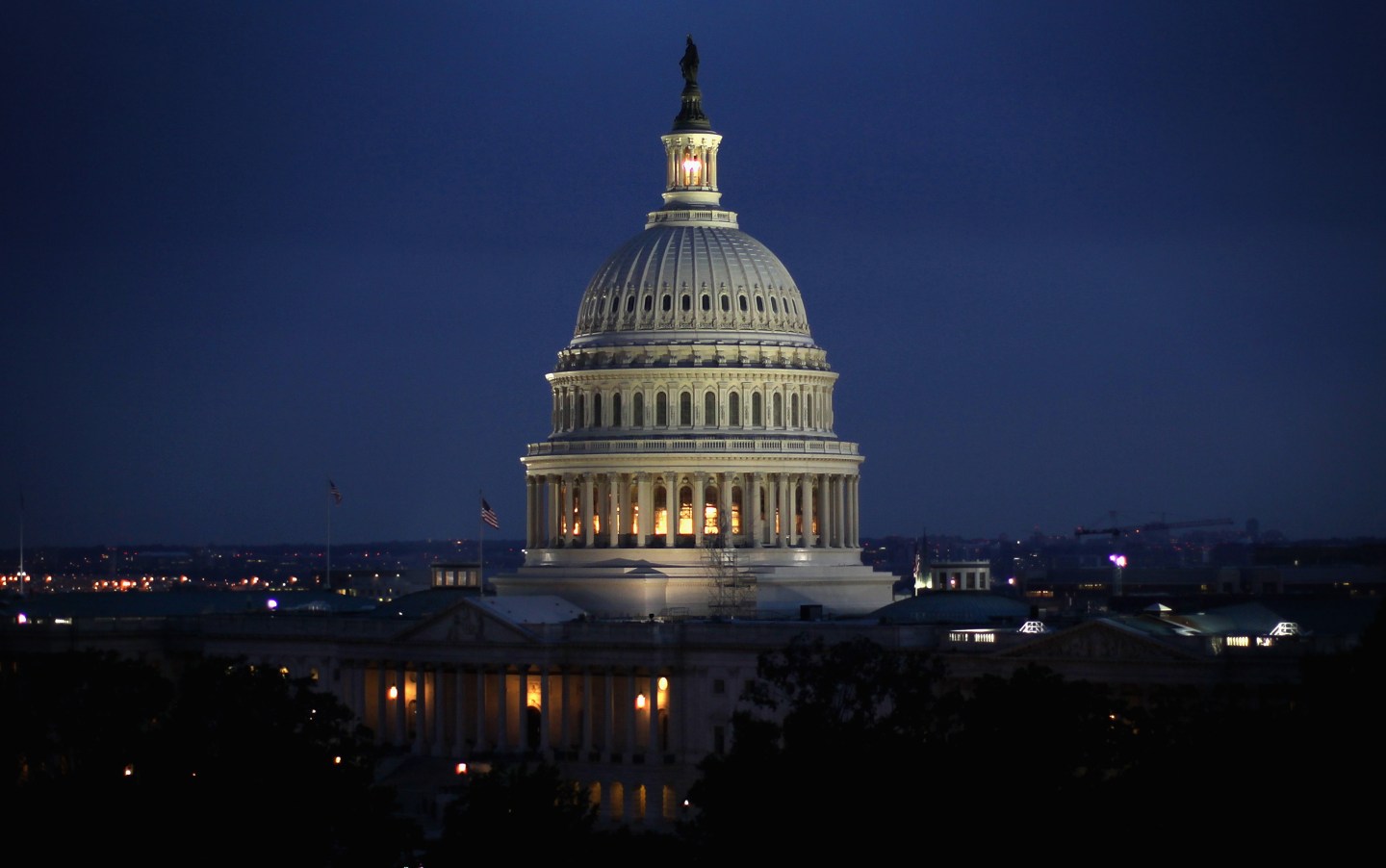
U.S. Capitol
WASHINGTON, DC - JUNE 10: The U.S. Capitol building is seen on the evening of June 10, 2014 in Washington, DC. (Photo by Alex Wong/Getty Images)Photograph by Alex Wong — Getty Images
Add Fortune on Google for similar content.

Many have bemoaned the U.S. government’s failure to do more to strengthen the financial system following the 2008-2009 crisis. In particular, Congress has not considered anything resembling a revival of the Glass-Steagall Act, which separated the humdrum deposit-taking function of commercial banks from the kind of dubious investment and trading activities that set up financial institutions for a fall.

In fact, Congress recently weakened The Volcker Rule, which aimed to prohibit some forms of risky trading by banks. And now the Republican-controlled House and Senate vow to further roll back the Volcker Rule and other provisions of the Dodd-Frank financial reform.

All this makes it important to get the history, and specifically the history of Glass-Steagall, right. First put in place in response to the financial crises of the Great Depression, the Glass-Steagall Act was allowed to lapse in 1999. Many critics of that move argue that it enabled the orgy of financial risk-taking that followed. Others counter that the increased risk-taking was not coming from commercial banks freed up by the elimination of Glass Steagall but by the shadow banking system of investment firms, hedge funds, and commercial paper dealers that were never restricted by Glass Steagall in the first place.

In fact, the financial crisis of the late 2000s was not brought on by the lack of Glass-Steagall per se but instead by a whole set of measures that loosened regulation. The end of Glass-Steagall was simply emblematic of that process.

It all started in 1980 with the abolition of Regulation Q ceilings on deposit interest rates, which allowed commercial banks to compete more aggressively for deposits. That led to a cascade of unintended consequences. It intensified the pressure on Savings & Loans, which previously had been permitted to offer higher deposit rates than other financial institutions. To limit the damage, the Garn-St. Germain Act of 1982 allowed S&Ls to engage in a range of commercial banking activities, those related to consumer lending for example.

Garn-St. Germain helped set the stage for the S&L crisis because it allowed thrifts to take on additional risk but didn’t do anything to restrain them. Meanwhile, as the thrifts began to offer more financial services to customers, traditional banks began to feel competitive pressure. Commercial banks had long been frustrated by their inability to underwrite corporate and municipal bonds. So, in response to a petition from J.P. Morgan(JPM), Bankers Trust, and Citicorp, the Federal Reserve creatively reinterpreted Glass-Steagall in December 1986 to allow commercial banks to derive up to 5% of their income from investment banking activities, including underwriting municipal bonds, commercial paper, and, fatefully, mortgage-backed securities.

In 1987, over the opposition of Fed Chair Paul Volcker, the Federal Reserve Board authorized several large banks to further expand their underwriting businesses. Under Volcker’s successor, Alan Greenspan, the Fed then allowed bank holding companies to derive as much as 25% of their revenues from investment banking operations.

The pressure to loosen regulation intensified as a merger wave swept through the world of investment banking and brokerage firms in the 1990s. Investment banks had first been allowed to expand when, in 1970, the ban on publicly listing their shares was lifted. The response took time to gather steam, but they now expanded with a vengeance.

In 1997, Morgan Stanley (MS), an investment bank, merged with Dean, Witter, Discover & Co., a brokerage and credit card company. That same year, the trust company and derivatives house Bankers Trust acquired Alex. Brown & Sons, an investment and brokerage firm. The consolidation of investment houses, brokers, and insurance companies threatened to put banks at an even bigger disadvantage. So, the banks responded by lobbying even more intensely for the removal of the remaining restrictions on their operations.

By the 1990s, then, the Glass-Steagall Act was already significantly weakened. The fatal blow was struck in 1998 when Citicorp moved to purchase Travelers Insurance Group, notwithstanding Glass-Steagall’s requirement that it sell off Travelers’ insurance business within two years. The merger allowed Travelers to market insurance and its in-house money funds to Citicorp’s retail banking customers. And it gave Citicorp access to an expanded clientele of investors and insurance policyholders. Its main shortcoming? It was not compatible with Glass-Steagall.

The chairmen and co-CEOs of the merged company, John Reed and Sandy Weill, mounted a furious campaign to remove Glass-Steagall’s nettlesome restrictions before the two-year window closed. Their arguments received a sympathetic hearing from Alan Greenspan’s Fed, the Clinton White House, and the Treasury Department, especially when Lawrence Summers succeeded Robert Rubin as secretary in mid-1999. And the executives were warmly received in the halls of Congress, where bank lobbyists freely roamed.

Glass-Steagall was finally euthanized by the Gramm-Leach-Bliley Act, which repealed residual restrictions on combining commercial banking, investment banking, and insurance underwriting businesses in November 1999.

It would be all too easy to claim that Glass-Steagall’s death was a singular event that caused the financial crisis. In fact, its demise was the culmination of a decades-long process of financial deregulation in which both commercial banks and shadow banks were permitted to engage in a wider range of activities, while supervision and oversight lagged behind. Competition between commercial banks, investment banks, and shadow banks squeezed the profits of all involved. Many of the affected institutions responded by using more borrowed money and assuming more risk. The consequences, we now know, were disastrous.

The fact that much of the risky business that led to the 2008-2009 crisis was performed by shadow banks that had always operated outside the Glass-Steagall ring-fence does not excuse the ongoing relaxation of financial oversight and regulation. But simply putting Glass-Steagall back in place will not protect us from future crises. Re-regulating only part of the financial system will not be enough.

We need comprehensive financial reform to cope with 21st century financial markets. From this point of view, eviscerating the Dodd-Frank Wall Street Reform and Consumer Protection Act, as some in the recently inaugurated Congress propose, would be a step in precisely the wrong direction.

Barry Eichengreen is the George C. Pardee and Helen N. Pardee Professor of Economics and Political Science at the University of California, Berkeley and the author of the recently published Hall of Mirrors: The Great Depression, The Great Recession, and the Uses-and Misuses-of History.
About the Author
By Barry Eichengreen
See full bioRight Arrow Button Icon
Add Fortune on Google for similar content.

Latest in Finance

Finance
Lorem ipsum dolor sit amet, consectetur adipiscing elit, sed do eiusmod tempor incididunt ut labore et dolore magna aliqua. Ut enim ad minim veniam
By Fortune Editors
October 20, 2025
Finance
Lorem ipsum dolor sit amet, consectetur adipiscing elit, sed do eiusmod tempor incididunt ut labore et dolore magna aliqua. Ut enim ad minim veniam
By Fortune Editors
October 20, 2025
Finance
Lorem ipsum dolor sit amet, consectetur adipiscing elit, sed do eiusmod tempor incididunt ut labore et dolore magna aliqua. Ut enim ad minim veniam
By Fortune Editors
October 20, 2025
Finance
Lorem ipsum dolor sit amet, consectetur adipiscing elit, sed do eiusmod tempor incididunt ut labore et dolore magna aliqua. Ut enim ad minim veniam
By Fortune Editors
October 20, 2025
Finance
Lorem ipsum dolor sit amet, consectetur adipiscing elit, sed do eiusmod tempor incididunt ut labore et dolore magna aliqua. Ut enim ad minim veniam
By Fortune Editors
October 20, 2025
Finance
Lorem ipsum dolor sit amet, consectetur adipiscing elit, sed do eiusmod tempor incididunt ut labore et dolore magna aliqua. Ut enim ad minim veniam
By Fortune Editors
October 20, 2025

Most Popular

Finance
Lorem ipsum dolor sit amet, consectetur adipiscing elit, sed do eiusmod tempor incididunt ut labore et dolore magna aliqua. Ut enim ad minim veniam
By Fortune Editors
October 20, 2025
Finance
Lorem ipsum dolor sit amet, consectetur adipiscing elit, sed do eiusmod tempor incididunt ut labore et dolore magna aliqua. Ut enim ad minim veniam
By Fortune Editors
October 20, 2025
Finance
Lorem ipsum dolor sit amet, consectetur adipiscing elit, sed do eiusmod tempor incididunt ut labore et dolore magna aliqua. Ut enim ad minim veniam
By Fortune Editors
October 20, 2025
Finance
Lorem ipsum dolor sit amet, consectetur adipiscing elit, sed do eiusmod tempor incididunt ut labore et dolore magna aliqua. Ut enim ad minim veniam
By Fortune Editors
October 20, 2025
Finance
Lorem ipsum dolor sit amet, consectetur adipiscing elit, sed do eiusmod tempor incididunt ut labore et dolore magna aliqua. Ut enim ad minim veniam
By Fortune Editors
October 20, 2025
Finance
Lorem ipsum dolor sit amet, consectetur adipiscing elit, sed do eiusmod tempor incididunt ut labore et dolore magna aliqua. Ut enim ad minim veniam
By Fortune Editors
October 20, 2025
Fortune Secondary Logo
Rankings
  • 100 Best Companies
  • Fortune 500
  • Global 500
  • Fortune 500 Europe
  • Most Powerful Women
  • World's Most Admired Companies
  • See All Rankings
  • Lists Calendar
Sections
  • Finance
  • Fortune Crypto
  • Features
  • Leadership
  • Health
  • Commentary
  • Success
  • Retail
  • Mpw
  • Tech
  • Lifestyle
  • CEO Initiative
  • Asia
  • Politics
  • Conferences
  • Europe
  • Newsletters
  • Personal Finance
  • Environment
  • Magazine
  • Education
Customer Support
  • Frequently Asked Questions
  • Customer Service Portal
  • Privacy Policy
  • Terms Of Use
  • Single Issues For Purchase
  • International Print
Commercial Services
  • Advertising
  • Fortune Brand Studio
  • Fortune Analytics
  • Fortune Conferences
  • Business Development
  • Group Subscriptions
About Us
  • About Us
  • Press Center
  • Work At Fortune
  • Terms And Conditions
  • Site Map
  • About Us
  • Press Center
  • Work At Fortune
  • Terms And Conditions
  • Site Map
  • Facebook icon
  • Twitter icon
  • LinkedIn icon
  • Instagram icon
  • Pinterest icon

Latest in Finance

The supertanker tycoon making millions on Hormuz shuttle runs
EnergyShipping
The supertanker tycoon making millions on Hormuz shuttle runs
By Weilun Soon, Alex Longley, Anthony Di Paola and BloombergJuly 5, 2026
5 hours ago
The stock market is about to suffer a ‘snapback’ and will lose much of this year’s gains as ‘speculation is hitting extreme levels,’ BofA warns
InvestingS&P 500
The stock market is about to suffer a ‘snapback’ and will lose much of this year’s gains as ‘speculation is hitting extreme levels,’ BofA warns
By Jason MaJuly 5, 2026
6 hours ago
Oil, gas tankers cross Hormuz via Oman-side route after U-turns
EnergyIran
Oil, gas tankers cross Hormuz via Oman-side route after U-turns
By Weilun Soon, Paul Burkhardt and BloombergJuly 5, 2026
8 hours ago
France’s richest man Arnault hit with €22 million tax assessment
LawTaxes
France’s richest man Arnault hit with €22 million tax assessment
By Claudia Cohen and BloombergJuly 5, 2026
8 hours ago
SK Hynix seeks access to AI investors in $29 billion U.S. listing
InvestingChips
SK Hynix seeks access to AI investors in $29 billion U.S. listing
By Bailey Lipschultz, Jeran Wittenstein, Yiqin Shen and BloombergJuly 5, 2026
8 hours ago
As higher airfares and gas prices make vacations ‘crazy expensive,’ small business owners say Americans are staying closer to home this summer
EconomySmall Business
As higher airfares and gas prices make vacations ‘crazy expensive,’ small business owners say Americans are staying closer to home this summer
By Mae Anderson and The Associated PressJuly 5, 2026
12 hours ago

Most Popular

Even as Elon Musk calls philanthropy ‘very hard,’ everyday Americans gave a record $617 billion—despite feeling the squeeze over the cost of living
Success
Even as Elon Musk calls philanthropy ‘very hard,’ everyday Americans gave a record $617 billion—despite feeling the squeeze over the cost of living
By Preston ForeJuly 4, 2026
2 days ago
Egg companies made $1.22 billion in profit off a $6 carton — now they’re buying their way out of a price-fixing case with 53 million donated eggs
Law
Egg companies made $1.22 billion in profit off a $6 carton — now they’re buying their way out of a price-fixing case with 53 million donated eggs
By Wyatte Grantham-Philips and The Associated PressJuly 2, 2026
3 days ago
Shark Tank's Kevin O'Leary says if he were 25 today, he'd chase these two booming opportunities in the world of AI
AI
Shark Tank's Kevin O'Leary says if he were 25 today, he'd chase these two booming opportunities in the world of AI
By Marco Quiroz-GutierrezJuly 5, 2026
13 hours ago
Meet the Zillennials: The luckiest micro-generation in the workforce, born between 1993 and 1998
AI
Meet the Zillennials: The luckiest micro-generation in the workforce, born between 1993 and 1998
By Nick LichtenbergJuly 3, 2026
3 days ago
The stock market is about to suffer a 'snapback' and will lose much of this year's gains as 'speculation is hitting extreme levels,' BofA warns
Investing
The stock market is about to suffer a 'snapback' and will lose much of this year's gains as 'speculation is hitting extreme levels,' BofA warns
By Jason MaJuly 5, 2026
6 hours ago
Mark Zuckerberg takes business calls on a jet ski wearing his $800 Meta glasses—and insists 'the other person could not tell'
Big Tech
Mark Zuckerberg takes business calls on a jet ski wearing his $800 Meta glasses—and insists 'the other person could not tell'
By Sydney LakeJuly 5, 2026
14 hours ago

© 2026 Fortune Media IP Limited. All Rights Reserved. Use of this site constitutes acceptance of our Terms of Use and Privacy Policy | CA Notice at Collection and Privacy Notice | Do Not Sell/Share My Personal Information
FORTUNE is a trademark of Fortune Media IP Limited, registered in the U.S. and other countries. FORTUNE may receive compensation for some links to products and services on this website. Offers may be subject to change without notice.