• Home
  • Latest
  • Fortune 500
  • Finance
  • Tech
  • Leadership
  • Lifestyle
  • Rankings
  • Multimedia

Trendingnow

1

Egg companies made $1.22 billion in profit off a $6 carton — now they’re buying their way out of a price-fixing case with 53 million donated eggs

2

Meet the Zillennials: The luckiest micro-generation in the workforce, born between 1993 and 1998

3

Economists have found an answer to slowing cognitive decline: Avoid retiring early, study finds

1

Egg companies made $1.22 billion in profit off a $6 carton — now they’re buying their way out of a price-fixing case with 53 million donated eggs

2

Meet the Zillennials: The luckiest micro-generation in the workforce, born between 1993 and 1998

3

Economists have found an answer to slowing cognitive decline: Avoid retiring early, study finds
TechAmazon

Amazon’s new way of paying authors makes sense, and here’s why

By
Mathew Ingram
Mathew Ingram
Down Arrow Button Icon
By
Mathew Ingram
Mathew Ingram
Down Arrow Button Icon
June 24, 2015, 12:38 PM ET
Amazon Unveils Its First Smartphone
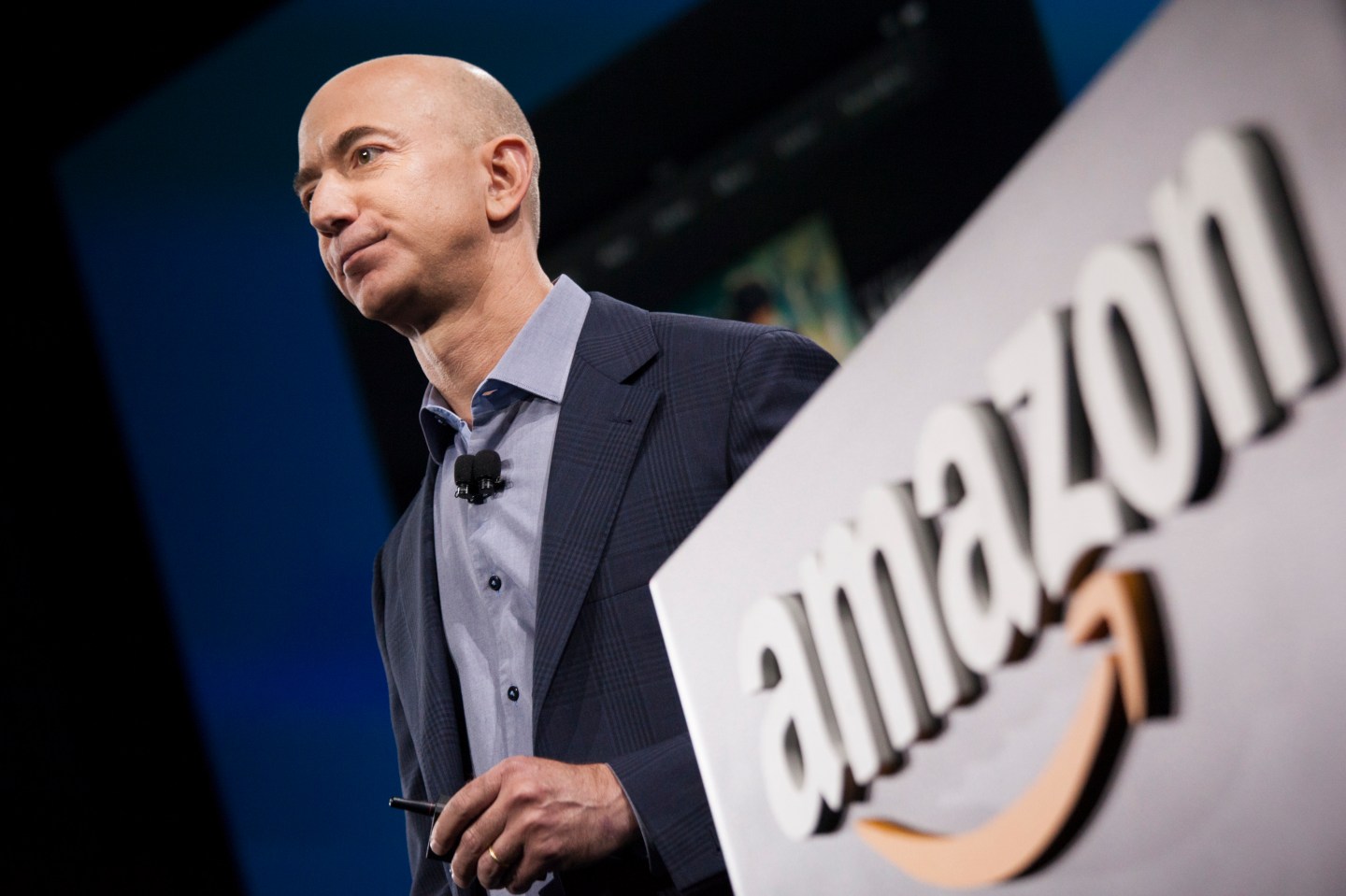
Amazon.com founder and CEO Jeff Bezos presents the company's first smartphone, the Fire Phone, on June 18, 2014 in Seattle, Washington.Photograph by David Ryder — Getty Images
Add Fortune on Google for similar content.

Amazon has what you might call a tense relationship with the book-publishing community, including authors who believe its platform devalues the act of writing, so it’s not surprising that any change it makes to the way it sells books or pays writers tends to come under heavy fire. Its latest move is no exception: The company is launching a new payment scheme for authors whose books are part of its Netflix-style book-rental program for the Kindle, in which writers will be paid based on how many pages a user reads.

Depending on whom you listen to, this is either the death of writing, an all-out attack on authors, a shameless money grab that will lead to an explosion of shlock, or a combination of all three. But while most authors probably don’t want to admit it, what Amazon (AMZN)is doing makes a lot of sense—and not just from a business point of view either. Its approach could actually make the market for new books healthier, which would help everyone.

Amazon to pay self-published authors on basis of how many pages are actually read. Because being an unknown writer isn't hard enough already

— John O'Farrell (@mrjohnofarrell) June 22, 2015

This new approach doesn’t apply to every author who publishes through Amazon’s Kindle platform, just the ones who are part of the Kindle Direct Publishing Select program, which features self-published titles that are exclusive to the Amazon platform. When one of these books is rented through the Kindle Unlimited or Lending Library programs, authors used to be paid a certain fee for every reader who got past 10% of the book. Now, they will be paid based on the total number of pages that are read by rental users. Here’s how Amazon explained it in its announcement:

The author of a 100 page book that was borrowed and read completely 100 times would earn $1,000 ($10 million multiplied by 10,000 pages for this author divided by 100,000,000 total pages).

The author of a 200 page book that was borrowed and read completely 100 times would earn $2,000 ($10 million multiplied by 20,000 pages for this author divided by 100,000,000 total pages).

The author of a 200 page book that was borrowed 100 times but only read halfway through on average would earn $1,000 ($10 million multiplied by 10,000 pages for this author divided by 100,000,000 total pages).

Some Amazon supporters have pointed out that famous authors like Charles Dickens and Sir Arthur Conan Doyle were also paid based on the number of words they produced and the magazines they sold (although at the time no one could tell how many of them were read), but for the most part the company has been criticized for cheapening the art of writing.

But does the change actually do this? Not really. In fact, it arguably incentivizes new authors to create books that readers will like, so that more people will get through as many pages as possible. In the past, all that mattered was the number of rentals.

https://twitter.com/ana_d_h/status/613218555635437568

If you look past all of the criticism, what Amazon is trying to do is what any retailer or middle-man does: It’s trying to figure out the right mix of incentives that will encourage authors to produce what it wants, which is books that sell and that readers enjoy. This may offend writers who don’t want to think of their books as retail products, but it’s a perfectly reasonable approach for Amazon to take. In fact, you could argue that traditional publishers would probably have done the same thing if they could have.

Author Chuck Wendig made a similar point in a blog post on the changes, arguing that the new approach is better in some ways than the model Amazon used to use. The previous system encouraged writers to produce as many books as possible, Wendig says—even if they weren’t very good—in the hope that enough people would rent them that they could get paid. The new model, he argues:

“Fixes the weird inequity and stops punishing people who wrote… y’know, actual-size novels. And it stops incentivizing people to write tiny little no-nothing stories, or for writers to break up actual-size novels into hitching seed-spurts of ‘serial content’ (‘My novel, THE RAMTHONODOX CONSPIRACY, is broken up into 215 downloadable chapters!’)”

Author Kerry Wilkinson, whose series of crime novels made it to the top of the Amazon best-seller list and won him a deal with a traditional publisher, also feels that Amazon’s new approach for Kindle rentals is fair. “If readers give up on a title after half a dozen pages, why should the writer be paid in full?” he asked in an interview with The Telegraph. Others point out that many books are “padded” by writers who feel as though they should be a certain size, something Amazon’s new strategy would discourage.

One of the things some authors seem to be worried about is the potential for Amazon to start paying all Kindle authors in the same way, or for its approach to catch on with other publishers. And it’s certainly possible that Amazon might expand its experiment, if it proves to have the right effect on production of new books. But it’s not entirely clear that this would be a bad thing—either for readers and book buyers, or for authors themselves. Whether writers like it or not, books are a product that consumers pay for, and encouraging better products arguably benefits the entire marketplace.

Follow Mathew Ingram on Twitter at @mathewi. You can read his coverage of the media industry by going here, or you can subscribe via his RSS feed.


About the Author
By Mathew Ingram
See full bioRight Arrow Button Icon
Add Fortune on Google for similar content.

Latest in Tech

Finance
Lorem ipsum dolor sit amet, consectetur adipiscing elit, sed do eiusmod tempor incididunt ut labore et dolore magna aliqua. Ut enim ad minim veniam
By Fortune Editors
October 20, 2025
Finance
Lorem ipsum dolor sit amet, consectetur adipiscing elit, sed do eiusmod tempor incididunt ut labore et dolore magna aliqua. Ut enim ad minim veniam
By Fortune Editors
October 20, 2025
Finance
Lorem ipsum dolor sit amet, consectetur adipiscing elit, sed do eiusmod tempor incididunt ut labore et dolore magna aliqua. Ut enim ad minim veniam
By Fortune Editors
October 20, 2025
Finance
Lorem ipsum dolor sit amet, consectetur adipiscing elit, sed do eiusmod tempor incididunt ut labore et dolore magna aliqua. Ut enim ad minim veniam
By Fortune Editors
October 20, 2025
Finance
Lorem ipsum dolor sit amet, consectetur adipiscing elit, sed do eiusmod tempor incididunt ut labore et dolore magna aliqua. Ut enim ad minim veniam
By Fortune Editors
October 20, 2025
Finance
Lorem ipsum dolor sit amet, consectetur adipiscing elit, sed do eiusmod tempor incididunt ut labore et dolore magna aliqua. Ut enim ad minim veniam
By Fortune Editors
October 20, 2025

Most Popular

Finance
Lorem ipsum dolor sit amet, consectetur adipiscing elit, sed do eiusmod tempor incididunt ut labore et dolore magna aliqua. Ut enim ad minim veniam
By Fortune Editors
October 20, 2025
Finance
Lorem ipsum dolor sit amet, consectetur adipiscing elit, sed do eiusmod tempor incididunt ut labore et dolore magna aliqua. Ut enim ad minim veniam
By Fortune Editors
October 20, 2025
Finance
Lorem ipsum dolor sit amet, consectetur adipiscing elit, sed do eiusmod tempor incididunt ut labore et dolore magna aliqua. Ut enim ad minim veniam
By Fortune Editors
October 20, 2025
Finance
Lorem ipsum dolor sit amet, consectetur adipiscing elit, sed do eiusmod tempor incididunt ut labore et dolore magna aliqua. Ut enim ad minim veniam
By Fortune Editors
October 20, 2025
Finance
Lorem ipsum dolor sit amet, consectetur adipiscing elit, sed do eiusmod tempor incididunt ut labore et dolore magna aliqua. Ut enim ad minim veniam
By Fortune Editors
October 20, 2025
Finance
Lorem ipsum dolor sit amet, consectetur adipiscing elit, sed do eiusmod tempor incididunt ut labore et dolore magna aliqua. Ut enim ad minim veniam
By Fortune Editors
October 20, 2025
Fortune Secondary Logo
Rankings
  • 100 Best Companies
  • Fortune 500
  • Global 500
  • Fortune 500 Europe
  • Most Powerful Women
  • World's Most Admired Companies
  • See All Rankings
  • Lists Calendar
Sections
  • Finance
  • Fortune Crypto
  • Features
  • Leadership
  • Health
  • Commentary
  • Success
  • Retail
  • Mpw
  • Tech
  • Lifestyle
  • CEO Initiative
  • Asia
  • Politics
  • Conferences
  • Europe
  • Newsletters
  • Personal Finance
  • Environment
  • Magazine
  • Education
Customer Support
  • Frequently Asked Questions
  • Customer Service Portal
  • Privacy Policy
  • Terms Of Use
  • Single Issues For Purchase
  • International Print
Commercial Services
  • Advertising
  • Fortune Brand Studio
  • Fortune Analytics
  • Fortune Conferences
  • Business Development
  • Group Subscriptions
About Us
  • About Us
  • Press Center
  • Work At Fortune
  • Terms And Conditions
  • Site Map
  • About Us
  • Press Center
  • Work At Fortune
  • Terms And Conditions
  • Site Map
  • Facebook icon
  • Twitter icon
  • LinkedIn icon
  • Instagram icon
  • Pinterest icon

Latest in Tech

‘Devin-kun’: Japan embraces agents as legacy code and a shrinking workforce create a perfect market for an AI software engineer 
AsiaAI agents
‘Devin-kun’: Japan embraces agents as legacy code and a shrinking workforce create a perfect market for an AI software engineer 
By Nicholas GordonJuly 3, 2026
10 hours ago
Chad Hurley and Steven Chen wearing suits
SuccessWealth
YouTube’s founders split over $650 million when they sold to Google in 2006—had they held out, they could have taken a slice of $550 billion
By Preston ForeJuly 3, 2026
16 hours ago
ds
CommentarySoftware
I argued with the father of open source for 2 years. Now the AI fight is the same — only bigger
By David SiegelJuly 3, 2026
18 hours ago
ashok
Commentary250 Years of Innovation
The greatest startup in history: What we can learn from America’s founders at today’s AI frontier
By Ashok N. SrivastavaJuly 3, 2026
18 hours ago
2
Commentary250 Years of Innovation
America’s secret weapon isn’t just innovation — It’s the freedom to fail
By Keith KrachJuly 3, 2026
20 hours ago
A $75 billion valuation, 75 million global customers and on its way to America—Revolut is London’s disruptor extraordinaire
EuropeLetter from London
A $75 billion valuation, 75 million global customers and on its way to America—Revolut is London’s disruptor extraordinaire
By Kamal AhmedJuly 3, 2026
20 hours ago

Most Popular

Egg companies made $1.22 billion in profit off a $6 carton — now they’re buying their way out of a price-fixing case with 53 million donated eggs
Law
Egg companies made $1.22 billion in profit off a $6 carton — now they’re buying their way out of a price-fixing case with 53 million donated eggs
By Wyatte Grantham-Philips and The Associated PressJuly 2, 2026
2 days ago
Meet the Zillennials: The luckiest micro-generation in the workforce, born between 1993 and 1998
AI
Meet the Zillennials: The luckiest micro-generation in the workforce, born between 1993 and 1998
By Nick LichtenbergJuly 3, 2026
23 hours ago
Economists have found an answer to slowing cognitive decline: Avoid retiring early, study finds
Economy
Economists have found an answer to slowing cognitive decline: Avoid retiring early, study finds
By Sasha RogelbergJuly 2, 2026
2 days ago
On Wall Street, analysts increasingly don’t believe the U.S. government’s 'misleading' job numbers
Economy
On Wall Street, analysts increasingly don’t believe the U.S. government’s 'misleading' job numbers
By Jim EdwardsJuly 3, 2026
19 hours ago
$25 billion CEO says one-hour interviews are a waste of time—he puts candidates through six hours of tests and wants them to order wine at lunch
Success
$25 billion CEO says one-hour interviews are a waste of time—he puts candidates through six hours of tests and wants them to order wine at lunch
By Orianna Rosa RoyleJuly 3, 2026
24 hours ago
Current price of oil as of July 2, 2026
Personal Finance
Current price of oil as of July 2, 2026
By Joseph HostetlerJuly 2, 2026
2 days ago

© 2026 Fortune Media IP Limited. All Rights Reserved. Use of this site constitutes acceptance of our Terms of Use and Privacy Policy | CA Notice at Collection and Privacy Notice | Do Not Sell/Share My Personal Information
FORTUNE is a trademark of Fortune Media IP Limited, registered in the U.S. and other countries. FORTUNE may receive compensation for some links to products and services on this website. Offers may be subject to change without notice.