• Home
  • Latest
  • Fortune 500
  • Finance
  • Tech
  • Leadership
  • Lifestyle
  • Rankings
  • Multimedia

Trendingnow

1

Even as Elon Musk calls philanthropy ‘very hard,’ everyday Americans gave a record $617 billion—despite feeling the squeeze over the cost of living

2

Egg companies made $1.22 billion in profit off a $6 carton — now they’re buying their way out of a price-fixing case with 53 million donated eggs

3

Meet the Zillennials: The luckiest micro-generation in the workforce, born between 1993 and 1998

1

Even as Elon Musk calls philanthropy ‘very hard,’ everyday Americans gave a record $617 billion—despite feeling the squeeze over the cost of living

2

Egg companies made $1.22 billion in profit off a $6 carton — now they’re buying their way out of a price-fixing case with 53 million donated eggs

3

Meet the Zillennials: The luckiest micro-generation in the workforce, born between 1993 and 1998
Commentary

What the Presidential Candidates Get Wrong About Free Trade

By
Alan Wolff
Alan Wolff
and
Bethany Cianciolo
Bethany Cianciolo
Down Arrow Button Icon
By
Alan Wolff
Alan Wolff
and
Bethany Cianciolo
Bethany Cianciolo
Down Arrow Button Icon
April 14, 2016, 7:35 PM ET
US-VOTE-DEMOCRATS-SANDERS-CLINTON
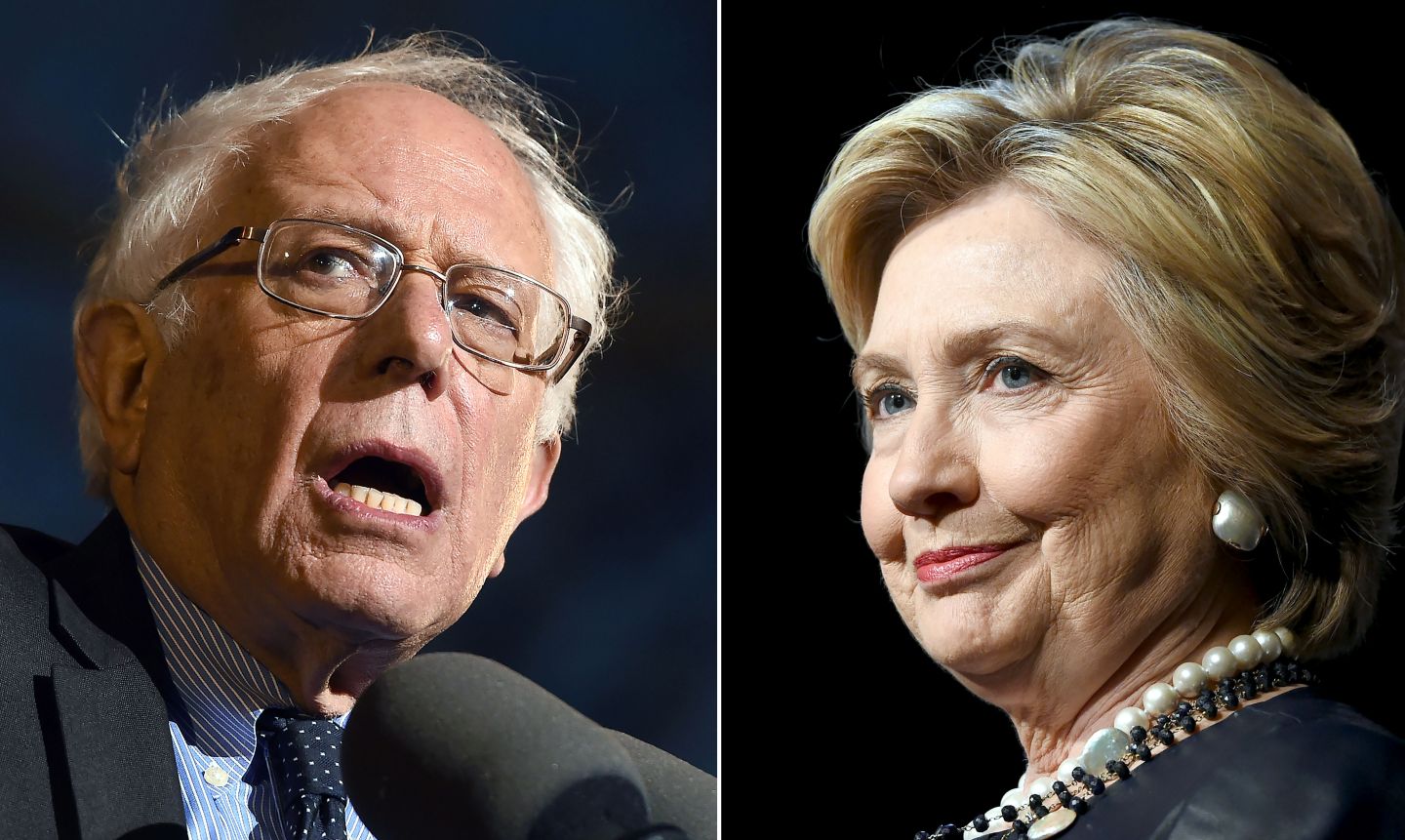
This combination of file photos shows Democratic presidential hopefuls Bernie Sanders(L)on March 31, 2016 and Hillary Clinton on March 30, 2016, US presidential primaries spark back to life April 5, 2016 after an eventful 10-day break. For Clinton, a loss in Wisconsin would be more symbolic than anything else, as the state distributes delegates proportionally according to the primary results. But she comes into the contest having lost five of the last six states to Bernie Sanders, and polls show him finishing on top in Wisconsin. / AFP / PHOTO DESK (Photo credit should read PHOTO DESK/AFP/Getty Images)Photograph by AFP via Getty Images
Add Fortune on Google for similar content.

Every presidential candidate now recognizes a new political reality: Income inequality and depressed wages are making voters feel that the future will not be as good as the past. Yet politicians are reluctant to talk about the real causes of income inequality, and negatively talk about trade agreements instead. In fact, free trade has become a major theme in this year’s presidential race, and is bound to come up in tonight’s Democratic debate. But it’s time to stop blaming trade agreements and ignoring other causes of job loss if we’re ever to figure out what to do about the real problems that exist.

What the candidates ignore is that America’s market is already very open, and that really isn’t going to change unless the country wants to trigger a global economic downturn more serious than the one caused by the financial crisis in 2008. Trade agreements are mainly about leveling the playing field for American exports by opening up foreign markets, so they are the right policy for America.

Take Rochester, New York, for example. For over a century, Rochester was best known as the home of Eastman Kodak. At its peak, Kodak employed 61,000, but that number dropped to 7,000 before the company went bankrupt in 2012. It was a city with a lot of chemists and chemical plants dedicated to making photographic film. But as cameras became digital and stopped using film, Kodak tried—and ultimately failed—to pivot into the digital age. Even the digital cameras that it marketed were submerged in yet another technological revolution: smart phone cameras.

Neither trade agreements nor trade caused Rochester’s huge job losses. It was advances in technology, something no one can stop. But technology is the answer as well as the challenge. Investing in both education and research and development is the best hope to save the cities like Rochester, and it has made a lot of progress—creating a new economy around 22 colleges and universities that can and is bringing jobs back.

It is true that globalization is a major factor causing job loss. Containerization of freight has caused shipping costs to drop by 790%, and total U.S. trade has expanded by 585% over a 20-year period. The savings from cheaper shipping costs, due to technological change, dwarfs any effect of trade agreements liberalizing import barriers over the same period. The average U.S. tariff on imports of manufactured goods was 5.57% two decades ago, declining to 2.7% in 2013. Other factors that contribute to income inequality: Not spending what the country needs to on infrastructure cuts into construction jobs, not spending on education means fewer teaching jobs, and having a tax system that is not competitive for making products in the United States means fewer manufacturing jobs.


Why do politicians like Donald Trump, Ted Cruz, Bernie Sanders, and Hillary Clinton target trade agreements then? Because they can’t go to Baltimore’s container port and say, “Tear down those cranes that offload super container ships,” nor can they say to their supporters, “Throw away those smart phones, unplug your computers, and stop ordering anything over the Internet.” That would not sell. They should be talking more about investing in America—in infrastructure, in education, in training—by adopting policies that restore voters’ confidence that America’s future will be better than the past.

We used to call our presidents, and those who aspired to be our president, “leaders.” Every American president from Franklin Roosevelt to Barack Obama has been for opening markets—not only because they were world leaders, but because they concluded with advice from senior officials and support from Congress that opening foreign markets was good for the United States—and not just for business, but for workers. Most of the world’s consumers are outside of the United States. The trade agreement signed a few months ago with 11 Pacific-Rim countries is a good beginning. Six other countries in the region are interested in joining. What we have in common with them is that we know that growth in trade will bring economic growth at home.

There may be more heat than light in a presidential campaign, but there should be enough light to read a trade agreement. The Trans-Pacific Partnership Agreement is mostly about getting rules in place—rules against state-owned enterprises causing harm to private competitors, better protection of labor rights, and rules to keep the digital economy growing. There are a host of domestic programs that would start to provide the right answers for the crowds that now cheer the end of trade agreements—more job training, more education, better highways, and better airports. This is not a time to embark upon a new era of turning inward, but to champion good policies for the world economy for which the United States is still seen as the essential leader, and at home to advocate and implement progressive domestic policies that provide people with far better prospects for the future.

Alan Wm. Wolff is chairman of the National Foreign Trade Council and practices law with Dentons LLP in Washington D.C. He served in Republican and Democratic administrations as a senior U.S. trade negotiator.

About the Authors
By Alan Wolff
See full bioRight Arrow Button Icon
By Bethany Cianciolo
See full bioRight Arrow Button Icon
Add Fortune on Google for similar content.

Latest in Commentary

Finance
Lorem ipsum dolor sit amet, consectetur adipiscing elit, sed do eiusmod tempor incididunt ut labore et dolore magna aliqua. Ut enim ad minim veniam
By Fortune Editors
October 20, 2025
Finance
Lorem ipsum dolor sit amet, consectetur adipiscing elit, sed do eiusmod tempor incididunt ut labore et dolore magna aliqua. Ut enim ad minim veniam
By Fortune Editors
October 20, 2025
Finance
Lorem ipsum dolor sit amet, consectetur adipiscing elit, sed do eiusmod tempor incididunt ut labore et dolore magna aliqua. Ut enim ad minim veniam
By Fortune Editors
October 20, 2025
Finance
Lorem ipsum dolor sit amet, consectetur adipiscing elit, sed do eiusmod tempor incididunt ut labore et dolore magna aliqua. Ut enim ad minim veniam
By Fortune Editors
October 20, 2025
Finance
Lorem ipsum dolor sit amet, consectetur adipiscing elit, sed do eiusmod tempor incididunt ut labore et dolore magna aliqua. Ut enim ad minim veniam
By Fortune Editors
October 20, 2025
Finance
Lorem ipsum dolor sit amet, consectetur adipiscing elit, sed do eiusmod tempor incididunt ut labore et dolore magna aliqua. Ut enim ad minim veniam
By Fortune Editors
October 20, 2025

Most Popular

Finance
Lorem ipsum dolor sit amet, consectetur adipiscing elit, sed do eiusmod tempor incididunt ut labore et dolore magna aliqua. Ut enim ad minim veniam
By Fortune Editors
October 20, 2025
Finance
Lorem ipsum dolor sit amet, consectetur adipiscing elit, sed do eiusmod tempor incididunt ut labore et dolore magna aliqua. Ut enim ad minim veniam
By Fortune Editors
October 20, 2025
Finance
Lorem ipsum dolor sit amet, consectetur adipiscing elit, sed do eiusmod tempor incididunt ut labore et dolore magna aliqua. Ut enim ad minim veniam
By Fortune Editors
October 20, 2025
Finance
Lorem ipsum dolor sit amet, consectetur adipiscing elit, sed do eiusmod tempor incididunt ut labore et dolore magna aliqua. Ut enim ad minim veniam
By Fortune Editors
October 20, 2025
Finance
Lorem ipsum dolor sit amet, consectetur adipiscing elit, sed do eiusmod tempor incididunt ut labore et dolore magna aliqua. Ut enim ad minim veniam
By Fortune Editors
October 20, 2025
Finance
Lorem ipsum dolor sit amet, consectetur adipiscing elit, sed do eiusmod tempor incididunt ut labore et dolore magna aliqua. Ut enim ad minim veniam
By Fortune Editors
October 20, 2025
Fortune Secondary Logo
Rankings
  • 100 Best Companies
  • Fortune 500
  • Global 500
  • Fortune 500 Europe
  • Most Powerful Women
  • World's Most Admired Companies
  • See All Rankings
  • Lists Calendar
Sections
  • Finance
  • Fortune Crypto
  • Features
  • Leadership
  • Health
  • Commentary
  • Success
  • Retail
  • Mpw
  • Tech
  • Lifestyle
  • CEO Initiative
  • Asia
  • Politics
  • Conferences
  • Europe
  • Newsletters
  • Personal Finance
  • Environment
  • Magazine
  • Education
Customer Support
  • Frequently Asked Questions
  • Customer Service Portal
  • Privacy Policy
  • Terms Of Use
  • Single Issues For Purchase
  • International Print
Commercial Services
  • Advertising
  • Fortune Brand Studio
  • Fortune Analytics
  • Fortune Conferences
  • Business Development
  • Group Subscriptions
About Us
  • About Us
  • Press Center
  • Work At Fortune
  • Terms And Conditions
  • Site Map
  • About Us
  • Press Center
  • Work At Fortune
  • Terms And Conditions
  • Site Map
  • Facebook icon
  • Twitter icon
  • LinkedIn icon
  • Instagram icon
  • Pinterest icon

Latest in Commentary

k
Commentary250 Years of Innovation
Media leadership unity in defying Trump’s assault on free speech: standing tall against historic comparisons
By Jeffrey Sonnenfeld, Jeff Bewkes, Kay Koplovitz, Tom Glocer and Marvin KalbJuly 4, 2026
23 hours ago
ds
CommentarySoftware
I argued with the father of open source for 2 years. Now the AI fight is the same — only bigger
By David SiegelJuly 3, 2026
2 days ago
ashok
Commentary250 Years of Innovation
The greatest startup in history: What we can learn from America’s founders at today’s AI frontier
By Ashok N. SrivastavaJuly 3, 2026
2 days ago
2
Commentary250 Years of Innovation
America’s secret weapon isn’t just innovation — It’s the freedom to fail
By Keith KrachJuly 3, 2026
2 days ago
rn
CommentaryCryptocurrency
Former Iran director at NSC: Crypto legislation is a ticket to sanctions evasion
By Richard NephewJuly 2, 2026
3 days ago
m
Commentary250 Years of Innovation
McKinsey chairs: Building a more resilient industrial base may require $2 trillion in investment
By Eric Kutcher and Shubham SinghalJuly 2, 2026
3 days ago

Most Popular

Even as Elon Musk calls philanthropy ‘very hard,’ everyday Americans gave a record $617 billion—despite feeling the squeeze over the cost of living
Success
Even as Elon Musk calls philanthropy ‘very hard,’ everyday Americans gave a record $617 billion—despite feeling the squeeze over the cost of living
By Preston ForeJuly 4, 2026
1 day ago
Egg companies made $1.22 billion in profit off a $6 carton — now they’re buying their way out of a price-fixing case with 53 million donated eggs
Law
Egg companies made $1.22 billion in profit off a $6 carton — now they’re buying their way out of a price-fixing case with 53 million donated eggs
By Wyatte Grantham-Philips and The Associated PressJuly 2, 2026
3 days ago
Meet the Zillennials: The luckiest micro-generation in the workforce, born between 1993 and 1998
AI
Meet the Zillennials: The luckiest micro-generation in the workforce, born between 1993 and 1998
By Nick LichtenbergJuly 3, 2026
2 days ago
Economists have found an answer to slowing cognitive decline: Avoid retiring early, study finds
Economy
Economists have found an answer to slowing cognitive decline: Avoid retiring early, study finds
By Sasha RogelbergJuly 2, 2026
3 days ago
$25 billion CEO says one-hour interviews are a waste of time—he puts candidates through six hours of tests and wants them to order wine at lunch
Success
$25 billion CEO says one-hour interviews are a waste of time—he puts candidates through six hours of tests and wants them to order wine at lunch
By Orianna Rosa RoyleJuly 3, 2026
2 days ago
Three dads started selling hats from a garage with $750—now they’ve sold $35 million worth, partnered with Gary Vee, and grown a community of fathers
Success
Three dads started selling hats from a garage with $750—now they’ve sold $35 million worth, partnered with Gary Vee, and grown a community of fathers
By Preston ForeJuly 4, 2026
23 hours ago

© 2026 Fortune Media IP Limited. All Rights Reserved. Use of this site constitutes acceptance of our Terms of Use and Privacy Policy | CA Notice at Collection and Privacy Notice | Do Not Sell/Share My Personal Information
FORTUNE is a trademark of Fortune Media IP Limited, registered in the U.S. and other countries. FORTUNE may receive compensation for some links to products and services on this website. Offers may be subject to change without notice.