• Home
  • Latest
  • Fortune 500
  • Finance
  • Tech
  • Leadership
  • Lifestyle
  • Rankings
  • Multimedia

Exclusive

An hour in the Oval Office with President Trump Fortune Editor-in-Chief: Alyson Shontell sat down with President Trump in the Oval Office for an hour. Tariffs, Intel, AI, Boeing, Iran—and the question every CEO eventually has to answer: who's next?

An hour in the Oval Office with President Trump Fortune Editor-in-Chief: Alyson Shontell sat down with President Trump in the Oval Office for an hour. Tariffs, Intel, AI, Boeing, Iran—and the question every CEO eventually has to answer: who's next?

An hour in the Oval Office with President Trump Fortune Editor-in-Chief: Alyson Shontell sat down with President Trump in the Oval Office for an hour. Tariffs, Intel, AI, Boeing, Iran—and the question every CEO eventually has to answer: who's next?

An hour in the Oval Office with President Trump Fortune Editor-in-Chief: Alyson Shontell sat down with President Trump in the Oval Office for an hour. Tariffs, Intel, AI, Boeing, Iran—and the question every CEO eventually has to answer: who's next?

An hour in the Oval Office with President Trump Fortune Editor-in-Chief: Alyson Shontell sat down with President Trump in the Oval Office for an hour. Tariffs, Intel, AI, Boeing, Iran—and the question every CEO eventually has to answer: who's next?

An hour in the Oval Office with President Trump Fortune Editor-in-Chief: Alyson Shontell sat down with President Trump in the Oval Office for an hour. Tariffs, Intel, AI, Boeing, Iran—and the question every CEO eventually has to answer: who's next?

An hour in the Oval Office with President Trump Fortune Editor-in-Chief: Alyson Shontell sat down with President Trump in the Oval Office for an hour. Tariffs, Intel, AI, Boeing, Iran—and the question every CEO eventually has to answer: who's next?

An hour in the Oval Office with President Trump Fortune Editor-in-Chief: Alyson Shontell sat down with President Trump in the Oval Office for an hour. Tariffs, Intel, AI, Boeing, Iran—and the question every CEO eventually has to answer: who's next?

An hour in the Oval Office with President Trump Fortune Editor-in-Chief: Alyson Shontell sat down with President Trump in the Oval Office for an hour. Tariffs, Intel, AI, Boeing, Iran—and the question every CEO eventually has to answer: who's next?

An hour in the Oval Office with President Trump Fortune Editor-in-Chief: Alyson Shontell sat down with President Trump in the Oval Office for an hour. Tariffs, Intel, AI, Boeing, Iran—and the question every CEO eventually has to answer: who's next?

CommentaryLyft

What Uber and Lyft’s Austin Exit Says About the Future of Regulation

By
Arun Sundararajan
Arun Sundararajan
Down Arrow Button Icon
By
Arun Sundararajan
Arun Sundararajan
Down Arrow Button Icon
May 13, 2016, 1:00 PM ET

Earlier this week, Uber and Lyft followed through on threats to halt doing business in the nation’s 11th biggest city, after Austin’s voters reaffirmed stricter regulations over ridesharing companies. The companies’ exit on Monday might simply seem like the latest move in an ongoing game of regulatory chicken between the ridesharing giants and city governments. But this stalemate hurts thousands of Austin residents and drivers a lot more than it hurts the companies.

It is time to recognize that the platforms are not “bad actors” that need to be kept in line. Rather, they are new and responsible intermediaries reshaping the transportation industry and beyond in the face of outdated regulations. Governments should view them as partners crucial to re-writing regulations to be more decentralized and data-driven.

Austin is perhaps the last place thought to be unfriendly to tech. Home to the SXSW Interactive conference, the city’s attitudes toward ridesharing startups have evolved in interesting ways; at SXSW in 2013, an army of Lyft “providers” donned pink mustaches and gave attendees piggyback rides to underscore the legal uncertainties of their vehicle-based ridesharing service. When the Austin City Council voted to essentially legalize ridesharing in October 2014, it seemed they were living up to the city’s tech-savvy and forward-looking image.

Austin’s stricter regulations that include mandatory fingerprinting of drivers reflect a shift in the composition of Austin’s city council following a 2014 change in municipal election procedure. The new rules also highlight the fragile nature of how governments are pressured to balance innovation with safety when regulating for-hire transportation, a trade-off that often depends on where you live.

Nationwide, the rules around ridesharing vary widely with no overarching set of federal or state laws. Until recently, in most U.S. cities (among the exceptions, New York), people relied on their own vehicles for everyday transportation. Taxi service was a tiny fraction of traffic. Potential riders who would naturally feel unsafe getting into cars driven by strangers demanded some sort of reliable third-party screening or oversight of the drivers, their vehicles and the fares charged. Local government was the natural candidate to provide this intervention.

Today’s landscape is far different. Ridesharing apps are on the cusp of going mainstream, serving as an alternative to public and other types of transportation. A growing number of people rely on these services to commute to work and get around their cities. Technologies like smartphones and GPS have expanded transparency significantly, lowering the need for local government oversight. More important, there are now reliable new global intermediaries – platforms like Uber and Lyft – that are natural candidates to provide some of the third-party screening that remains necessary perhaps in a more geographically uniform way.

Governments should view Uber and Lyft as friends, not enemies. As I argue in my book ‘The Sharing Economy,’ society’s interests are served well when governments partner with platforms in the creation and enforcement of regulation rather than treating them as its target. This collaborative approach will yield radical new efficiencies in regulation. Partnering makes the most sense when the interests of the platforms are well aligned with the broader interests of society. For example, if passengers systematically feel that the safety standards of a service are low, they will stop using it. So it’s in the natural interest of any intermediary, ridesharing companies included, to ensure that services are safe, reliable and high quality.

More broadly, delegating responsibility to the platforms makes sense because they’re best positioned to enforce safety standards. This could help lower the costs to taxpayers without compromising on broader societal goals. Partnering with them in the development of new government mandates makes it more likely that the rules created will address real rather than imagined problems.

As platforms become trusted regulatory partners, tremendous potential benefits can be realized from data-driven delegation, the decentralizing of regulatory responsibility to the party that holds high-resolution and real-time data. The promise lies in creating a system wherein a platform uses its detailed data – about locations, routes and other choices made by drivers and by passengers – to assume greater responsibility in solving problems that have posed historically challenging. For example, if governments decentralize the responsibility of enforcing anti-discrimination laws to the platforms, officials might see the emergence of better methods that resemble approaches used to detect other lawlessness, such as credit-card fraud.

Given the right mix of incentives and responsibility, the platforms and their armies of talented engineers will, over time, invent new data-driven driver safety solutions that take advantage of predictive modeling and machine learning while transcending the weaknesses and potential biases inherent in approaches like fingerprint collection.

Our mobility choices are becoming more digitally anchored, making it hard for government-centric regulatory approaches to keep pace. The arrival of autonomous vehicles in the not-so-distant future will only accelerate the rate of change. Let’s take advantage of the new institutional stakeholders – the ridesharing platforms – to invent a better approach to keeping our transportation options safe, one that recognizes that the market today is far better equipped to deal with many of the issues that needed government involvement in the past. To get there, we first need to transcend the mindset that regulation is the sole province of the government.

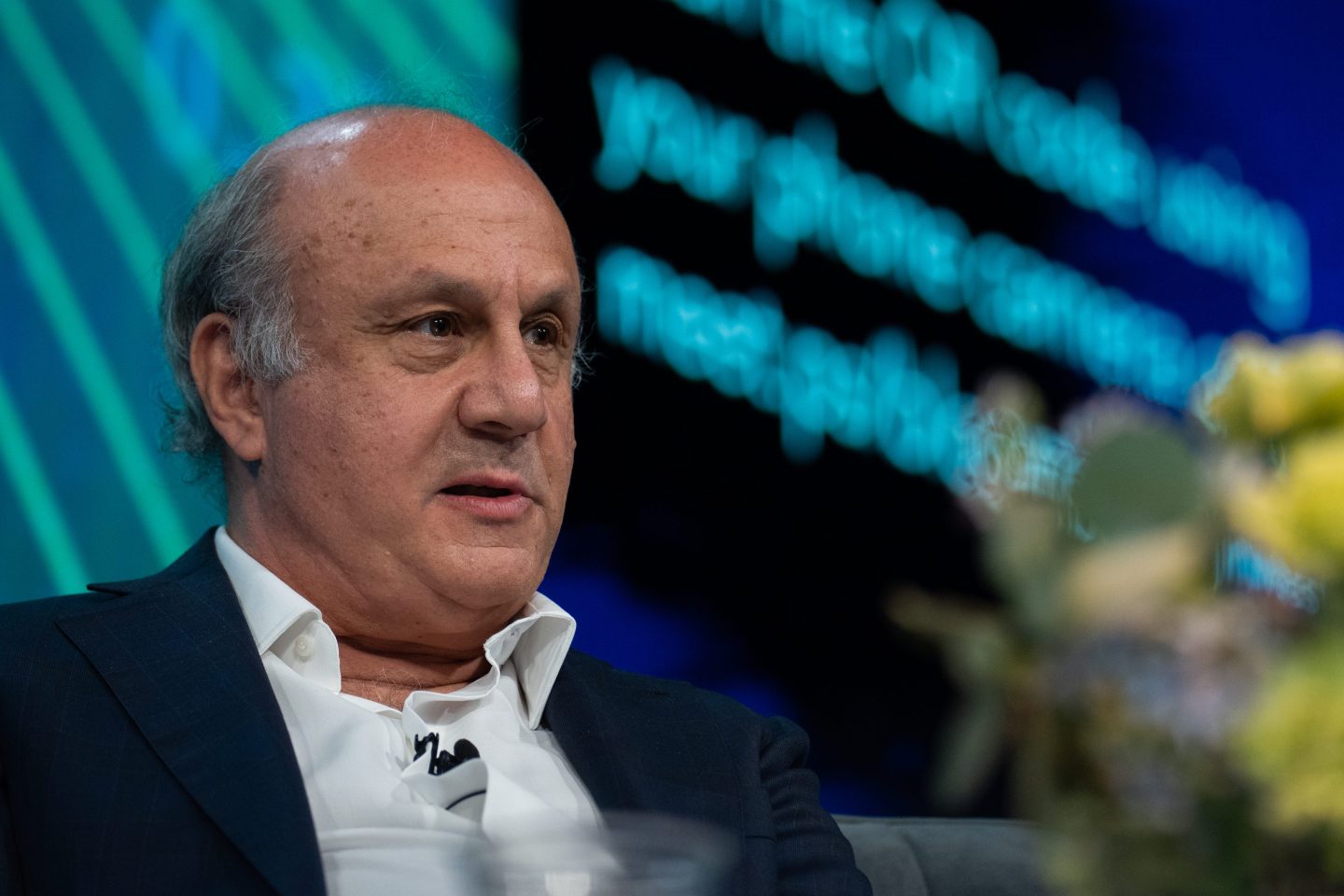
Arun Sundararajan is a professor at NYU Stern School of Business and author of the book, The Sharing Economy: The End of Employment and the Rise of Crowd-Based Capitalism.

About the Author
By Arun Sundararajan
See full bioRight Arrow Button Icon

Latest in Commentary

Finance
Lorem ipsum dolor sit amet, consectetur adipiscing elit, sed do eiusmod tempor incididunt ut labore et dolore magna aliqua. Ut enim ad minim veniam
By Fortune Editors
October 20, 2025
Finance
Lorem ipsum dolor sit amet, consectetur adipiscing elit, sed do eiusmod tempor incididunt ut labore et dolore magna aliqua. Ut enim ad minim veniam
By Fortune Editors
October 20, 2025
Finance
Lorem ipsum dolor sit amet, consectetur adipiscing elit, sed do eiusmod tempor incididunt ut labore et dolore magna aliqua. Ut enim ad minim veniam
By Fortune Editors
October 20, 2025
Finance
Lorem ipsum dolor sit amet, consectetur adipiscing elit, sed do eiusmod tempor incididunt ut labore et dolore magna aliqua. Ut enim ad minim veniam
By Fortune Editors
October 20, 2025
Finance
Lorem ipsum dolor sit amet, consectetur adipiscing elit, sed do eiusmod tempor incididunt ut labore et dolore magna aliqua. Ut enim ad minim veniam
By Fortune Editors
October 20, 2025
Finance
Lorem ipsum dolor sit amet, consectetur adipiscing elit, sed do eiusmod tempor incididunt ut labore et dolore magna aliqua. Ut enim ad minim veniam
By Fortune Editors
October 20, 2025

Most Popular

Finance
Lorem ipsum dolor sit amet, consectetur adipiscing elit, sed do eiusmod tempor incididunt ut labore et dolore magna aliqua. Ut enim ad minim veniam
By Fortune Editors
October 20, 2025
Finance
Lorem ipsum dolor sit amet, consectetur adipiscing elit, sed do eiusmod tempor incididunt ut labore et dolore magna aliqua. Ut enim ad minim veniam
By Fortune Editors
October 20, 2025
Finance
Lorem ipsum dolor sit amet, consectetur adipiscing elit, sed do eiusmod tempor incididunt ut labore et dolore magna aliqua. Ut enim ad minim veniam
By Fortune Editors
October 20, 2025
Finance
Lorem ipsum dolor sit amet, consectetur adipiscing elit, sed do eiusmod tempor incididunt ut labore et dolore magna aliqua. Ut enim ad minim veniam
By Fortune Editors
October 20, 2025
Finance
Lorem ipsum dolor sit amet, consectetur adipiscing elit, sed do eiusmod tempor incididunt ut labore et dolore magna aliqua. Ut enim ad minim veniam
By Fortune Editors
October 20, 2025
Finance
Lorem ipsum dolor sit amet, consectetur adipiscing elit, sed do eiusmod tempor incididunt ut labore et dolore magna aliqua. Ut enim ad minim veniam
By Fortune Editors
October 20, 2025
Fortune Secondary Logo
Rankings
  • 100 Best Companies
  • Fortune 500
  • Global 500
  • Fortune 500 Europe
  • Most Powerful Women
  • World's Most Admired Companies
  • See All Rankings
  • Lists Calendar
Sections
  • Finance
  • Fortune Crypto
  • Features
  • Leadership
  • Health
  • Commentary
  • Success
  • Retail
  • Mpw
  • Tech
  • Lifestyle
  • CEO Initiative
  • Asia
  • Politics
  • Conferences
  • Europe
  • Newsletters
  • Personal Finance
  • Environment
  • Magazine
  • Education
Customer Support
  • Frequently Asked Questions
  • Customer Service Portal
  • Privacy Policy
  • Terms Of Use
  • Single Issues For Purchase
  • International Print
Commercial Services
  • Advertising
  • Fortune Brand Studio
  • Fortune Analytics
  • Fortune Conferences
  • Business Development
  • Group Subscriptions
About Us
  • About Us
  • Press Center
  • Work At Fortune
  • Terms And Conditions
  • Site Map
  • About Us
  • Press Center
  • Work At Fortune
  • Terms And Conditions
  • Site Map
  • Facebook icon
  • Twitter icon
  • LinkedIn icon
  • Instagram icon
  • Pinterest icon

Latest in Commentary

‘Change the World’ idealism is dying in Silicon Valley. We’ll miss it when it’s gone
CommentarySilicon Valley
‘Change the World’ idealism is dying in Silicon Valley. We’ll miss it when it’s gone
By Jonathan WeberMay 19, 2026
7 hours ago
reorgs
CommentaryRestructuring
We studied 6,000 executives and found the real reason 70% of transformations fail
By Julia Dhar, Kristy R. Ellmer and Philip JamesonMay 19, 2026
9 hours ago
joel
Commentarysaas
The SaaSpocalypse isn’t killing software. It’s exposing where software value really lives
By Joel HronMay 19, 2026
10 hours ago
altman
CommentarySam Altman
Musk vs. Altman: AI safety cannot be one man’s job
By Stavros GadinisMay 18, 2026
21 hours ago
charlie
CommentarySoftware
Anaplan CEO: AI isn’t eating software. It’s sorting it
By Charlie GottdienerMay 18, 2026
1 day ago
shyam
CommentaryHealth
World Economic Forum: women’s health gets only 20% of R&D funding. We must seize this $1 trillion opportunity
By Shyam BishenMay 18, 2026
2 days ago

Most Popular

While Trump insisted the Iran war would end ‘soon,’ an account in his name was buying millions in oil, defense and gold
Economy
While Trump insisted the Iran war would end ‘soon,’ an account in his name was buying millions in oil, defense and gold
By Eva RoytburgMay 18, 2026
1 day ago
The Bezos family just donated $100 million to help achieve one of Mayor Zohran Mamdani’s top campaign promises
Politics
The Bezos family just donated $100 million to help achieve one of Mayor Zohran Mamdani’s top campaign promises
By Jake AngeloMay 12, 2026
7 days ago
Current price of oil as of May 18, 2026
Personal Finance
Current price of oil as of May 18, 2026
By Joseph HostetlerMay 18, 2026
1 day ago
Current price of silver as of Monday, May 18, 2026
Personal Finance
Current price of silver as of Monday, May 18, 2026
By Joseph HostetlerMay 18, 2026
1 day ago
EXCLUSIVE: An hour in the Oval Office with the CEO-in-Chief, President Trump
Politics
EXCLUSIVE: An hour in the Oval Office with the CEO-in-Chief, President Trump
By Alyson ShontellMay 18, 2026
1 day ago
Spirit Airlines apologizes to all the Americans who can't afford any summer vacation flights as it shuts down
Travel & Leisure
Spirit Airlines apologizes to all the Americans who can't afford any summer vacation flights as it shuts down
By Rio Yamat and The Associated PressMay 18, 2026
1 day ago

© 2026 Fortune Media IP Limited. All Rights Reserved. Use of this site constitutes acceptance of our Terms of Use and Privacy Policy | CA Notice at Collection and Privacy Notice | Do Not Sell/Share My Personal Information
FORTUNE is a trademark of Fortune Media IP Limited, registered in the U.S. and other countries. FORTUNE may receive compensation for some links to products and services on this website. Offers may be subject to change without notice.