Oracle’s $9.4 billion acquisition of NetSuite late last month has Wall Street bankers frothing at the mouth on the hopes that the software giant is set to go on a spending spree of epic proportions. But while Oracle is no stranger to making big purchases at opportune times, such as its $10.3 billion acquisition of PeopleSoft in 2004 or its $8.5 billion acquisition of BEA Systems in 2008, the bulk of its deal flow will most likely remain modest in its size and narrow in its scope.
Such small deals usually draw yawns from financiers (and news editors), but it is all part of Oracle’s overall business strategy to dominate and control the most profitable industry verticals in the business software (read: cloud computing) world, all without drawing attention to itself or its affiliates.
The strategy, which Oracle co-founder and executive chairman Larry Ellison devised years ago, involves first acquiring companies that make software considered a “must-have” for a particular industry. The acquired companies are then placed into semi-autonomous business groups called Global Business Units that are industry-specific (e.g. financial services or health sciences) and have their own organizational structure (each has its own general manager, development, sales, marketing, consulting and M&A strategy).
The GBU structure now encompasses seven business units made up of 33 acquired companies with a total deal value of around $15 billion. Oracle will expand into any industry vertical it thinks it can come to dominate and can snap up a company in the blink of an eye. During one week in April, Oracle gobbled up two public companies; Textura, which makes software that helps companies manage construction projects, for $663 million; and OPower, which makes software that helps utilities monitor and compare electricity usage, for $532 million.
While the average deal size for a GBU target company usually comes in below $1 billion, there have been a few notable exceptions over the years, namely the group’s $5.3 billion acquisition of Micros, which makes software for the hospitality industry. As cloud-based software continues to grow in popularity, it is possible that Oracle will go after bigger targets in the months to come—it’s just a question of finding the right one. Resources certainly aren’t a limiting factor—Oracle’s cash reserves at the end of its most recent fiscal quarter stood at a mind-blowing $56.1 billion.
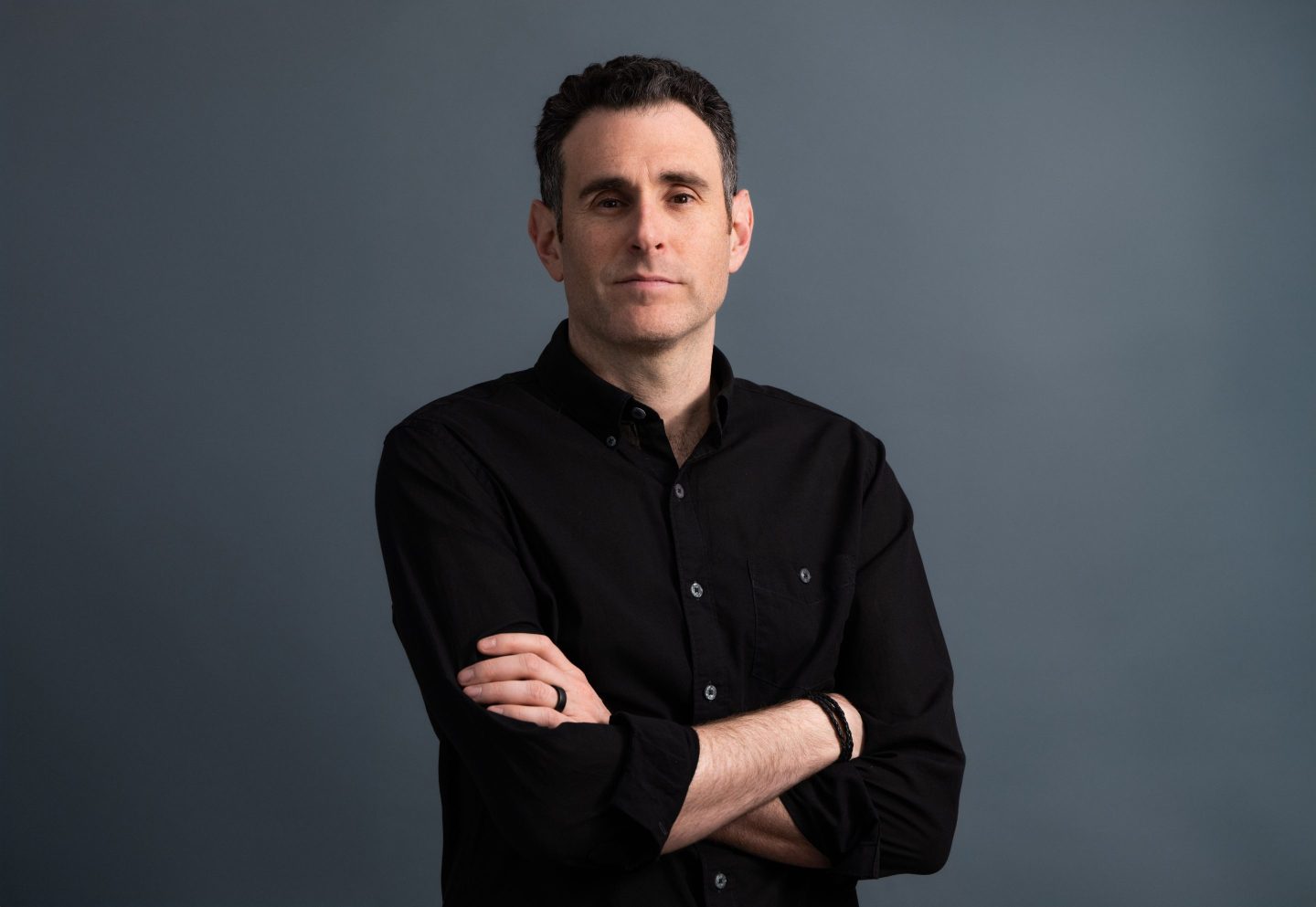
To get a better understanding of Oracle’s GBU strategy, Fortune visited Boston’s Route 128 tech corridor to meet with the head of the GBU group, Robert Weiler. Weiler came to Oracle six years ago after its GBU machine gobbled up his pharmaceutical software company, Phase Forward.
In conversation, Weiler explains how the group operates and how it fits into the overall Oracle ecosystem. He also lends insight as to what makes a good target and what companies might be on his shopping list. (The following interview has been edited and condensed for clarity.)
Fortune: How did the GBU group get started? What is its mission today?
Weiler: Larry [Ellison] had a vision eight years ago that he wanted to create dedicated business units for acquired companies that would provide industry-specific applications. Our GBUs represent dedicated, industry-focused teams covering strategy, development, sales and delivery, which none of our competitors do at our scale. The heads of all the GBUs report to me here in Boston and we now have seven verticals—Retail, Financial Services, Communications, Health Sciences, Construction and Engineering, Hospitality and Utilities.
Why does the GBU group tend to buy smaller software companies instead of big ones?
Because that’s where the growth is. Larry started the GBUs as dedicated and industry-focused organizations to serve the needs of specific industries and their most critical software. You can buy horizontal apps from SAP, Oracle—all the big guys. But if you go out and try to buy a clinical trial app for life sciences, you will need to go to a small “pure-play” company like my former company, Phase Forward.
Many times big companies find themselves dependent on the software made by these smaller pure-play companies and will actually be the one to come to Oracle and say, “Can you buy them? We think they’re good, we like them, but they cannot scale as fast as we need them to scale as opposed to Oracle.”
So that’s where a lot of our inbounds in our M&As come from. We don’t comment on anything, but that’s a very good lead. I guarantee you that’s what happened when I was CEO of Phase Forward. I’m sure one of our big customers at the time was talking to Oracle and told them that they wanted to stay with us but were worried about our scale. Three years later, Oracle bought us and I came on to run all the GBUs.
Get Data Sheet, Fortune’s technology newsletter.
How do you decide what company to buy within a certain industry vertical?
The hard part is finding a quality company that is the anchor of that vertical. If you look at overall verticals there are 17 to 23 of them to consider, and they are very fragmented. The companies we go after have defined solutions that we could either acquire and build upon or organically build upon.
So the newest one, which was 20 months ago, was Micros. Hospitality has retail, hotels, and food and beverage—so there are three verticals in one for an anchor solution. Finding a target company in a given industry that has actually done something of scale, quality, and holds a leadership position is the rule that we use when we want to expand.
For the GBU, why keep a vertical structure, where sales and administrative functions are replicated across different units, instead of a horizontal one, where redundant functions can be eliminated?
Larry created the GBU because he said, “I want to make sure that if I acquire a great company, I acquire what makes them great. They have great products, developed by great people; they already have market share; they have a good customer base; and their sales and development people know how to interact together.”
Larry’s view was that you lose domain expertise in big organizations because it scatters and naturally dilutes. You come back two years after an acquisition and you can’t find the company, the nucleus that made the company great. So he said for industry applications, “I am going to keep that nucleus.” As such, when we acquire a company, the development team and sales people are still working on the same thing. Occasionally we’ll change some things within a vertical, but they’re all around the same passion and solution.
Are you happy with seven industry verticals or do you want more? Which industries do you think are ripe for expansion?
We’d like to have more. I cannot tell you what industries are important because if I even mention one and you write it, their stock pops. But one of our goals is to continue to add to the footprint of each of our existing verticals with other products or areas that we think need expansion.
What do you look for in an acquisition?
Well, we would only look for something that’s in the cloud. We look for areas in each of our verticals where there are gaps. We bought OPower for its customer billing in utilities. We bought Textura because it is a payment system for project management construction and engineering issues. It was a good expansion for project management as customers could now manage the payment to each of their contractors, which they could then tie directly into a project. It is a billing function, but it’s cloud software tied to a project. This is different, then, say, healthcare billing, where a company, like Athena, gets paid on a percentage of receivables for medical billing. We don’t want to do that.
Why is cloud computing so important in your decision-making process?
One of Oracle’s biggest advantages over other software companies is that we offer PaaS [platform as a service] in the cloud, which you can expand. Once you move to the cloud, we’re going to give you the hardware, the infrastructure, the SaaS [software as a service] application and the PaaS and provide all that in one environment. No one else does that. Amazon doesn’t do it. Microsoft doesn’t do it. It is a very unique environment that we would like to build on and these companies we acquire help us advance that goal.
So companies need to be in the cloud. Anything else?
Customer engagement is big. We look at trends within the cloud, then we look at our industry portfolio and try to continue to build out that solution. We determine if it’s a feature over a product. We build and acquire.