• Home
  • Latest
  • Fortune 500
  • Finance
  • Tech
  • Leadership
  • Lifestyle
  • Rankings
  • Multimedia

Exclusive

An hour in the Oval Office with President Trump Fortune Editor-in-Chief: Alyson Shontell sat down with President Trump in the Oval Office for an hour. Tariffs, Intel, AI, Boeing, Iran—and the question every CEO eventually has to answer: who's next?

An hour in the Oval Office with President Trump Fortune Editor-in-Chief: Alyson Shontell sat down with President Trump in the Oval Office for an hour. Tariffs, Intel, AI, Boeing, Iran—and the question every CEO eventually has to answer: who's next?

An hour in the Oval Office with President Trump Fortune Editor-in-Chief: Alyson Shontell sat down with President Trump in the Oval Office for an hour. Tariffs, Intel, AI, Boeing, Iran—and the question every CEO eventually has to answer: who's next?

An hour in the Oval Office with President Trump Fortune Editor-in-Chief: Alyson Shontell sat down with President Trump in the Oval Office for an hour. Tariffs, Intel, AI, Boeing, Iran—and the question every CEO eventually has to answer: who's next?

An hour in the Oval Office with President Trump Fortune Editor-in-Chief: Alyson Shontell sat down with President Trump in the Oval Office for an hour. Tariffs, Intel, AI, Boeing, Iran—and the question every CEO eventually has to answer: who's next?

An hour in the Oval Office with President Trump Fortune Editor-in-Chief: Alyson Shontell sat down with President Trump in the Oval Office for an hour. Tariffs, Intel, AI, Boeing, Iran—and the question every CEO eventually has to answer: who's next?

An hour in the Oval Office with President Trump Fortune Editor-in-Chief: Alyson Shontell sat down with President Trump in the Oval Office for an hour. Tariffs, Intel, AI, Boeing, Iran—and the question every CEO eventually has to answer: who's next?

An hour in the Oval Office with President Trump Fortune Editor-in-Chief: Alyson Shontell sat down with President Trump in the Oval Office for an hour. Tariffs, Intel, AI, Boeing, Iran—and the question every CEO eventually has to answer: who's next?

An hour in the Oval Office with President Trump Fortune Editor-in-Chief: Alyson Shontell sat down with President Trump in the Oval Office for an hour. Tariffs, Intel, AI, Boeing, Iran—and the question every CEO eventually has to answer: who's next?

An hour in the Oval Office with President Trump Fortune Editor-in-Chief: Alyson Shontell sat down with President Trump in the Oval Office for an hour. Tariffs, Intel, AI, Boeing, Iran—and the question every CEO eventually has to answer: who's next?

CommentaryTech

Tech Companies Are Shutting Employees Out Of the Stock Market’s Boom

By
Joseph Blasi
Joseph Blasi
Down Arrow Button Icon
By
Joseph Blasi
Joseph Blasi
Down Arrow Button Icon
April 12, 2017, 1:45 PM ET

Many employees who must innovate in America’s leading industries are finding that they can no longer share in the fruits of such innovation. Is this the new American reality?

For more than a decade, equity compensation where average employees get to own shares of the companies they work for through restricted stock or stock options has declined dramatically in many large publicly-traded corporations. What’s more, the percentage of employees with equity stakes in innovative industries, such as computer services, declined from over half of all employees in that industry in the early 2000s to about a fifth of all employees by 2014. The percent of employees nationally receiving stock options has fallen by almost half over this period.

Given these trends, what’s at stake is the chance for workers to earn a lot more. The fall in equity compensation is threatening American innovation because the decline is not only in large corporations, it is concentrated in industries that are supposed to be in the forefront of developing new innovative products and services. In my 2003 book, In the Company of Owners, written with co-authors Douglas Kruse and Aaron Bernstein, I reported that each and every one of the 100 largest companies such as Amazon, Cisco Systems, and Microsoft, that developed the world-wide web had some form of employee share ownership for most employees. These hundred companies sold products and wrote software and made equipment for the Internet.

Back in the early 2000s when I visited many of these companies in Silicon Valley and in the “innovation cluster” around Seattle, Washington, I learned that their leaders considered equity compensation central to recruiting the best talent and maintaining a competitive edge. In 2002, 58% of the employees of the U.S. computer services industry were employee owners of their company, while 57% held company stock options. By 2010, only 20% of employees were employee owners in the computer services industry and only 17% held employee stock options, which represents a 60% to 70% drop in equity compensation among creative workers in one of America’s most leading innovation industries. By 2014, these numbers continued the decline.

Why did this happen? Under the George H.W. Bush administration during the 1990s, tax incentives developed to encourage Employee Stock Ownership Plans (ESOPs) in large publicly-traded companies were eliminated due to budget cuts. This led to a slow elimination of ESOPs from stock market companies. In the years that followed under the George W. Bush administration after the abuses of stock options by top executives in the Enron and Worldcom scandals of the early 2000s and the explosion of equity compensation for top executives, government regulators pushed for companies to expense stock compensation with the hope this would tame executive pay.

This change in accounting, ironically, led companies to downsize their stock compensation programs in order to keep the expense low. But the mechanism they used was to push regular employees — such as lower level managers and professionals – out of the employee share plans so that the benefits could be reserved mainly for executives and those at the top.

Yet another form of employee share ownership has suffered reverses. Employee Stock Purchase Plans (ESPPs) were one of the earliest forms of broad-based employee share ownership favored by business and encouraged by the U.S. Government. Typically, companies would allow employees to buy company shares at a significant discount while absorbing brokerage fees and letting the employees have a “lookback” option where they could opt to purchase the shares at any price over the last year. Employee Stock Purchase Plans have become less generous in many companies with lower or no discounts and the elimination of “lookback” options.

With no special tax incentives to encourage companies with equity compensation for all or most employees to keep those plans broad-based and open to most employees, these three events merged to mark the decline of equity compensation in many parts of American industry. It is true that some companies, such as Microsoft and Intel, continued to offer equity compensation to most employees, but the change in government rules and a lack of commitment by management has led to the general decline.

Unfortunately, in my conversations with human resource managers in recent years, I have discovered a kind of “revisionist history” where human resource management professionals who were asked to eliminate the middle class from employee ownership programs by their bosses are now creating a new “theory” to justify this. Many argue that only executives and a few percent of top employees can really impact the bottom line and only they should have shares. This view is held in spite of the fact that decades of scholarly research on broad-based employee share ownership concludes the opposite and in spite of the fact that about half of the Fortune Best Places to Work every year have some form of broad-based profit sharing or equity sharing program.

If policymakers believe that broad-based equity compensation plays an important role in innovation industries, what can be done? Business leaders need to look at the entire economy and look outside of their individual company and understand how significant a change has taken place in the work system of some of our major industries. Congress and the Administration should conduct hearings on the role of broad-based equity compensation in innovation industries. It is time to remove some of the regulatory barriers preventing a resurgence of different types of employee share ownership in larger corporations with several legislative proposals.

One proposal under discussion is the bipartisan Expanding Employee Ownership Act of 2017 recently introduced by Republican Rep. Dana Rohrabacher of California and Democratic Rep. Collin Peterson of Minnesota. It would provide tax incentives for corporations that grant equity to all employees and match them with tax benefits for the employees receiving the grants so that they can keep more of their share wealth. For the future of American innovation, it is time to take stock of equity compensation in America’s largest corporations.

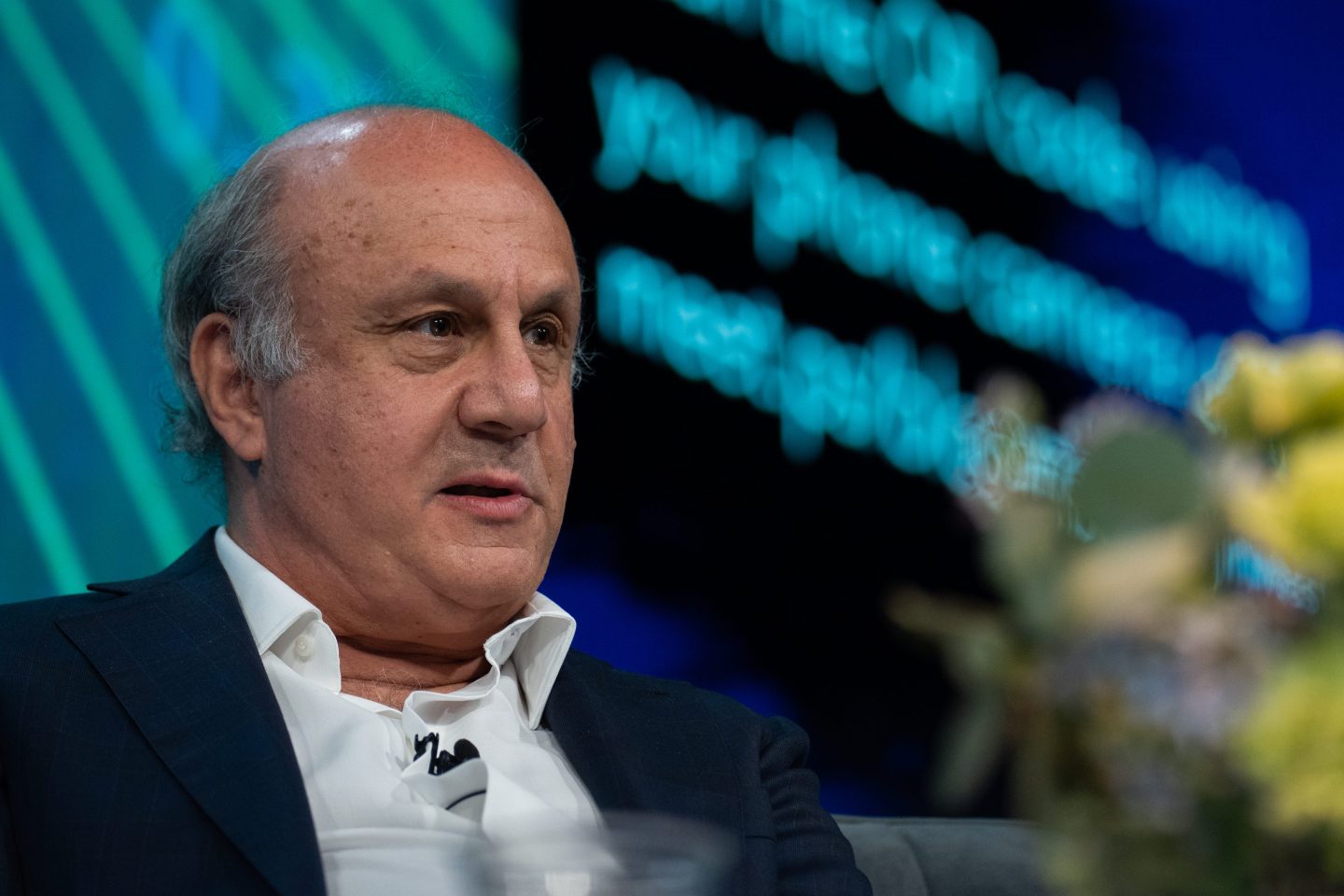
Joseph Blasi is the J. Robert Beyster Distinguished Professor at Rutgers University’s School of Management and Labor Relations and author of the book, The Citizen’s Share and the Third Way think tank policy report, Having a Stake. The article represents Blasi’s personal opinions and not those of any institution.

We’ve included affiliate links in this article. Click here to learn what those are.
About the Author
By Joseph Blasi
See full bioRight Arrow Button Icon

Latest in Commentary

Finance
Lorem ipsum dolor sit amet, consectetur adipiscing elit, sed do eiusmod tempor incididunt ut labore et dolore magna aliqua. Ut enim ad minim veniam
By Fortune Editors
October 20, 2025
Finance
Lorem ipsum dolor sit amet, consectetur adipiscing elit, sed do eiusmod tempor incididunt ut labore et dolore magna aliqua. Ut enim ad minim veniam
By Fortune Editors
October 20, 2025
Finance
Lorem ipsum dolor sit amet, consectetur adipiscing elit, sed do eiusmod tempor incididunt ut labore et dolore magna aliqua. Ut enim ad minim veniam
By Fortune Editors
October 20, 2025
Finance
Lorem ipsum dolor sit amet, consectetur adipiscing elit, sed do eiusmod tempor incididunt ut labore et dolore magna aliqua. Ut enim ad minim veniam
By Fortune Editors
October 20, 2025
Finance
Lorem ipsum dolor sit amet, consectetur adipiscing elit, sed do eiusmod tempor incididunt ut labore et dolore magna aliqua. Ut enim ad minim veniam
By Fortune Editors
October 20, 2025
Finance
Lorem ipsum dolor sit amet, consectetur adipiscing elit, sed do eiusmod tempor incididunt ut labore et dolore magna aliqua. Ut enim ad minim veniam
By Fortune Editors
October 20, 2025

Most Popular

Finance
Lorem ipsum dolor sit amet, consectetur adipiscing elit, sed do eiusmod tempor incididunt ut labore et dolore magna aliqua. Ut enim ad minim veniam
By Fortune Editors
October 20, 2025
Finance
Lorem ipsum dolor sit amet, consectetur adipiscing elit, sed do eiusmod tempor incididunt ut labore et dolore magna aliqua. Ut enim ad minim veniam
By Fortune Editors
October 20, 2025
Finance
Lorem ipsum dolor sit amet, consectetur adipiscing elit, sed do eiusmod tempor incididunt ut labore et dolore magna aliqua. Ut enim ad minim veniam
By Fortune Editors
October 20, 2025
Finance
Lorem ipsum dolor sit amet, consectetur adipiscing elit, sed do eiusmod tempor incididunt ut labore et dolore magna aliqua. Ut enim ad minim veniam
By Fortune Editors
October 20, 2025
Finance
Lorem ipsum dolor sit amet, consectetur adipiscing elit, sed do eiusmod tempor incididunt ut labore et dolore magna aliqua. Ut enim ad minim veniam
By Fortune Editors
October 20, 2025
Finance
Lorem ipsum dolor sit amet, consectetur adipiscing elit, sed do eiusmod tempor incididunt ut labore et dolore magna aliqua. Ut enim ad minim veniam
By Fortune Editors
October 20, 2025
Fortune Secondary Logo
Rankings
  • 100 Best Companies
  • Fortune 500
  • Global 500
  • Fortune 500 Europe
  • Most Powerful Women
  • World's Most Admired Companies
  • See All Rankings
  • Lists Calendar
Sections
  • Finance
  • Fortune Crypto
  • Features
  • Leadership
  • Health
  • Commentary
  • Success
  • Retail
  • Mpw
  • Tech
  • Lifestyle
  • CEO Initiative
  • Asia
  • Politics
  • Conferences
  • Europe
  • Newsletters
  • Personal Finance
  • Environment
  • Magazine
  • Education
Customer Support
  • Frequently Asked Questions
  • Customer Service Portal
  • Privacy Policy
  • Terms Of Use
  • Single Issues For Purchase
  • International Print
Commercial Services
  • Advertising
  • Fortune Brand Studio
  • Fortune Analytics
  • Fortune Conferences
  • Business Development
  • Group Subscriptions
About Us
  • About Us
  • Press Center
  • Work At Fortune
  • Terms And Conditions
  • Site Map
  • About Us
  • Press Center
  • Work At Fortune
  • Terms And Conditions
  • Site Map
  • Facebook icon
  • Twitter icon
  • LinkedIn icon
  • Instagram icon
  • Pinterest icon

Latest in Commentary

altman
CommentarySam Altman
Musk vs. Altman: AI safety cannot be one man’s job
By Stavros GadinisMay 18, 2026
9 hours ago
charlie
CommentarySoftware
Anaplan CEO: AI isn’t eating software. It’s sorting it
By Charlie GottdienerMay 18, 2026
19 hours ago
shyam
CommentaryHealth
World Economic Forum: women’s health gets only 20% of R&D funding. We must seize this $1 trillion opportunity
By Shyam BishenMay 18, 2026
1 day ago
murdochs
CommentaryMedia
OpenAI paid $100 million for a talk show. James Murdoch is eyeing an even bigger deal. The hot new asset class is humanity
By Lin CherryMay 17, 2026
2 days ago
dennis
CommentaryAI agents
Freshworks CEO: why agile enterprises are winning the AI race — and what they did differently
By Dennis WoodsideMay 17, 2026
2 days ago
Mary Moreland-Abbott Executive Vice President of Human Resources.
CommentaryRetirement
Gen X is the most indebted generation in America. Their employers can fix that
By Mary MorelandMay 17, 2026
2 days ago

Most Popular

The Bezos family just donated $100 million to help achieve one of Mayor Zohran Mamdani’s top campaign promises
Politics
The Bezos family just donated $100 million to help achieve one of Mayor Zohran Mamdani’s top campaign promises
By Jake AngeloMay 12, 2026
6 days ago
While Trump insisted the Iran war would end ‘soon,’ an account in his name was buying millions in oil, defense and gold
Economy
While Trump insisted the Iran war would end ‘soon,’ an account in his name was buying millions in oil, defense and gold
By Eva RoytburgMay 18, 2026
12 hours ago
Microsoft AI chief gives it 18 months—for all white-collar work to be automated by AI
AI
Microsoft AI chief gives it 18 months—for all white-collar work to be automated by AI
By Jake AngeloMay 16, 2026
3 days ago
EXCLUSIVE: An hour in the Oval Office with the CEO-in-Chief, President Trump
Politics
EXCLUSIVE: An hour in the Oval Office with the CEO-in-Chief, President Trump
By Alyson ShontellMay 18, 2026
23 hours ago
Current price of oil as of May 18, 2026
Personal Finance
Current price of oil as of May 18, 2026
By Joseph HostetlerMay 18, 2026
17 hours ago
The top foreign holders of U.S. debt may soon dump Treasury bonds and bring their money back home, potentially spiking borrowing costs
Economy
The top foreign holders of U.S. debt may soon dump Treasury bonds and bring their money back home, potentially spiking borrowing costs
By Jason MaMay 17, 2026
2 days ago

© 2026 Fortune Media IP Limited. All Rights Reserved. Use of this site constitutes acceptance of our Terms of Use and Privacy Policy | CA Notice at Collection and Privacy Notice | Do Not Sell/Share My Personal Information
FORTUNE is a trademark of Fortune Media IP Limited, registered in the U.S. and other countries. FORTUNE may receive compensation for some links to products and services on this website. Offers may be subject to change without notice.