• Home
  • Latest
  • Fortune 500
  • Finance
  • Tech
  • Leadership
  • Lifestyle
  • Rankings
  • Multimedia

Exclusive

An hour in the Oval Office with President Trump Fortune Editor-in-Chief: Alyson Shontell sat down with President Trump in the Oval Office for an hour. Tariffs, Intel, AI, Boeing, Iran—and the question every CEO eventually has to answer: who's next?

An hour in the Oval Office with President Trump Fortune Editor-in-Chief: Alyson Shontell sat down with President Trump in the Oval Office for an hour. Tariffs, Intel, AI, Boeing, Iran—and the question every CEO eventually has to answer: who's next?

An hour in the Oval Office with President Trump Fortune Editor-in-Chief: Alyson Shontell sat down with President Trump in the Oval Office for an hour. Tariffs, Intel, AI, Boeing, Iran—and the question every CEO eventually has to answer: who's next?

An hour in the Oval Office with President Trump Fortune Editor-in-Chief: Alyson Shontell sat down with President Trump in the Oval Office for an hour. Tariffs, Intel, AI, Boeing, Iran—and the question every CEO eventually has to answer: who's next?

An hour in the Oval Office with President Trump Fortune Editor-in-Chief: Alyson Shontell sat down with President Trump in the Oval Office for an hour. Tariffs, Intel, AI, Boeing, Iran—and the question every CEO eventually has to answer: who's next?

An hour in the Oval Office with President Trump Fortune Editor-in-Chief: Alyson Shontell sat down with President Trump in the Oval Office for an hour. Tariffs, Intel, AI, Boeing, Iran—and the question every CEO eventually has to answer: who's next?

An hour in the Oval Office with President Trump Fortune Editor-in-Chief: Alyson Shontell sat down with President Trump in the Oval Office for an hour. Tariffs, Intel, AI, Boeing, Iran—and the question every CEO eventually has to answer: who's next?

An hour in the Oval Office with President Trump Fortune Editor-in-Chief: Alyson Shontell sat down with President Trump in the Oval Office for an hour. Tariffs, Intel, AI, Boeing, Iran—and the question every CEO eventually has to answer: who's next?

An hour in the Oval Office with President Trump Fortune Editor-in-Chief: Alyson Shontell sat down with President Trump in the Oval Office for an hour. Tariffs, Intel, AI, Boeing, Iran—and the question every CEO eventually has to answer: who's next?

An hour in the Oval Office with President Trump Fortune Editor-in-Chief: Alyson Shontell sat down with President Trump in the Oval Office for an hour. Tariffs, Intel, AI, Boeing, Iran—and the question every CEO eventually has to answer: who's next?

Commentary

This State’s Free College Plan Won’t Actually Send More Kids to College

By
David H. Feldman
David H. Feldman
Down Arrow Button Icon
By
David H. Feldman
David H. Feldman
Down Arrow Button Icon
April 16, 2017, 6:00 PM ET
Education Images UIG/Getty Images

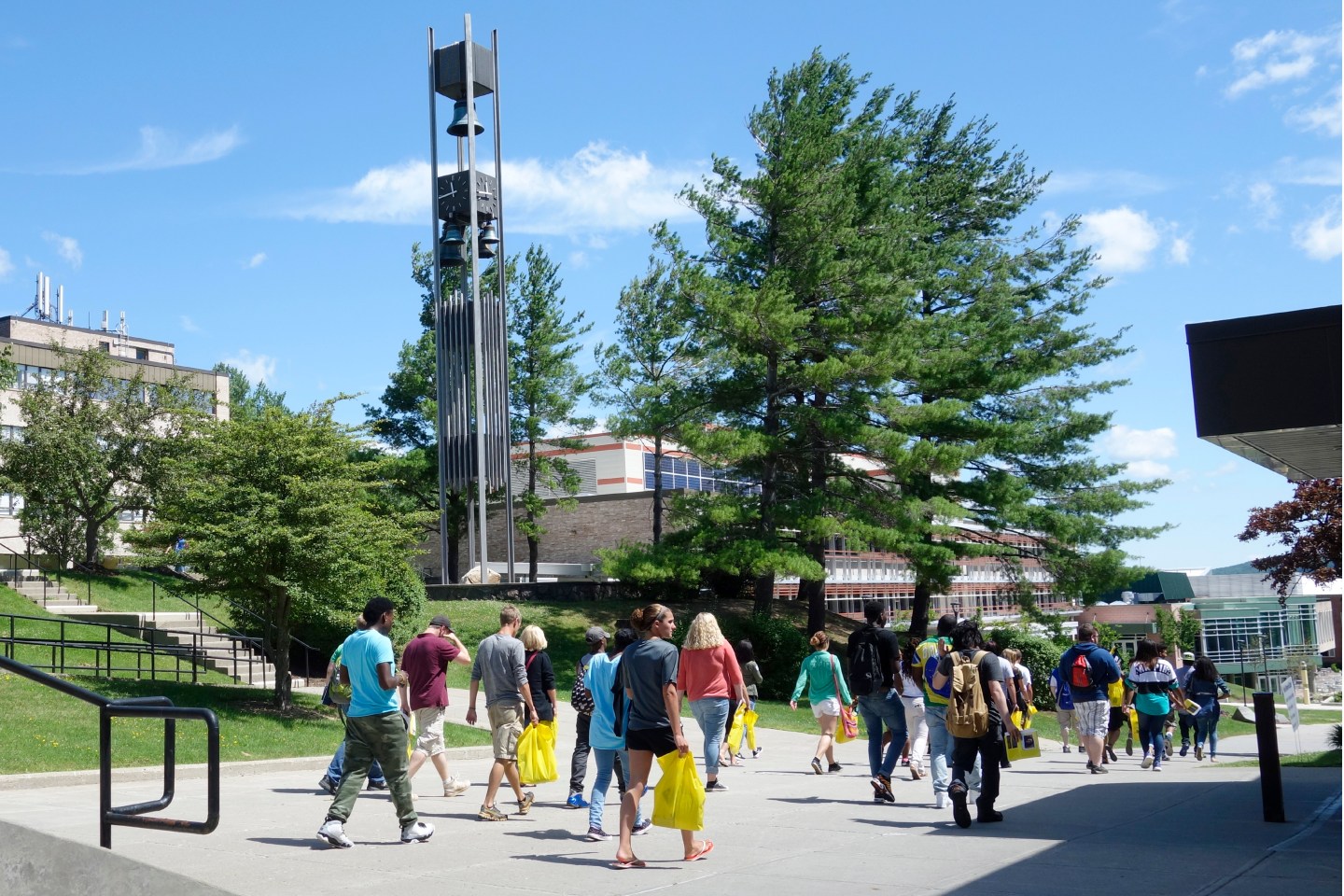
“New York now has free college tuition!” That powerful message is simple enough to put on a bumper sticker. But the reality of New York State’s new program, signed into law on Wednesday, is more nuanced. In reality, Albany has birthed an upper middle-class entitlement that won’t increase the number of students going to college.

The free college tuition movement neatly aligns two forces. One is a growing progressive populism that believes in making socially valuable services free. The other is the pocketbook interest of the middle and upper middle class, a large and politically active part of the population. New York Gov. Andrew Cuomo, a savvy politician, understood in a New York minute that this plan is a political winner.

Demands for free public university tuition reflect soaring sticker prices at state universities. Cutbacks in state higher education appropriations have been the driving engine of tuition growth over the past 40 years. Between 2008 and 2016, the average state appropriation per full-time student fell by $1,599 in inflation-adjusted 2015 dollars. State cuts constitute roughly 70% of the rise in list price tuition at public universities over the same period.

New York currently funds its public universities more generously than most states, so the cost of eliminating tuition is comparatively low. The estimated cost of the new program, known as the Excelsior Scholarship, is $163 million, which is a tiny 0.1 % of the state’s new budget. It’s not a surprise that the free tuition movement has more traction in the Empire State than in places like Virginia or Vermont, which would have to spend far more per student to zero out tuition.

Here’s how the system will work, and why it won’t create much access to college. New York will give a scholarship to any student whose existing federal and state need-based aid doesn’t fully cover the $6,470 list price tuition at any public institution, like one of the State University of New York (SUNY) campuses. Most poor families already pay no tuition out of pocket. As a result, they won’t get any Excelsior money.

Take a family making $21,000 per year. They’ll qualify for a $5,920 Pell Grant from Washington and a $4,000 need-based Tuition Assistance Program (TAP) Grant from New York State. After grant aid fully pays their tuition, they can use $3,450 of the remaining Pell support to pay for room, board, and other costs of attendance.

A family whose adjusted gross income on their tax form is $80,000 a year gets no need-based grant aid from Washington or Albany, so its budding student will get an Excelsior Scholarship to cover the full $6,470. This example shows the political wisdom behind the program. It targets with laser-like precision people making $60,000 to $100,000 (and that cap will soon rise to $125,000). They are the big winners, and they vote. The poor get nothing extra, and that helps limit the state’s costs.

Most young people with adequate college preparation who come from upper middle-income families are going to college anyway. For them, an Excelsior Scholarship will not be the deciding factor between going to SUNY Buffalo and taking a job at McDonald’s. The nation’s real college access problem is with low-income families that rely on need-based grants. For them, the non-tuition cost of attendance—and this includes extra living expenses, books, transportation, and foregone wages—are what keep them out of school in such large numbers and cause them to drop out so easily if their financial situations change.

To improve college access, need-based grants need to be enlarged to cover more of these non-tuition costs. And to improve college completion, the underfunded state universities that educate the bulk of the nation’s at-risk students need more resources. Free tuition proposals address neither of these issues, while funneling scarce public resources to families making almost double the median family income.

The new program may work against lower-income families in another way. States need to provide bigger subsidies over time to cover the rising cost of the technology-saturated educational experience students need for the modern labor market. The legislature may find future tuition increases more palatable than raising state appropriations, because “only wealthy families” would be forced to pay the extra tuition. Middle-income students would be protected by the automatic increase in the size of their Excelsior Scholarships. But higher list price tuition would also tax low-income students’ Pell Grants by leaving less in federal and state need-based aid to pay their non-tuition costs.

The program’s hard cutoff at $100,000 of adjusted gross income also has consequences. A New York family that earns $100,001 and has one child at SUNY loses a tuition benefit of $6,470 because of that extra $1 earned. Expect to see some creative thinking on New York tax returns. Likewise, the mandate that students stay in New York for as many years as they were funded by an Excelsior Scholarship is a poison pill that reduces the value of the program for many students.

On the plus side, “free tuition” sends an easily understood signal to over three-quarters of New York’s families. Most people don’t understand the complex system of grants and discounts. They focus instead on the list price of tuition and overestimate what it will cost to send a child to college. As a result, poor- and middle-class families often don’t adequately prepare their children for the demands of college-level education. This new program forcefully tells all families under the income threshold that their list price is zero, which could ease their concerns over the financial burden of sending their children to college.

Despite this benefit, free tuition proposals don’t put any more resources into the schools that need them most. And they don’t reduce the cost of attendance for students who really are on the margin between going to college and entering the workforce without meaningful training or a degree. New York can do better.

David H. Feldman is a professor in the economics department at the College of William & Mary. He is the author of Why Does College Cost So Much? and The Road Ahead for America’s Colleges and Universities.

About the Author
By David H. Feldman
See full bioRight Arrow Button Icon

Latest in Commentary

Finance
Lorem ipsum dolor sit amet, consectetur adipiscing elit, sed do eiusmod tempor incididunt ut labore et dolore magna aliqua. Ut enim ad minim veniam
By Fortune Editors
October 20, 2025
Finance
Lorem ipsum dolor sit amet, consectetur adipiscing elit, sed do eiusmod tempor incididunt ut labore et dolore magna aliqua. Ut enim ad minim veniam
By Fortune Editors
October 20, 2025
Finance
Lorem ipsum dolor sit amet, consectetur adipiscing elit, sed do eiusmod tempor incididunt ut labore et dolore magna aliqua. Ut enim ad minim veniam
By Fortune Editors
October 20, 2025
Finance
Lorem ipsum dolor sit amet, consectetur adipiscing elit, sed do eiusmod tempor incididunt ut labore et dolore magna aliqua. Ut enim ad minim veniam
By Fortune Editors
October 20, 2025
Finance
Lorem ipsum dolor sit amet, consectetur adipiscing elit, sed do eiusmod tempor incididunt ut labore et dolore magna aliqua. Ut enim ad minim veniam
By Fortune Editors
October 20, 2025
Finance
Lorem ipsum dolor sit amet, consectetur adipiscing elit, sed do eiusmod tempor incididunt ut labore et dolore magna aliqua. Ut enim ad minim veniam
By Fortune Editors
October 20, 2025

Most Popular

Finance
Lorem ipsum dolor sit amet, consectetur adipiscing elit, sed do eiusmod tempor incididunt ut labore et dolore magna aliqua. Ut enim ad minim veniam
By Fortune Editors
October 20, 2025
Finance
Lorem ipsum dolor sit amet, consectetur adipiscing elit, sed do eiusmod tempor incididunt ut labore et dolore magna aliqua. Ut enim ad minim veniam
By Fortune Editors
October 20, 2025
Finance
Lorem ipsum dolor sit amet, consectetur adipiscing elit, sed do eiusmod tempor incididunt ut labore et dolore magna aliqua. Ut enim ad minim veniam
By Fortune Editors
October 20, 2025
Finance
Lorem ipsum dolor sit amet, consectetur adipiscing elit, sed do eiusmod tempor incididunt ut labore et dolore magna aliqua. Ut enim ad minim veniam
By Fortune Editors
October 20, 2025
Finance
Lorem ipsum dolor sit amet, consectetur adipiscing elit, sed do eiusmod tempor incididunt ut labore et dolore magna aliqua. Ut enim ad minim veniam
By Fortune Editors
October 20, 2025
Finance
Lorem ipsum dolor sit amet, consectetur adipiscing elit, sed do eiusmod tempor incididunt ut labore et dolore magna aliqua. Ut enim ad minim veniam
By Fortune Editors
October 20, 2025
Fortune Secondary Logo
Rankings
  • 100 Best Companies
  • Fortune 500
  • Global 500
  • Fortune 500 Europe
  • Most Powerful Women
  • World's Most Admired Companies
  • See All Rankings
  • Lists Calendar
Sections
  • Finance
  • Fortune Crypto
  • Features
  • Leadership
  • Health
  • Commentary
  • Success
  • Retail
  • Mpw
  • Tech
  • Lifestyle
  • CEO Initiative
  • Asia
  • Politics
  • Conferences
  • Europe
  • Newsletters
  • Personal Finance
  • Environment
  • Magazine
  • Education
Customer Support
  • Frequently Asked Questions
  • Customer Service Portal
  • Privacy Policy
  • Terms Of Use
  • Single Issues For Purchase
  • International Print
Commercial Services
  • Advertising
  • Fortune Brand Studio
  • Fortune Analytics
  • Fortune Conferences
  • Business Development
  • Group Subscriptions
About Us
  • About Us
  • Press Center
  • Work At Fortune
  • Terms And Conditions
  • Site Map
  • About Us
  • Press Center
  • Work At Fortune
  • Terms And Conditions
  • Site Map
  • Facebook icon
  • Twitter icon
  • LinkedIn icon
  • Instagram icon
  • Pinterest icon

Latest in Commentary

charlie
CommentarySoftware
Anaplan CEO: AI isn’t eating software. It’s sorting it
By Charlie GottdienerMay 18, 2026
6 hours ago
shyam
CommentaryHealth
World Economic Forum: women’s health gets only 20% of R&D funding. We must seize this $1 trillion opportunity
By Shyam BishenMay 18, 2026
14 hours ago
murdochs
CommentaryMedia
OpenAI paid $100 million for a talk show. James Murdoch is eyeing an even bigger deal. The hot new asset class is humanity
By Lin CherryMay 17, 2026
1 day ago
dennis
CommentaryAI agents
Freshworks CEO: why agile enterprises are winning the AI race — and what they did differently
By Dennis WoodsideMay 17, 2026
1 day ago
Mary Moreland-Abbott Executive Vice President of Human Resources.
CommentaryRetirement
Gen X is the most indebted generation in America. Their employers can fix that
By Mary MorelandMay 17, 2026
1 day ago
liberman
Commentarystart-ups
We watched social media concentrate. The same thing is happening in AI, only at a deeper layer
By David Liberman and Daniil LibermanMay 16, 2026
2 days ago

Most Popular

Microsoft AI chief gives it 18 months—for all white-collar work to be automated by AI
AI
Microsoft AI chief gives it 18 months—for all white-collar work to be automated by AI
By Jake AngeloMay 16, 2026
2 days ago
The top foreign holders of U.S. debt may soon dump Treasury bonds and bring their money back home, potentially spiking borrowing costs
Economy
The top foreign holders of U.S. debt may soon dump Treasury bonds and bring their money back home, potentially spiking borrowing costs
By Jason MaMay 17, 2026
1 day ago
The Bezos family just donated $100 million to help achieve one of Mayor Zohran Mamdani’s top campaign promises
Politics
The Bezos family just donated $100 million to help achieve one of Mayor Zohran Mamdani’s top campaign promises
By Jake AngeloMay 12, 2026
6 days ago
'No one was coming to save me': How Reese Witherspoon built a $900 million company from a problem Hollywood wouldn't fix
Success
'No one was coming to save me': How Reese Witherspoon built a $900 million company from a problem Hollywood wouldn't fix
By Sydney LakeMay 17, 2026
1 day ago
SpaceX heads into a record-shattering IPO with the 'deepest moat that exists today' as investors vow to 'never bet against Elon'
Innovation
SpaceX heads into a record-shattering IPO with the 'deepest moat that exists today' as investors vow to 'never bet against Elon'
By Jason MaMay 16, 2026
2 days ago
Gen X is the most indebted generation in America. Their employers can fix that
Commentary
Gen X is the most indebted generation in America. Their employers can fix that
By Mary MorelandMay 17, 2026
1 day ago

© 2026 Fortune Media IP Limited. All Rights Reserved. Use of this site constitutes acceptance of our Terms of Use and Privacy Policy | CA Notice at Collection and Privacy Notice | Do Not Sell/Share My Personal Information
FORTUNE is a trademark of Fortune Media IP Limited, registered in the U.S. and other countries. FORTUNE may receive compensation for some links to products and services on this website. Offers may be subject to change without notice.