• Home
  • Latest
  • Fortune 500
  • Finance
  • Tech
  • Leadership
  • Lifestyle
  • Rankings
  • Multimedia

Trendingnow

1

Egg companies made $1.22 billion in profit off a $6 carton — now they’re buying their way out of a price-fixing case with 53 million donated eggs

2

Meet the Zillennials: The luckiest micro-generation in the workforce, born between 1993 and 1998

3

Economists have found an answer to slowing cognitive decline: Avoid retiring early, study finds

1

Egg companies made $1.22 billion in profit off a $6 carton — now they’re buying their way out of a price-fixing case with 53 million donated eggs

2

Meet the Zillennials: The luckiest micro-generation in the workforce, born between 1993 and 1998

3

Economists have found an answer to slowing cognitive decline: Avoid retiring early, study finds
design thinking

Asia Miles CEO: “Tolerable Risk” Is Key To Design Thinking For Businesses

By
Debbie Yong
Debbie Yong
Down Arrow Button Icon
By
Debbie Yong
Debbie Yong
Down Arrow Button Icon
November 16, 2017, 1:27 AM ET
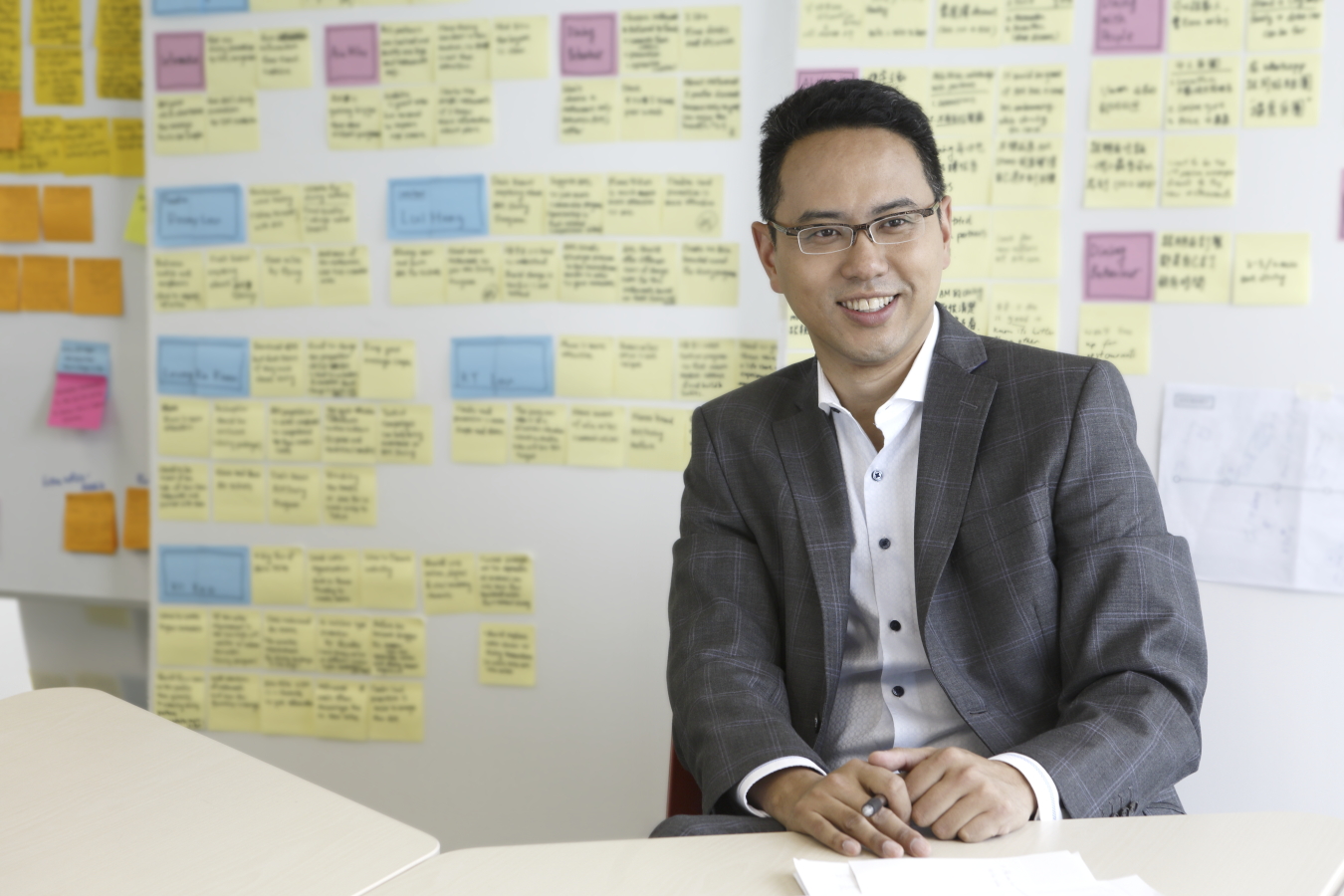
Stephen Wong is the CEO of Asia Miles, the rewards program subsidiary of Cathay Pacific Airlines, and the co-founder of Design Thinking in Action, a Hong Kong-based workshop series promoting design thinking in Asia.
Stephen Wong is the CEO of Asia Miles, the rewards program subsidiary of Cathay Pacific Airlines, and the co-founder of Design Thinking in Action, a Hong Kong-based workshop series promoting design thinking in Asia.Asia Miles
Add Fortune on Google for similar content.

He may be one of Hong Kong’s leading names in the field of design thinking, but don’t call Asia Miles chief executive officer Stephen Wong a designer.

Wong, who helms the rewards program subsidiary of Cathay Pacific Airlines, says: “I don’t see myself as a designer in the traditional sense of the word. I design solutions, not aesthetics. It’s a slightly different thing.”

The Hong Kong native was first introduced to the concept of design thinking — a problem-solving methodology that prizes rapid prototyping and feedback-collection — when he took a few courses at the Stanford d.school, Stanford University’s design school, as part of his MBA program at the university in 2010.

“We saw first-hand how the application of design at IDEO and other Silicon Valley firms led people to do things differently,” Wong recalls. A particular project that left a deep impression was observing a healthcare manufacturer as it went through the process of designing a child-friendly magnetic resonance imaging scanner.

“They originally thought it was an engineering challenge, and that they had to build a new machine, but after speaking to parents and doing some on-the-ground observations, they realized it was not the machine but the experience that made children nervous,” he says. “So they redesigned the process as a game: They stuck stickers inside the machine and told the children that they were entering a submarine, and the nurses dressed up in role-playing costumes to fit the storyline.”

On Wong’s return to Hong Kong post-graduation, the former Cathay Pacific Airlines general manager was deployed to steer Asia Miles, where he made it his mission to incorporate design thinking into the key ethos of the company. He established three new tenets for Asia Miles: to use design thinking to provide transparency and as a common language in decision-making processes throughout the company, as well as to keep the interests of its customers, stakeholders and employees at the core of its strategies.

Innovation at Asia Miles was “all over the place”, says Wong, but thanks to design thinking’s structured step-by-step approach to problem-solving, and a common canon of terms such as “ideation” and “empathy”, staff now have a clearer mutual understanding on the progress of different projects. “They are thus able to tell each other: on this project, we are still at the understanding phase and it needs to move on to the ideation stage next, but on another task, we are already at the prototyping and testing stage. The process becomes very transparent,” he adds.

To get everyone on board, every new employee at Asia Miles — from data scientists to public relations officers and accountants — is put through a one-day orientation program on design thinking that Wong used to conduct personally.

His customer experience team now leads the training program, and some of the more senior leadership in Asia Miles, such as the heads of their customer experience and marketing teams, are sent to Stanford’s d.school for a more immersive five-day course.

“What we are teaching, essentially, is problem solving skills, and everyone needs it – even a child. Everyone can do a better job in their work lives and their personal lives if they have some skills and methodologies that help them solve problems. At every part of the company, there will be ‘pain points’ and there will be opportunities,” says Wong.

An education in design thinking alone is not enough. For Wong, employees must get the chance to apply what they’ve learnt in day-to-day business decisions, too.

“Attending a one-day course on design thinking is like watching a PowerPoint presentation about a bicycle. After going through it, you will understand how a bicycle works, its different parts, and when your colleagues tell you they’re going bike-riding, you’ll know what they are talking about. But you still won’t know how to ride it. And if you don’t learn how to ride a bicycle, you will still fall,” he explains.

This is why employees are set design-thinking-centered projects led by colleagues who are more experienced with the concept, including those from the customer experience team or those who have previously worked in design consultancies.

Wong peppers our conversation with common design thinking terminology such as “user-centricity”, “bias towards action” and “risk-taking”, but throws into the mix a couple of his own concepts, such as “stakeholder-centricity” and “tolerable risk”.

“If the company only cares about keeping the customer happy, but your stakeholder isn’t and the company loses money, then you’ll still go bankrupt,” he explains of the former term.

Of the latter, he is more elaborate. “We want to be a company that empowers people to grow and try new things, but if you do that, inevitably, you will fail sometimes,” Wong says. “If you want to minimize risk, you can go for a lengthy approval system, but if you want to liberalize the system, you have to empower your staff to take risks, such as by setting parameters within which they can try things quickly without asking.”

“If we are undertaking a project with some risk, we get our employees to ask themselves: does the project fit the overall objective, and if it fails, can it fail without affecting major work or compromising the company’s core values?”

For Wong, agile delivery does not always equate to empathy or user-centricity.

“There is a general misconception, especially in Asia, that the total time taken [to solve a problem using a design thinking approach] is longer than if you were solution-driven, but in fact the overall timeframes are often the same,” he says. “If you adopt a solution-driven mindset, you may be lucky and get it right the first or second time, but you may still fail on the 100th time and not know why you’ve failed. But with design thinking, every new iteration is an improvement.”

Over the years, Asia Miles has built a pool of 9,000 self-selected users who respond to surveys and feedback in return for access to beta versions of new website upgrades, members’ benefits and other booking functions, a resource that the company taps on regularly, for instance, to determine which new features to prioritize in its upcoming bookings website revamp.

“Some people help the world by advocating for issues such as recycling. If I can help the world to be a little more efficient — by helping companies not to waste time and resources in creating solutions that don’t solve the problem — then it’s also creating value. That’s why I believe in promoting and preaching the benefits design thinking,” he says.

To further spread his message, Wong teamed up with a fellow Hong Kong-based Stanford d.school alumnus to start Design Thinking In Action (DTIA) in 2016. The annual two-day series of talks and workshops held in Hong Kong aims to build a community among business leaders and design thinkers across Asia.

His favorite lesson to share with fellow business leaders? “If you truly want to be customer- or stakeholder-centric, you have to let go of yourself and of your ego. I find myself telling a lot of CEOs that — myself included,” Wong adds.

“Don’t hijack the process. That is, don’t say that you are customer-centric but force things to go your way ultimately. Let the process run and you’ll find out things about your business that even you did not know.”

About the Author
By Debbie Yong
See full bioRight Arrow Button Icon
Add Fortune on Google for similar content.

Latest in

Finance
Lorem ipsum dolor sit amet, consectetur adipiscing elit, sed do eiusmod tempor incididunt ut labore et dolore magna aliqua. Ut enim ad minim veniam
By Fortune Editors
October 20, 2025
Finance
Lorem ipsum dolor sit amet, consectetur adipiscing elit, sed do eiusmod tempor incididunt ut labore et dolore magna aliqua. Ut enim ad minim veniam
By Fortune Editors
October 20, 2025
Finance
Lorem ipsum dolor sit amet, consectetur adipiscing elit, sed do eiusmod tempor incididunt ut labore et dolore magna aliqua. Ut enim ad minim veniam
By Fortune Editors
October 20, 2025
Finance
Lorem ipsum dolor sit amet, consectetur adipiscing elit, sed do eiusmod tempor incididunt ut labore et dolore magna aliqua. Ut enim ad minim veniam
By Fortune Editors
October 20, 2025
Finance
Lorem ipsum dolor sit amet, consectetur adipiscing elit, sed do eiusmod tempor incididunt ut labore et dolore magna aliqua. Ut enim ad minim veniam
By Fortune Editors
October 20, 2025
Finance
Lorem ipsum dolor sit amet, consectetur adipiscing elit, sed do eiusmod tempor incididunt ut labore et dolore magna aliqua. Ut enim ad minim veniam
By Fortune Editors
October 20, 2025

Most Popular

Finance
Lorem ipsum dolor sit amet, consectetur adipiscing elit, sed do eiusmod tempor incididunt ut labore et dolore magna aliqua. Ut enim ad minim veniam
By Fortune Editors
October 20, 2025
Finance
Lorem ipsum dolor sit amet, consectetur adipiscing elit, sed do eiusmod tempor incididunt ut labore et dolore magna aliqua. Ut enim ad minim veniam
By Fortune Editors
October 20, 2025
Finance
Lorem ipsum dolor sit amet, consectetur adipiscing elit, sed do eiusmod tempor incididunt ut labore et dolore magna aliqua. Ut enim ad minim veniam
By Fortune Editors
October 20, 2025
Finance
Lorem ipsum dolor sit amet, consectetur adipiscing elit, sed do eiusmod tempor incididunt ut labore et dolore magna aliqua. Ut enim ad minim veniam
By Fortune Editors
October 20, 2025
Finance
Lorem ipsum dolor sit amet, consectetur adipiscing elit, sed do eiusmod tempor incididunt ut labore et dolore magna aliqua. Ut enim ad minim veniam
By Fortune Editors
October 20, 2025
Finance
Lorem ipsum dolor sit amet, consectetur adipiscing elit, sed do eiusmod tempor incididunt ut labore et dolore magna aliqua. Ut enim ad minim veniam
By Fortune Editors
October 20, 2025
Fortune Secondary Logo
Rankings
  • 100 Best Companies
  • Fortune 500
  • Global 500
  • Fortune 500 Europe
  • Most Powerful Women
  • World's Most Admired Companies
  • See All Rankings
  • Lists Calendar
Sections
  • Finance
  • Fortune Crypto
  • Features
  • Leadership
  • Health
  • Commentary
  • Success
  • Retail
  • Mpw
  • Tech
  • Lifestyle
  • CEO Initiative
  • Asia
  • Politics
  • Conferences
  • Europe
  • Newsletters
  • Personal Finance
  • Environment
  • Magazine
  • Education
Customer Support
  • Frequently Asked Questions
  • Customer Service Portal
  • Privacy Policy
  • Terms Of Use
  • Single Issues For Purchase
  • International Print
Commercial Services
  • Advertising
  • Fortune Brand Studio
  • Fortune Analytics
  • Fortune Conferences
  • Business Development
  • Group Subscriptions
About Us
  • About Us
  • Press Center
  • Work At Fortune
  • Terms And Conditions
  • Site Map
  • About Us
  • Press Center
  • Work At Fortune
  • Terms And Conditions
  • Site Map
  • Facebook icon
  • Twitter icon
  • LinkedIn icon
  • Instagram icon
  • Pinterest icon

Latest in

‘It’s just his AI and my AI going back and forth’: The workplace phenomenon that’s undermining human relationships
Future of WorkWorkforce
‘It’s just his AI and my AI going back and forth’: The workplace phenomenon that’s undermining human relationships
By Jacqueline MunisJuly 3, 2026
4 hours ago
Chad Hurley and Steven Chen wearing suits
SuccessWealth
YouTube’s founders split over $650 million when they sold to Google in 2006—had they held out, they could have taken a slice of $550 billion
By Preston ForeJuly 3, 2026
4 hours ago
Photo: Paris, france
Environmentclimate change
Brutal heatwave in France is killing 2,000 people per week, undertakers are overwhelmed, and health agency says there’s worse to come
By John Leicester and The Associated PressJuly 3, 2026
5 hours ago
ds
CommentarySoftware
I argued with the father of open source for 2 years. Now the AI fight is the same — only bigger
By David SiegelJuly 3, 2026
7 hours ago
ashok
Commentary250 Years of Innovation
The greatest startup in history: What we can learn from America’s founders at today’s AI frontier
By Ashok N. SrivastavaJuly 3, 2026
7 hours ago
Photo: World Cup fans drinking.
EconomyEconomics
On Wall Street, analysts increasingly don’t believe the U.S. government’s ‘misleading’ job numbers
By Jim EdwardsJuly 3, 2026
8 hours ago

Most Popular

Egg companies made $1.22 billion in profit off a $6 carton — now they’re buying their way out of a price-fixing case with 53 million donated eggs
Law
Egg companies made $1.22 billion in profit off a $6 carton — now they’re buying their way out of a price-fixing case with 53 million donated eggs
By Wyatte Grantham-Philips and The Associated PressJuly 2, 2026
1 day ago
Meet the Zillennials: The luckiest micro-generation in the workforce, born between 1993 and 1998
AI
Meet the Zillennials: The luckiest micro-generation in the workforce, born between 1993 and 1998
By Nick LichtenbergJuly 3, 2026
12 hours ago
Economists have found an answer to slowing cognitive decline: Avoid retiring early, study finds
Economy
Economists have found an answer to slowing cognitive decline: Avoid retiring early, study finds
By Sasha RogelbergJuly 2, 2026
1 day ago
On Wall Street, analysts increasingly don’t believe the U.S. government’s 'misleading' job numbers
Economy
On Wall Street, analysts increasingly don’t believe the U.S. government’s 'misleading' job numbers
By Jim EdwardsJuly 3, 2026
8 hours ago
Mark Zuckerberg feeds his cows macadamia nuts and beer to create the 'highest-quality beef in the world' on his $300 million estate in Hawaii
Success
Mark Zuckerberg feeds his cows macadamia nuts and beer to create the 'highest-quality beef in the world' on his $300 million estate in Hawaii
By Sasha RogelbergJuly 2, 2026
1 day ago
Current price of oil as of July 2, 2026
Personal Finance
Current price of oil as of July 2, 2026
By Joseph HostetlerJuly 2, 2026
1 day ago

© 2026 Fortune Media IP Limited. All Rights Reserved. Use of this site constitutes acceptance of our Terms of Use and Privacy Policy | CA Notice at Collection and Privacy Notice | Do Not Sell/Share My Personal Information
FORTUNE is a trademark of Fortune Media IP Limited, registered in the U.S. and other countries. FORTUNE may receive compensation for some links to products and services on this website. Offers may be subject to change without notice.