• Home
  • Latest
  • Fortune 500
  • Finance
  • Tech
  • Leadership
  • Lifestyle
  • Rankings
  • Multimedia

Trendingnow

1

Egg companies made $1.22 billion in profit off a $6 carton — now they’re buying their way out of a price-fixing case with 53 million donated eggs

2

Meet the Zillennials: The luckiest micro-generation in the workforce, born between 1993 and 1998

3

Economists have found an answer to slowing cognitive decline: Avoid retiring early, study finds

1

Egg companies made $1.22 billion in profit off a $6 carton — now they’re buying their way out of a price-fixing case with 53 million donated eggs

2

Meet the Zillennials: The luckiest micro-generation in the workforce, born between 1993 and 1998

3

Economists have found an answer to slowing cognitive decline: Avoid retiring early, study finds
Commentarydecision making

Leaders Can Make Really Dumb Decisions. This Exercise Can Fix That

By
Micah Zenko
Micah Zenko
Down Arrow Button Icon
By
Micah Zenko
Micah Zenko
Down Arrow Button Icon
October 19, 2018, 3:32 PM ET
President George W. Bush delivers a speech to on the flight deck of the aircraft carrier USS Abraham Lincoln on May 1, 2003.
ABOARD THE USS ABRAHAM LINCOLN??Presdient George W. Bush, delivers an inspirational speech to the sailors and the nation, on the flightdeck of the aircraft carrier USS Abraham Lincoln, 30 miles off the coast of San Diego, (05/01/03), that the Iraqi conflict was coming to an end but the war on terrorism is not over. The president will spend the night on the ship before leaving early tomorrow morning. (Photo by Don Tormey/Los Angeles Times via Getty Images)Don Tormey—Los Angeles Times via Getty Images
Add Fortune on Google for similar content.

The most consequential decision made by an American leader in the past quarter-century was President George W. Bush’s decision to invade Iraq to topple Saddam Hussein’s government in 2003. Remarkably, the decision was made without a formal process, a careful consideration of the consequences through structured deliberations, the solicitation of outside experts’ views, or even a vote of Cabinet officials.

Bush later told Bob Woodward why such a process was unnecessary: “I could tell what they thought,” the president recalled. “I didn’t need to ask them their opinion about Saddam Hussein,” adding, “I think we’ve got an environment where people feel free to express themselves.”

This perspective reflects two dangerous assumptions for leaders to hold: They know what others are thinking, and those surrounding them share their actual opinions. Yet no leaders are mind readers, and research demonstrates that most employees refrain from expressing challenging views for fear of retaliation or futility. Subsequently, before consequential decisions are made, their vulnerabilities frequently remain hidden and assumptions unquestioned.

How can leaders avoid making disastrous decisions? The answer lies in a tool you may have never heard of: red teams.

Red teams are exercises that create an environment where employees feel safe and willing to put forth their ideas or concerns about a strategic decision, and that institute a process through which those ideas and concerns are documented to improve the decision. They should be led by a trained, unbiased facilitator, require limited preparation, and are conducted over the course of just a few hours. You may have heard of them by other names: pre-mortem analysis, wicked questions, or weighted anonymous feedback.

Broadly speaking there are three types of red teams: diagnostic, contrarian, and imaginative. The first dissects and describes, the second questions and challenges, and the third generates new thinking and expands the limits of what is presently imaginable. Ultimately, they all have the same objective of fostering an environment for open and frank discussion. When employees are hesitant to speak up in front of peers or bosses, exercises can be tailored so participants are awarded anonymity by writing or typing out their views. Affording this anonymity often leads to startling insights.

The most meaningful moments of red teaming are when someone offers an “aha” observation. Such an insight stuns the group with its novelty and obviousness, and causes the participants to collectively, instinctually recognize the observation as meaningful or correct. In every exercise with a senior leadership team I have facilitated, there has been at least one such “aha” moment. For instance, I’ve seen a junior manager ask what would happen to the forthcoming strategy if a powerful chief operating officer were to leave her position, and a chief nursing officer identify the most probable cause of a new patient care plan failing—the non-cooperation of doctors. In both instances, the room went quiet and heads nodded in agreement. Once such a breakthrough is made, new initiatives can be developed in order to deal with contingencies.

To be most impactful, red team exercises should have two components: open-ended, divergent thinking to draw out still-hidden ideas, followed by convergent thinking in which those ideas are deliberated, weighted, and prioritized to provide a path for revamping a forthcoming decision. It is impossible to force any leader to take action and implement a new approach, but by highlighting shortcomings, these exercises make leaders more aware of the relative consequences of their organization’s inaction.

Even when red team exercises elicit new insights on old problems or uncover areas of opportunity, they are sometimes wholly ignored. Leaders become ostriches to this new data out of misplaced concerns that they could suffer from reduced prestige or have their wisdom unduly questioned in the future.

But those leaders who refuse to acknowledge or act upon the concerns raised by their employees—the very people closest to the issue—will approach their strategic decision with less information and context to achieve the best outcome. They will also be far less prepared when that decision, once implemented, faces inevitable impediments and complications.

Challenges that may have been foreseen, and may seem obvious in hindsight, often remain buried due to a leader’s mistaken belief that their employees either have nothing to offer or will willingly offer their authentic opinions. From the Oval Office to the C-suite, this assumption has proven costly time and time again.

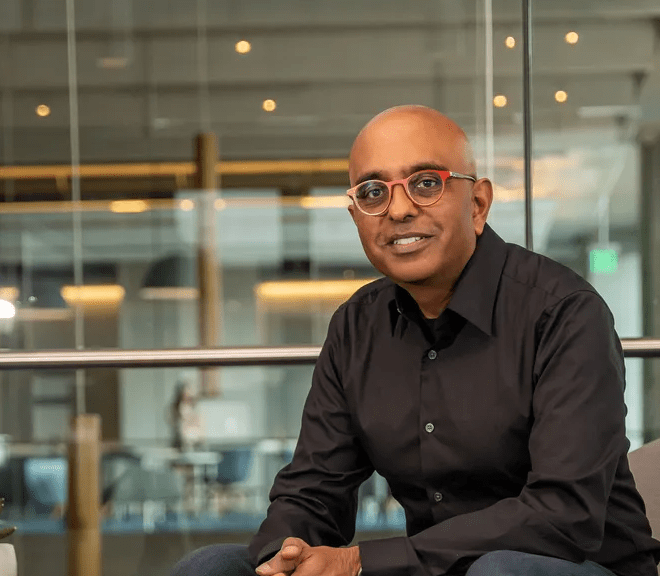
Micah Zenko is the director of research and learning at McChrystal Group, and author of Red Team: How to Succeed by Thinking Like the Enemy.


About the Author
By Micah Zenko
See full bioRight Arrow Button Icon
Add Fortune on Google for similar content.

Latest in Commentary

Finance
Lorem ipsum dolor sit amet, consectetur adipiscing elit, sed do eiusmod tempor incididunt ut labore et dolore magna aliqua. Ut enim ad minim veniam
By Fortune Editors
October 20, 2025
Finance
Lorem ipsum dolor sit amet, consectetur adipiscing elit, sed do eiusmod tempor incididunt ut labore et dolore magna aliqua. Ut enim ad minim veniam
By Fortune Editors
October 20, 2025
Finance
Lorem ipsum dolor sit amet, consectetur adipiscing elit, sed do eiusmod tempor incididunt ut labore et dolore magna aliqua. Ut enim ad minim veniam
By Fortune Editors
October 20, 2025
Finance
Lorem ipsum dolor sit amet, consectetur adipiscing elit, sed do eiusmod tempor incididunt ut labore et dolore magna aliqua. Ut enim ad minim veniam
By Fortune Editors
October 20, 2025
Finance
Lorem ipsum dolor sit amet, consectetur adipiscing elit, sed do eiusmod tempor incididunt ut labore et dolore magna aliqua. Ut enim ad minim veniam
By Fortune Editors
October 20, 2025
Finance
Lorem ipsum dolor sit amet, consectetur adipiscing elit, sed do eiusmod tempor incididunt ut labore et dolore magna aliqua. Ut enim ad minim veniam
By Fortune Editors
October 20, 2025

Most Popular

Finance
Lorem ipsum dolor sit amet, consectetur adipiscing elit, sed do eiusmod tempor incididunt ut labore et dolore magna aliqua. Ut enim ad minim veniam
By Fortune Editors
October 20, 2025
Finance
Lorem ipsum dolor sit amet, consectetur adipiscing elit, sed do eiusmod tempor incididunt ut labore et dolore magna aliqua. Ut enim ad minim veniam
By Fortune Editors
October 20, 2025
Finance
Lorem ipsum dolor sit amet, consectetur adipiscing elit, sed do eiusmod tempor incididunt ut labore et dolore magna aliqua. Ut enim ad minim veniam
By Fortune Editors
October 20, 2025
Finance
Lorem ipsum dolor sit amet, consectetur adipiscing elit, sed do eiusmod tempor incididunt ut labore et dolore magna aliqua. Ut enim ad minim veniam
By Fortune Editors
October 20, 2025
Finance
Lorem ipsum dolor sit amet, consectetur adipiscing elit, sed do eiusmod tempor incididunt ut labore et dolore magna aliqua. Ut enim ad minim veniam
By Fortune Editors
October 20, 2025
Finance
Lorem ipsum dolor sit amet, consectetur adipiscing elit, sed do eiusmod tempor incididunt ut labore et dolore magna aliqua. Ut enim ad minim veniam
By Fortune Editors
October 20, 2025
Fortune Secondary Logo
Rankings
  • 100 Best Companies
  • Fortune 500
  • Global 500
  • Fortune 500 Europe
  • Most Powerful Women
  • World's Most Admired Companies
  • See All Rankings
  • Lists Calendar
Sections
  • Finance
  • Fortune Crypto
  • Features
  • Leadership
  • Health
  • Commentary
  • Success
  • Retail
  • Mpw
  • Tech
  • Lifestyle
  • CEO Initiative
  • Asia
  • Politics
  • Conferences
  • Europe
  • Newsletters
  • Personal Finance
  • Environment
  • Magazine
  • Education
Customer Support
  • Frequently Asked Questions
  • Customer Service Portal
  • Privacy Policy
  • Terms Of Use
  • Single Issues For Purchase
  • International Print
Commercial Services
  • Advertising
  • Fortune Brand Studio
  • Fortune Analytics
  • Fortune Conferences
  • Business Development
  • Group Subscriptions
About Us
  • About Us
  • Press Center
  • Work At Fortune
  • Terms And Conditions
  • Site Map
  • About Us
  • Press Center
  • Work At Fortune
  • Terms And Conditions
  • Site Map
  • Facebook icon
  • Twitter icon
  • LinkedIn icon
  • Instagram icon
  • Pinterest icon

Latest in Commentary

k
Commentary250 Years of Innovation
Media leadership unity in defying Trump’s assault on Free speech: standing tall against historic comparisons
By Jeffrey Sonnenfeld, Jeff Bewkes, Kay Koplovitz, Tom Glocer and Marvin KalbJuly 4, 2026
2 hours ago
ds
CommentarySoftware
I argued with the father of open source for 2 years. Now the AI fight is the same — only bigger
By David SiegelJuly 3, 2026
1 day ago
ashok
Commentary250 Years of Innovation
The greatest startup in history: What we can learn from America’s founders at today’s AI frontier
By Ashok N. SrivastavaJuly 3, 2026
1 day ago
2
Commentary250 Years of Innovation
America’s secret weapon isn’t just innovation — It’s the freedom to fail
By Keith KrachJuly 3, 2026
1 day ago
rn
CommentaryCryptocurrency
Former Iran director at NSC: Crypto legislation is a ticket to sanctions evasion
By Richard NephewJuly 2, 2026
2 days ago
m
Commentary250 Years of Innovation
McKinsey chairs: Building a more resilient industrial base may require $2 trillion in investment
By Eric Kutcher and Shubham SinghalJuly 2, 2026
2 days ago

Most Popular

Egg companies made $1.22 billion in profit off a $6 carton — now they’re buying their way out of a price-fixing case with 53 million donated eggs
Law
Egg companies made $1.22 billion in profit off a $6 carton — now they’re buying their way out of a price-fixing case with 53 million donated eggs
By Wyatte Grantham-Philips and The Associated PressJuly 2, 2026
2 days ago
Meet the Zillennials: The luckiest micro-generation in the workforce, born between 1993 and 1998
AI
Meet the Zillennials: The luckiest micro-generation in the workforce, born between 1993 and 1998
By Nick LichtenbergJuly 3, 2026
1 day ago
Economists have found an answer to slowing cognitive decline: Avoid retiring early, study finds
Economy
Economists have found an answer to slowing cognitive decline: Avoid retiring early, study finds
By Sasha RogelbergJuly 2, 2026
2 days ago
On Wall Street, analysts increasingly don’t believe the U.S. government’s 'misleading' job numbers
Economy
On Wall Street, analysts increasingly don’t believe the U.S. government’s 'misleading' job numbers
By Jim EdwardsJuly 3, 2026
1 day ago
$25 billion CEO says one-hour interviews are a waste of time—he puts candidates through six hours of tests and wants them to order wine at lunch
Success
$25 billion CEO says one-hour interviews are a waste of time—he puts candidates through six hours of tests and wants them to order wine at lunch
By Orianna Rosa RoyleJuly 3, 2026
1 day ago
In Iran, regime officials who survived the war intended to kill them appear in public for dayslong funeral of the late Supreme Leader Khamenei
Politics
In Iran, regime officials who survived the war intended to kill them appear in public for dayslong funeral of the late Supreme Leader Khamenei
By Nasser Karimi, Jon Gambrell and The Associated PressJuly 3, 2026
1 day ago

© 2026 Fortune Media IP Limited. All Rights Reserved. Use of this site constitutes acceptance of our Terms of Use and Privacy Policy | CA Notice at Collection and Privacy Notice | Do Not Sell/Share My Personal Information
FORTUNE is a trademark of Fortune Media IP Limited, registered in the U.S. and other countries. FORTUNE may receive compensation for some links to products and services on this website. Offers may be subject to change without notice.