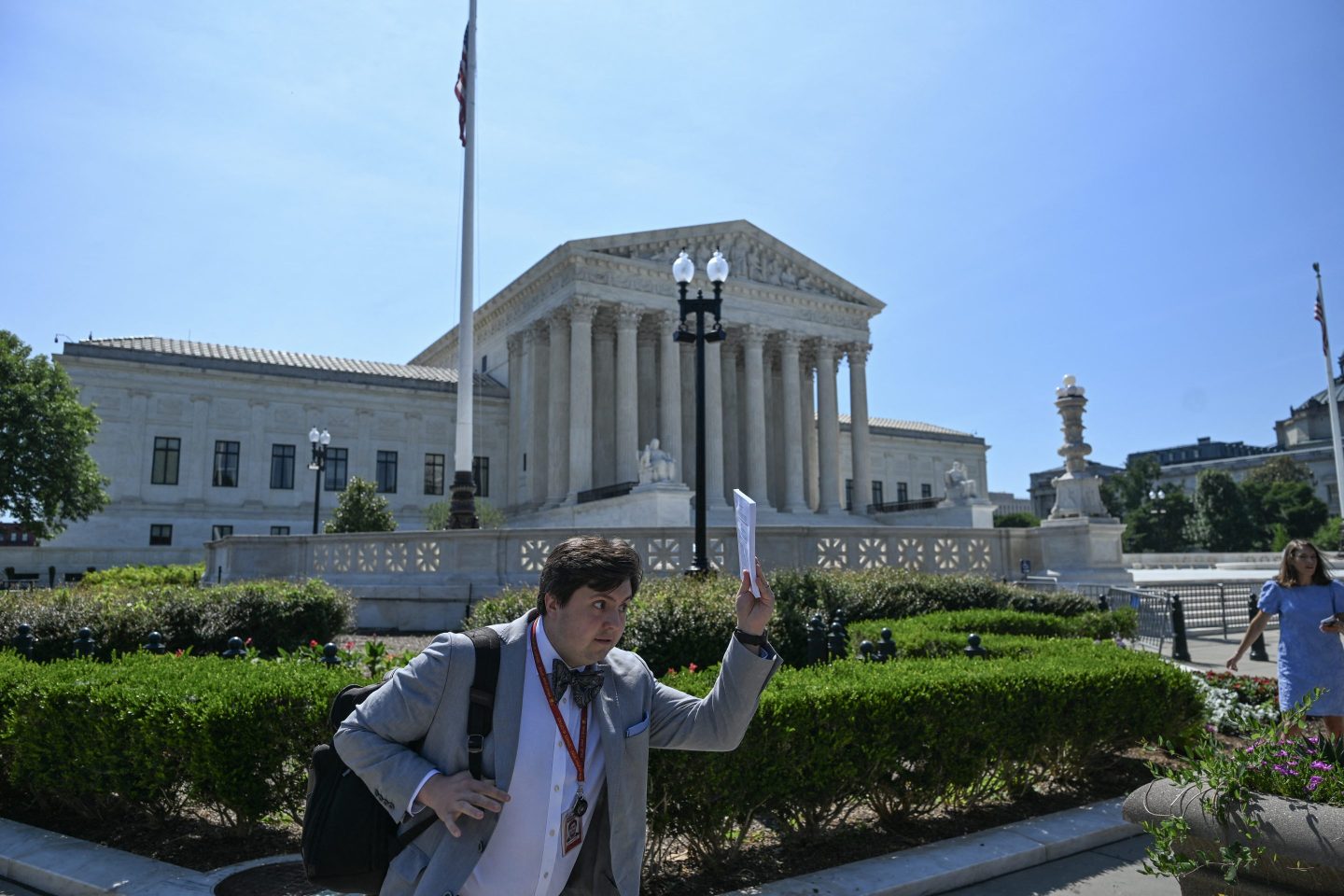
This week, both the Senate Banking Committee and the House Financial Services Committee grilled Facebook’s David Marcus, head of the Libra cryptocurrency project. Lawmakers bluntly laid out a variety of doubts about the Libra proposal, including whether the system could prevent money laundering, and whether Facebook should be trusted to collect transaction data, given its shoddy history of handling user information.
But perhaps the most high-stakes question on legislators’ minds was whether Libra might introduce a new kind of systemic financial risk. Though often derided for their speculation-fueled volatility, bitcoin and other cryptocurrencies are largely disconnected from the mainstream financial system, and represent a relatively tiny slice of global value. Libra, by contrast, is designed in a way that could make it very large, and very closely entwined with things like national currencies and even small local banks.
If and when Libra gets up and running—Facebook has said it will launch in 2020—it would have a built-in base of nearly 2.5 billion Facebook users worldwide, or roughly one third of the entire global population. Facebook and Marcus have said that reaching unbanked people is a major goal for Libra, and pointed towards close integration between Libra and Facebook tools such as Messenger. The social network, then, plans to push hard to get its users to convert funds to Libra. Rep. Michael San Nicolas (D–Guam) yesterday speculated that Libra could easily attract $100 billion in deposits—about one tenth of the assets held by Goldman Sachs—and potentially much more.
Funds converted into Libra by users would be placed into a “Libra Reserve” made up of conservative instruments like treasury bills and national currencies. The value of Libra will not be ‘pegged’ to any single currency, and will instead ‘float’ in a global market, much like most national currencies. David Marcus nonetheless described its structure as “1 to 1” backing, in the sense that the reserve funds will not be lent out, decreasing risk.
But there’s no real guarantee the Libra Reserve would be stable in practice, especially when broader conditions get rough. The problem, according to numerous experts, boils down to this: What looks safe on paper can hide unpredictable risks.
“We’re talking about finance, which is inherently fragile,” says Columbia Law School’s Katharina Pistor, “And subject to crisis, time and again.” Pistor studies the legal structure of financial systems, and testified before the Financial Services hearing Wednesday. She thinks the idea that Libra can be insulated from crisis is based on “very strong assumptions that probably will prove to be wrong.”
The Libra bank run
One of those assumptions is simply that certain currencies are ‘safe.’ “In the last decade, we’ve seen even the Euro under very significant pressure,” points out Lars Seier Christensen, an experienced currency trader and founder of Saxo Bank, a Danish investment bank.
Even without the risk of lending out its reserves, Pistor says she “would not exclude the possibility of a run on the Libra,” as one slumping currency in its ‘basket’ could trigger a collapse of faith, causing holders to scramble for the exits. Because its value would float in the market, a sudden global rush to sell Libra would potentially mean a big (if temporary) hit for holders slow to exit. It doesn’t take much to trigger such a run: Pistor points out that the Reserve Primary Fund, a ‘safe’ money market fund, had less than 2% of its assets in Lehman Brothers when Lehman collapsed in 2008. Yet it caused a run, ultimately forcing Reserve Primary into liquidation.
Libra’s possibly huge size would make it a threat to more than just its own holders. “Let’s say one of these [Libra Reserve] assets began to fail, for whatever reason,” Christensen says. “Presumably, if people began to reclaim the counter value of the Libra, [the Reserve] would actually have to start wholesaling the other assets for the shortfall in the original failing asset.” A large enough selloff, even of national currencies and short-term government bonds, could be a shock to the broader market.
A scenario along these lines seemed to be on the minds of House Financial Services Committee members on Wednesday. Rep. Gregory Meeks (D-N.Y.), for instance, recalled the “absolutely terrifying” unfolding of the 2008 financial crisis, and argued that if even 10 percent of Facebook users began using Libra, “that would absolutely make [Libra] a systemically risky financial institution, and we would expect FSOC [the Financial Services Oversight Council] to designate you as such,” subjecting Libra to heightened ongoing scrutiny by regulators.
The moral hazard of the Libra Reserve
These risks are compounded by one of the most worrisome elements of Libra’s proposed structure. Even many conservative instruments that might be included in the Libra Reserve return a percent or two of interest. Those returns, according to the Libra proposal, would not go to depositors, but to Libra Association members and other investors in the system. Despite the notional pledge that the Reserve will only hold the most conservative instruments, Christiansen finds this structure deeply problematic.
“If all of the interest value falls to the consortium,” he muses,“Would there not be a slight temptation to go just a little bit higher on risk than you might if you didn’t have an upside? Would not the incentive be to move the yield from 100 [basis points] to 150 or 175?”
That troubling dynamic collides with a hard truth: “Safe assets are not infinitely available,” says Pistor. “You could argue even today we have a scarcity of safe assets.” So even if not out of greed, the administrators of the Libra Reserve could find themselves extending into less safe territory as the currency grew. This again has shades of the 2008 financial crisis, when heightened demand for mortgage-backed securities led to increasingly dicey loans being bundled into them.
Disrupting global monetary policies
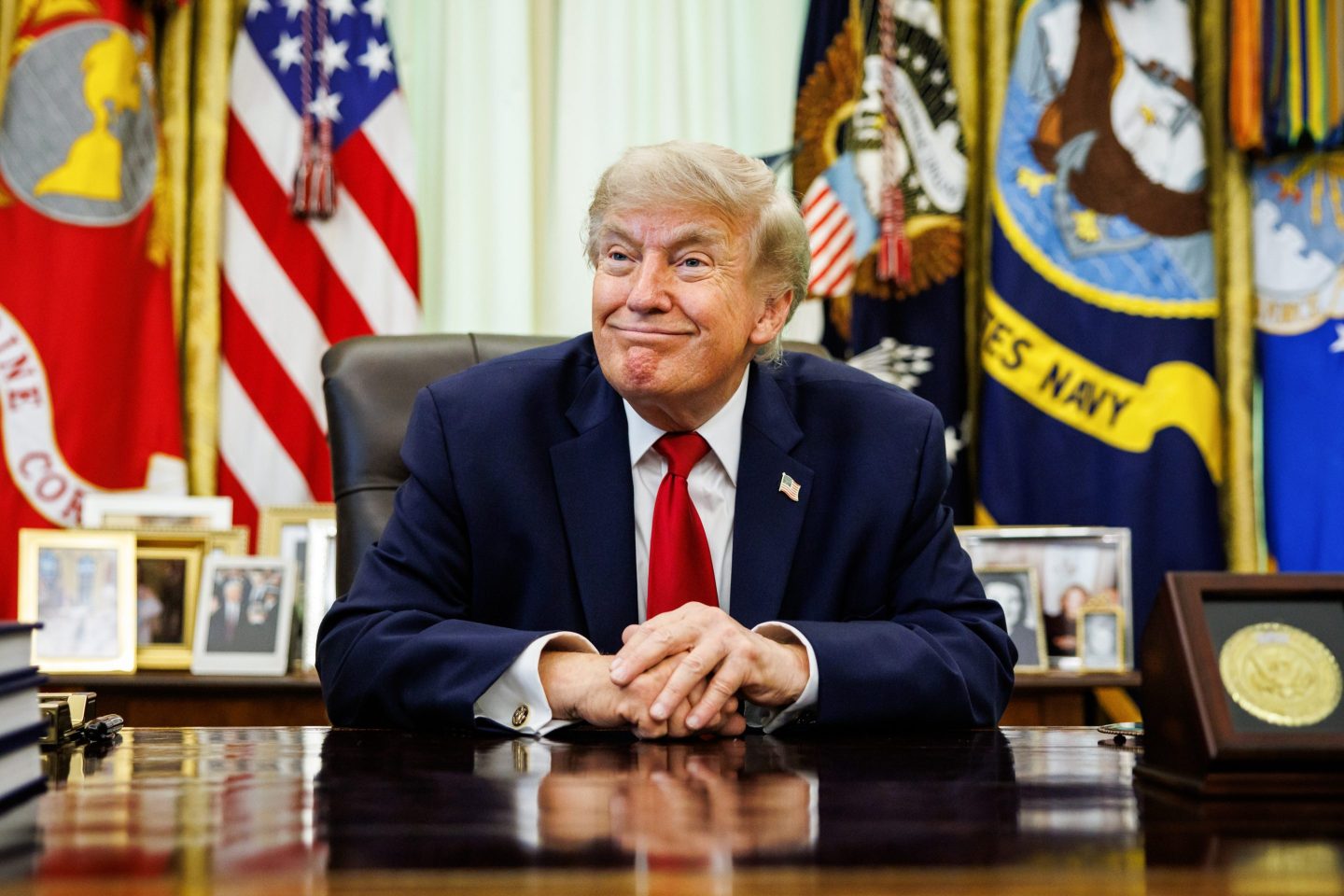
On July 11, U.S. President Donald Trump commented about virtual currency, including Libra, on Twitter. “We have only one real currency in the USA,” he said in part. Libra is clearly anticipating this sort of anxiety, with Marcus taking pains in his Banking Committee testimony to say that “The Libra Association . . . has no intention of competing with any sovereign currencies or entering the monetary policy arena.”
But Libra’s very structure and mission may inevitably disrupt government monetary policy, says Pistor—especially in countries with less stable currencies. When Libra is sold by a local agent in a country like Kenya, for instance, the Kenyan shillings traded for Libra would in turn have to be traded in for something acceptable to the Libra reserve. “This could have an effect on the exchange rates of local currencies, and their stability,” says Pistor.
Further, the conversion of local currencies for Libra could interfere with local banks’ ability to provide credit, for instance to local small businesses. Pistor says even cryptocurrencies that make no claim to stability—for instance, bitcoin—have seen significant uptake in places with weak money, making these impacts entirely plausible.
Also… It’s Facebook
One of the most striking takeaways from this week’s hearings was how little credence legislators gave to Facebook’s claims that it would not control Libra once it launches. For instance, Facebook has gathered a consortium, including the likes of Visa and Uber, that would, in theory, come to oversee Libra through a Swiss-headquartered nonprofit. But as Rep. Anthony Gonzalez (R-Ohio) pointed out, the fact that Facebook is the one who gathered those parties could give the social network outsized power.
Facebook’s role clearly has legislators particularly suspicious of Libra’s general trustworthiness. So much so, in fact, that they’re already preparing to block it outright. The Finance Committee has posted a discussion draft of a bill, referred to as the “Keep Big Tech Out of Finance Act,” that would explicitly make it illegal for “a large platform utility” (read: Facebook or Google) to “establish, maintain, or operate a digital asset” (read: Libra). Such a sweeping prohibition seems unlikely to gain traction, but the fact that it has even been proposed shows just how much Libra worries the people in charge.
More must-read stories from Fortune:
—Meet the A.I. landlord that’s building a single-family-home empire
—You might have longer than you think to invest for retirement
—Will the Fed cut interest rates to prevent recession? 6 predictions
—Schwab’s ‘Project Bear’ uses A.I. to predict when investors are getting nervous
—When the next recession hits, four good things could happen
Don’t miss the daily Term Sheet, Fortune‘s newsletter on deals and dealmakers.