• Home
  • Latest
  • Fortune 500
  • Finance
  • Tech
  • Leadership
  • Lifestyle
  • Rankings
  • Multimedia

Trendingnow

1

Egg companies made $1.22 billion in profit off a $6 carton — now they’re buying their way out of a price-fixing case with 53 million donated eggs

2

Meet the Zillennials: The luckiest micro-generation in the workforce, born between 1993 and 1998

3

Economists have found an answer to slowing cognitive decline: Avoid retiring early, study finds

1

Egg companies made $1.22 billion in profit off a $6 carton — now they’re buying their way out of a price-fixing case with 53 million donated eggs

2

Meet the Zillennials: The luckiest micro-generation in the workforce, born between 1993 and 1998

3

Economists have found an answer to slowing cognitive decline: Avoid retiring early, study finds
TechRobotics

How robots are changing the construction industry

By
Jennifer Alsever
Jennifer Alsever
Down Arrow Button Icon
By
Jennifer Alsever
Jennifer Alsever
Down Arrow Button Icon
November 23, 2019, 6:30 AM ET
Courtesy of Construction Robotics
Add Fortune on Google for similar content.

Along the banks of Lake Michigan, 20 masons lay bricks for a huge dorm, as big as three football fields, at the Naval Station Great Lakes in Illinois. Compared with those in years past, these workers are doing far less laying and “buttering” and, instead, are focused on quality and on cleaning up mortar joints. 

A robot named SAM handles the real grunt work. 

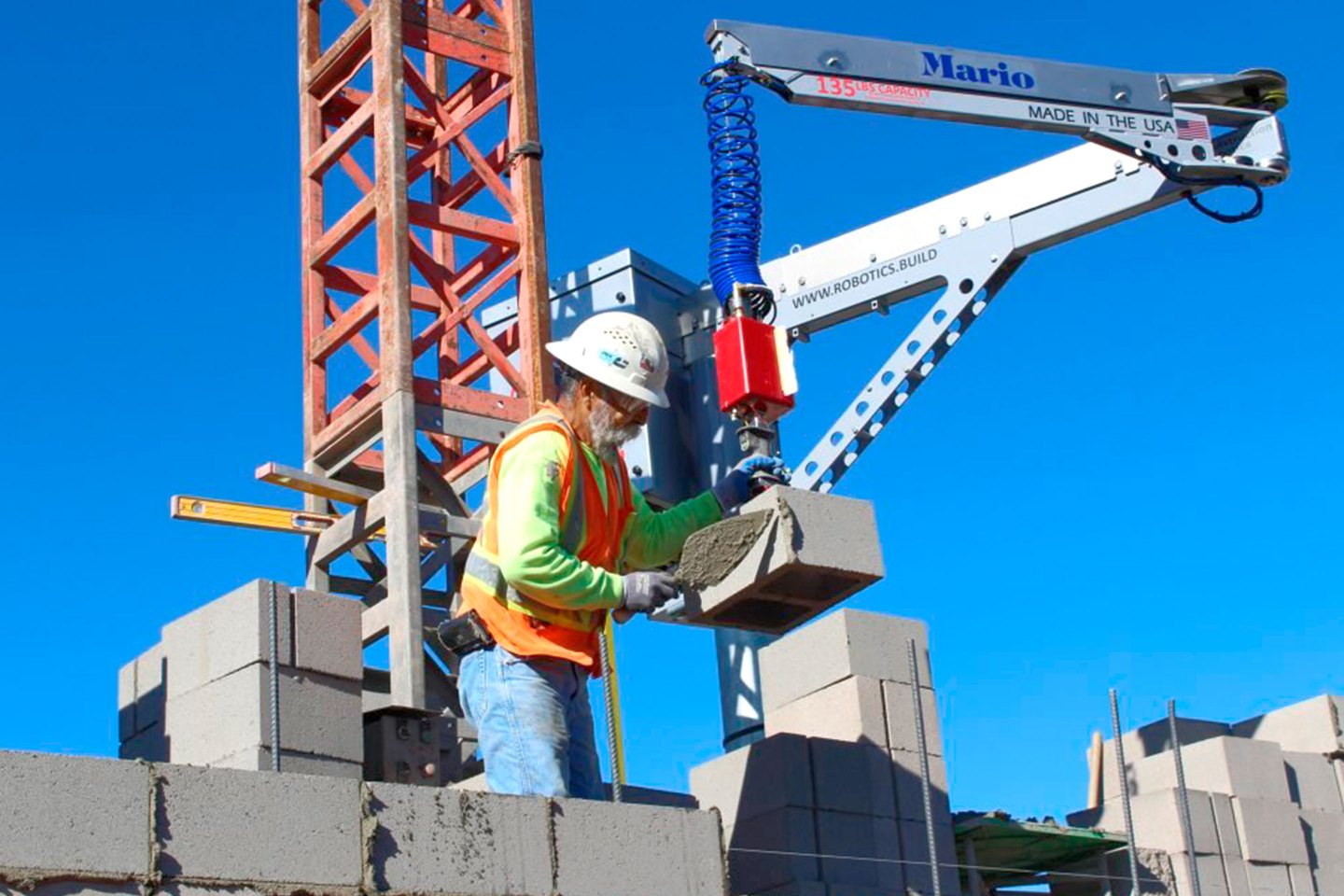
SAM, a clawlike metal arm extending from a cage, moves back and forth along the walls, buttering and layering a brick every eight to 12 seconds. Nearby, another robot called MULE uses a burly 12-foot arm to lift heavy cement blocks for workers, who then guide them into place. 

Neither bot takes sick days or gets sore muscles, and both can work around the clock. “It’s all about reliability and certainty that the job will get done,” says Tyler Shawcross, senior project manager at Clark Construction, the general contracting giant co-overseeing the Navy project.

These days, reliability is a big issue in the construction industry, responsible for nearly $10 trillion in global spending annually. The vast majority of large construction projects go over budget and take 20% longer than expected, according to consulting firm McKinsey. 

The problem is partly owing to a labor shortage. In August, 7.1 million construction jobs went unfilled, and 80% of construction companies say they struggle to recruit and hire people, according to a survey by software firm Autodesk and Associated General Contractors of America. 

Construction work—whether building bridges, roads, or homes—is dirty, physical, and dangerous. The sector is among the leaders in workplace fatalities, with 965 job-site deaths in 2017, according to the U.S. Bureau of Labor Statistics. 

Investors think technology can fix some of the construction industry’s downsides. Last year they pumped $3.1 billion into tech startups focused on everything from construction-scheduling software to factories that churn out prefab housing to robots like SAM. 

“In the last three years, there’s been a big transformation,” says Scott Peters, cofounder of Construction Robotics, based in Victor, N.Y., and maker of the SAM and MULE robots. “Most people understand change is needed.”

But with low profit margins, high risk, and tight timelines, the construction industry is notoriously cautious. Adding new technology requires contractors to rethink how they do their work, and that adds to the cost and risk. 

“If there’s an accident, who is at fault?” says Jose Luis Blanco, a partner at McKinsey. “No one wants to be the first one when it goes south.”

The push to use robots is, of course, still in its early days. Although the technology exists for certain kinds of construction work, it isn’t there for electrical work and carpentry, which require more finesse. Price is also a major stumbling block. The robots sold by Construction Robotics, for example, cost $75,000 to $500,000. 

Even if construction executives favor new technologies, getting everyone else on board, from foremen to frontline workers, can be difficult, says Peters. Masons, for instance, had some misgivings about the SAM bricklaying robot when it was unveiled at a trade show in 2015 because some of them feared losing their jobs. “You got some people who were super excited and other people who were scared to death,” Peters says.

MULE has had a warmer welcome from the International Union of Bricklayers and Allied Craftworkers. Its robotic arm can quickly lift tools, stones, and concrete panels of up to 135 pounds, eliminating physical strain on human workers. 

“SAM is a little bit different,” says Bob Arnold, the national director of the union’s arm responsible for job training, “because they feel that it’s replacing them, and, in a way, it could.”

Despite those mixed feelings, the union started training its members to use the machines. Over the past three years, Construction Robotics has deployed its technology on 165 job sites in three countries. 

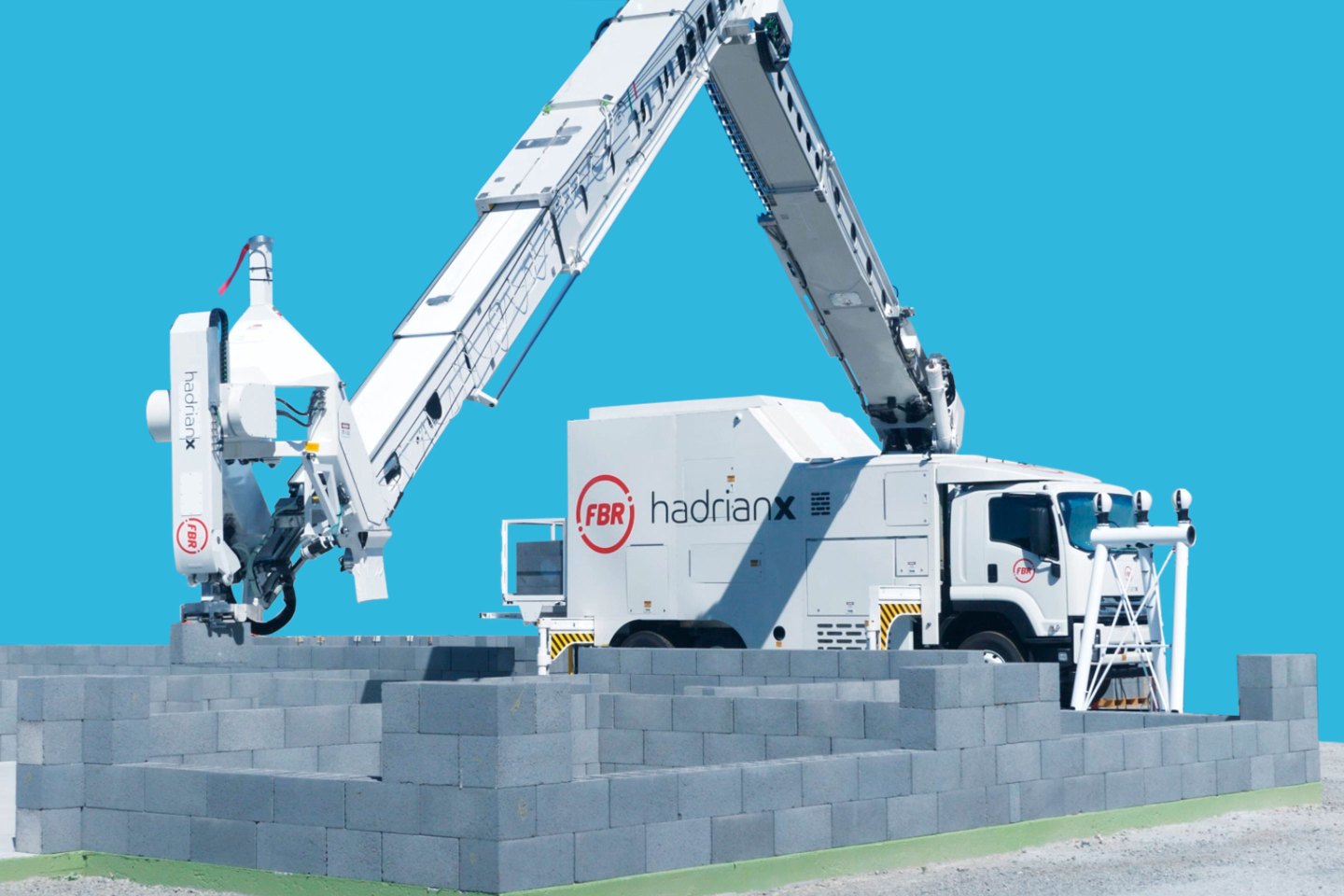
Other companies are also trying to gain traction with their construction-focused robots. Hadrian X, by FBR in Australia, builds walls for a complete home in a single day using bricks that are 12 times as large as traditional ones. Meanwhile, Toggle, in New York, uses industrial robots to fabricate and assemble rebar cages. 

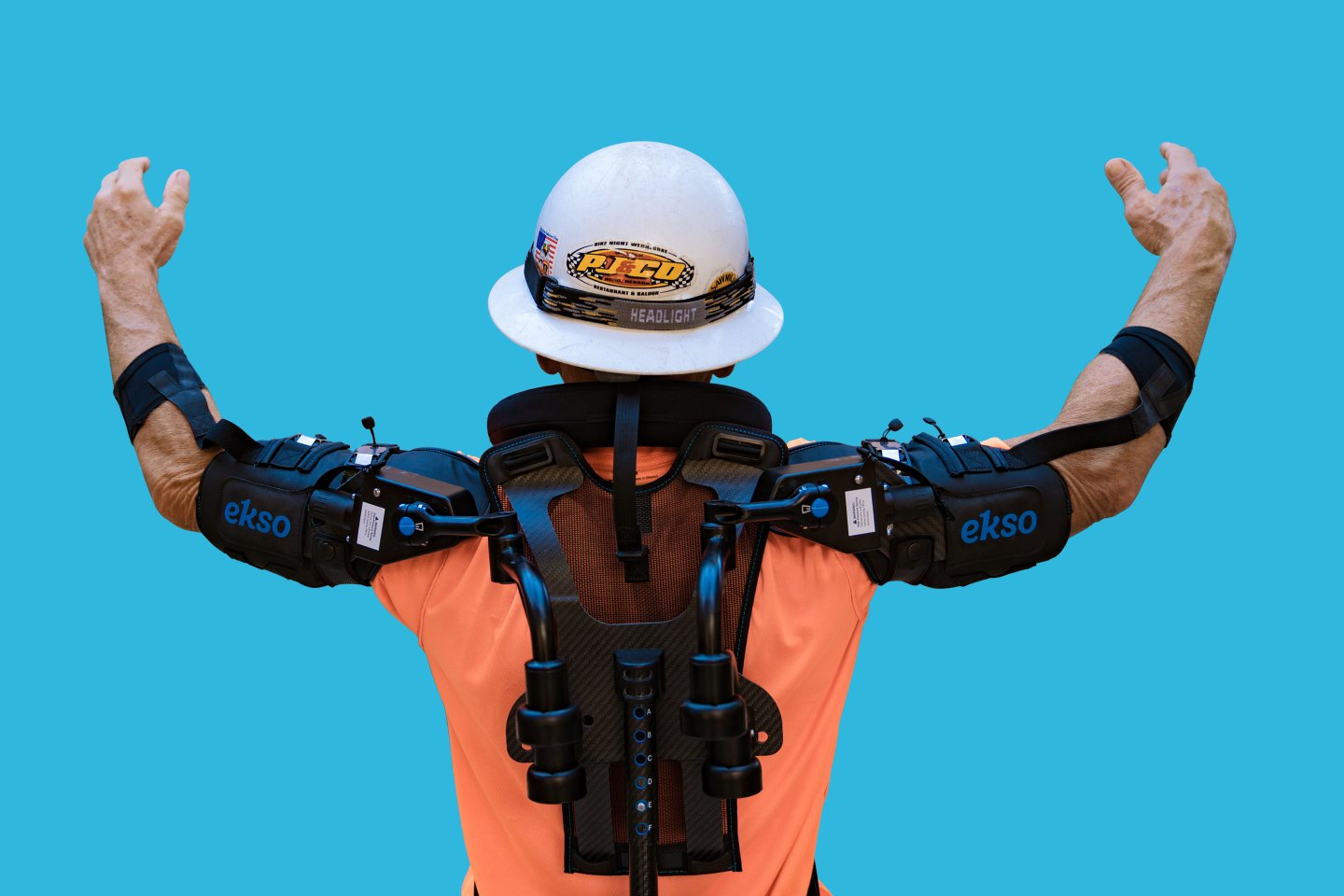
A host of Bay Area startups are also getting in on the act. Doxel builds autonomous robots and drones with 3D vision and artificial intelligence that roll around and fly over job sites, inspecting how much plumbing work has been done and whether it was done correctly. Ekso Bionics makes robotic vests that support a worker’s arms for jobs like drilling or installing piping overhead. It also sells a robotic arm that makes it easier for workers to use heavy tools, reducing fatigue and injury. And Dusty Robotics makes small autonomous bots that roll around construction sites and mark lines on concrete floors that indicate the location of walls and infrastructure, based on construction documents. 

Few companies are trying anything as ambitious as San Francisco startup Built Robotics. It sells autonomous technology for bulldozers and other heavy equipment. The tech can enable a Caterpillar tractor, among others, to move dirt and lift pallets of wood—all without anyone in the cab. 
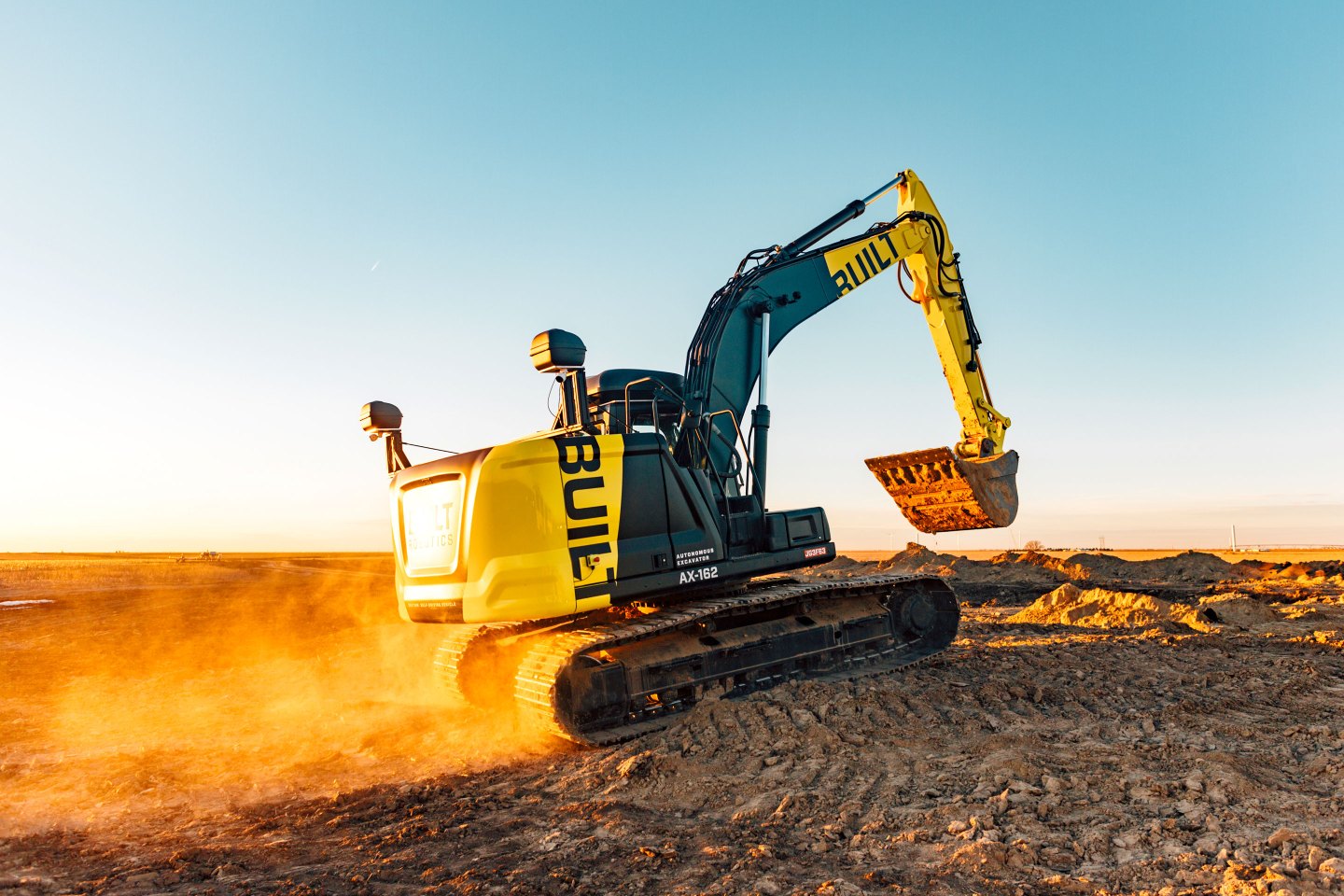
Technology from Built Robotics enables heavy vehicles like backhoes to drive themselves—and, theoret­ically, to get better at it over time.
Courtesy of Built Robotics

The “brains”—a combination of sensors, intelligence, and cameras—are affixed atop the vehicle’s cab inside what looks like a car luggage carrier. Software engineers must work with on-site contractors, who pay a monthly fee for the technology, to program the autonomous guidance system for specific jobs. 

Geofences—which tell the computer the physical boundaries of a job site—and remote kill buttons keep the vehicles from going awry. Over time, with the help of machine learning that analyzes their work, the vehicles are supposed to get smarter.

Mortenson, a large contracting firm, is using Built’s autonomous technology on tractors that move dirt and build roads at five wind farms in rural Texas, Kansas, and eastern Colorado. Covering 100 square miles or more, the wind farms are ideal places for testing such new technology, says Eric Sellman, a Mortenson vice president.

“The robots keep getting better and better, and smarter and faster,” he says. 

This technology, Sellman says, makes job sites safer by letting construction crews stay clear of danger while they focus on other tasks, such as planning. Workers are also assigned to oversee the bulldozers, often monitoring several machines at once, and then verifying whether they’ve done a good job. 

Sellman hopes that robots will ultimately become a recruiting tool, encouraging more young people to pursue careers in construction. 

“There isn’t any rule book yet on how robots and people will work together,” Sellman says. “But we know we need to start teaching our people the skills now to prepare for a future where we work differently and work smarter.” 


Robots Cement Their Place in Construction

Startups are working to automate different jobs within the building industry. Here are a few examples.
Courtesy of Fastbrick Robotics

FBR

This company’s Hadrian X robot has a mechanical arm mounted on a truck that builds walls faster than humans, with bricks that are 12 times as big as traditional ones. 
Courtesy of Ekso Bionics

EkSo Bionics

Its vest supports workers’ arms and backs to provide superhero strength, reducing fatigue and injury. A separate robotic arm makes heavy tools seem weightless.  

Courtesy of Built Robotics

Built Robotics

A system of cameras, GPS, sensors, and A.I. turns bulldozers and other heavy equipment into autonomous vehicles that can dig without human operators.

A version of this article appears in the November 2019 issue of Fortune with the headline “Bots Start Building.”

More must-read stories from Fortune:

—Why the Midwest is a hotbed for innovation
—Nintendo’s Switch Lite helps capture new audiences—women and families
—A new Motorola Razr—and its folding screen—could bring phone design back to the future
—Most executives fear their companies will fail if they don’t adopt A.I.
—How giving thinkers and tinkerers room to experiment builds a better company
Catch up with Data Sheet, Fortune’s daily digest on the business of tech.
About the Author
By Jennifer Alsever
See full bioRight Arrow Button Icon
Add Fortune on Google for similar content.

Latest in Tech

Finance
Lorem ipsum dolor sit amet, consectetur adipiscing elit, sed do eiusmod tempor incididunt ut labore et dolore magna aliqua. Ut enim ad minim veniam
By Fortune Editors
October 20, 2025
Finance
Lorem ipsum dolor sit amet, consectetur adipiscing elit, sed do eiusmod tempor incididunt ut labore et dolore magna aliqua. Ut enim ad minim veniam
By Fortune Editors
October 20, 2025
Finance
Lorem ipsum dolor sit amet, consectetur adipiscing elit, sed do eiusmod tempor incididunt ut labore et dolore magna aliqua. Ut enim ad minim veniam
By Fortune Editors
October 20, 2025
Finance
Lorem ipsum dolor sit amet, consectetur adipiscing elit, sed do eiusmod tempor incididunt ut labore et dolore magna aliqua. Ut enim ad minim veniam
By Fortune Editors
October 20, 2025
Finance
Lorem ipsum dolor sit amet, consectetur adipiscing elit, sed do eiusmod tempor incididunt ut labore et dolore magna aliqua. Ut enim ad minim veniam
By Fortune Editors
October 20, 2025
Finance
Lorem ipsum dolor sit amet, consectetur adipiscing elit, sed do eiusmod tempor incididunt ut labore et dolore magna aliqua. Ut enim ad minim veniam
By Fortune Editors
October 20, 2025

Most Popular

Finance
Lorem ipsum dolor sit amet, consectetur adipiscing elit, sed do eiusmod tempor incididunt ut labore et dolore magna aliqua. Ut enim ad minim veniam
By Fortune Editors
October 20, 2025
Finance
Lorem ipsum dolor sit amet, consectetur adipiscing elit, sed do eiusmod tempor incididunt ut labore et dolore magna aliqua. Ut enim ad minim veniam
By Fortune Editors
October 20, 2025
Finance
Lorem ipsum dolor sit amet, consectetur adipiscing elit, sed do eiusmod tempor incididunt ut labore et dolore magna aliqua. Ut enim ad minim veniam
By Fortune Editors
October 20, 2025
Finance
Lorem ipsum dolor sit amet, consectetur adipiscing elit, sed do eiusmod tempor incididunt ut labore et dolore magna aliqua. Ut enim ad minim veniam
By Fortune Editors
October 20, 2025
Finance
Lorem ipsum dolor sit amet, consectetur adipiscing elit, sed do eiusmod tempor incididunt ut labore et dolore magna aliqua. Ut enim ad minim veniam
By Fortune Editors
October 20, 2025
Finance
Lorem ipsum dolor sit amet, consectetur adipiscing elit, sed do eiusmod tempor incididunt ut labore et dolore magna aliqua. Ut enim ad minim veniam
By Fortune Editors
October 20, 2025
Fortune Secondary Logo
Rankings
  • 100 Best Companies
  • Fortune 500
  • Global 500
  • Fortune 500 Europe
  • Most Powerful Women
  • World's Most Admired Companies
  • See All Rankings
  • Lists Calendar
Sections
  • Finance
  • Fortune Crypto
  • Features
  • Leadership
  • Health
  • Commentary
  • Success
  • Retail
  • Mpw
  • Tech
  • Lifestyle
  • CEO Initiative
  • Asia
  • Politics
  • Conferences
  • Europe
  • Newsletters
  • Personal Finance
  • Environment
  • Magazine
  • Education
Customer Support
  • Frequently Asked Questions
  • Customer Service Portal
  • Privacy Policy
  • Terms Of Use
  • Single Issues For Purchase
  • International Print
Commercial Services
  • Advertising
  • Fortune Brand Studio
  • Fortune Analytics
  • Fortune Conferences
  • Business Development
  • Group Subscriptions
About Us
  • About Us
  • Press Center
  • Work At Fortune
  • Terms And Conditions
  • Site Map
  • About Us
  • Press Center
  • Work At Fortune
  • Terms And Conditions
  • Site Map
  • Facebook icon
  • Twitter icon
  • LinkedIn icon
  • Instagram icon
  • Pinterest icon

Latest in Tech

Ejay O'Donnell, Bart Szaniewski, and Grant Eastey wear Dad Gang hats in a factory
SuccessEntrepreneurship
Three dads started selling hats from a garage with $750—now they’ve sold $35 million worth, partnered with Gary Vee, and grown a community of fathers
By Preston ForeJuly 4, 2026
45 minutes ago
How a third-generation Texas oilman transformed an organic farming company into a leading advanced nuclear startup at a small Christian college
EnergyNuclear
How a third-generation Texas oilman transformed an organic farming company into a leading advanced nuclear startup at a small Christian college
By Jordan BlumJuly 4, 2026
4 hours ago
Americans will eat 150 million hot dogs today. One specific American is predicted to eat 70 of them
North AmericaFood and drink
Americans will eat 150 million hot dogs today. One specific American is predicted to eat 70 of them
By Catherina GioinoJuly 4, 2026
4 hours ago
‘Devin-kun’: Japan embraces agents as legacy code and a shrinking workforce create a perfect market for an AI software engineer 
AsiaAI agents
‘Devin-kun’: Japan embraces agents as legacy code and a shrinking workforce create a perfect market for an AI software engineer 
By Nicholas GordonJuly 3, 2026
14 hours ago
Chad Hurley and Steven Chen wearing suits
SuccessWealth
YouTube’s founders split over $650 million when they sold to Google in 2006—had they held out, they could have taken a slice of $550 billion
By Preston ForeJuly 3, 2026
20 hours ago
ds
CommentarySoftware
I argued with the father of open source for 2 years. Now the AI fight is the same — only bigger
By David SiegelJuly 3, 2026
22 hours ago

Most Popular

Egg companies made $1.22 billion in profit off a $6 carton — now they’re buying their way out of a price-fixing case with 53 million donated eggs
Law
Egg companies made $1.22 billion in profit off a $6 carton — now they’re buying their way out of a price-fixing case with 53 million donated eggs
By Wyatte Grantham-Philips and The Associated PressJuly 2, 2026
2 days ago
Meet the Zillennials: The luckiest micro-generation in the workforce, born between 1993 and 1998
AI
Meet the Zillennials: The luckiest micro-generation in the workforce, born between 1993 and 1998
By Nick LichtenbergJuly 3, 2026
1 day ago
Economists have found an answer to slowing cognitive decline: Avoid retiring early, study finds
Economy
Economists have found an answer to slowing cognitive decline: Avoid retiring early, study finds
By Sasha RogelbergJuly 2, 2026
2 days ago
On Wall Street, analysts increasingly don’t believe the U.S. government’s 'misleading' job numbers
Economy
On Wall Street, analysts increasingly don’t believe the U.S. government’s 'misleading' job numbers
By Jim EdwardsJuly 3, 2026
23 hours ago
$25 billion CEO says one-hour interviews are a waste of time—he puts candidates through six hours of tests and wants them to order wine at lunch
Success
$25 billion CEO says one-hour interviews are a waste of time—he puts candidates through six hours of tests and wants them to order wine at lunch
By Orianna Rosa RoyleJuly 3, 2026
1 day ago
In Iran, regime officials who survived the war intended to kill them appear in public for dayslong funeral of the late Supreme Leader Khamenei
Politics
In Iran, regime officials who survived the war intended to kill them appear in public for dayslong funeral of the late Supreme Leader Khamenei
By Nasser Karimi, Jon Gambrell and The Associated PressJuly 3, 2026
1 day ago

© 2026 Fortune Media IP Limited. All Rights Reserved. Use of this site constitutes acceptance of our Terms of Use and Privacy Policy | CA Notice at Collection and Privacy Notice | Do Not Sell/Share My Personal Information
FORTUNE is a trademark of Fortune Media IP Limited, registered in the U.S. and other countries. FORTUNE may receive compensation for some links to products and services on this website. Offers may be subject to change without notice.