• Home
  • Latest
  • Fortune 500
  • Finance
  • Tech
  • Leadership
  • Lifestyle
  • Rankings
  • Multimedia

Trendingnow

1

MacKenzie Scott alone accounted for one-third of America's $19.2 billion in megagifts last year

2

As Big Tech showers employees with perks to win the talent war, Nvidia built a nearly $5 trillion company by making people pay for their own lunch

3

Philanthropy leader at Warren Buffett and Bill Gates’ Giving Pledge says children of billionaires are pushing them to give their wealth away faster

1

MacKenzie Scott alone accounted for one-third of America's $19.2 billion in megagifts last year

2

As Big Tech showers employees with perks to win the talent war, Nvidia built a nearly $5 trillion company by making people pay for their own lunch

3

Philanthropy leader at Warren Buffett and Bill Gates’ Giving Pledge says children of billionaires are pushing them to give their wealth away faster
FinanceHigh Frequency Trading

How high-frequency algorithmic trading programs can make bad stock market days even worse

By
Adrian Croft
Adrian Croft
Down Arrow Button Icon
By
Adrian Croft
Adrian Croft
Down Arrow Button Icon
March 10, 2020, 2:37 PM ET
Add Fortune on Google for similar content.

The stock market has had one of its most tumultuous months on record, with the S&P 500, Dow and Nasdaq all soaring to new highs in mid-February only to crash to within a whisker of bear territory on Monday. Market watchers once again are casting a suspicious eye on the role of high-frequency algorithmic trading in exacerbating the slide.

Algorithmic trading, where a computer automatically executes trades based on pre-programmed instructions, has been around for a long time and is now a big factor in the daily ups and downs of the stock market. The days when you would call your broker to instruct a human to place the trade are mostly gone.

A computer makes “buy” or “sell” decisions quickly and dispassionately, unburdened by emotion or instinct that might cloud human judgement.

“Dangerous accelerant”…

But, when the markets fall dramatically, as they did on Monday, algorithmic trading is often accused of magnifying the market slump, and fueling investor panic. When stop-loss limits are triggered en masse, for example, it can lead to a snowball selling effect, sending a market into a downward spiral.

In the midst of Monday’s historic sell-off, some markets observers were pointing a finger at algorithmic trading as a possible cause, calling it a “dangerous accelerant of volatility.”

It’s notable, however, that you rarely hear criticism of computerized trading when stocks are booming.

Guy De Blonay, a fund manager at Jupiter Asset Management, told CNBC in 2018 that 80% of daily moves in U.S. stocks were machine-led, while Marko Kolanovic, global head of quantitative and derivatives research at J.P. Morgan, said in 2017 that “fundamental discretionary traders” accounted for only about 10% of trading volume in stocks, compared with 60% for passive and quantitative investing, which uses algorithms to make investment decisions.

The advantages of algorithmic trading, typically used by institutional investors and hedge funds, are speed of execution, lower trading costs and sticking to a consistent strategy.

An algorithm might be designed to momentum strategy—that is buy stocks that are rising, or sell shares that are falling. Or, the software is programmed to buy or sell shares that have broken above or below their recent trading range.

And so when the markets lurch significantly lower, the software will quickly execute big sell orders. The U.S. markets have so-called staged circuit breakers to halt trading when shares surge down 7%—and later by 13% and 20%. That’s precisely what happened a few minutes into the trading session on Monday.

…or markets shock-absorber?

Algorithmic trading also enables investors to make lucrative arbitrage trades by identifying tiny differences in the price of assets, perhaps profiting from exchange rates fluctuations.

Computers can also be programmed to react instantaneously, and in a set way, to timed releases of economic data—think jobs numbers or Fed interest rates moves—which can magnify their impact on markets.

The software can also be used to avoid big hiccups during the trading day. For example, big institutional investors, such as pension funds, making a large stock purchase, may break up their order into a lot of smaller orders, using automated trading software to avoid driving up the price of the shares.

Flash crash

Algorithmic trading is increasingly being coupled with machine learning to create ever more sophisticated automated investing.

Investment bank J.P. Morgan said last year it was applying machine learning to provide competitive pricing, and optimize execution in the $6.6 trillion-a-day foreign exchange market with its Deep Neural Network for Algo Execution (DNA).

Meanwhile, investors are increasingly turning to robo-advisors, which use algorithms to create and manage online investment strategies tailored to an individual’s goals.

A sub-set of algorithmic trading is high-frequency trading, where investors buy or sell shares in a fraction of a second, seeking to profit from tiny fluctuations in prices. High-frequency trading brings liquidity to markets but the practice is controversial as it’s blamed for contributing to a number of unexplained market crashes.

On May 6, 2010, around $1 trillion was wiped off U.S. stocks as the Dow Jones Industrial Average plunged by nearly 1,000 points in a bizarre “flash crash” before recovering most of the losses.

An official 2010 report said the crash happened on a nervous day in the markets when a mutual fund sold $4.1 billion of EMini S&P 500 futures contracts via an automated execution algorithm in 20 minutes, precipitating a liquidity crisis in the EMini market.

Since then, algorithmic trades are thought to have magnified a number of flash crashes in the foreign exchange market.

Michael Lewis, in his 2014 book “Flash Boys”, alleged that high-frequency traders used split-second advantages provided by ultra-high-speed communications to make billions at the expense of other market players.

Since then, a growing number of exchanges have created “speed bumps”, tiny delays in executing trades, to blunt the advantage of the high-frequency traders, as The Wall Street Journal recently reported.

More must-read stories from Fortune:

—Why plunging Treasury yields are so alarming
—Furious Robinhood customers want payback following two day outage
—Why investors suddenly turned on pot stocks
—With stocks down sharply are we approaching”buy” territory? Not by a longshot.
—Why it’s so hard to find the next Warby Parker

Subscribe to Fortune’s Bull Sheet for no-nonsense finance news and analysis daily.

About the Author
By Adrian Croft
See full bioRight Arrow Button Icon
Add Fortune on Google for similar content.

Latest in Finance

Finance
Lorem ipsum dolor sit amet, consectetur adipiscing elit, sed do eiusmod tempor incididunt ut labore et dolore magna aliqua. Ut enim ad minim veniam
By Fortune Editors
October 20, 2025
Finance
Lorem ipsum dolor sit amet, consectetur adipiscing elit, sed do eiusmod tempor incididunt ut labore et dolore magna aliqua. Ut enim ad minim veniam
By Fortune Editors
October 20, 2025
Finance
Lorem ipsum dolor sit amet, consectetur adipiscing elit, sed do eiusmod tempor incididunt ut labore et dolore magna aliqua. Ut enim ad minim veniam
By Fortune Editors
October 20, 2025
Finance
Lorem ipsum dolor sit amet, consectetur adipiscing elit, sed do eiusmod tempor incididunt ut labore et dolore magna aliqua. Ut enim ad minim veniam
By Fortune Editors
October 20, 2025
Finance
Lorem ipsum dolor sit amet, consectetur adipiscing elit, sed do eiusmod tempor incididunt ut labore et dolore magna aliqua. Ut enim ad minim veniam
By Fortune Editors
October 20, 2025
Finance
Lorem ipsum dolor sit amet, consectetur adipiscing elit, sed do eiusmod tempor incididunt ut labore et dolore magna aliqua. Ut enim ad minim veniam
By Fortune Editors
October 20, 2025

Most Popular

Finance
Lorem ipsum dolor sit amet, consectetur adipiscing elit, sed do eiusmod tempor incididunt ut labore et dolore magna aliqua. Ut enim ad minim veniam
By Fortune Editors
October 20, 2025
Finance
Lorem ipsum dolor sit amet, consectetur adipiscing elit, sed do eiusmod tempor incididunt ut labore et dolore magna aliqua. Ut enim ad minim veniam
By Fortune Editors
October 20, 2025
Finance
Lorem ipsum dolor sit amet, consectetur adipiscing elit, sed do eiusmod tempor incididunt ut labore et dolore magna aliqua. Ut enim ad minim veniam
By Fortune Editors
October 20, 2025
Finance
Lorem ipsum dolor sit amet, consectetur adipiscing elit, sed do eiusmod tempor incididunt ut labore et dolore magna aliqua. Ut enim ad minim veniam
By Fortune Editors
October 20, 2025
Finance
Lorem ipsum dolor sit amet, consectetur adipiscing elit, sed do eiusmod tempor incididunt ut labore et dolore magna aliqua. Ut enim ad minim veniam
By Fortune Editors
October 20, 2025
Finance
Lorem ipsum dolor sit amet, consectetur adipiscing elit, sed do eiusmod tempor incididunt ut labore et dolore magna aliqua. Ut enim ad minim veniam
By Fortune Editors
October 20, 2025
Fortune Secondary Logo
Rankings
  • 100 Best Companies
  • Fortune 500
  • Global 500
  • Fortune 500 Europe
  • Most Powerful Women
  • World's Most Admired Companies
  • See All Rankings
  • Lists Calendar
Sections
  • Finance
  • Fortune Crypto
  • Features
  • Leadership
  • Health
  • Commentary
  • Success
  • Retail
  • Mpw
  • Tech
  • Lifestyle
  • CEO Initiative
  • Asia
  • Politics
  • Conferences
  • Europe
  • Newsletters
  • Personal Finance
  • Environment
  • Magazine
  • Education
Customer Support
  • Frequently Asked Questions
  • Customer Service Portal
  • Privacy Policy
  • Terms Of Use
  • Single Issues For Purchase
  • International Print
Commercial Services
  • Advertising
  • Fortune Brand Studio
  • Fortune Analytics
  • Fortune Conferences
  • Business Development
  • Group Subscriptions
About Us
  • About Us
  • Press Center
  • Work At Fortune
  • Terms And Conditions
  • Site Map
  • About Us
  • Press Center
  • Work At Fortune
  • Terms And Conditions
  • Site Map
  • Facebook icon
  • Twitter icon
  • LinkedIn icon
  • Instagram icon
  • Pinterest icon

Latest in Finance

Melania Trump NFT earnings surge 28x in 2025 as First Lady rakes in nearly $17 million in total earnings, filing shows
PoliticsDonald Trump
Melania Trump NFT earnings surge 28x in 2025 as First Lady rakes in nearly $17 million in total earnings, filing shows
By Mia OsmonbekovJuly 1, 2026
31 minutes ago
Donald Trump sits at his desk in the Oval Office, smiling and with his hands folded in front of him.
PoliticsDonald Trump
Trump got a $78k pension from the Screen Actors Guild in 2025 because he appeared in Home Alone 2 in 1992
By Sasha RogelbergJuly 1, 2026
2 hours ago
Current price of Bitcoin for July 1, 2026
Personal FinanceCryptocurrency
Current price of Bitcoin for July 1, 2026
By Joseph HostetlerJuly 1, 2026
6 hours ago
Current price of Ethereum for July 1, 2026
Personal FinanceEthereum
Current price of Ethereum for July 1, 2026
By Joseph HostetlerJuly 1, 2026
6 hours ago
Top CD rates from major banks July 1, 2026: Chase CDs, Bank of America CDs, Citibank CDs, and more
Personal FinanceCertificates of Deposit (CDs)
Top CD rates from major banks on July 1, 2026: Chase CDs, Bank of America CDs, Citibank CDs, and more
By Joseph HostetlerJuly 1, 2026
6 hours ago
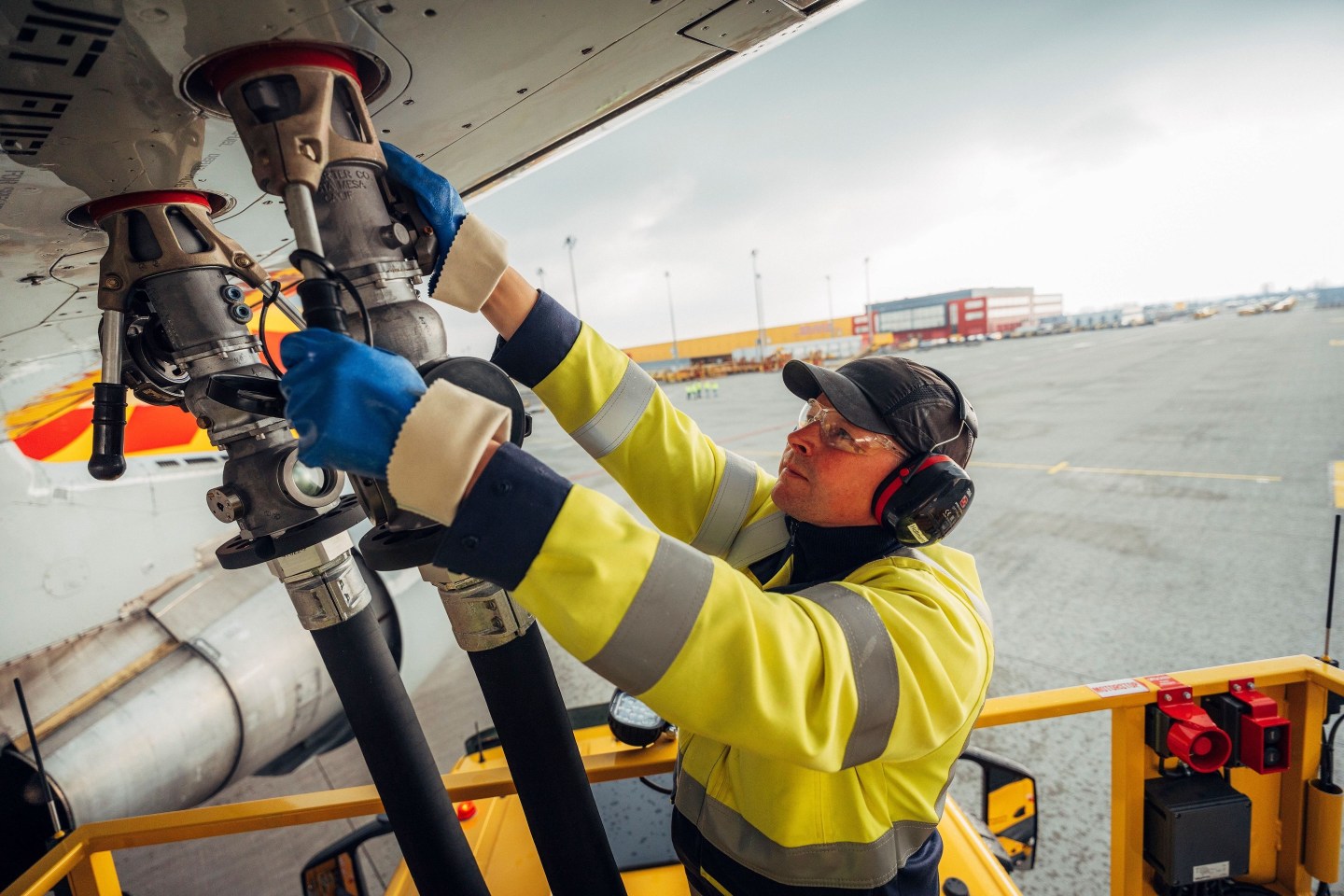
DHL plane being refuelled at airport by man in high-vis jacket
EuropeAviation
The Iran conflict saw jet fuel prices soar—when you use 1.88 million tonnes a year, how you respond really matters (just ask DHL)
By Sam ForsdickJuly 1, 2026
6 hours ago

Most Popular

MacKenzie Scott alone accounted for one-third of America's $19.2 billion in megagifts last year
Success
MacKenzie Scott alone accounted for one-third of America's $19.2 billion in megagifts last year
By Sydney LakeJune 25, 2026
6 days ago
As Big Tech showers employees with perks to win the talent war, Nvidia built a nearly $5 trillion company by making people pay for their own lunch
Big Tech
As Big Tech showers employees with perks to win the talent war, Nvidia built a nearly $5 trillion company by making people pay for their own lunch
By Marco Quiroz-GutierrezJuly 1, 2026
12 hours ago
Philanthropy leader at Warren Buffett and Bill Gates’ Giving Pledge says children of billionaires are pushing them to give their wealth away faster
Success
Philanthropy leader at Warren Buffett and Bill Gates’ Giving Pledge says children of billionaires are pushing them to give their wealth away faster
By Preston ForeJune 27, 2026
4 days ago
Elon Musk on MacKenzie Scott giving away $26 billion of her fortune: 'Sadly,' it makes the world a worse place
Success
Elon Musk on MacKenzie Scott giving away $26 billion of her fortune: 'Sadly,' it makes the world a worse place
By Sydney LakeJune 29, 2026
2 days ago
The Supreme Court's birthright citizenship ruling hands the U.S. economy a $7.7 trillion win
Newsletters
The Supreme Court's birthright citizenship ruling hands the U.S. economy a $7.7 trillion win
By Diane BradyJuly 1, 2026
10 hours ago
The U.S. Army is opening military bases to private billions — here's why that changes everything for the next 250 years
Commentary
The U.S. Army is opening military bases to private billions — here's why that changes everything for the next 250 years
By Marc AndersenJune 30, 2026
1 day ago

© 2026 Fortune Media IP Limited. All Rights Reserved. Use of this site constitutes acceptance of our Terms of Use and Privacy Policy | CA Notice at Collection and Privacy Notice | Do Not Sell/Share My Personal Information
FORTUNE is a trademark of Fortune Media IP Limited, registered in the U.S. and other countries. FORTUNE may receive compensation for some links to products and services on this website. Offers may be subject to change without notice.