• Home
  • Latest
  • Fortune 500
  • Finance
  • Tech
  • Leadership
  • Lifestyle
  • Rankings
  • Multimedia

Exclusive

An hour in the Oval Office with President Trump Fortune Editor-in-Chief: Alyson Shontell sat down with President Trump in the Oval Office for an hour. Tariffs, Intel, AI, Boeing, Iran—and the question every CEO eventually has to answer: who's next?

An hour in the Oval Office with President Trump Fortune Editor-in-Chief: Alyson Shontell sat down with President Trump in the Oval Office for an hour. Tariffs, Intel, AI, Boeing, Iran—and the question every CEO eventually has to answer: who's next?

An hour in the Oval Office with President Trump Fortune Editor-in-Chief: Alyson Shontell sat down with President Trump in the Oval Office for an hour. Tariffs, Intel, AI, Boeing, Iran—and the question every CEO eventually has to answer: who's next?

An hour in the Oval Office with President Trump Fortune Editor-in-Chief: Alyson Shontell sat down with President Trump in the Oval Office for an hour. Tariffs, Intel, AI, Boeing, Iran—and the question every CEO eventually has to answer: who's next?

An hour in the Oval Office with President Trump Fortune Editor-in-Chief: Alyson Shontell sat down with President Trump in the Oval Office for an hour. Tariffs, Intel, AI, Boeing, Iran—and the question every CEO eventually has to answer: who's next?

An hour in the Oval Office with President Trump Fortune Editor-in-Chief: Alyson Shontell sat down with President Trump in the Oval Office for an hour. Tariffs, Intel, AI, Boeing, Iran—and the question every CEO eventually has to answer: who's next?

An hour in the Oval Office with President Trump Fortune Editor-in-Chief: Alyson Shontell sat down with President Trump in the Oval Office for an hour. Tariffs, Intel, AI, Boeing, Iran—and the question every CEO eventually has to answer: who's next?

An hour in the Oval Office with President Trump Fortune Editor-in-Chief: Alyson Shontell sat down with President Trump in the Oval Office for an hour. Tariffs, Intel, AI, Boeing, Iran—and the question every CEO eventually has to answer: who's next?

An hour in the Oval Office with President Trump Fortune Editor-in-Chief: Alyson Shontell sat down with President Trump in the Oval Office for an hour. Tariffs, Intel, AI, Boeing, Iran—and the question every CEO eventually has to answer: who's next?

An hour in the Oval Office with President Trump Fortune Editor-in-Chief: Alyson Shontell sat down with President Trump in the Oval Office for an hour. Tariffs, Intel, AI, Boeing, Iran—and the question every CEO eventually has to answer: who's next?

Commentarycorporate social responsibility

How to hold the corporate world accountable

By
Christopher Marquis
Christopher Marquis
Down Arrow Button Icon
By
Christopher Marquis
Christopher Marquis
Down Arrow Button Icon
October 24, 2020, 10:00 AM ET
Google Alphabet HQ-Antitrust Lawsuit
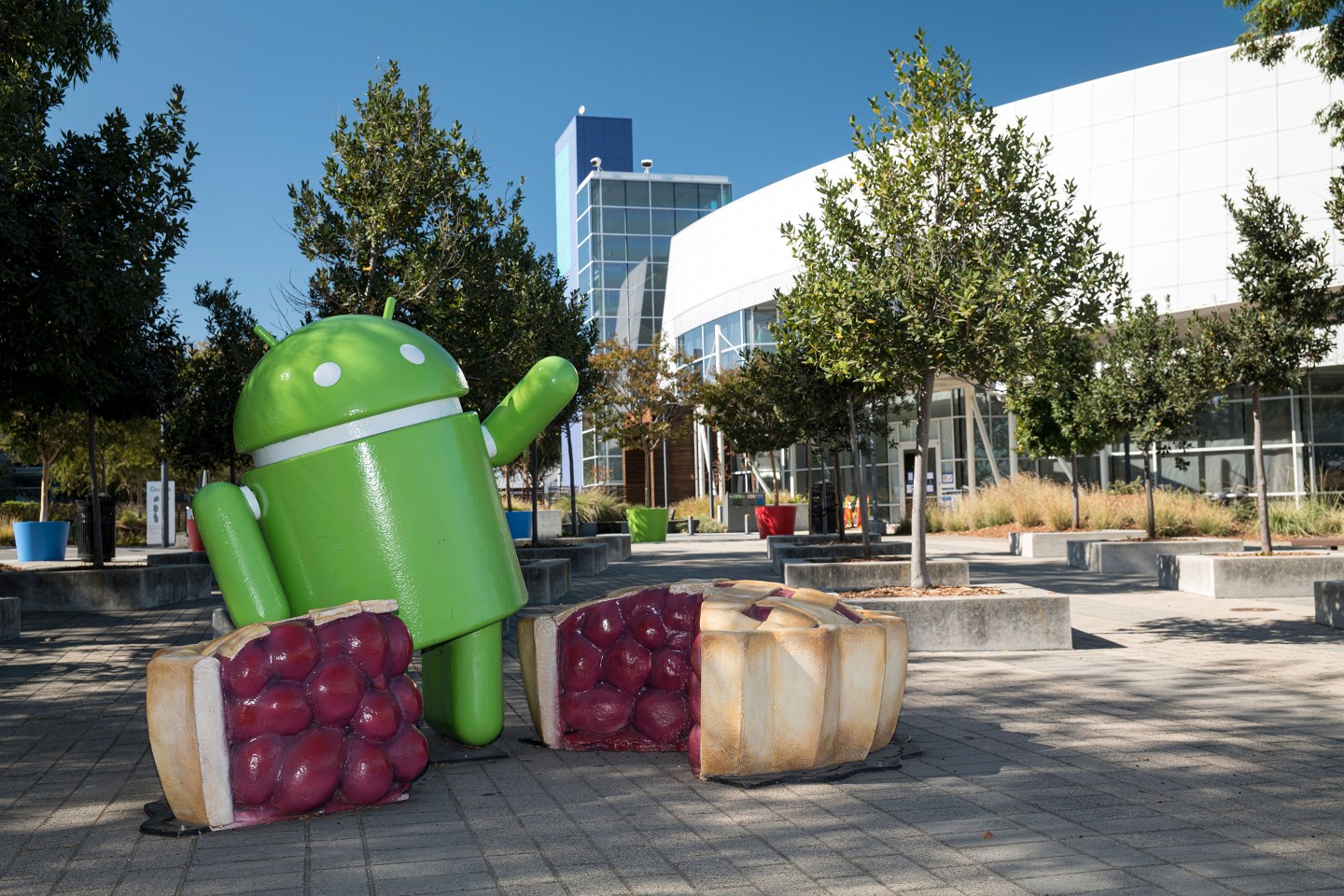
The Google campus in Mountain View, Calif., on Oct. 21, 2020. The Google antitrust case shows the difficulty in measuring corporations’ commitment to stakeholder capitalism, writes Christopher Marquis.David Paul Morris—Bloomberg/Getty Images

On Tuesday, the Justice Department and 11 U.S. states filed an antitrust lawsuit against Google, alleging, “For the sake of American consumers, advertisers, and all companies…the time has come to stop Google’s anticompetitive conduct and restore competition.” 

Yet, despite widespread, bipartisan censure, Google has been celebrated as a leader in “stakeholder capitalism”; its parent company, Alphabet, ranks fifth out of over 900 companies in JUST Capital’s recently released list of businesses that excel in addressing the needs of workers, consumers, communities, and the environment. Why the reputational disconnect?

The answer is the key challenge of the stakeholder capitalism movement: All too often, corporate goodness cannot be adequately measured and assessed. 

But fortunately, that is starting to change.

There is increasing recognition that we need to depart from the past 50 years of “shareholder capitalism,” but less consensus on what that actually means. Influential actors such as the Business Roundtable and leading investors advocate that management must pivot its focus to address all stakeholders’ needs. But this is easier said than done. For instance, reports and analyses find that signatories of the Roundtable statement have performed worse in post-COVID response than other firms have. Adding more confusion to the mix, JUST Capital finds the opposite. 

JUST Capital, a nonprofit spearheaded by hedge fund billionaire Paul Tudor Jones II and celebrities like Deepak Chopra and Arianna Huffington, has created an oft-cited industry standard for measuring stakeholder commitment. But its approach typifies fundamental errors in identifying which companies are actually “doing good” in society.

Read JUST Capital CEO Martin Whittaker’s recent Fortune commentary: “In a time of crisis, Americans send a clear message to Corporate America: Focus on workers”

Environmentally sustainable initiatives, fair pay, corporate philanthropy, and statements about fighting systemic racism are important and admirable. But understanding stakeholder focus through systems like JUST’s fails to fully consider effects of companies’ business models on society, ultimately valorizing large tech companies that abuse their market power (like Amazon, No. 66 on the JUST list) and allow the spread of disinformation (such as Facebook, No. 21 on the JUST list). Such factors must be included when assessing how responsibly a company meets stakeholder needs. After all, isn’t the public an important stakeholder too?

For example, PepsiCo was the 24th company in the recent ranking. But despite some progressive policies and moves toward health-conscious products, PepsiCo’s primary businesses continue to market products with high-fructose corn syrup and other types of ingredients implicated in the obesity epidemic, as well as significant amounts of chemicals and additives, some identified as potentially carcinogenic. Further, the core of its business model is shipping large quantities of flavored water around the world, which has a tremendous carbon impact.

Granted, PepsiCo does many good things; its focus on safe water, sustainable agriculture, and reducing carbon emissions is commendable. But should PepsiCo really be hailed as one of America’s most “just” companies when its fundamental business model is destructive to society and the environment? As increasing attention is put on the idea of “stakeholder capitalism,” we need to seriously consider the role of companies in society. To call a company just, it is essential to understand the company’s fundamental business, and the effects of that business on the world.

Fortunately, there are better methods for assessing corporate accountability. The model spearheaded by the American nonprofit B Lab, for example, includes a rigorous evaluation of stakeholder orientation—the B Impact Assessment—that comprehensively assesses companies’ impact on the world, including effects of its business model. 

Importantly, B Lab has also pioneered a new type of business, the benefit corporation, which places obligations on stakeholders in the company’s legal foundation. Thirty-six U.S. states, Italy, Colombia, Ecuador, and the Canadian province of British Columbia have adopted this model, and it is currently under consideration in many other jurisdictions. There are over 3,500 B Corporations, but over 100,000 firms, banks, and investors worldwide also use these tools to assess corporate sustainability.

Digging into the JUST Capital methodology exposes two more fundamental errors in how it considers companies’ responsibilities to stakeholders. First, its definition of “just” derives from public opinion surveys of Americans. The democratic intention behind this crowdsourced approach may sound good on the surface, but polling data is notoriously biased and isn’t appropriate for assessing the efficacy of different corporate practices. This is particularly so in an age when much public information is filtered through corporate marketing and PR. This might explain why nine of JUST’s top 10 companies are technology firms, despite growing questions about the real impact these corporations have on society. 

A day in advance of the announcement of the recent list, JUST issued a statement that it was withholding the “JUST Seal” from Facebook due to recent media controversies and would investigate further. Really? Is that it? Is the high-tech industry more “just” than other industries, or are Americans’ ideas about “just” business practices biased toward high-tech? The same survey given in Europe or China would likely deliver dramatically different results.

Second, JUST relies on information voluntarily supplied by corporations themselves. Yet significant research has shown that self-reported social and environmental data is susceptible to “greenwashing,” a phenomenon where companies try to burnish their reputation by aligning with social and environmental initiatives—yet don’t follow through in their actual behavior. 

Take Marriott’s response to the COVID-19 crisis. Despite publicly signaling virtuous behavior by signing the Business Roundtable statement, the company acted unjustly, laying off a significant percentage of its U.S. employees while paying $160 million in dividends to shareholders and increasing its CEO’s salary. Last year Marriott was part of the JUST 100, and ranked second in the restaurant and leisure industry (this year its ranking is 170).

B Corporations can’t greenwash because they are legally obliged to put stakeholder principles at their core. The B Impact Assessment is designed by an independent committee of international experts and focused on facts and data, not PR and selective self-reporting. B Corps aim to provide social and environmental impact, not just deliver profits to investors. 

Some examples: Clothing brand Eileen Fisher has a “repair and care” program so that customers can increase the life of their products and keep fixable items out of landfills. Greyston Bakery practices “open hiring” to provide economic opportunities to marginalized populations, such as the formerly incarcerated. Participant, producer of Oscar-winning films such as Green Book and American Factory, aims to inspire social change through film and media.

By factoring in underlying business models, employing objective third-party standards, and holding companies accountable to those standards, the B Corp model is helping build a more sustainable and equitable capitalism.

And B Corps are increasingly getting noticed. In a revealing moment during the Big Tech congressional hearings on anticompetitive practices in July, Maryland Democratic Congressman Jamie Raskin asked the “Big Four”—Alphabet, Amazon, Apple, and Facebook—CEOs if they had considered becoming B Corps. Met with silence, Raskin concluded, “Okay, I take it the answer is no.” 

As consumers learn more about holding companies genuinely accountable, corporate bosses will need a better answer than silence.

Christopher Marquis is the Samuel C. Johnson professor in sustainable global enterprise at Cornell University and author of Better Business: How the B Corp Movement Is Remaking Capitalism.
About the Author
By Christopher Marquis
See full bioRight Arrow Button Icon

Latest in Commentary

Finance
Lorem ipsum dolor sit amet, consectetur adipiscing elit, sed do eiusmod tempor incididunt ut labore et dolore magna aliqua. Ut enim ad minim veniam
By Fortune Editors
October 20, 2025
Finance
Lorem ipsum dolor sit amet, consectetur adipiscing elit, sed do eiusmod tempor incididunt ut labore et dolore magna aliqua. Ut enim ad minim veniam
By Fortune Editors
October 20, 2025
Finance
Lorem ipsum dolor sit amet, consectetur adipiscing elit, sed do eiusmod tempor incididunt ut labore et dolore magna aliqua. Ut enim ad minim veniam
By Fortune Editors
October 20, 2025
Finance
Lorem ipsum dolor sit amet, consectetur adipiscing elit, sed do eiusmod tempor incididunt ut labore et dolore magna aliqua. Ut enim ad minim veniam
By Fortune Editors
October 20, 2025
Finance
Lorem ipsum dolor sit amet, consectetur adipiscing elit, sed do eiusmod tempor incididunt ut labore et dolore magna aliqua. Ut enim ad minim veniam
By Fortune Editors
October 20, 2025
Finance
Lorem ipsum dolor sit amet, consectetur adipiscing elit, sed do eiusmod tempor incididunt ut labore et dolore magna aliqua. Ut enim ad minim veniam
By Fortune Editors
October 20, 2025

Most Popular

Finance
Lorem ipsum dolor sit amet, consectetur adipiscing elit, sed do eiusmod tempor incididunt ut labore et dolore magna aliqua. Ut enim ad minim veniam
By Fortune Editors
October 20, 2025
Finance
Lorem ipsum dolor sit amet, consectetur adipiscing elit, sed do eiusmod tempor incididunt ut labore et dolore magna aliqua. Ut enim ad minim veniam
By Fortune Editors
October 20, 2025
Finance
Lorem ipsum dolor sit amet, consectetur adipiscing elit, sed do eiusmod tempor incididunt ut labore et dolore magna aliqua. Ut enim ad minim veniam
By Fortune Editors
October 20, 2025
Finance
Lorem ipsum dolor sit amet, consectetur adipiscing elit, sed do eiusmod tempor incididunt ut labore et dolore magna aliqua. Ut enim ad minim veniam
By Fortune Editors
October 20, 2025
Finance
Lorem ipsum dolor sit amet, consectetur adipiscing elit, sed do eiusmod tempor incididunt ut labore et dolore magna aliqua. Ut enim ad minim veniam
By Fortune Editors
October 20, 2025
Finance
Lorem ipsum dolor sit amet, consectetur adipiscing elit, sed do eiusmod tempor incididunt ut labore et dolore magna aliqua. Ut enim ad minim veniam
By Fortune Editors
October 20, 2025
Fortune Secondary Logo
Rankings
  • 100 Best Companies
  • Fortune 500
  • Global 500
  • Fortune 500 Europe
  • Most Powerful Women
  • World's Most Admired Companies
  • See All Rankings
  • Lists Calendar
Sections
  • Finance
  • Fortune Crypto
  • Features
  • Leadership
  • Health
  • Commentary
  • Success
  • Retail
  • Mpw
  • Tech
  • Lifestyle
  • CEO Initiative
  • Asia
  • Politics
  • Conferences
  • Europe
  • Newsletters
  • Personal Finance
  • Environment
  • Magazine
  • Education
Customer Support
  • Frequently Asked Questions
  • Customer Service Portal
  • Privacy Policy
  • Terms Of Use
  • Single Issues For Purchase
  • International Print
Commercial Services
  • Advertising
  • Fortune Brand Studio
  • Fortune Analytics
  • Fortune Conferences
  • Business Development
  • Group Subscriptions
About Us
  • About Us
  • Press Center
  • Work At Fortune
  • Terms And Conditions
  • Site Map
  • About Us
  • Press Center
  • Work At Fortune
  • Terms And Conditions
  • Site Map
  • Facebook icon
  • Twitter icon
  • LinkedIn icon
  • Instagram icon
  • Pinterest icon

Latest in Commentary

‘Change the World’ idealism is dying in Silicon Valley. We’ll miss it when it’s gone
CommentarySilicon Valley
‘Change the World’ idealism is dying in Silicon Valley. We’ll miss it when it’s gone
By Jonathan WeberMay 19, 2026
1 hour ago
reorgs
CommentaryRestructuring
We studied 6,000 executives and found the real reason 70% of transformations fail
By Julia Dhar, Kristy R. Ellmer and Philip JamesonMay 19, 2026
3 hours ago
joel
Commentarysaas
The SaaSpocalypse isn’t killing software. It’s exposing where software value really lives
By Joel HronMay 19, 2026
4 hours ago
altman
CommentarySam Altman
Musk vs. Altman: AI safety cannot be one man’s job
By Stavros GadinisMay 18, 2026
16 hours ago
charlie
CommentarySoftware
Anaplan CEO: AI isn’t eating software. It’s sorting it
By Charlie GottdienerMay 18, 2026
1 day ago
shyam
CommentaryHealth
World Economic Forum: women’s health gets only 20% of R&D funding. We must seize this $1 trillion opportunity
By Shyam BishenMay 18, 2026
1 day ago

Most Popular

While Trump insisted the Iran war would end ‘soon,’ an account in his name was buying millions in oil, defense and gold
Economy
While Trump insisted the Iran war would end ‘soon,’ an account in his name was buying millions in oil, defense and gold
By Eva RoytburgMay 18, 2026
19 hours ago
The Bezos family just donated $100 million to help achieve one of Mayor Zohran Mamdani’s top campaign promises
Politics
The Bezos family just donated $100 million to help achieve one of Mayor Zohran Mamdani’s top campaign promises
By Jake AngeloMay 12, 2026
7 days ago
Current price of oil as of May 18, 2026
Personal Finance
Current price of oil as of May 18, 2026
By Joseph HostetlerMay 18, 2026
1 day ago
EXCLUSIVE: An hour in the Oval Office with the CEO-in-Chief, President Trump
Politics
EXCLUSIVE: An hour in the Oval Office with the CEO-in-Chief, President Trump
By Alyson ShontellMay 18, 2026
1 day ago
Spirit Airlines apologizes to all the Americans who can't afford any summer vacation flights as it shuts down
Travel & Leisure
Spirit Airlines apologizes to all the Americans who can't afford any summer vacation flights as it shuts down
By Rio Yamat and The Associated PressMay 18, 2026
1 day ago
Mamdani's New York is coming to tax your private jet. Here's how to prepare
Personal Finance
Mamdani's New York is coming to tax your private jet. Here's how to prepare
By Greg RaiffMay 16, 2026
3 days ago

© 2026 Fortune Media IP Limited. All Rights Reserved. Use of this site constitutes acceptance of our Terms of Use and Privacy Policy | CA Notice at Collection and Privacy Notice | Do Not Sell/Share My Personal Information
FORTUNE is a trademark of Fortune Media IP Limited, registered in the U.S. and other countries. FORTUNE may receive compensation for some links to products and services on this website. Offers may be subject to change without notice.