• Home
  • Latest
  • Fortune 500
  • Finance
  • Tech
  • Leadership
  • Lifestyle
  • Rankings
  • Multimedia

Trendingnow

1

Egg companies made $1.22 billion in profit off a $6 carton — now they’re buying their way out of a price-fixing case with 53 million donated eggs

2

Meet the Zillennials: The luckiest micro-generation in the workforce, born between 1993 and 1998

3

Economists have found an answer to slowing cognitive decline: Avoid retiring early, study finds

1

Egg companies made $1.22 billion in profit off a $6 carton — now they’re buying their way out of a price-fixing case with 53 million donated eggs

2

Meet the Zillennials: The luckiest micro-generation in the workforce, born between 1993 and 1998

3

Economists have found an answer to slowing cognitive decline: Avoid retiring early, study finds
CommentaryGerman economy

Germany’s shift on longstanding policies in energy and military spending offers hope for bold reforms

By
Matthias Kromayer
Matthias Kromayer
Down Arrow Button Icon
By
Matthias Kromayer
Matthias Kromayer
Down Arrow Button Icon
March 16, 2022, 2:30 PM ET
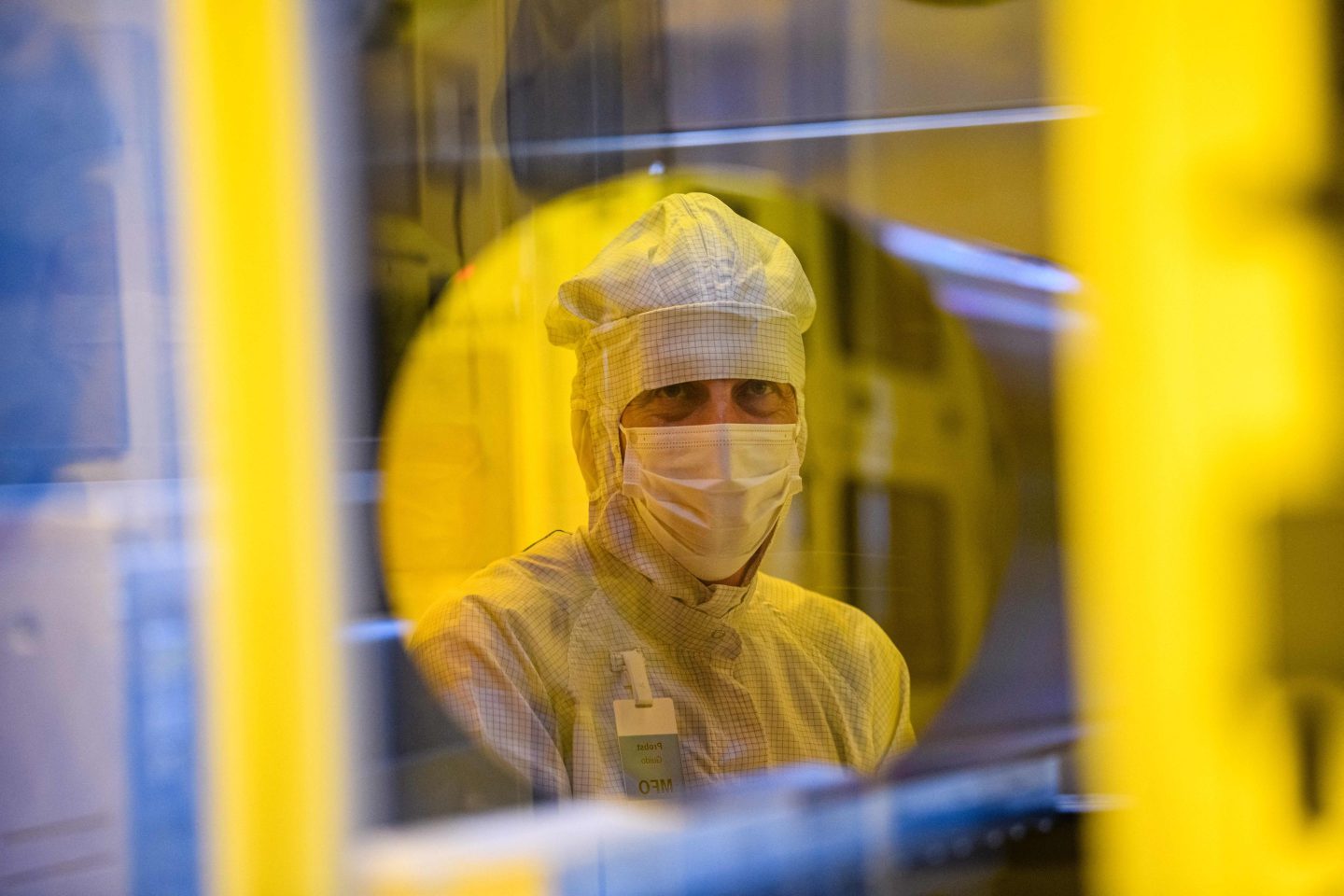
An employee of the semiconductor manufacturer Bosch works in a clean room.
A worker at a new semiconductor chip manufacturing facility in Dresden, eastern Germany, 2021. Germany's engineering talent and promising startup scene are starved for cash.Jens Schlueter—AFP/Getty Images
Add Fortune on Google for similar content.

Germans must face several inconvenient truths these days. We have traditionally entertained close economic relationships with Russia in every sector from energy to the automotive industry and professional sports.

Russia’s unjustifiable invasion of Ukraine has suddenly forced the new German Chancellor, Olaf Scholz, and the ruling coalition to rethink these ties and our policy positions in a number of related areas. While painful in the short term, these changes—and more—are necessary to ensure the strength and stability of our country and to enable it to provide Europe with urgently needed leadership in times of dramatic global changes.

Scholz’s decisions were shocking to many: freezing the Nord Stream 2 pipeline and abandoning long-held military constraints, with a one-time 100-billion-euro spending package and a ramp-up of annual spending to two percent of GDP. Germany’s new government has also given in to the rising pressure to exclude Russia from the SWIFT payment system and to impose harsh sanctions on the country.

However, if Chancellor Scholz is serious about tackling the latent systemic problems awaiting our children, he should address another big one: our pension system.

Germany’s population is aging due to one of the lowest birth rates in the world. The ratio of pensioners to working people continues to rise. This is a real problem because, unlike in the U.S., the German state pension is paid directly by employers and employees (via contributions to German social security, where a percentage of salary is paid) and government subsidies. Contributions are redistributed to pay for existing pensioners rather than saved or invested.

The system is already sputtering, with inadequate funds for current pensioners, and young people are giving away an ever-larger share of their income. Contributions have gone from 10% in 1955 to 18.6% today. This figure is expected to continue rising.

The absence of large pension funds in Germany and their ability to deploy capital also means that less money is invested in high-yield asset classes such as public or private equity. The real economic nightmare looming behind our 19th-century pension system is the persistent lack of capital to fund tech innovation and entrepreneurship.

The unprecedented development of the world’s first COVID-19 vaccine by the Mainz-based company BioNTech at “the speed of light”, in partnership with U.S. pharma giant Pfizer, has put German science, technology, and engineering into the limelight.

Germans are openly dreaming of the country becoming the “world’s pharmacy” again, a title it lost after the 1980s. With almost 50 billion euros in revenue in (2019), Germany is Europe’s largest pharmaceutical market and a strategic gateway to the EU single market for international companies. If you make it there, you can make it anywhere. Foreigners are also seeing the potential for innovation and growth in the country.

Elite universities such as Munich Technical University boast increasing numbers of applications from top international students with over a third of the student population now coming from abroad. While the success of BioNTech founders Ugur Sahin and Özlem Tureci may surprise some, they are an express product of a strong German university system known for its creativity, engineering skills, and entrepreneurial spirit. Young entrepreneurs are eager to capitalize on their innovations in a range of other fields, such as quantum technology and artificial intelligence.

However, Germany’s capital-intensive high-tech industries and talent pool cannot continue to flourish without the main fuel for innovation: Capital. Fortunately, conditions may gradually change under the new government.

The unexpected new political coalition of Social Democrats, Greens, and libertarian Free Democrats documented their willingness, in an agreement published last November, to take a first step towards a capital-based pension system: They plan to invest 10 billion euros of taxpayer money “in the capital market”.

A step, perhaps, but a tiny one, with only three percent of the annual pension payments invested. Divided by Germany’s population, the figure is equivalent to about US$ 130 per capita. The U.S. figure is around 750 times higher at $100,000 per capita! The US$ 35,000 billion in capital stock managed by U.S. pension funds results in over 10 times as much venture capital invested annually on a per-capita basis. This, in turn, is largely what makes it possible to finance the rapid development of tiny startups into unicorns within a few years.

Germans are reluctant to change the current pension system. A key reason is their reliance on conventional wisdom: It has worked well so far, so why change anything?

When the German pension system was introduced 150 years ago, the younger population far outnumbered the elderly. In the 1980s, it became clear that the baby boomers born just before the introduction of the birth control pill would be the last generation to outnumber the prior one. Despite these demographics, German officials continue to cling to the notion that “pensions are safe.” Regardless of the circumstances, “someone” will pay these pensions. This is misleading, if not deceiving, the public.

Many Germans believe the current system of redistributing money from the working population to pensioners is a responsible distribution of resources. But while pensioners undoubtedly worked hard in their day, their income in retirement doesn’t reflect the value creation to which they contributed. Rather, it reflects what their country can afford to pay based on the shifted ratios between old and young. This is irresponsible.

We are also notoriously skeptical about owning equities. This may have changed somewhat during the pandemic, but on average Germans believe their money is safer in a savings account or with the government.

The new coalition government should seize the current political will for change to tackle the pensions problem. Why not increase the percentage invested in markets to 10 % short-term and even more long-term? It would ensure the future strength and stability of Germany.

Matthias Kromayer is managing partner at MIG Capital.

More must-read commentary published by Fortune:

  • Stop asking women how we manage work-life balance. Most of us don’t
  • It’s not a Great Resignation–it’s a Great Rethink
  • The media’s racial bias is also happening off screen
  • The Great Business Retreat matters in Russia today–just as it mattered in 1986 South Africa
  • Offices are obsolete—and so are the managers who insist you must go back
Never miss a story: Follow your favorite topics and authors to get a personalized email with the journalism that matters most to you.
About the Author
By Matthias Kromayer
See full bioRight Arrow Button Icon
Add Fortune on Google for similar content.

Latest in Commentary

Finance
Lorem ipsum dolor sit amet, consectetur adipiscing elit, sed do eiusmod tempor incididunt ut labore et dolore magna aliqua. Ut enim ad minim veniam
By Fortune Editors
October 20, 2025
Finance
Lorem ipsum dolor sit amet, consectetur adipiscing elit, sed do eiusmod tempor incididunt ut labore et dolore magna aliqua. Ut enim ad minim veniam
By Fortune Editors
October 20, 2025
Finance
Lorem ipsum dolor sit amet, consectetur adipiscing elit, sed do eiusmod tempor incididunt ut labore et dolore magna aliqua. Ut enim ad minim veniam
By Fortune Editors
October 20, 2025
Finance
Lorem ipsum dolor sit amet, consectetur adipiscing elit, sed do eiusmod tempor incididunt ut labore et dolore magna aliqua. Ut enim ad minim veniam
By Fortune Editors
October 20, 2025
Finance
Lorem ipsum dolor sit amet, consectetur adipiscing elit, sed do eiusmod tempor incididunt ut labore et dolore magna aliqua. Ut enim ad minim veniam
By Fortune Editors
October 20, 2025
Finance
Lorem ipsum dolor sit amet, consectetur adipiscing elit, sed do eiusmod tempor incididunt ut labore et dolore magna aliqua. Ut enim ad minim veniam
By Fortune Editors
October 20, 2025

Most Popular

Finance
Lorem ipsum dolor sit amet, consectetur adipiscing elit, sed do eiusmod tempor incididunt ut labore et dolore magna aliqua. Ut enim ad minim veniam
By Fortune Editors
October 20, 2025
Finance
Lorem ipsum dolor sit amet, consectetur adipiscing elit, sed do eiusmod tempor incididunt ut labore et dolore magna aliqua. Ut enim ad minim veniam
By Fortune Editors
October 20, 2025
Finance
Lorem ipsum dolor sit amet, consectetur adipiscing elit, sed do eiusmod tempor incididunt ut labore et dolore magna aliqua. Ut enim ad minim veniam
By Fortune Editors
October 20, 2025
Finance
Lorem ipsum dolor sit amet, consectetur adipiscing elit, sed do eiusmod tempor incididunt ut labore et dolore magna aliqua. Ut enim ad minim veniam
By Fortune Editors
October 20, 2025
Finance
Lorem ipsum dolor sit amet, consectetur adipiscing elit, sed do eiusmod tempor incididunt ut labore et dolore magna aliqua. Ut enim ad minim veniam
By Fortune Editors
October 20, 2025
Finance
Lorem ipsum dolor sit amet, consectetur adipiscing elit, sed do eiusmod tempor incididunt ut labore et dolore magna aliqua. Ut enim ad minim veniam
By Fortune Editors
October 20, 2025
Fortune Secondary Logo
Rankings
  • 100 Best Companies
  • Fortune 500
  • Global 500
  • Fortune 500 Europe
  • Most Powerful Women
  • World's Most Admired Companies
  • See All Rankings
  • Lists Calendar
Sections
  • Finance
  • Fortune Crypto
  • Features
  • Leadership
  • Health
  • Commentary
  • Success
  • Retail
  • Mpw
  • Tech
  • Lifestyle
  • CEO Initiative
  • Asia
  • Politics
  • Conferences
  • Europe
  • Newsletters
  • Personal Finance
  • Environment
  • Magazine
  • Education
Customer Support
  • Frequently Asked Questions
  • Customer Service Portal
  • Privacy Policy
  • Terms Of Use
  • Single Issues For Purchase
  • International Print
Commercial Services
  • Advertising
  • Fortune Brand Studio
  • Fortune Analytics
  • Fortune Conferences
  • Business Development
  • Group Subscriptions
About Us
  • About Us
  • Press Center
  • Work At Fortune
  • Terms And Conditions
  • Site Map
  • About Us
  • Press Center
  • Work At Fortune
  • Terms And Conditions
  • Site Map
  • Facebook icon
  • Twitter icon
  • LinkedIn icon
  • Instagram icon
  • Pinterest icon

Latest in Commentary

ds
CommentarySoftware
I argued with the father of open source for 2 years. Now the AI fight is the same — only bigger
By David SiegelJuly 3, 2026
17 hours ago
ashok
Commentary250 Years of Innovation
The greatest startup in history: What we can learn from America’s founders at today’s AI frontier
By Ashok N. SrivastavaJuly 3, 2026
17 hours ago
2
Commentary250 Years of Innovation
America’s secret weapon isn’t just innovation — It’s the freedom to fail
By Keith KrachJuly 3, 2026
19 hours ago
rn
CommentaryCryptocurrency
Former Iran director at NSC: Crypto legislation is a ticket to sanctions evasion
By Richard NephewJuly 2, 2026
2 days ago
m
Commentary250 Years of Innovation
McKinsey chairs: Building a more resilient industrial base may require $2 trillion in investment
By Eric Kutcher and Shubham SinghalJuly 2, 2026
2 days ago
em
Commentary250 Years of Innovation
America’s 250th birthday has Elon Musk and a record IPO. Its 15th had Alexander Hamilton — and a stock market bubble
By Owen LamontJuly 2, 2026
2 days ago

Most Popular

Egg companies made $1.22 billion in profit off a $6 carton — now they’re buying their way out of a price-fixing case with 53 million donated eggs
Law
Egg companies made $1.22 billion in profit off a $6 carton — now they’re buying their way out of a price-fixing case with 53 million donated eggs
By Wyatte Grantham-Philips and The Associated PressJuly 2, 2026
1 day ago
Meet the Zillennials: The luckiest micro-generation in the workforce, born between 1993 and 1998
AI
Meet the Zillennials: The luckiest micro-generation in the workforce, born between 1993 and 1998
By Nick LichtenbergJuly 3, 2026
23 hours ago
Economists have found an answer to slowing cognitive decline: Avoid retiring early, study finds
Economy
Economists have found an answer to slowing cognitive decline: Avoid retiring early, study finds
By Sasha RogelbergJuly 2, 2026
2 days ago
On Wall Street, analysts increasingly don’t believe the U.S. government’s 'misleading' job numbers
Economy
On Wall Street, analysts increasingly don’t believe the U.S. government’s 'misleading' job numbers
By Jim EdwardsJuly 3, 2026
18 hours ago
$25 billion CEO says one-hour interviews are a waste of time—he puts candidates through six hours of tests and wants them to order wine at lunch
Success
$25 billion CEO says one-hour interviews are a waste of time—he puts candidates through six hours of tests and wants them to order wine at lunch
By Orianna Rosa RoyleJuly 3, 2026
23 hours ago
Current price of oil as of July 2, 2026
Personal Finance
Current price of oil as of July 2, 2026
By Joseph HostetlerJuly 2, 2026
2 days ago

© 2026 Fortune Media IP Limited. All Rights Reserved. Use of this site constitutes acceptance of our Terms of Use and Privacy Policy | CA Notice at Collection and Privacy Notice | Do Not Sell/Share My Personal Information
FORTUNE is a trademark of Fortune Media IP Limited, registered in the U.S. and other countries. FORTUNE may receive compensation for some links to products and services on this website. Offers may be subject to change without notice.