• Home
  • Latest
  • Fortune 500
  • Finance
  • Tech
  • Leadership
  • Lifestyle
  • Rankings
  • Multimedia

Exclusive

An hour in the Oval Office with President Trump Fortune Editor-in-Chief: Alyson Shontell sat down with President Trump in the Oval Office for an hour. Tariffs, Intel, AI, Boeing, Iran—and the question every CEO eventually has to answer: who's next?

An hour in the Oval Office with President Trump Fortune Editor-in-Chief: Alyson Shontell sat down with President Trump in the Oval Office for an hour. Tariffs, Intel, AI, Boeing, Iran—and the question every CEO eventually has to answer: who's next?

An hour in the Oval Office with President Trump Fortune Editor-in-Chief: Alyson Shontell sat down with President Trump in the Oval Office for an hour. Tariffs, Intel, AI, Boeing, Iran—and the question every CEO eventually has to answer: who's next?

An hour in the Oval Office with President Trump Fortune Editor-in-Chief: Alyson Shontell sat down with President Trump in the Oval Office for an hour. Tariffs, Intel, AI, Boeing, Iran—and the question every CEO eventually has to answer: who's next?

An hour in the Oval Office with President Trump Fortune Editor-in-Chief: Alyson Shontell sat down with President Trump in the Oval Office for an hour. Tariffs, Intel, AI, Boeing, Iran—and the question every CEO eventually has to answer: who's next?

An hour in the Oval Office with President Trump Fortune Editor-in-Chief: Alyson Shontell sat down with President Trump in the Oval Office for an hour. Tariffs, Intel, AI, Boeing, Iran—and the question every CEO eventually has to answer: who's next?

An hour in the Oval Office with President Trump Fortune Editor-in-Chief: Alyson Shontell sat down with President Trump in the Oval Office for an hour. Tariffs, Intel, AI, Boeing, Iran—and the question every CEO eventually has to answer: who's next?

An hour in the Oval Office with President Trump Fortune Editor-in-Chief: Alyson Shontell sat down with President Trump in the Oval Office for an hour. Tariffs, Intel, AI, Boeing, Iran—and the question every CEO eventually has to answer: who's next?

An hour in the Oval Office with President Trump Fortune Editor-in-Chief: Alyson Shontell sat down with President Trump in the Oval Office for an hour. Tariffs, Intel, AI, Boeing, Iran—and the question every CEO eventually has to answer: who's next?

An hour in the Oval Office with President Trump Fortune Editor-in-Chief: Alyson Shontell sat down with President Trump in the Oval Office for an hour. Tariffs, Intel, AI, Boeing, Iran—and the question every CEO eventually has to answer: who's next?

Commentary

It’s time to expose the secret drug scam at the heart of American health care

By
Howard Dean
Howard Dean
Down Arrow Button Icon
By
Howard Dean
Howard Dean
Down Arrow Button Icon
July 26, 2022, 5:47 AM ET
In 2021 alone, pharmaceutical firms provided a staggering $204 billion in price concessions for brand-name medicines–but the funds have mostly benefited insurers and their pharmacy benefits managers.
In 2021 alone, pharmaceutical firms provided a staggering $204 billion in price concessions for brand-name medicines–but the funds have mostly benefited insurers and their pharmacy benefits managers.Andi Rice—Bloomberg/Getty Images

A federal court recently exposed the rot at the heart of America’s health care system.

The case, filed in the U.S. District Court for the District of Columbia, partly revolved around the many low-income, and even middle-income, patients who receive “co-pay coupons” from drug manufacturers to help them cover their out-of-pocket costs at pharmacies.

For many Americans, these coupons represent the difference between filling a prescription and going without lifesaving care. But in recent years, health insurers have started to effectively steal those coupons, leaving patients on the hook for far higher expenses. As Judge Carl Nichols noted in a May ruling, insurance companies “pocket for themselves at least some of the assistance.”

Sadly, the practice is totally legal. And until lawmakers crack down on this sort of grossly immoral behavior, insurance behemoths and their allies will continue shifting costs onto patients, with disastrous consequences for individuals’ health and society at large.

Most Americans are furious over the price of prescription drugs–and rightly so. Americans pay more for medications than the citizens of any other developed nation.

It’s tempting to blame the pharmaceutical industry for this state of affairs. But in reality, drug companies–while hardly blameless–actually have very little say over the price patients pay at the pharmacy counter.

A drug’s out-of-pocket cost is mostly the result of decisions made by insurance companies and the “pharmacy benefit managers” (PBMs) they hire to administer prescription drug plans and haggle with pharmaceutical firms for discounts.

PBMs are quite good at those negotiations. In 2021 alone, pharmaceutical firms provided a staggering $204 billion in price concessions for brand-name medicines.

The problem is that PBMs aren’t negotiating on behalf of patients. Pharmacy benefit managers are seeking to maximize their own profits and the profits of their insurer clients. PBMs skim off a substantial share of the negotiated savings for themselves and pass the rest to insurers. Those health insurers, in turn, use the discounts to offer more competitive premiums in a bid to attract enrollees.

But saving a few bucks a month on premiums does relatively little to help the sickest patients, who often take multiple prescriptions.

On each of those drugs, patients generally face copay or “coinsurance” payments (a fixed percentage of a medicine’s cost) set by their insurance plans. 

Insurers base that patient cost-sharing on the undiscounted–and undisclosed–list price of medications, rather than the sharply discounted rate that PBMs actually negotiated. This causes patients to vastly overpay for drugs.

For example, say medication lists for $400 for a month’s supply, and the insurer’s PBM has negotiated a discount of 75%–a plausible scenario for many types of insulin.

And say the insurance plan’s coinsurance requirement for that medication is 25%. That means the insurer would collect $100 from the patient in coinsurance–25% of the $400 list price. And it would turn around and pay that $100 to the manufacturer.

When all is said and done, the insurer ends up paying a net total of $0!

Insurers’ greed doesn’t end there. As Judge Nichols noted, insurers have started coming after the discount coupons that many drug companies issue directly to patients. In 2020, the value of these coupons totaled $14 billion.

Currently, the federal government allows insurers to ignore those discount coupons when calculating a patient’s deductible or annual out-of-pocket maximum. So in effect, for every dollar of financial assistance the manufacturer coupon provides, the patient’s deductible and annual out-of-pocket maximum goes up by a dollar–and the insurer profits by the same amount.

Insurers and PBMs have even devised schemes to overcharge patients for generic drugs. Although generics are still significantly cheaper than drugs under patent protection, a new paper from University of Southern California researchers finds that PBMs’ “opaque and arcane pricing practices” inflate patients’ spending on those medicines by up to 20%.

These insurer practices obviously hurt patients. But they also harm society as a whole. When folks can’t afford their out-of-pocket prescription costs, many skip doses–and get sicker. Drug non-adherence cost the country at least $495 billion and contributed to over 275,000 premature deaths in 2016, according to a 2018 study in The Annals of Pharmacotherapy.

We don’t need to tolerate this dysfunction. There are eminently sensible ways to stop insurers and PBMs from bilking patients. All we need from lawmakers is a bit of political courage.

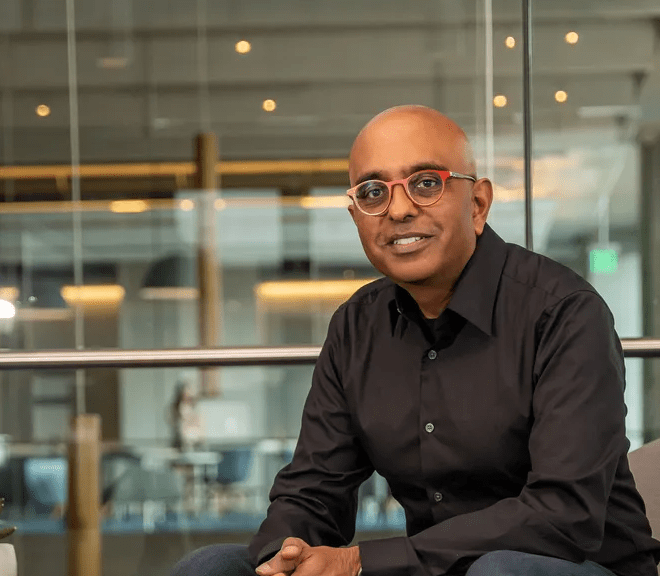
Howard Dean is the former chair of the Democratic National Committee and former governor of Vermont.

The opinions expressed in Fortune.com commentary pieces are solely the views of their authors and do not reflect the opinions and beliefs of Fortune.

More must-read commentary published by Fortune:

  • COVID got me. Will it come for you?
  • Why remote work will win this fall
  • A list of companies supporting abortion rights after the Roe v. Wade ruling shows which firms are stepping up, and why
  • Career hoarding is on the rise—but it comes at a cost
  • Venture capital is hard–and it’s supposed to be

Sign up for the Fortune Features email list so you don’t miss our biggest features, exclusive interviews, and investigations.
About the Author
By Howard Dean
See full bioRight Arrow Button Icon

Latest in Commentary

Finance
Lorem ipsum dolor sit amet, consectetur adipiscing elit, sed do eiusmod tempor incididunt ut labore et dolore magna aliqua. Ut enim ad minim veniam
By Fortune Editors
October 20, 2025
Finance
Lorem ipsum dolor sit amet, consectetur adipiscing elit, sed do eiusmod tempor incididunt ut labore et dolore magna aliqua. Ut enim ad minim veniam
By Fortune Editors
October 20, 2025
Finance
Lorem ipsum dolor sit amet, consectetur adipiscing elit, sed do eiusmod tempor incididunt ut labore et dolore magna aliqua. Ut enim ad minim veniam
By Fortune Editors
October 20, 2025
Finance
Lorem ipsum dolor sit amet, consectetur adipiscing elit, sed do eiusmod tempor incididunt ut labore et dolore magna aliqua. Ut enim ad minim veniam
By Fortune Editors
October 20, 2025
Finance
Lorem ipsum dolor sit amet, consectetur adipiscing elit, sed do eiusmod tempor incididunt ut labore et dolore magna aliqua. Ut enim ad minim veniam
By Fortune Editors
October 20, 2025
Finance
Lorem ipsum dolor sit amet, consectetur adipiscing elit, sed do eiusmod tempor incididunt ut labore et dolore magna aliqua. Ut enim ad minim veniam
By Fortune Editors
October 20, 2025

Most Popular

Finance
Lorem ipsum dolor sit amet, consectetur adipiscing elit, sed do eiusmod tempor incididunt ut labore et dolore magna aliqua. Ut enim ad minim veniam
By Fortune Editors
October 20, 2025
Finance
Lorem ipsum dolor sit amet, consectetur adipiscing elit, sed do eiusmod tempor incididunt ut labore et dolore magna aliqua. Ut enim ad minim veniam
By Fortune Editors
October 20, 2025
Finance
Lorem ipsum dolor sit amet, consectetur adipiscing elit, sed do eiusmod tempor incididunt ut labore et dolore magna aliqua. Ut enim ad minim veniam
By Fortune Editors
October 20, 2025
Finance
Lorem ipsum dolor sit amet, consectetur adipiscing elit, sed do eiusmod tempor incididunt ut labore et dolore magna aliqua. Ut enim ad minim veniam
By Fortune Editors
October 20, 2025
Finance
Lorem ipsum dolor sit amet, consectetur adipiscing elit, sed do eiusmod tempor incididunt ut labore et dolore magna aliqua. Ut enim ad minim veniam
By Fortune Editors
October 20, 2025
Finance
Lorem ipsum dolor sit amet, consectetur adipiscing elit, sed do eiusmod tempor incididunt ut labore et dolore magna aliqua. Ut enim ad minim veniam
By Fortune Editors
October 20, 2025
Fortune Secondary Logo
Rankings
  • 100 Best Companies
  • Fortune 500
  • Global 500
  • Fortune 500 Europe
  • Most Powerful Women
  • World's Most Admired Companies
  • See All Rankings
  • Lists Calendar
Sections
  • Finance
  • Fortune Crypto
  • Features
  • Leadership
  • Health
  • Commentary
  • Success
  • Retail
  • Mpw
  • Tech
  • Lifestyle
  • CEO Initiative
  • Asia
  • Politics
  • Conferences
  • Europe
  • Newsletters
  • Personal Finance
  • Environment
  • Magazine
  • Education
Customer Support
  • Frequently Asked Questions
  • Customer Service Portal
  • Privacy Policy
  • Terms Of Use
  • Single Issues For Purchase
  • International Print
Commercial Services
  • Advertising
  • Fortune Brand Studio
  • Fortune Analytics
  • Fortune Conferences
  • Business Development
  • Group Subscriptions
About Us
  • About Us
  • Press Center
  • Work At Fortune
  • Terms And Conditions
  • Site Map
  • About Us
  • Press Center
  • Work At Fortune
  • Terms And Conditions
  • Site Map
  • Facebook icon
  • Twitter icon
  • LinkedIn icon
  • Instagram icon
  • Pinterest icon

Latest in Commentary

altman
CommentarySam Altman
Musk vs. Altman: AI safety cannot be one man’s job
By Stavros GadinisMay 18, 2026
11 hours ago
charlie
CommentarySoftware
Anaplan CEO: AI isn’t eating software. It’s sorting it
By Charlie GottdienerMay 18, 2026
21 hours ago
shyam
CommentaryHealth
World Economic Forum: women’s health gets only 20% of R&D funding. We must seize this $1 trillion opportunity
By Shyam BishenMay 18, 2026
1 day ago
murdochs
CommentaryMedia
OpenAI paid $100 million for a talk show. James Murdoch is eyeing an even bigger deal. The hot new asset class is humanity
By Lin CherryMay 17, 2026
2 days ago
dennis
CommentaryAI agents
Freshworks CEO: why agile enterprises are winning the AI race — and what they did differently
By Dennis WoodsideMay 17, 2026
2 days ago
Mary Moreland-Abbott Executive Vice President of Human Resources.
CommentaryRetirement
Gen X is the most indebted generation in America. Their employers can fix that
By Mary MorelandMay 17, 2026
2 days ago

Most Popular

The Bezos family just donated $100 million to help achieve one of Mayor Zohran Mamdani’s top campaign promises
Politics
The Bezos family just donated $100 million to help achieve one of Mayor Zohran Mamdani’s top campaign promises
By Jake AngeloMay 12, 2026
6 days ago
While Trump insisted the Iran war would end ‘soon,’ an account in his name was buying millions in oil, defense and gold
Economy
While Trump insisted the Iran war would end ‘soon,’ an account in his name was buying millions in oil, defense and gold
By Eva RoytburgMay 18, 2026
13 hours ago
Current price of oil as of May 18, 2026
Personal Finance
Current price of oil as of May 18, 2026
By Joseph HostetlerMay 18, 2026
19 hours ago
EXCLUSIVE: An hour in the Oval Office with the CEO-in-Chief, President Trump
Politics
EXCLUSIVE: An hour in the Oval Office with the CEO-in-Chief, President Trump
By Alyson ShontellMay 18, 2026
1 day ago
Microsoft AI chief gives it 18 months—for all white-collar work to be automated by AI
AI
Microsoft AI chief gives it 18 months—for all white-collar work to be automated by AI
By Jake AngeloMay 16, 2026
3 days ago
The top foreign holders of U.S. debt may soon dump Treasury bonds and bring their money back home, potentially spiking borrowing costs
Economy
The top foreign holders of U.S. debt may soon dump Treasury bonds and bring their money back home, potentially spiking borrowing costs
By Jason MaMay 17, 2026
2 days ago

© 2026 Fortune Media IP Limited. All Rights Reserved. Use of this site constitutes acceptance of our Terms of Use and Privacy Policy | CA Notice at Collection and Privacy Notice | Do Not Sell/Share My Personal Information
FORTUNE is a trademark of Fortune Media IP Limited, registered in the U.S. and other countries. FORTUNE may receive compensation for some links to products and services on this website. Offers may be subject to change without notice.