• Home
  • Latest
  • Fortune 500
  • Finance
  • Tech
  • Leadership
  • Lifestyle
  • Rankings
  • Multimedia

Exclusive

An hour in the Oval Office with President Trump Fortune Editor-in-Chief: Alyson Shontell sat down with President Trump in the Oval Office for an hour. Tariffs, Intel, AI, Boeing, Iran—and the question every CEO eventually has to answer: who's next?

An hour in the Oval Office with President Trump Fortune Editor-in-Chief: Alyson Shontell sat down with President Trump in the Oval Office for an hour. Tariffs, Intel, AI, Boeing, Iran—and the question every CEO eventually has to answer: who's next?

An hour in the Oval Office with President Trump Fortune Editor-in-Chief: Alyson Shontell sat down with President Trump in the Oval Office for an hour. Tariffs, Intel, AI, Boeing, Iran—and the question every CEO eventually has to answer: who's next?

An hour in the Oval Office with President Trump Fortune Editor-in-Chief: Alyson Shontell sat down with President Trump in the Oval Office for an hour. Tariffs, Intel, AI, Boeing, Iran—and the question every CEO eventually has to answer: who's next?

An hour in the Oval Office with President Trump Fortune Editor-in-Chief: Alyson Shontell sat down with President Trump in the Oval Office for an hour. Tariffs, Intel, AI, Boeing, Iran—and the question every CEO eventually has to answer: who's next?

An hour in the Oval Office with President Trump Fortune Editor-in-Chief: Alyson Shontell sat down with President Trump in the Oval Office for an hour. Tariffs, Intel, AI, Boeing, Iran—and the question every CEO eventually has to answer: who's next?

An hour in the Oval Office with President Trump Fortune Editor-in-Chief: Alyson Shontell sat down with President Trump in the Oval Office for an hour. Tariffs, Intel, AI, Boeing, Iran—and the question every CEO eventually has to answer: who's next?

An hour in the Oval Office with President Trump Fortune Editor-in-Chief: Alyson Shontell sat down with President Trump in the Oval Office for an hour. Tariffs, Intel, AI, Boeing, Iran—and the question every CEO eventually has to answer: who's next?

An hour in the Oval Office with President Trump Fortune Editor-in-Chief: Alyson Shontell sat down with President Trump in the Oval Office for an hour. Tariffs, Intel, AI, Boeing, Iran—and the question every CEO eventually has to answer: who's next?

An hour in the Oval Office with President Trump Fortune Editor-in-Chief: Alyson Shontell sat down with President Trump in the Oval Office for an hour. Tariffs, Intel, AI, Boeing, Iran—and the question every CEO eventually has to answer: who's next?

Healthtrademarks

One business professor says he has a new idea about how to resolve trademark disputes and it involves taking a scan of your brain

By
Zhihao Zhang
Zhihao Zhang
and
The Conversation
The Conversation
Down Arrow Button Icon
By
Zhihao Zhang
Zhihao Zhang
and
The Conversation
The Conversation
Down Arrow Button Icon
February 13, 2023, 11:12 AM ET
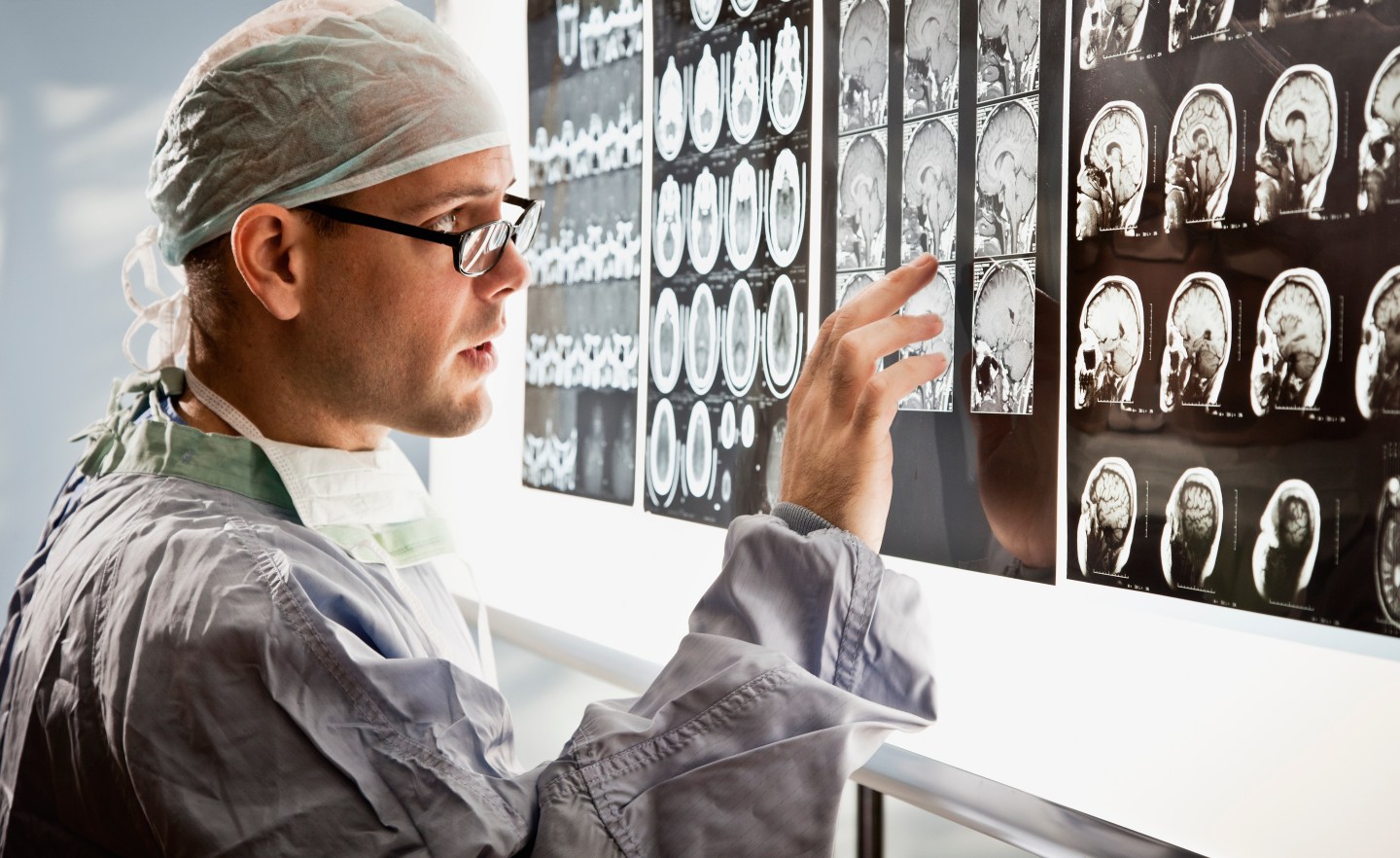
Could brain scans help decide legal decisions?
Could brain scans help decide legal decisions?Ron Levine—Getty Images

Does the toothpaste Colddate infringe upon the trademark of Colgate? Some might think this is a no-brainer. But in a 2007 lawsuit between the two brands, Colgate-Palmolive lost on the grounds that the two brands were “similar” but not “substantially indistinguishable.”

Determining trademark infringement can often be challenging and fraught with controversy. The reason is that, at its core, a verdict for infringement requires proof that the two brands are confusingly similar. And yet the existing approach primarily relies on self-report, which is known to be vulnerable to biases and manipulation.

But this challenge also provides an interesting lens into the complex yet fascinating relationship between scientific evidence and legal practices. I am a marketing professor with a background in cognitive neuroscience, and one of my research interests is in using neuroscientific tools to study consumer behavior. In our recently published study, my colleagues and I demonstrated how looking directly into the brain may help solve the conundrum of how to measure similarity between trademarks.

Determining trademark infringement is messy

In most legal systems, trademark infringement decisions revolve around whether a “reasonable person” would find two trademarks similar enough to cause confusion. While this may sound straightforward and intuitive, judges have found it incredibly difficult to translate such a criterion into concrete guidance for legal decision-making. Many legal scholars have lamented the lack of a clear definition of a “reasonable person,” or what factors contribute to “similarity” and their relative importance.

This ambiguity is further compounded by the adversarial legal system in the U.S. and many other countries. In such a system, two opposing parties each hire their own attorneys and expert witnesses who present their own evidence. Often that evidence takes the form of consumer surveys conducted by an expert witness hired by a party, which can be susceptible to manipulation—for example, through the use of leading questions. Not surprisingly, plaintiffs are known to present surveys finding that two trademarks are similar, while defendants present competing surveys showing they are different.

This unfortunate situation arises largely because there is no legal gold standard about what types of background information survey respondents should receive, how the questions should be phrased and what criteria of “similarity” should be followed—all factors that can change the results substantially. For example, parties could include instructions on how respondents should evaluate similarity.

As a result, judges have developed some degree of cynicism. It is not uncommon that some simply discard the evidence from both sides and go with their own judgment—which could risk replacing one set of biases with another, despite their best intentions.

Asking the brain, not the person

Neuroscience may provide a way out of the dilemma: What if courts measured perceived similarity directly from the brain, instead of asking people to describe what they think?

To test this, we leveraged a well-known phenomenon of the brain called repetition suppression. When the brain sees or hears the same thing over and over again, its response to the repeated stimulus becomes weaker each time, as if it’s losing interest or doesn’t find the information as important.

Imagine you hear a really loud noise and your brain responds by triggering a fear response. But if you hear that same loud noise over and over again, your brain will start to get used to it and you won’t feel as scared anymore. This repetition suppression is thought to help the brain focus better on new or important information. Scientists have seen this happening in different parts of the brain, including those that process sight, sound, attention, and memory.

In our experiment, we rapidly showed participants pairs of images consisting of a target brand (such as “Reese’s”) and a supposed copycat (such as “Reese’s Sticks”) and used MRI scanners to examine activity in the part of the brain that processes visual objects.

Given repetition suppression, we would expect a maximum amount of response reduction if the second brand is exactly the same as the first one, minimum reduction if the two are completely different, and somewhere in between if they are somewhat similar. By measuring the degree of response reduction, we could then determine how similar, in the brain’s perspective, the two brands are.

This approach provides the important benefit of bypassing the need to ask people to judge how similar they find two brands, or defining what it means to be similar, which can be highly contentious in trademark lawsuits. A person might not even be conscious of the brain’s repetition suppression response.

Across the whole set of brands we tested, we compared the neuroimaging results against the results of surveys designed to favor the plaintiff, to favor the defendant, or to be more neutral. We found that the brain-based measure can reliably pick out the more neutral survey results, supporting the idea that brain scans could improve the quality of legal evidence in these cases.

Applying neuroscience to legal problems

It is crucial to note that looking into the brain doesn’t mean a legal decision automatically results from such data. Our method provides a better ruler to measure similarity, but it still falls on the judge to determine where to draw the line for infringement. Neuroimaging is also costlier than consumer surveys and can’t easily be done on as large a sample of people.

Interdisciplinary discussions and a better understanding of neuroimaging techniques are necessary before broader uses can be integrated into the legal system. The courts play a crucial role in deciding when new insights from neuroimaging should be considered in a case and how they should influence its outcome. Therefore, it is becoming increasingly important for judges and lawyers to have a working knowledge of neuroscientific techniques.

Our approach also opens the door to the possibility of applying neuroscience to a variety of legal cases centering on the “reasonable person,” such as copyright infringement, obscenity, and negligence. More broadly, it offers a novel perspective on the burgeoning field of neurolaw, which seeks to refine and reform legal thinking using insights from neuroscience.

Most existing work in law and neuroscience focuses on criminal culpability, or evaluating someone’s mental state while making a certain action. But little attention has been paid to seemingly more mundane questions in civil law that could arguably have an even broader impact on people’s everyday lives. We believe that broadening the ways neuroscience can contribute to the law could help improve legal decision-making.

Learn how to navigate and strengthen trust in your business with The Trust Factor, a weekly newsletter examining what leaders need to succeed. Sign up here.
About the Authors
By Zhihao Zhang
See full bioRight Arrow Button Icon
By The Conversation
See full bioRight Arrow Button Icon

Latest in Health

Finance
Lorem ipsum dolor sit amet, consectetur adipiscing elit, sed do eiusmod tempor incididunt ut labore et dolore magna aliqua. Ut enim ad minim veniam
By Fortune Editors
October 20, 2025
Finance
Lorem ipsum dolor sit amet, consectetur adipiscing elit, sed do eiusmod tempor incididunt ut labore et dolore magna aliqua. Ut enim ad minim veniam
By Fortune Editors
October 20, 2025
Finance
Lorem ipsum dolor sit amet, consectetur adipiscing elit, sed do eiusmod tempor incididunt ut labore et dolore magna aliqua. Ut enim ad minim veniam
By Fortune Editors
October 20, 2025
Finance
Lorem ipsum dolor sit amet, consectetur adipiscing elit, sed do eiusmod tempor incididunt ut labore et dolore magna aliqua. Ut enim ad minim veniam
By Fortune Editors
October 20, 2025
Finance
Lorem ipsum dolor sit amet, consectetur adipiscing elit, sed do eiusmod tempor incididunt ut labore et dolore magna aliqua. Ut enim ad minim veniam
By Fortune Editors
October 20, 2025
Finance
Lorem ipsum dolor sit amet, consectetur adipiscing elit, sed do eiusmod tempor incididunt ut labore et dolore magna aliqua. Ut enim ad minim veniam
By Fortune Editors
October 20, 2025

Most Popular

Finance
Lorem ipsum dolor sit amet, consectetur adipiscing elit, sed do eiusmod tempor incididunt ut labore et dolore magna aliqua. Ut enim ad minim veniam
By Fortune Editors
October 20, 2025
Finance
Lorem ipsum dolor sit amet, consectetur adipiscing elit, sed do eiusmod tempor incididunt ut labore et dolore magna aliqua. Ut enim ad minim veniam
By Fortune Editors
October 20, 2025
Finance
Lorem ipsum dolor sit amet, consectetur adipiscing elit, sed do eiusmod tempor incididunt ut labore et dolore magna aliqua. Ut enim ad minim veniam
By Fortune Editors
October 20, 2025
Finance
Lorem ipsum dolor sit amet, consectetur adipiscing elit, sed do eiusmod tempor incididunt ut labore et dolore magna aliqua. Ut enim ad minim veniam
By Fortune Editors
October 20, 2025
Finance
Lorem ipsum dolor sit amet, consectetur adipiscing elit, sed do eiusmod tempor incididunt ut labore et dolore magna aliqua. Ut enim ad minim veniam
By Fortune Editors
October 20, 2025
Finance
Lorem ipsum dolor sit amet, consectetur adipiscing elit, sed do eiusmod tempor incididunt ut labore et dolore magna aliqua. Ut enim ad minim veniam
By Fortune Editors
October 20, 2025
Fortune Secondary Logo
Rankings
  • 100 Best Companies
  • Fortune 500
  • Global 500
  • Fortune 500 Europe
  • Most Powerful Women
  • World's Most Admired Companies
  • See All Rankings
  • Lists Calendar
Sections
  • Finance
  • Fortune Crypto
  • Features
  • Leadership
  • Health
  • Commentary
  • Success
  • Retail
  • Mpw
  • Tech
  • Lifestyle
  • CEO Initiative
  • Asia
  • Politics
  • Conferences
  • Europe
  • Newsletters
  • Personal Finance
  • Environment
  • Magazine
  • Education
Customer Support
  • Frequently Asked Questions
  • Customer Service Portal
  • Privacy Policy
  • Terms Of Use
  • Single Issues For Purchase
  • International Print
Commercial Services
  • Advertising
  • Fortune Brand Studio
  • Fortune Analytics
  • Fortune Conferences
  • Business Development
  • Group Subscriptions
About Us
  • About Us
  • Press Center
  • Work At Fortune
  • Terms And Conditions
  • Site Map
  • About Us
  • Press Center
  • Work At Fortune
  • Terms And Conditions
  • Site Map
  • Facebook icon
  • Twitter icon
  • LinkedIn icon
  • Instagram icon
  • Pinterest icon

Latest in Health

Employers are quietly pausing 401(k) matches again. The last time this happened was the 2008 recession and Covid
Personal Finance401(k)
Employers are quietly pausing 401(k) matches again. The last time this happened was the 2008 recession and Covid
By Courtney Vinopal and HR BrewMay 18, 2026
2 hours ago
CDC to escalate Ebola response after WHO declares emergency
HealthHealth
CDC to escalate Ebola response after WHO declares emergency
By Jessica Nix and BloombergMay 17, 2026
24 hours ago
WHO declares latest Ebola outbreak a global health emergency. A rare variant of the disease with no approved treatments is to blame
HealthHealth
WHO declares latest Ebola outbreak a global health emergency. A rare variant of the disease with no approved treatments is to blame
By Chinedu Asadu and The Associated PressMay 17, 2026
1 day ago
hoeg
HealthFDA
RFK ally confirms she was fired by FDA: ‘I learned so much and leave with no regrets’
By Matthew Perrone and The Associated PressMay 16, 2026
2 days ago
lawyer
CommentaryLaw
Would you hire the lawyer who just got sanctioned for using AI?
By Alexandra SmythMay 16, 2026
3 days ago
lori
Commentarymental health
I run Valvoline Instant Oil Change and work with young people every day. They’re in crisis—and we all have to try to help
By Lori FleesMay 15, 2026
3 days ago

Most Popular

The top foreign holders of U.S. debt may soon dump Treasury bonds and bring their money back home, potentially spiking borrowing costs
Economy
The top foreign holders of U.S. debt may soon dump Treasury bonds and bring their money back home, potentially spiking borrowing costs
By Jason MaMay 17, 2026
1 day ago
Microsoft AI chief gives it 18 months—for all white-collar work to be automated by AI
AI
Microsoft AI chief gives it 18 months—for all white-collar work to be automated by AI
By Jake AngeloMay 16, 2026
2 days ago
The Bezos family just donated $100 million to help achieve one of Mayor Zohran Mamdani’s top campaign promises
Politics
The Bezos family just donated $100 million to help achieve one of Mayor Zohran Mamdani’s top campaign promises
By Jake AngeloMay 12, 2026
6 days ago
SpaceX heads into a record-shattering IPO with the 'deepest moat that exists today' as investors vow to 'never bet against Elon'
Innovation
SpaceX heads into a record-shattering IPO with the 'deepest moat that exists today' as investors vow to 'never bet against Elon'
By Jason MaMay 16, 2026
2 days ago
'No one was coming to save me': How Reese Witherspoon built a $900 million company from a problem Hollywood wouldn't fix
Success
'No one was coming to save me': How Reese Witherspoon built a $900 million company from a problem Hollywood wouldn't fix
By Sydney LakeMay 17, 2026
1 day ago
Mamdani's New York is coming to tax your private jet. Here's how to prepare
Personal Finance
Mamdani's New York is coming to tax your private jet. Here's how to prepare
By Greg RaiffMay 16, 2026
3 days ago

© 2026 Fortune Media IP Limited. All Rights Reserved. Use of this site constitutes acceptance of our Terms of Use and Privacy Policy | CA Notice at Collection and Privacy Notice | Do Not Sell/Share My Personal Information
FORTUNE is a trademark of Fortune Media IP Limited, registered in the U.S. and other countries. FORTUNE may receive compensation for some links to products and services on this website. Offers may be subject to change without notice.