• Home
  • Latest
  • Fortune 500
  • Finance
  • Tech
  • Leadership
  • Lifestyle
  • Rankings
  • Multimedia

Exclusive

An hour in the Oval Office with President Trump Fortune Editor-in-Chief: Alyson Shontell sat down with President Trump in the Oval Office for an hour. Tariffs, Intel, AI, Boeing, Iran—and the question every CEO eventually has to answer: who's next?

An hour in the Oval Office with President Trump Fortune Editor-in-Chief: Alyson Shontell sat down with President Trump in the Oval Office for an hour. Tariffs, Intel, AI, Boeing, Iran—and the question every CEO eventually has to answer: who's next?

An hour in the Oval Office with President Trump Fortune Editor-in-Chief: Alyson Shontell sat down with President Trump in the Oval Office for an hour. Tariffs, Intel, AI, Boeing, Iran—and the question every CEO eventually has to answer: who's next?

An hour in the Oval Office with President Trump Fortune Editor-in-Chief: Alyson Shontell sat down with President Trump in the Oval Office for an hour. Tariffs, Intel, AI, Boeing, Iran—and the question every CEO eventually has to answer: who's next?

An hour in the Oval Office with President Trump Fortune Editor-in-Chief: Alyson Shontell sat down with President Trump in the Oval Office for an hour. Tariffs, Intel, AI, Boeing, Iran—and the question every CEO eventually has to answer: who's next?

An hour in the Oval Office with President Trump Fortune Editor-in-Chief: Alyson Shontell sat down with President Trump in the Oval Office for an hour. Tariffs, Intel, AI, Boeing, Iran—and the question every CEO eventually has to answer: who's next?

An hour in the Oval Office with President Trump Fortune Editor-in-Chief: Alyson Shontell sat down with President Trump in the Oval Office for an hour. Tariffs, Intel, AI, Boeing, Iran—and the question every CEO eventually has to answer: who's next?

An hour in the Oval Office with President Trump Fortune Editor-in-Chief: Alyson Shontell sat down with President Trump in the Oval Office for an hour. Tariffs, Intel, AI, Boeing, Iran—and the question every CEO eventually has to answer: who's next?

An hour in the Oval Office with President Trump Fortune Editor-in-Chief: Alyson Shontell sat down with President Trump in the Oval Office for an hour. Tariffs, Intel, AI, Boeing, Iran—and the question every CEO eventually has to answer: who's next?

An hour in the Oval Office with President Trump Fortune Editor-in-Chief: Alyson Shontell sat down with President Trump in the Oval Office for an hour. Tariffs, Intel, AI, Boeing, Iran—and the question every CEO eventually has to answer: who's next?

CommentarySemiconductors

U.S. chip efforts have focused on advanced semiconductors–but low-tech legacy chips could give China an unexpected edge

By
Rakesh Kumar
Rakesh Kumar
Down Arrow Button Icon
By
Rakesh Kumar
Rakesh Kumar
Down Arrow Button Icon
August 18, 2023, 11:39 AM ET
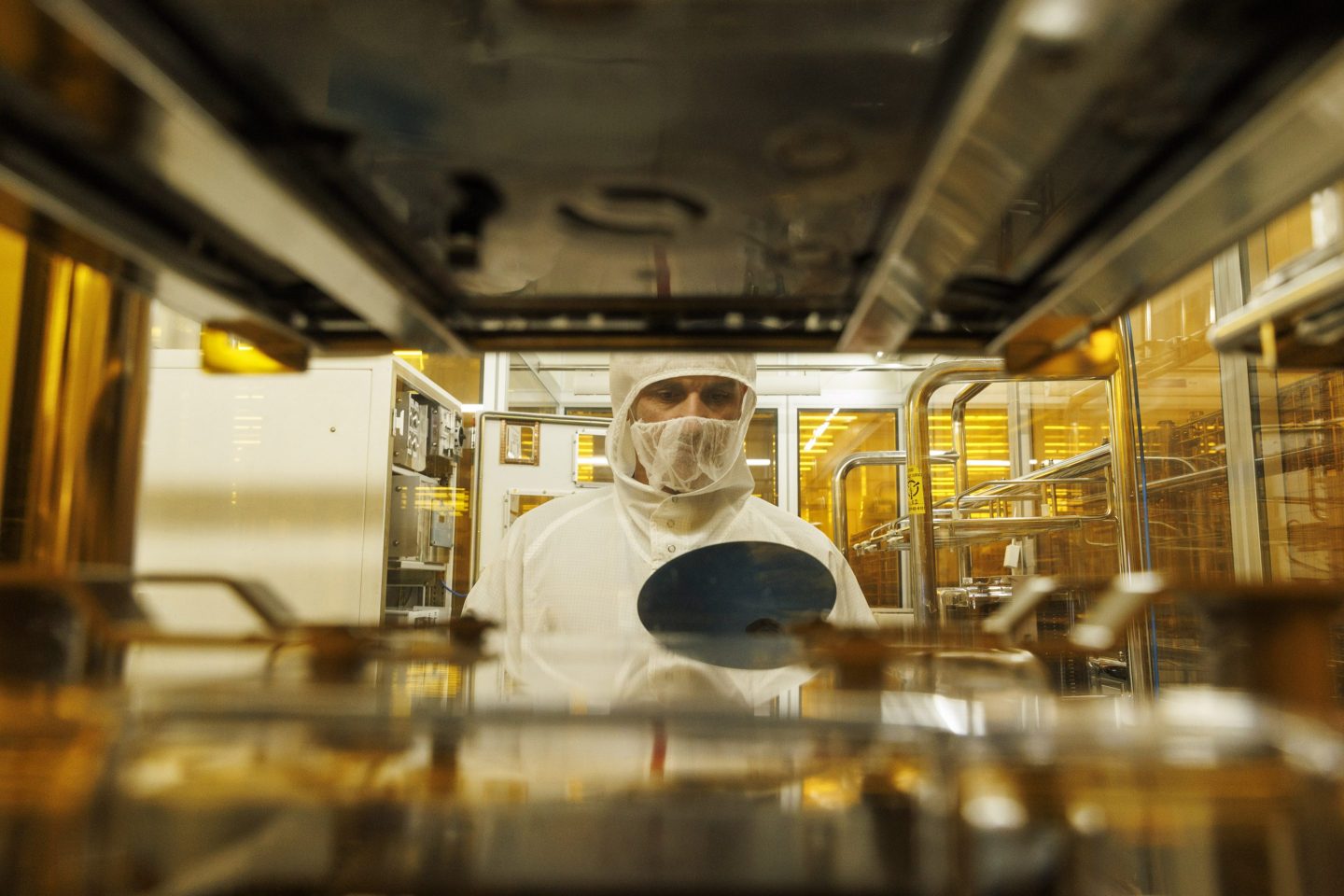
A technician inspects a semiconductor wafer during testing in the cleanroom
Intel has announced the termination of its plans to acquire Israel's Tower Semiconductor after Chinese regulators opposed the deal.Kobi Wolf—Bloomberg/Getty Images

Earlier this week, China scuttled a $5.4 dollar merger between Intel and Tower Semiconductor. Tower does not manufacture advanced chips using the latest technologies. Instead, it builds legacy chips–chips manufactured using much older technologies.

Intel’s play for the legacy chip market was almost an oddity. Most of the recent high-profile U.S. chip-related efforts–the CHIPS and Science Act, export restrictions on China, and onshoring manufacturing–largely focused on advanced chips. However, most chips manufactured today are not advanced chips, but legacy chips. Two-thirds of the chips sold today are manufactured using technologies that were commercialized before 2005. Almost a quarter of the chips sold today are manufactured using technologies from the last century! In fact, a majority of the ~500 chip manufacturing plants operating today worldwide were built in the last century.

Legacy chips are at least as critical as advanced chips both in terms of economic importance and national security. Some 95% of the chips used in the automotive industry are legacy chips. Several other critical industries–medical devices, consumer electronics, infrastructure, industrial automation, and defense–also rely heavily on legacy chips. Russian military equipment found in Ukraine famously had legacy chips yanked from refrigerators and dishwashers.

In fact, the COVID-era chip shortage was primarily a shortage of legacy chips, not advanced chips. One’s iPhone 13 Max got delayed not because of its advanced workhorse chips–but due to the unavailability of a large number of legacy chips that the device requires for its operation.

The main reason lawmakers and the industry have largely overlooked legacy chips is that profits mostly come from the expensive advanced chips, whereas commoditized legacy chips often sell for pennies. The average cost of a chip sold today is less than 50 cents. In fact, chips built using pre-2005 technologies make up two-thirds of sales but only a tenth of the overall chip industry’s revenue.

But there is no room for complacency. The gap between the demand and supply of legacy chips has been increasing unsustainably. Consider the automobile industry. The global automotive semiconductor market is expected to grow by over 11% per year for the next few years. However, the projected annual growth in manufacturing of legacy chips is only 2%. It’s simply not economically attractive to invest in legacy chip manufacturing. The cost and spin-up time for a new fab for legacy chips are far too high considering the wafer-thin profit margins. Most legacy chip fabs exist today only because they once produced then-advanced chips–it was the profits made from selling those advanced chips that paid for the cost of setting up those facilities. The lack of new investment despite fast-increasing demand (only one-sixth of the semiconductor investment goes toward manufacturing legacy chips) may blow up into a severe chip shortage unless something changes.

Complacency around legacy chips is also dangerous because it may soon compromise America’s security and strategic autonomy.

Today, almost three-quarters of the manufacturing capacity for legacy chips is based in Taiwan and China, resulting in the same supply chain dependence as for advanced chips. Hypothetically, China could threaten supplies someday and hold the U.S. economy hostage.

China has been investing heavily in the manufacturing of legacy chips, especially in the aftermath of export controls on advanced chips. Some estimates predict that China may build more legacy chip fabs in the next few years than the rest of the world combined. They can eventually box everyone else out, especially through overproduction and loss-leader strategy. It has happened before–the solar industry is a prime example. China can then either turn off the spigot at will–or have immense leverage over everyone else. This dependence on China-based supply chains would be ironic considering that it would be created in part due to the actions taken to reduce dependence on China (for advanced chips).

That creates vulnerabilities for the U.S.–and undermines trust in the chip supply chain, especially in the defense and critical infrastructure sectors. The loss of the legacy chip market can potentially also lead to the loss of downstream critical markets such as electric mobility.

Government subsidies may help convince the U.S. semiconductor industry to build more legacy chips–but there may not be much appetite for more chip subsidies after the CHIPS Act. Friendshoring may be more effective, especially in low-cost allied countries such as India. Export controls on tools and technologies required for producing legacy chips that include volume or cost-based restrictions on production may help prevent overproduction. Import controls and tariffs can be used to prevent dumping. Innovation in legacy chips may help U.S. chipmakers survive a price war. Many applications of legacy chips require safety qualifications. U.S. control over standards bodies may help prevent China’s domination of downstream industries–and insisting on open security standards may help retain some trust in the supply chains.

Considering the enormous amount of attention and resources the U.S. chip industry has received recently, the feeling that chip-related problems have been addressed can be understandable–but an unaddressed danger is lurking within the supply chain of legacy chips. These chips deserve the same level of attention as cutting-edge semiconductors.

Rakesh Kumar is a professor in the Electrical and Computer Engineering department at the University of Illinois and the author of Reluctant Technophiles: India’s Complicated Relationship with Technology.

The opinions expressed in Fortune.com commentary pieces are solely the views of their authors and do not necessarily reflect the opinions and beliefs of Fortune.

More must-read commentary published by Fortune:

  • The FIRE movement is soaring in popularity–but early retirees report feeling lost and unfulfilled
  • America turned to hospital-at-home programs during the pandemic–but their stunning success calls for a permanent fix
  • ‘The Feckless 400’: These companies are still doing business in Russia–and funding Putin’s war
  • Daniel Lubetzky: ‘You can’t make big ESG commitments while failing at the basics of kindness’
Join us at the Fortune Workplace Innovation Summit May 19–20, 2026, in Atlanta. The next era of workplace innovation is here—and the old playbook is being rewritten. At this exclusive, high-energy event, the world’s most innovative leaders will convene to explore how AI, humanity, and strategy converge to redefine, again, the future of work. Register now.
About the Author
By Rakesh Kumar
See full bioRight Arrow Button Icon

Latest in Commentary

Finance
Lorem ipsum dolor sit amet, consectetur adipiscing elit, sed do eiusmod tempor incididunt ut labore et dolore magna aliqua. Ut enim ad minim veniam
By Fortune Editors
October 20, 2025
Finance
Lorem ipsum dolor sit amet, consectetur adipiscing elit, sed do eiusmod tempor incididunt ut labore et dolore magna aliqua. Ut enim ad minim veniam
By Fortune Editors
October 20, 2025
Finance
Lorem ipsum dolor sit amet, consectetur adipiscing elit, sed do eiusmod tempor incididunt ut labore et dolore magna aliqua. Ut enim ad minim veniam
By Fortune Editors
October 20, 2025
Finance
Lorem ipsum dolor sit amet, consectetur adipiscing elit, sed do eiusmod tempor incididunt ut labore et dolore magna aliqua. Ut enim ad minim veniam
By Fortune Editors
October 20, 2025
Finance
Lorem ipsum dolor sit amet, consectetur adipiscing elit, sed do eiusmod tempor incididunt ut labore et dolore magna aliqua. Ut enim ad minim veniam
By Fortune Editors
October 20, 2025
Finance
Lorem ipsum dolor sit amet, consectetur adipiscing elit, sed do eiusmod tempor incididunt ut labore et dolore magna aliqua. Ut enim ad minim veniam
By Fortune Editors
October 20, 2025

Most Popular

Finance
Lorem ipsum dolor sit amet, consectetur adipiscing elit, sed do eiusmod tempor incididunt ut labore et dolore magna aliqua. Ut enim ad minim veniam
By Fortune Editors
October 20, 2025
Finance
Lorem ipsum dolor sit amet, consectetur adipiscing elit, sed do eiusmod tempor incididunt ut labore et dolore magna aliqua. Ut enim ad minim veniam
By Fortune Editors
October 20, 2025
Finance
Lorem ipsum dolor sit amet, consectetur adipiscing elit, sed do eiusmod tempor incididunt ut labore et dolore magna aliqua. Ut enim ad minim veniam
By Fortune Editors
October 20, 2025
Finance
Lorem ipsum dolor sit amet, consectetur adipiscing elit, sed do eiusmod tempor incididunt ut labore et dolore magna aliqua. Ut enim ad minim veniam
By Fortune Editors
October 20, 2025
Finance
Lorem ipsum dolor sit amet, consectetur adipiscing elit, sed do eiusmod tempor incididunt ut labore et dolore magna aliqua. Ut enim ad minim veniam
By Fortune Editors
October 20, 2025
Finance
Lorem ipsum dolor sit amet, consectetur adipiscing elit, sed do eiusmod tempor incididunt ut labore et dolore magna aliqua. Ut enim ad minim veniam
By Fortune Editors
October 20, 2025
Fortune Secondary Logo
Rankings
  • 100 Best Companies
  • Fortune 500
  • Global 500
  • Fortune 500 Europe
  • Most Powerful Women
  • World's Most Admired Companies
  • See All Rankings
  • Lists Calendar
Sections
  • Finance
  • Fortune Crypto
  • Features
  • Leadership
  • Health
  • Commentary
  • Success
  • Retail
  • Mpw
  • Tech
  • Lifestyle
  • CEO Initiative
  • Asia
  • Politics
  • Conferences
  • Europe
  • Newsletters
  • Personal Finance
  • Environment
  • Magazine
  • Education
Customer Support
  • Frequently Asked Questions
  • Customer Service Portal
  • Privacy Policy
  • Terms Of Use
  • Single Issues For Purchase
  • International Print
Commercial Services
  • Advertising
  • Fortune Brand Studio
  • Fortune Analytics
  • Fortune Conferences
  • Business Development
  • Group Subscriptions
About Us
  • About Us
  • Press Center
  • Work At Fortune
  • Terms And Conditions
  • Site Map
  • About Us
  • Press Center
  • Work At Fortune
  • Terms And Conditions
  • Site Map
  • Facebook icon
  • Twitter icon
  • LinkedIn icon
  • Instagram icon
  • Pinterest icon

Latest in Commentary

‘Change the World’ idealism is dying in Silicon Valley. We’ll miss it when it’s gone
CommentarySilicon Valley
‘Change the World’ idealism is dying in Silicon Valley. We’ll miss it when it’s gone
By Jonathan WeberMay 19, 2026
2 hours ago
reorgs
CommentaryRestructuring
We studied 6,000 executives and found the real reason 70% of transformations fail
By Julia Dhar, Kristy R. Ellmer and Philip JamesonMay 19, 2026
4 hours ago
joel
Commentarysaas
The SaaSpocalypse isn’t killing software. It’s exposing where software value really lives
By Joel HronMay 19, 2026
5 hours ago
altman
CommentarySam Altman
Musk vs. Altman: AI safety cannot be one man’s job
By Stavros GadinisMay 18, 2026
16 hours ago
charlie
CommentarySoftware
Anaplan CEO: AI isn’t eating software. It’s sorting it
By Charlie GottdienerMay 18, 2026
1 day ago
shyam
CommentaryHealth
World Economic Forum: women’s health gets only 20% of R&D funding. We must seize this $1 trillion opportunity
By Shyam BishenMay 18, 2026
1 day ago

Most Popular

While Trump insisted the Iran war would end ‘soon,’ an account in his name was buying millions in oil, defense and gold
Economy
While Trump insisted the Iran war would end ‘soon,’ an account in his name was buying millions in oil, defense and gold
By Eva RoytburgMay 18, 2026
19 hours ago
The Bezos family just donated $100 million to help achieve one of Mayor Zohran Mamdani’s top campaign promises
Politics
The Bezos family just donated $100 million to help achieve one of Mayor Zohran Mamdani’s top campaign promises
By Jake AngeloMay 12, 2026
7 days ago
Current price of oil as of May 18, 2026
Personal Finance
Current price of oil as of May 18, 2026
By Joseph HostetlerMay 18, 2026
1 day ago
EXCLUSIVE: An hour in the Oval Office with the CEO-in-Chief, President Trump
Politics
EXCLUSIVE: An hour in the Oval Office with the CEO-in-Chief, President Trump
By Alyson ShontellMay 18, 2026
1 day ago
Spirit Airlines apologizes to all the Americans who can't afford any summer vacation flights as it shuts down
Travel & Leisure
Spirit Airlines apologizes to all the Americans who can't afford any summer vacation flights as it shuts down
By Rio Yamat and The Associated PressMay 18, 2026
1 day ago
Mamdani's New York is coming to tax your private jet. Here's how to prepare
Personal Finance
Mamdani's New York is coming to tax your private jet. Here's how to prepare
By Greg RaiffMay 16, 2026
3 days ago

© 2026 Fortune Media IP Limited. All Rights Reserved. Use of this site constitutes acceptance of our Terms of Use and Privacy Policy | CA Notice at Collection and Privacy Notice | Do Not Sell/Share My Personal Information
FORTUNE is a trademark of Fortune Media IP Limited, registered in the U.S. and other countries. FORTUNE may receive compensation for some links to products and services on this website. Offers may be subject to change without notice.