• Home
  • Latest
  • Fortune 500
  • Finance
  • Tech
  • Leadership
  • Lifestyle
  • Rankings
  • Multimedia

Trendingnow

1

Egg companies made $1.22 billion in profit off a $6 carton — now they’re buying their way out of a price-fixing case with 53 million donated eggs

2

Meet the Zillennials: The luckiest micro-generation in the workforce, born between 1993 and 1998

3

As Big Tech showers employees with perks to win the talent war, Nvidia built a nearly $5 trillion company by making people pay for their own lunch

1

Egg companies made $1.22 billion in profit off a $6 carton — now they’re buying their way out of a price-fixing case with 53 million donated eggs

2

Meet the Zillennials: The luckiest micro-generation in the workforce, born between 1993 and 1998

3

As Big Tech showers employees with perks to win the talent war, Nvidia built a nearly $5 trillion company by making people pay for their own lunch
CommentaryFinance

24/7 trading is already in full swing. Now Wall Street is considering ditching the opening and closing bells altogether

By
Richard Torrenzano
Richard Torrenzano
Down Arrow Button Icon
By
Richard Torrenzano
Richard Torrenzano
Down Arrow Button Icon
May 14, 2024, 7:54 AM ET
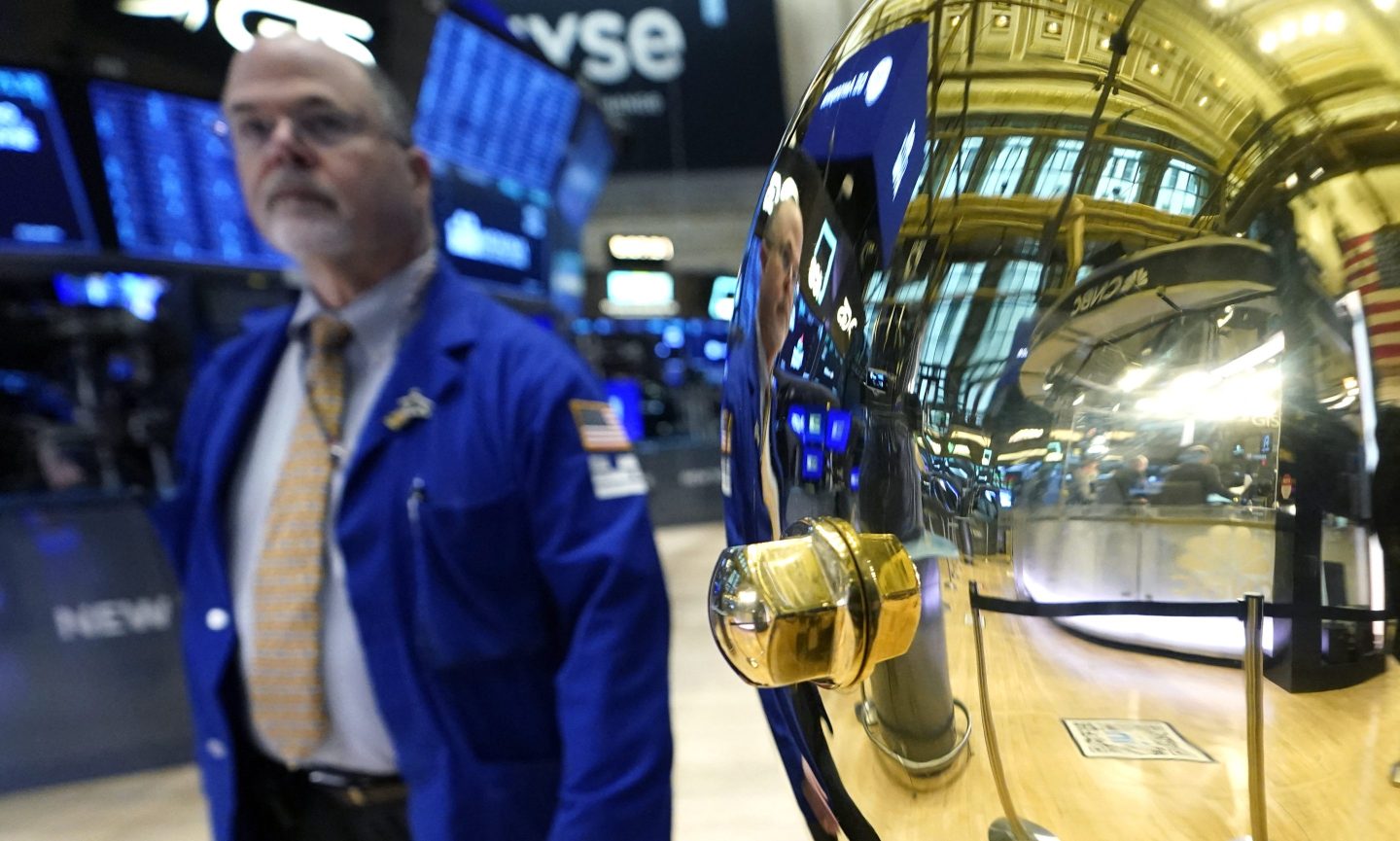
Stocks continue to trade around the world outside of U.S. market hours.
Stocks continue to trade around the world outside of U.S. market hours.Timothy A. Clary—AFP/Getty Images
Add Fortune on Google for similar content.

Since the formation of America’s first stock market in Philadelphia in 1790, markets have been evolving. Now, cutting-edge technology enhanced by artificial intelligence (AI) is reshaping instantaneous access to a myriad of resources, transforming connectivity, as well as global trading.

Recently, the New York Stock Exchange (NYSE) sought to gauge market players’ opinions on the possibility of trading its listed stocks “round the clock.”

One question jumps out: Why?

Global markets function today following the sun. Trading equities does not stop when the NYSE or Nasdaq ring their closing bell–nor do U.S.-based brokerage firms close their doors.

Outside U.S. market hours, major listed stocks continue to trade through dual listings in exchanges from Tokyo to London or as unregistered securities in the many foreign financial markets in between. Stocks such as Apple, Microsoft, Amazon, Meta, Oracle, Visa and Mastercard, JP Morgan, Exxon, and numerous others trade this way.

What was new is now old—and what is old is new again.

The NYSE first studied the possibility of 24-hour trading in July 1985. At that time, as a member of the big board’s management committee and chief spokesman, I briefed journalists about international implications.

As I told the New York Times then, I didn’t think it was a question of whether 24-hour trading would come, but when. I also cautioned that round-the-clock trading might not necessarily involve keeping the New York Exchange open day and night. It could involve links with other exchanges, or extending trading hours further.

Decades ago, we anticipated a 24-hour trading paradigm, recognizing the need for advanced technological innovations, organizational changes, and perspective shifts among financial professionals and regulators. However, technology and investor demand suggested the concept was still ahead of its time.

24/7 trading is already in full swing

In simple terms, the NYSE could let all investors buy or sell stocks at any time day or night, seven days a week. Currently, American stock exchange trading hours are weekdays from 9:30 am to 4:00 pm Eastern Time.

Over the years, rules and technology have transformed markets. Investors trade with no commissions today—but they effectively pay commissions in the form of a spread. The spread is the difference between the price stocks are sought (the bid)—and the price a stock is offered for sale (the offer).

Not long ago, the NYSE and Nasdaq once captured market shares of more than 86% of their listed securities. They centralized price discovery and price validity for their listed companies. No more.

Currently, industry insiders estimate that the NYSE and Nasdaq each account for an approximate blended market share of less than 20% of daily trading volume in their listed securities (market share is lowest for the most active stocks and highest in the least active ones). Additionally, both markets trade each other’s stock listings–and each pays for order flow.

In the absence of this commanding presence or a yet unidentified magnetic force, enticing non-U.S. investors to engage in U.S. stock trading during off-market hours appears exceedingly challenging, particularly when they can trade in their home market, protected by local oversight, when U.S. markets are closed.

Buyer beware

As a result of numerous SEC market reform initiatives, alternative trading systems now actively compete with traditional stock markets and in some securities capture the majority of daily trading.

As many as 70 venues trade the same securities. Some transactions are reported immediately, some delayed, some after the close, and still others never posted, thus concealing trading volumes and prices from competitors and the public.

These platforms execute trades and generate profits at warp speed and frequency. Together with the introduction of algorithmic trading, they have redefined the structure of U.S. equity markets. Algo trades execute in fractions of a penny, striking thousands of trades per day, often in the same stock, a process far beyond human capability.

This underscores the importance of not enticing U.S. individual investors into a fragmented and opaque after-hours market.

For instance, on Apr. 24, Meta reported first-quarter earnings after the close. Between post-closing and the next day’s opening, Meta stock was down anywhere from $15 to $85. There is no way to judge how many shares were actually traded—or the prices of these shares—executed during this overnight period. To stop these wild swings, the SEC and major markets should recommend one of two policy changes: Either strongly urge all listed U.S. companies to announce earnings before the market opens, which would allow trading to take place after management commentary and prevent a few select participants to capitalize on unexpected news. Or, for companies choosing to report after the close, markets should refrain from reporting trades in those companies, preventing errant pricing from corrupting the next day’s pricing in the regular trading session.

Either of these two initiatives would preserve the validity of price discovery when all investor orders—the largest to the smallest—would compete for execution at the next regular trading session.

NYSE time travel

Why is the NYSE revisiting history and seeking input? It is a smart innovative initiative by management to adapt to evolving needs of market participants.

One potential step forward could involve extending traditional trading hours. This might involve splitting the current trading day into two segments. One from 8:00 a.m. to 2:00 p.m. Eastern Time—and another from 2:30 pm to 8:00 pm Eastern Time. Both segments would incorporate a mix of human expertise and technological innovation through electronic trading in price discovery, a model already employed daily at the NYSE.

The NYSE must always look at new initiatives to better serve all market participants. Ultimately, the key question is whether Wall Street can make a profit from extended trading hours, as well as meet the needs of contemporary customers. Once these questions are answered, everything else will just fall into place.

Richard Torrenzano, chief executive, The Torrenzano Group, helps organizations take control of how they are perceived. For nearly a decade, he was a member of the New York Stock Exchange Management (policy) and Executive (operations) Committees.

More must-read commentary published by Fortune:

  • Fannie Mae CEO: Beyoncé is right. Climate change has already hit the housing market—and homeowners aren’t prepared
  • A new Cold War is brewing at sea–and the West’s security and prosperity are at stake
  • How to fix Boeing, according to a former Airbus technology chief
  • Congress could soon spell the end of employment arbitration—but it’s not all good news for American workers

The opinions expressed in Fortune.com commentary pieces are solely the views of their authors and do not necessarily reflect the opinions and beliefs of Fortune.
About the Author
By Richard Torrenzano
See full bioRight Arrow Button Icon
Add Fortune on Google for similar content.

Latest in Commentary

Finance
Lorem ipsum dolor sit amet, consectetur adipiscing elit, sed do eiusmod tempor incididunt ut labore et dolore magna aliqua. Ut enim ad minim veniam
By Fortune Editors
October 20, 2025
Finance
Lorem ipsum dolor sit amet, consectetur adipiscing elit, sed do eiusmod tempor incididunt ut labore et dolore magna aliqua. Ut enim ad minim veniam
By Fortune Editors
October 20, 2025
Finance
Lorem ipsum dolor sit amet, consectetur adipiscing elit, sed do eiusmod tempor incididunt ut labore et dolore magna aliqua. Ut enim ad minim veniam
By Fortune Editors
October 20, 2025
Finance
Lorem ipsum dolor sit amet, consectetur adipiscing elit, sed do eiusmod tempor incididunt ut labore et dolore magna aliqua. Ut enim ad minim veniam
By Fortune Editors
October 20, 2025
Finance
Lorem ipsum dolor sit amet, consectetur adipiscing elit, sed do eiusmod tempor incididunt ut labore et dolore magna aliqua. Ut enim ad minim veniam
By Fortune Editors
October 20, 2025
Finance
Lorem ipsum dolor sit amet, consectetur adipiscing elit, sed do eiusmod tempor incididunt ut labore et dolore magna aliqua. Ut enim ad minim veniam
By Fortune Editors
October 20, 2025

Most Popular

Finance
Lorem ipsum dolor sit amet, consectetur adipiscing elit, sed do eiusmod tempor incididunt ut labore et dolore magna aliqua. Ut enim ad minim veniam
By Fortune Editors
October 20, 2025
Finance
Lorem ipsum dolor sit amet, consectetur adipiscing elit, sed do eiusmod tempor incididunt ut labore et dolore magna aliqua. Ut enim ad minim veniam
By Fortune Editors
October 20, 2025
Finance
Lorem ipsum dolor sit amet, consectetur adipiscing elit, sed do eiusmod tempor incididunt ut labore et dolore magna aliqua. Ut enim ad minim veniam
By Fortune Editors
October 20, 2025
Finance
Lorem ipsum dolor sit amet, consectetur adipiscing elit, sed do eiusmod tempor incididunt ut labore et dolore magna aliqua. Ut enim ad minim veniam
By Fortune Editors
October 20, 2025
Finance
Lorem ipsum dolor sit amet, consectetur adipiscing elit, sed do eiusmod tempor incididunt ut labore et dolore magna aliqua. Ut enim ad minim veniam
By Fortune Editors
October 20, 2025
Finance
Lorem ipsum dolor sit amet, consectetur adipiscing elit, sed do eiusmod tempor incididunt ut labore et dolore magna aliqua. Ut enim ad minim veniam
By Fortune Editors
October 20, 2025
Fortune Secondary Logo
Rankings
  • 100 Best Companies
  • Fortune 500
  • Global 500
  • Fortune 500 Europe
  • Most Powerful Women
  • World's Most Admired Companies
  • See All Rankings
  • Lists Calendar
Sections
  • Finance
  • Fortune Crypto
  • Features
  • Leadership
  • Health
  • Commentary
  • Success
  • Retail
  • Mpw
  • Tech
  • Lifestyle
  • CEO Initiative
  • Asia
  • Politics
  • Conferences
  • Europe
  • Newsletters
  • Personal Finance
  • Environment
  • Magazine
  • Education
Customer Support
  • Frequently Asked Questions
  • Customer Service Portal
  • Privacy Policy
  • Terms Of Use
  • Single Issues For Purchase
  • International Print
Commercial Services
  • Advertising
  • Fortune Brand Studio
  • Fortune Analytics
  • Fortune Conferences
  • Business Development
  • Group Subscriptions
About Us
  • About Us
  • Press Center
  • Work At Fortune
  • Terms And Conditions
  • Site Map
  • About Us
  • Press Center
  • Work At Fortune
  • Terms And Conditions
  • Site Map
  • Facebook icon
  • Twitter icon
  • LinkedIn icon
  • Instagram icon
  • Pinterest icon

Latest in Commentary

ds
CommentarySoftware
I argued with the father of open source for 2 years. Now the AI fight is the same — only bigger
By David SiegelJuly 3, 2026
1 hour ago
ashok
Commentary250 Years of Innovation
The greatest startup in history: What we can learn from America’s founders at today’s AI frontier
By Ashok N. SrivastavaJuly 3, 2026
1 hour ago
2
Commentary250 Years of Innovation
America’s secret weapon isn’t just innovation — It’s the freedom to fail
By Keith KrachJuly 3, 2026
3 hours ago
rn
CommentaryCryptocurrency
Former Iran director at NSC: Crypto legislation is a ticket to sanctions evasion
By Richard NephewJuly 2, 2026
23 hours ago
m
Commentary250 Years of Innovation
McKinsey chairs: Building a more resilient industrial base may require $2 trillion in investment
By Eric Kutcher and Shubham SinghalJuly 2, 2026
23 hours ago
em
Commentary250 Years of Innovation
America’s 250th birthday has Elon Musk and a record IPO. Its 15th had Alexander Hamilton — and a stock market bubble
By Owen LamontJuly 2, 2026
1 day ago

Most Popular

Egg companies made $1.22 billion in profit off a $6 carton — now they’re buying their way out of a price-fixing case with 53 million donated eggs
Law
Egg companies made $1.22 billion in profit off a $6 carton — now they’re buying their way out of a price-fixing case with 53 million donated eggs
By Wyatte Grantham-Philips and The Associated PressJuly 2, 2026
19 hours ago
Meet the Zillennials: The luckiest micro-generation in the workforce, born between 1993 and 1998
AI
Meet the Zillennials: The luckiest micro-generation in the workforce, born between 1993 and 1998
By Nick LichtenbergJuly 3, 2026
7 hours ago
As Big Tech showers employees with perks to win the talent war, Nvidia built a nearly $5 trillion company by making people pay for their own lunch
Big Tech
As Big Tech showers employees with perks to win the talent war, Nvidia built a nearly $5 trillion company by making people pay for their own lunch
By Marco Quiroz-GutierrezJuly 1, 2026
2 days ago
Economists have found an answer to slowing cognitive decline: Avoid retiring early, study finds
Economy
Economists have found an answer to slowing cognitive decline: Avoid retiring early, study finds
By Sasha RogelbergJuly 2, 2026
21 hours ago
Mark Zuckerberg feeds his cows macadamia nuts and beer to create the 'highest-quality beef in the world' on his $300 million estate in Hawaii
Success
Mark Zuckerberg feeds his cows macadamia nuts and beer to create the 'highest-quality beef in the world' on his $300 million estate in Hawaii
By Sasha RogelbergJuly 2, 2026
21 hours ago
Current price of oil as of July 2, 2026
Personal Finance
Current price of oil as of July 2, 2026
By Joseph HostetlerJuly 2, 2026
1 day ago

© 2026 Fortune Media IP Limited. All Rights Reserved. Use of this site constitutes acceptance of our Terms of Use and Privacy Policy | CA Notice at Collection and Privacy Notice | Do Not Sell/Share My Personal Information
FORTUNE is a trademark of Fortune Media IP Limited, registered in the U.S. and other countries. FORTUNE may receive compensation for some links to products and services on this website. Offers may be subject to change without notice.