• Home
  • Latest
  • Fortune 500
  • Finance
  • Tech
  • Leadership
  • Lifestyle
  • Rankings
  • Multimedia

Trendingnow

1

The Bezos family just donated $100 million to help achieve one of Mayor Zohran Mamdani’s top campaign promises

2

Despite having a $165 million net worth, Scarlett Johansson says work-life balance doesn’t exist—and the first step to success is admitting that

3

Nearly 50,000 Lake Tahoe residents have to find a new power source after their energy source looks to redirect lines to data centers

1

The Bezos family just donated $100 million to help achieve one of Mayor Zohran Mamdani’s top campaign promises

2

Despite having a $165 million net worth, Scarlett Johansson says work-life balance doesn’t exist—and the first step to success is admitting that

3

Nearly 50,000 Lake Tahoe residents have to find a new power source after their energy source looks to redirect lines to data centers
CommentaryPersonal Finance

Americans finally got a rule protecting their credit scores from unexpected medical debt. Now Trump is attacking the agency behind it

By
Andy Schoonover
Andy Schoonover
Down Arrow Button Icon
By
Andy Schoonover
Andy Schoonover
Down Arrow Button Icon
March 20, 2025, 1:15 PM ET

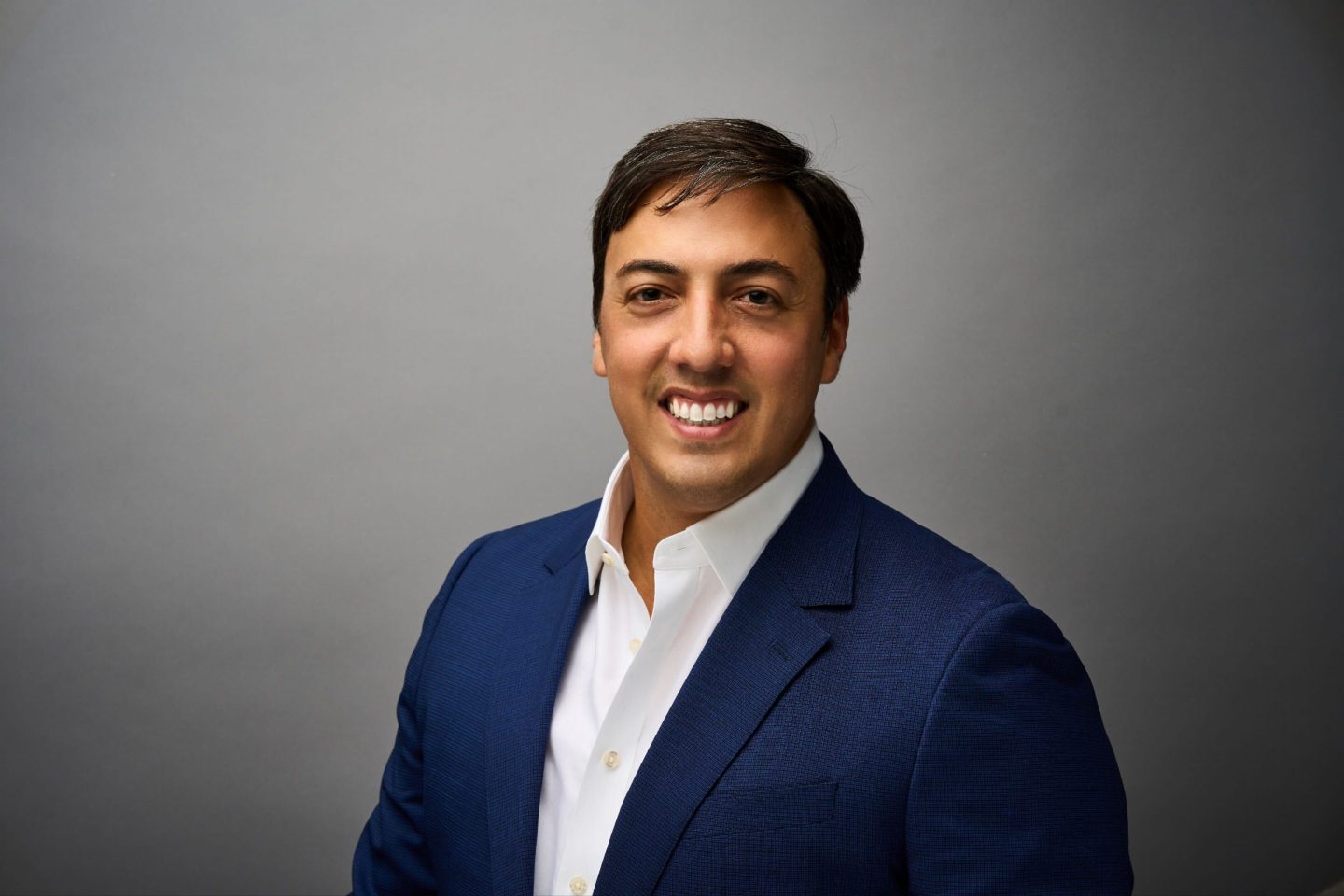
Andy Schoonover is the founder and CEO of CrowdHealth.

Many Americans know the experience of, after receiving emergency care, being hit with an outrageous bill that has no correlation to the actual cost of providing care.
Many Americans know the experience of, after receiving emergency care, being hit with an outrageous bill that has no correlation to the actual cost of providing care. getty images

In early January, the Consumer Financial Protection Bureau (CFPB) finalized a policy to eliminate medical debt from credit reports. This decision is particularly important for individuals burdened by unexpected health-care costs and represents a pivotal shift in how Americans manage and finance their medical expenses.

But the Trump administration aims to diminish the CFPB. While the bureau’s shortcomings are certainly up for debate, the policy to remove health-care bills from credit reporting must be kept in place to protect patients from predatory billing practices. In a truly fair system, a hospital bill would reflect the actual cost of care, with a reasonable margin, not an arbitrary, inflated price designed to exploit people at their most vulnerable moments.

One of the most egregious failures of the American health-care system is the way it handles emergency medical situations. When someone experiences a medical crisis, a heart attack, a stroke, or a severe injury, they don’t have the luxury of choosing which hospital will treat them. Instead, they are transported by ambulance to the nearest or most convenient hospital, often with no say in the matter. In any other industry, consumers choose their providers based on price, quality, and personal preference. But in health care, patients are stripped of that basic right the moment they need urgent care.

Price gouging

Going to an emergency room and being charged an arbitrary amount is strikingly similar to price gouging during a natural disaster. They both exploit people in situations where they have no real choice. When a hurricane, wildfire, or other disaster strikes, people often scramble to evacuate, needing essential supplies like gas, food, and lodging. Take the hoarded personal protective equipment (PPE) during the COVID-19 pandemic, for example. In one case, a company was found guilty of purchasing 250,000 KN95s—filtering facepiece respirators—from a foreign manufacturer and selling 100,000 of them to New Jersey grocers for a 400% markup. The National Library of Medicine found that factors like price gouging, demand shock, and disrupted supply chains contributed to “significantly elevated” PPE costs for national hospitals through the first wave of the pandemic. Examples like this illustrate why price-gouging is illegal in many states. The logic behind banning it is simple: When people are in crisis, they shouldn’t be exploited for basic needs.

Hospitals do essentially the same thing with emergency care. When someone experiences a life-threatening event, they don’t have time to compare prices or shop around for the best hospital. They are taken to the nearest facility, treated without being told the cost, and later hit with an outrageous bill that has no correlation to the actual cost of providing care.

The key similarity is coercion under duress. In both cases, people are not making free-market decisions; they are making life-or-death decisions with no ability to negotiate or walk away. Just as a gas station in a disaster zone is not operating in a fair market when it triples its prices, hospitals are not operating in a fair market when they bill patients thousands of dollars for care they never agreed to at a set price.

Health-care reform

If price gouging is unacceptable in the wake of a hurricane, why is it tolerated in health care, where the stakes are just as high? The reality is that hospitals are engaging in a legalized form of extortion, exploiting the lack of alternatives in emergencies to maximize profits at the expense of patients. It’s a broken system that prioritizes financial gain over fairness and transparency, and it needs serious reform.

Hospitals justify their arbitrary pricing by citing administrative complexity, uncompensated care, and the burden of uninsured patients. But these are just excuses for a system that lacks transparency and accountability. Unlike a free market, where businesses compete for customers by offering fair prices and quality services, emergency health care operates as a monopoly. The patient has no bargaining power, no knowledge of the price beforehand, and no way to opt out of the service.

Additionally, medical debt is a flawed indicator of creditworthiness. Unlike consumer debt—such as credit card balances or personal loans—medical debt is often incurred unexpectedly due to emergencies, illnesses, or accidents. According to data compiled by the Commonwealth Fund, 72% of medical debt stems from acute care situations like hospital stays or accident treatments—or in other words, unexpected emergencies. Individuals rarely choose to take on medical debt in the same way they might choose to finance a car or make purchases on credit. Yet, for years, unpaid medical bills have unfairly damaged credit scores, limiting access to mortgages, auto loans, and even employment opportunities.

Penalizing people for medical debt exacerbates the financial instability that the traditional health-care system already creates, functioning as a form of entrapment by forcing individuals into a cycle of financial hardship that benefits hospitals, insurance companies, and collections agencies while punishing patients. Many traditional insurance models leave individuals with unexpected out-of-pocket costs, high deductibles, and confusing billing practices, leading to debt accumulation. This debt, when reported to credit agencies, makes it even harder for individuals to recover financially.

The CFPB’s policy ensures that people are not punished for their health-related expenses, allowing them to focus on recovery rather than financial ruin. While the bureau’s future remains to be decided, this policy must be kept in place to reduce the long-term consequences of an already predatory system and allow people to rebuild their financial standing more fairly. Until this system changes, Americans will remain trapped in a cycle of medical debt, forced to pay whatever price hospitals decide after the fact. And that isn’t just unfair, it’s extortion.

The opinions expressed in Fortune.com commentary pieces are solely the views of their authors and do not necessarily reflect the opinions and beliefs of Fortune.

Read more:

  • Misaligned incentives plague our health-care system. Here’s how to make America healthy again
  • My son’s rare disease diagnosis spurred me to ditch Big Pharma for a biotech startup
  • I cared for my dad under ‘hospital at home’ in his final weeks. The program is missing one big piece
  • Cancer made me a patient. Health care’s blind spots made me a CEO
Join us at the Fortune Workplace Innovation Summit May 19–20, 2026, in Atlanta. The next era of workplace innovation is here—and the old playbook is being rewritten. At this exclusive, high-energy event, the world’s most innovative leaders will convene to explore how AI, humanity, and strategy converge to redefine, again, the future of work. Register now.
About the Author
By Andy Schoonover
See full bioRight Arrow Button Icon

Latest in Commentary

Finance
Lorem ipsum dolor sit amet, consectetur adipiscing elit, sed do eiusmod tempor incididunt ut labore et dolore magna aliqua. Ut enim ad minim veniam
By Fortune Editors
October 20, 2025
Finance
Lorem ipsum dolor sit amet, consectetur adipiscing elit, sed do eiusmod tempor incididunt ut labore et dolore magna aliqua. Ut enim ad minim veniam
By Fortune Editors
October 20, 2025
Finance
Lorem ipsum dolor sit amet, consectetur adipiscing elit, sed do eiusmod tempor incididunt ut labore et dolore magna aliqua. Ut enim ad minim veniam
By Fortune Editors
October 20, 2025
Finance
Lorem ipsum dolor sit amet, consectetur adipiscing elit, sed do eiusmod tempor incididunt ut labore et dolore magna aliqua. Ut enim ad minim veniam
By Fortune Editors
October 20, 2025
Finance
Lorem ipsum dolor sit amet, consectetur adipiscing elit, sed do eiusmod tempor incididunt ut labore et dolore magna aliqua. Ut enim ad minim veniam
By Fortune Editors
October 20, 2025
Finance
Lorem ipsum dolor sit amet, consectetur adipiscing elit, sed do eiusmod tempor incididunt ut labore et dolore magna aliqua. Ut enim ad minim veniam
By Fortune Editors
October 20, 2025

Most Popular

Finance
Lorem ipsum dolor sit amet, consectetur adipiscing elit, sed do eiusmod tempor incididunt ut labore et dolore magna aliqua. Ut enim ad minim veniam
By Fortune Editors
October 20, 2025
Finance
Lorem ipsum dolor sit amet, consectetur adipiscing elit, sed do eiusmod tempor incididunt ut labore et dolore magna aliqua. Ut enim ad minim veniam
By Fortune Editors
October 20, 2025
Finance
Lorem ipsum dolor sit amet, consectetur adipiscing elit, sed do eiusmod tempor incididunt ut labore et dolore magna aliqua. Ut enim ad minim veniam
By Fortune Editors
October 20, 2025
Finance
Lorem ipsum dolor sit amet, consectetur adipiscing elit, sed do eiusmod tempor incididunt ut labore et dolore magna aliqua. Ut enim ad minim veniam
By Fortune Editors
October 20, 2025
Finance
Lorem ipsum dolor sit amet, consectetur adipiscing elit, sed do eiusmod tempor incididunt ut labore et dolore magna aliqua. Ut enim ad minim veniam
By Fortune Editors
October 20, 2025
Finance
Lorem ipsum dolor sit amet, consectetur adipiscing elit, sed do eiusmod tempor incididunt ut labore et dolore magna aliqua. Ut enim ad minim veniam
By Fortune Editors
October 20, 2025
Fortune Secondary Logo
Rankings
  • 100 Best Companies
  • Fortune 500
  • Global 500
  • Fortune 500 Europe
  • Most Powerful Women
  • World's Most Admired Companies
  • See All Rankings
  • Lists Calendar
Sections
  • Finance
  • Fortune Crypto
  • Features
  • Leadership
  • Health
  • Commentary
  • Success
  • Retail
  • Mpw
  • Tech
  • Lifestyle
  • CEO Initiative
  • Asia
  • Politics
  • Conferences
  • Europe
  • Newsletters
  • Personal Finance
  • Environment
  • Magazine
  • Education
Customer Support
  • Frequently Asked Questions
  • Customer Service Portal
  • Privacy Policy
  • Terms Of Use
  • Single Issues For Purchase
  • International Print
Commercial Services
  • Advertising
  • Fortune Brand Studio
  • Fortune Analytics
  • Fortune Conferences
  • Business Development
  • Group Subscriptions
About Us
  • About Us
  • Press Center
  • Work At Fortune
  • Terms And Conditions
  • Site Map
  • About Us
  • Press Center
  • Work At Fortune
  • Terms And Conditions
  • Site Map
  • Facebook icon
  • Twitter icon
  • LinkedIn icon
  • Instagram icon
  • Pinterest icon

Latest in Commentary

chase
CommentaryCities
San Francisco has $2 trillion in AI wealth and can’t fix its own city. That’s every city’s problem
By Chase GarbarinoMay 15, 2026
1 hour ago
lori
Commentarymental health
I run Valvoline and work with young people every day. They’re in crisis—and we all have to try to help
By Lori FleesMay 15, 2026
3 hours ago
michael
CommentaryEducation
AI is wiping out entry-level jobs. Here’s how colleges can fill the gap
By Michael HansenMay 15, 2026
3 hours ago
krishna
Commentaryregulation
The U.S. has 1,200 AI bills and no good test for any of them
By Jeffrey Sonnenfeld, Gary Marcus and Stephen HenriquesMay 15, 2026
5 hours ago
gene
Commentarybatteries
I helped design the original Tesla battery. Here’s how America can lead the world again
By Gene BerdichevskyMay 14, 2026
1 day ago
newman
Commentaryphilanthropy
Newman’s Own Foundation CEO on steward ownership: succession when you don’t want to sell
By Alex AmouyelMay 14, 2026
1 day ago

Most Popular

The Bezos family just donated $100 million to help achieve one of Mayor Zohran Mamdani’s top campaign promises
Politics
The Bezos family just donated $100 million to help achieve one of Mayor Zohran Mamdani’s top campaign promises
By Jake AngeloMay 12, 2026
3 days ago
Despite having a $165 million net worth, Scarlett Johansson says work-life balance doesn’t exist—and the first step to success is admitting that
Success
Despite having a $165 million net worth, Scarlett Johansson says work-life balance doesn’t exist—and the first step to success is admitting that
By Preston ForeMay 13, 2026
2 days ago
Nearly 50,000 Lake Tahoe residents have to find a new power source after their energy source looks to redirect lines to data centers
Travel & Leisure
Nearly 50,000 Lake Tahoe residents have to find a new power source after their energy source looks to redirect lines to data centers
By Catherina GioinoMay 12, 2026
3 days ago
The airplane fuel shortage is a myth propagated by airlines who want to cancel unprofitable flights, says private jet CEO
Energy
The airplane fuel shortage is a myth propagated by airlines who want to cancel unprofitable flights, says private jet CEO
By Jim EdwardsMay 14, 2026
1 day ago
Steve Jobs used a 'beer test' for interviews at Apple—if he didn’t want to drink with you, you didn’t get the job
Success
Steve Jobs used a 'beer test' for interviews at Apple—if he didn’t want to drink with you, you didn’t get the job
By Orianna Rosa RoyleMay 14, 2026
1 day ago
Current price of oil as of May 14, 2026
Personal Finance
Current price of oil as of May 14, 2026
By Joseph HostetlerMay 14, 2026
1 day ago

© 2026 Fortune Media IP Limited. All Rights Reserved. Use of this site constitutes acceptance of our Terms of Use and Privacy Policy | CA Notice at Collection and Privacy Notice | Do Not Sell/Share My Personal Information
FORTUNE is a trademark of Fortune Media IP Limited, registered in the U.S. and other countries. FORTUNE may receive compensation for some links to products and services on this website. Offers may be subject to change without notice.