• Home
  • Latest
  • Fortune 500
  • Finance
  • Tech
  • Leadership
  • Lifestyle
  • Rankings
  • Multimedia

Trendingnow

1

Shark Tank's Kevin O'Leary says if he were 25 today, he'd chase these two booming opportunities in the world of AI

2

Even as Elon Musk calls philanthropy ‘very hard,’ everyday Americans gave a record $617 billion—despite feeling the squeeze over the cost of living

3

The stock market is about to suffer a 'snapback' and will lose much of this year's gains as 'speculation is hitting extreme levels,' BofA warns

1

Shark Tank's Kevin O'Leary says if he were 25 today, he'd chase these two booming opportunities in the world of AI

2

Even as Elon Musk calls philanthropy ‘very hard,’ everyday Americans gave a record $617 billion—despite feeling the squeeze over the cost of living

3

The stock market is about to suffer a 'snapback' and will lose much of this year's gains as 'speculation is hitting extreme levels,' BofA warns
Economy

Trump’s tariffs may be bringing in a lot of revenue but they’ve also been a ‘tax on capital, so far,’ top economist says

Nick Lichtenberg
By
Nick Lichtenberg
Nick Lichtenberg
Business Editor
Down Arrow Button Icon
Nick Lichtenberg
By
Nick Lichtenberg
Nick Lichtenberg
Business Editor
Down Arrow Button Icon
October 6, 2025, 12:03 PM ET
Donald Trump
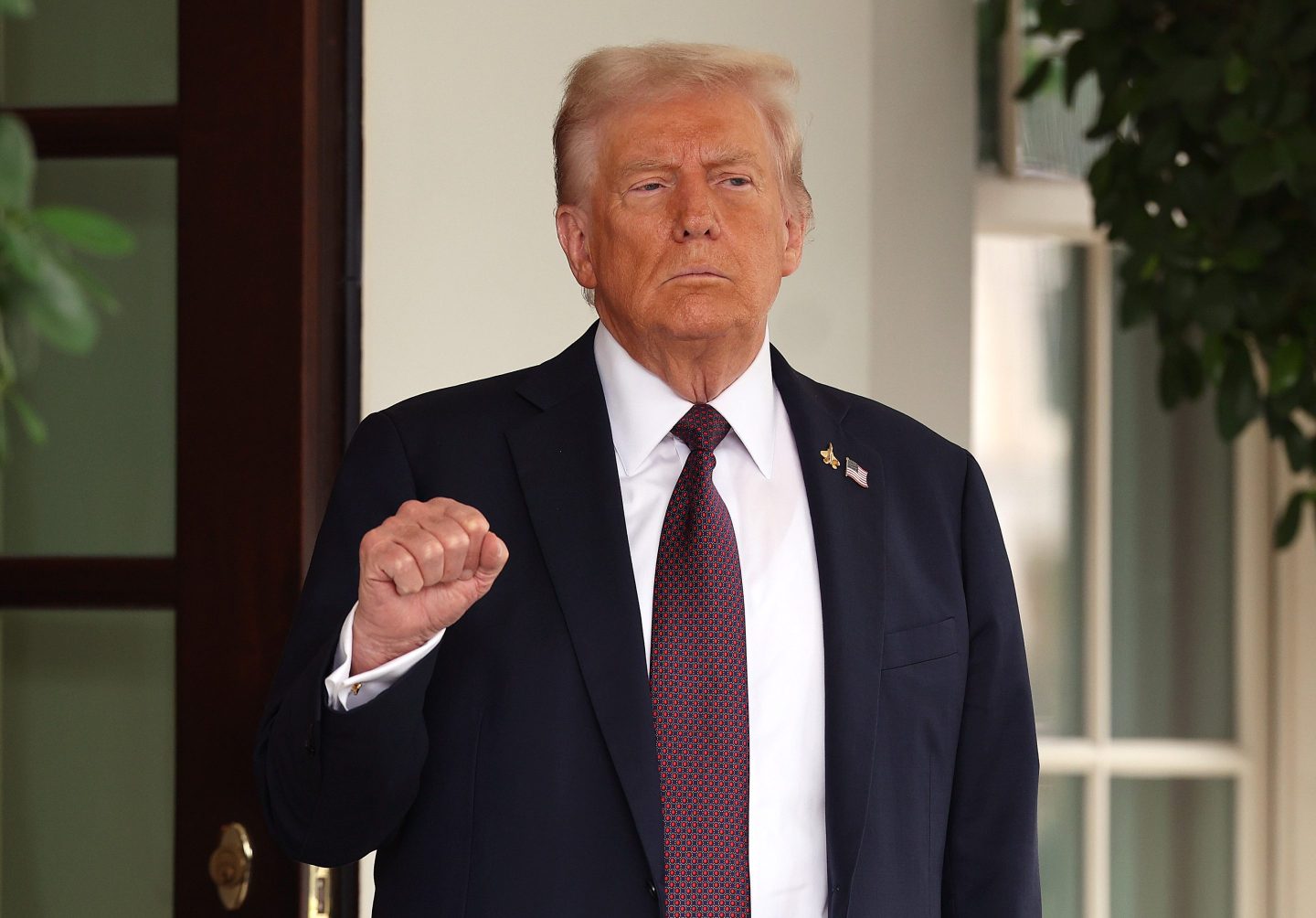
Is Donald Trump raising taxes through his tariffs?Win McNamee/Getty Images
Add Fortune on Google for similar content.

President Trump’s tariffs, highly touted as a lever to boost American industry, are now emerging as a substantial tax on business—putting pressure on corporate profits, labor markets, and prices, according to Morgan Stanley’s chief economist. Michael Gapen draws a striking conclusion in his Monday research note, US Economics Weekly: “Tariffs have been a tax on capital, so far.”

Recommended Video

In the second quarter of 2025, U.S. corporations largely absorbed the escalating cost of tariffs, according to Gapen’s team, offsetting higher nonlabor costs with reductions in labor costs and profitability rather than passing them directly on to consumers. This is markedly different from the trends observed in 2021 and 2022, a phenomenon called “greedflation” by some, when businesses responded to rising costs by raising prices more than those costs, which led to boosted profits.

Since returning to office, President Trump has expanded “reciprocal tariffs” across major U.S. trading partners, collecting a record $25 billion in July alone—triple the amount from late last year. The Committee for a Responsible Federal Budget (CRFB) reports tariffs are on track to inject $1.3 trillion in new revenue by the end of Trump’s current term and as much as $2.8 trillion through 2034. For fiscal 2025, the take from tariffs has already doubled its typical share, accounting for 2.7% of all federal revenue with projections as high as 5% if current policies persist. This is functioning to date as a tax on capital, Gapen’s team concludes.

The mystery of the 2025 economy

Gapen is wrestling with a question that has been plaguing many other economists, about how 2025’s strong economy doesn’t feel like it, which he calls “the mystery between solid spending data and weak hiring.” He believes it “can be explained by a corporate sector that absorbed the initial cost of tariffs and reduced unit labor costs and profitability rather than raising prices.” Yale management professor Jeff Sonnenfeld wrote for Fortune that CEOs have been privately grumbling about this dynamic for months, concluding that President Trump’s tariffs policy is simply “bad for business.”

Gapen’s thesis, if correct, would also go a long way to explaining the anemic hiring market for entry-level workers and the “job-hugging” phenomenon from the worker perspective, or “hoarding workers” from the company perspective. In short, with the stock market roaring to many record highs off AI exuberance, the guts of the economy have been experiencing some major indigestion brought about by a radically different trade policy. It’s what Federal Reserve Chair Jerome Powell calls a “low-hire, low-fire” economy, and Gapen argues it’s because there’s been a giant, secret new corporate tax put in place by President Trump. But, the economist further argues, it’s not likely to function as a tax over the long haul.

Businesses squeezed, hiring cools

Data shows that, for now, firms have reduced hiring to manage the shock of higher costs from tariffs. Surveys indicate that while roughly two-thirds of businesses affected by tariffs have not yet raised prices, many plan to do so, foreshadowing inflationary pressures in the coming months. The diminished profitability is a direct byproduct of increased unit nonlabor costs—specifically, taxes on production and imports, which include tariffs paid by the nonfinancial sector.

This absorption of tariff expenses has contributed to a puzzling economic divergence: Solid growth in consumer spending actively contrasts with a distinct slowdown in employment growth. Without rapidly rising goods prices, household purchasing power has been maintained, but weaker labor markets have become more visible.

Whereas companies have so far shielded consumers from the brunt of these costs, the threat remains that as the pass-through process continues, price increases will follow, putting further pressure on both households and businesses. Academic studies reject the notion that exporters are significantly absorbing U.S. tariffs through price discounting, as evidenced by largely flat or higher import price indexes from major trading partners like the EU, U.K., Japan, and ASEAN economies. Instead, U.S. companies are bearing the brunt, and the effective tariff rate has spiked—reaching 16% after recent rounds of increases, with customs and excise deposits at the Treasury climbing to record levels.

Historical contrast and future risks

The contrast to earlier years is stark. In 2021 and 2022, when supply chains were disrupted and production costs soared, businesses responded by raising prices and, paradoxically, improving profitability. Now, however, the playbook has changed: Firms are managing costs internally, accepting lower profit margins, and avoiding immediate price hikes.

Looking ahead, Morgan Stanley analysts caution that if companies are not able or willing to pass more tariff costs on to consumers, profit warnings, greater cost control, and even corrections in equity markets could follow. This is a central concern for the Federal Reserve, as the potential for increased downside risk to the labor market grows. Alternatively, if unseen productivity growth emerges—potentially driven by efficiency measures and AI adoption—profitability could rebound without weakening labor markets, sustaining consumer purchasing power.

Inflationary ripples loom

Survey data underscores that tariff pass-through is not yet complete. A Federal Reserve Bank of Richmond poll found about 25% of affected firms intend to raise prices, while between 40% and 50% have already done so and plan further increases. Recent months have brought observable upticks in consumer price inflation for goods exposed to tariffs, and projections by leading analysts suggest annualized core consumer price inflation will approach 3.7% by the end of 2025.

On the ground, the effects are regressive. The Yale Budget Lab estimates tariffs cost families in the second-lowest income tier some $1,700 a year, jumping to $8,100 for those in the top income decile. National-security experts also warn higher costs for hardware and components could dent America’s military readiness, making it “more expensive to meet national defense requirements,” according to the Council on Foreign Relations.

President Trump’s tariff policy—once framed as a pathway to industrial revival—is, in the immediate term, raising nonlabor costs and squeezing margins for American businesses. With the effective tariff rate near record highs, firms are forced into tough decisions about pricing, employment, and profitability. Whether these pressures will eventually cascade into the broader economy through higher consumer prices or persist as a drag on business investment and hiring remains an open question. Fortune senior editor-at-large Shawn Tully and Steve Hanke, the Johns Hopkins economist known as “the money doctor” for his globe-trotting adventures slaying hyperinflation, warned in August that Trump’s tariffs were really a tax in disguise all along: “A giant national sales tax that will hobble U.S. economic growth.”

For this story, Fortune used generative AI to help with an initial draft. An editor verified the accuracy of the information before publishing. 

Subscribe to Fortune Gulf Brief. Every Tuesday, this new newsletter delivers clear-eyed, authoritative intelligence on the deals, decisions, policies, and power shifts shaping one of the world’s most consequential regions, written for the people who need to act on it. Sign up here.
About the Author
Nick Lichtenberg
By Nick LichtenbergBusiness Editor
LinkedIn icon

Nick Lichtenberg is business editor and was formerly Fortune's executive editor of global news.

See full bioRight Arrow Button Icon
Add Fortune on Google for similar content.

Latest in Economy

Finance
Lorem ipsum dolor sit amet, consectetur adipiscing elit, sed do eiusmod tempor incididunt ut labore et dolore magna aliqua. Ut enim ad minim veniam
By Fortune Editors
October 20, 2025
Finance
Lorem ipsum dolor sit amet, consectetur adipiscing elit, sed do eiusmod tempor incididunt ut labore et dolore magna aliqua. Ut enim ad minim veniam
By Fortune Editors
October 20, 2025
Finance
Lorem ipsum dolor sit amet, consectetur adipiscing elit, sed do eiusmod tempor incididunt ut labore et dolore magna aliqua. Ut enim ad minim veniam
By Fortune Editors
October 20, 2025
Finance
Lorem ipsum dolor sit amet, consectetur adipiscing elit, sed do eiusmod tempor incididunt ut labore et dolore magna aliqua. Ut enim ad minim veniam
By Fortune Editors
October 20, 2025
Finance
Lorem ipsum dolor sit amet, consectetur adipiscing elit, sed do eiusmod tempor incididunt ut labore et dolore magna aliqua. Ut enim ad minim veniam
By Fortune Editors
October 20, 2025
Finance
Lorem ipsum dolor sit amet, consectetur adipiscing elit, sed do eiusmod tempor incididunt ut labore et dolore magna aliqua. Ut enim ad minim veniam
By Fortune Editors
October 20, 2025

Most Popular

Finance
Lorem ipsum dolor sit amet, consectetur adipiscing elit, sed do eiusmod tempor incididunt ut labore et dolore magna aliqua. Ut enim ad minim veniam
By Fortune Editors
October 20, 2025
Finance
Lorem ipsum dolor sit amet, consectetur adipiscing elit, sed do eiusmod tempor incididunt ut labore et dolore magna aliqua. Ut enim ad minim veniam
By Fortune Editors
October 20, 2025
Finance
Lorem ipsum dolor sit amet, consectetur adipiscing elit, sed do eiusmod tempor incididunt ut labore et dolore magna aliqua. Ut enim ad minim veniam
By Fortune Editors
October 20, 2025
Finance
Lorem ipsum dolor sit amet, consectetur adipiscing elit, sed do eiusmod tempor incididunt ut labore et dolore magna aliqua. Ut enim ad minim veniam
By Fortune Editors
October 20, 2025
Finance
Lorem ipsum dolor sit amet, consectetur adipiscing elit, sed do eiusmod tempor incididunt ut labore et dolore magna aliqua. Ut enim ad minim veniam
By Fortune Editors
October 20, 2025
Finance
Lorem ipsum dolor sit amet, consectetur adipiscing elit, sed do eiusmod tempor incididunt ut labore et dolore magna aliqua. Ut enim ad minim veniam
By Fortune Editors
October 20, 2025
Fortune Secondary Logo
Rankings
  • 100 Best Companies
  • Fortune 500
  • Global 500
  • Fortune 500 Europe
  • Most Powerful Women
  • World's Most Admired Companies
  • See All Rankings
  • Lists Calendar
Sections
  • Finance
  • Fortune Crypto
  • Features
  • Leadership
  • Health
  • Commentary
  • Success
  • Retail
  • Mpw
  • Tech
  • Lifestyle
  • CEO Initiative
  • Asia
  • Politics
  • Conferences
  • Europe
  • Newsletters
  • Personal Finance
  • Environment
  • Magazine
  • Education
Customer Support
  • Frequently Asked Questions
  • Customer Service Portal
  • Privacy Policy
  • Terms Of Use
  • Single Issues For Purchase
  • International Print
Commercial Services
  • Advertising
  • Fortune Brand Studio
  • Fortune Analytics
  • Fortune Conferences
  • Business Development
  • Group Subscriptions
About Us
  • About Us
  • Press Center
  • Work At Fortune
  • Terms And Conditions
  • Site Map
  • About Us
  • Press Center
  • Work At Fortune
  • Terms And Conditions
  • Site Map
  • Facebook icon
  • Twitter icon
  • LinkedIn icon
  • Instagram icon
  • Pinterest icon

Latest in Economy

White man glasses gray hair smiling.
PoliticsBernie Sanders
The man who ran Bernie’s campaign says Democrats are still making the same mistakes with Democratic Socialists, and they should laud Mamdani’s win
By Catherina GioinoJuly 6, 2026
2 hours ago
t
CommentaryParenting
Babylist CEO: The Trump Accounts gold rush is overlooking moms
By Natalie GordonJuly 6, 2026
5 hours ago
The yen is quietly crashing as Japan’s debt crisis bleeds into currency markets, and efforts to halt the slide are ‘doomed to fail,’ economist says
EconomyCurrency
The yen is quietly crashing as Japan’s debt crisis bleeds into currency markets, and efforts to halt the slide are ‘doomed to fail,’ economist says
By Jason MaJuly 6, 2026
7 hours ago
Billionaire entrepreneur Mark Cuban
SuccessWealth
Billionaire Mark Cuban says it’s ‘embarrassing’ to not pay employees well—and a $20 minimum wage should be standard
By Emma BurleighJuly 6, 2026
8 hours ago
Torsten Slok holds his hands apart as he speaks on stage.
AIProductivity
Top economist says AI just hasn’t delivered on the productivity hype—and it means a ‘painful repricing’ of markets is very possible
By Sasha RogelbergJuly 6, 2026
11 hours ago
r
EconomyGen Z
Gen Z was ‘jaded about employment before we ever entered the workforce’—now psychologists say the stare has hardened into something worse
By Nick LichtenbergJuly 6, 2026
17 hours ago

Most Popular

Shark Tank's Kevin O'Leary says if he were 25 today, he'd chase these two booming opportunities in the world of AI
AI
Shark Tank's Kevin O'Leary says if he were 25 today, he'd chase these two booming opportunities in the world of AI
By Marco Quiroz-GutierrezJuly 5, 2026
1 day ago
Even as Elon Musk calls philanthropy ‘very hard,’ everyday Americans gave a record $617 billion—despite feeling the squeeze over the cost of living
Success
Even as Elon Musk calls philanthropy ‘very hard,’ everyday Americans gave a record $617 billion—despite feeling the squeeze over the cost of living
By Preston ForeJuly 4, 2026
3 days ago
The stock market is about to suffer a 'snapback' and will lose much of this year's gains as 'speculation is hitting extreme levels,' BofA warns
Investing
The stock market is about to suffer a 'snapback' and will lose much of this year's gains as 'speculation is hitting extreme levels,' BofA warns
By Jason MaJuly 5, 2026
1 day ago
Egg companies made $1.22 billion in profit off a $6 carton — now they’re buying their way out of a price-fixing case with 53 million donated eggs
Law
Egg companies made $1.22 billion in profit off a $6 carton — now they’re buying their way out of a price-fixing case with 53 million donated eggs
By Wyatte Grantham-Philips and The Associated PressJuly 2, 2026
4 days ago
Gen Z was 'jaded about employment before we ever entered the workforce'—now psychologists say the stare has hardened into something worse
Economy
Gen Z was 'jaded about employment before we ever entered the workforce'—now psychologists say the stare has hardened into something worse
By Nick LichtenbergJuly 6, 2026
17 hours ago
Meet the Zillennials: The luckiest micro-generation in the workforce, born between 1993 and 1998
AI
Meet the Zillennials: The luckiest micro-generation in the workforce, born between 1993 and 1998
By Nick LichtenbergJuly 3, 2026
4 days ago

© 2026 Fortune Media IP Limited. All Rights Reserved. Use of this site constitutes acceptance of our Terms of Use and Privacy Policy | CA Notice at Collection and Privacy Notice | Do Not Sell/Share My Personal Information
FORTUNE is a trademark of Fortune Media IP Limited, registered in the U.S. and other countries. FORTUNE may receive compensation for some links to products and services on this website. Offers may be subject to change without notice.