America foreclosed on Gen Z once. The risk now is that Gen Z finishes the job.
I wrote a piece last year that went semi-viral about the “Gen Z stare,” that labeling of young-adult awkwardness that goes far beyond the “millennial pause” in stereotyping a generation. But this interaction made me think it’s something else; it looks like the Gen Z sneer. This wasn’t the freeze response that researchers spent much of 2025 explaining (and excusing) but a worldview expressing itself casually, in the way that formed worldviews do: without effort, without doubt, and without interest in what you might say back.
I saw it in the discourse around Disclosure Day, Steven Spielberg’s much-hyped UFO opus, where younger audiences tagged the film “boomer-coded” and walked away. The film’s sincerity — the quality critics praised most — was met with a sneer rather than a response.
The stare was earned
Many Gen Zers’ formative years fell during the Great Recession, a period marked by a “jobless recovery” and a housing bust that led to a nationwide wave of foreclosures. The oldest Gen Zers were between 8 and 13 years old during the 2008-2010 foreclosure crisis, which displaced 3.8 million American families at its peak. They lived the experience of watching parents open an envelope, changing schools mid-year, the house that wasn’t there anymore. A generation was taught that the foundational promise of American middle-class life — work hard, the system holds — was simply revocable if you didn’t have enough cash in the bank.
The economic conditions they inherited as adults have only confirmed that lesson in the years since. Starter home prices are up 87% since 2019. The average new car costs $49,000, up 27% from 2020. A SignalFire analysis of hiring data from 2019 to 2024 found that across all sectors, entry-level hiring had fallen more than 50%, even as mid- and senior-level hiring recovered. Over 70% say “survival spending” is their financial norm and that wealth is genuinely out of reach. Fifty-seven percent believe their generation was set up for financial failure. Only 32% think the American Dream remains attainable.
Kaelyn, 24, was born in 2002 and wrote to Fortune after reading our coverage. She and her partner did everything the system asked: skipped college, obtained GEDs, lived with family until they were 21, saved aggressively, and eventually bought a home — a transaction she describes as arriving “with extreme caveats.”
She is now an administrator at a high-volume tax firm, working toward an enrolled agent certification. She is “one of a very fortunate and rare few” to beat the odds, she told me. And yet her read on the system is unsparing. “Everywhere I turn — healthcare, employment, even housing — those who provide the ‘opportunities’ are exploitative and slowly but surely drilling further into a broken system.” She said she’s not alone: “This is a common mentality I’ve seen among my age group. We were jaded about employment before we ever entered the workforce.”
Beyond jaded, Kaelyn added, Gen Z is simply “angry.” She grew up watching her parents “struggle through jobs that sent them home exhausted” and only having money for dinners of ramen noodles or “orzo with onions.”
That anger has a clinical name. The World Economic Forum calls it financial nihilism — the conclusion that the system no longer rewards prudence, driving a cohort toward crypto bets, prediction markets, and raided retirement accounts.
The empirical record supports them. Dartmouth economist David Blanchflower and UCL’s Alex Bryson have spent the last two years documenting what they call the disappearance of the U-curve — the long-established pattern by which happiness dipped in middle age and recovered in later life. Their findings, some previously covered in Fortune, draw on a deep dataset spanning dozens of countries to confirm that ill-being is no longer hump-shaped in age — the young are now the most miserable cohort globally. In subsequent NBER working papers under review, they sharpen the finding: the deterioration is concentrated specifically among young workers, and the trend began not with COVID but in 2010, the year the foreclosure crisis ended.
The stare, in this context, was the correct emotional response to an ambush. A generation that arrived at adulthood to find the door locked and, instead of smiling and saying thank you, froze.
Kaelyn went out of her way to bring up the Gen Z stare and to blame a broken business and consumer culture for making her generation the “guinea pigs” for social media “before anyone bothered to consider its long-term effects.” She offered some empathy for millennials, who “were screwed by [the economy] the second they hit the ground.” She said she thinks millennials seem to be “burnt out” — it was unclear whether she was referencing Anne Helen Petersen’s famous BuzzFeed essay on the burnout generation — but that Gen Z is not apathetic, lazy or stupid — it’s just really “angry.”
The sneer is something different
Foreclosure has a psychological literature, it turns out. James Marcia, building on Erik Erikson, identified defensive foreclosure as the preemptive closing off of identity exploration in response to anxiety — adopting a fixed identity defined primarily by refusal, shutting the process down before it can hurt you. The person who forecloses defensively doesn’t go through the crisis of questioning and exploring. They’ve already decided. To paraphrase the Gin Blossoms’ line from “Hey Jealousy,” if you don’t expect too much, then you won’t be let down.
Calling something “boomer-coded” is defensive foreclosure in action, a categorical ruling issued without engagement, doors shut before entry.
The corporate sector is confirming that the gates are shutting on all comers, seemingly confirming the worst-baked-in fears. Sixty percent of companies report letting Gen Z hires go within the first few months in 2026, citing a lack of motivation — and Gen Z has largely responded not with reflection but with viral mockery of the employers. Fourteen-and-a-half percent of Gen Z describe themselves as ideologically “extreme,” compared to 2.7% of Millennials at the same age. Eighteen percent say they never trust the government, more than double the Millennial rate. More than 50% of Gen Z workers say their own social skills have declined — but where early commentary framed this as a wound, a significant cohort has reframed it as a posture.
The expert class bears responsibility for this trajectory. When the Gen Z stare went viral in mid-2025, the institutional response was almost uniformly defensive. Researchers advised “generational empathy” as some called the phenomenon exaggerated. It didn’t see a generation at risk of foreclosing on itself. By reflexively framing withdrawal as resistance rather than a deficit, the expert class helped remove the mechanism that might actually have helped. Even worse, they implicitly told a generation that their contempt was justified — and even now they are still expressing surprise as it deepens.
They were not the first
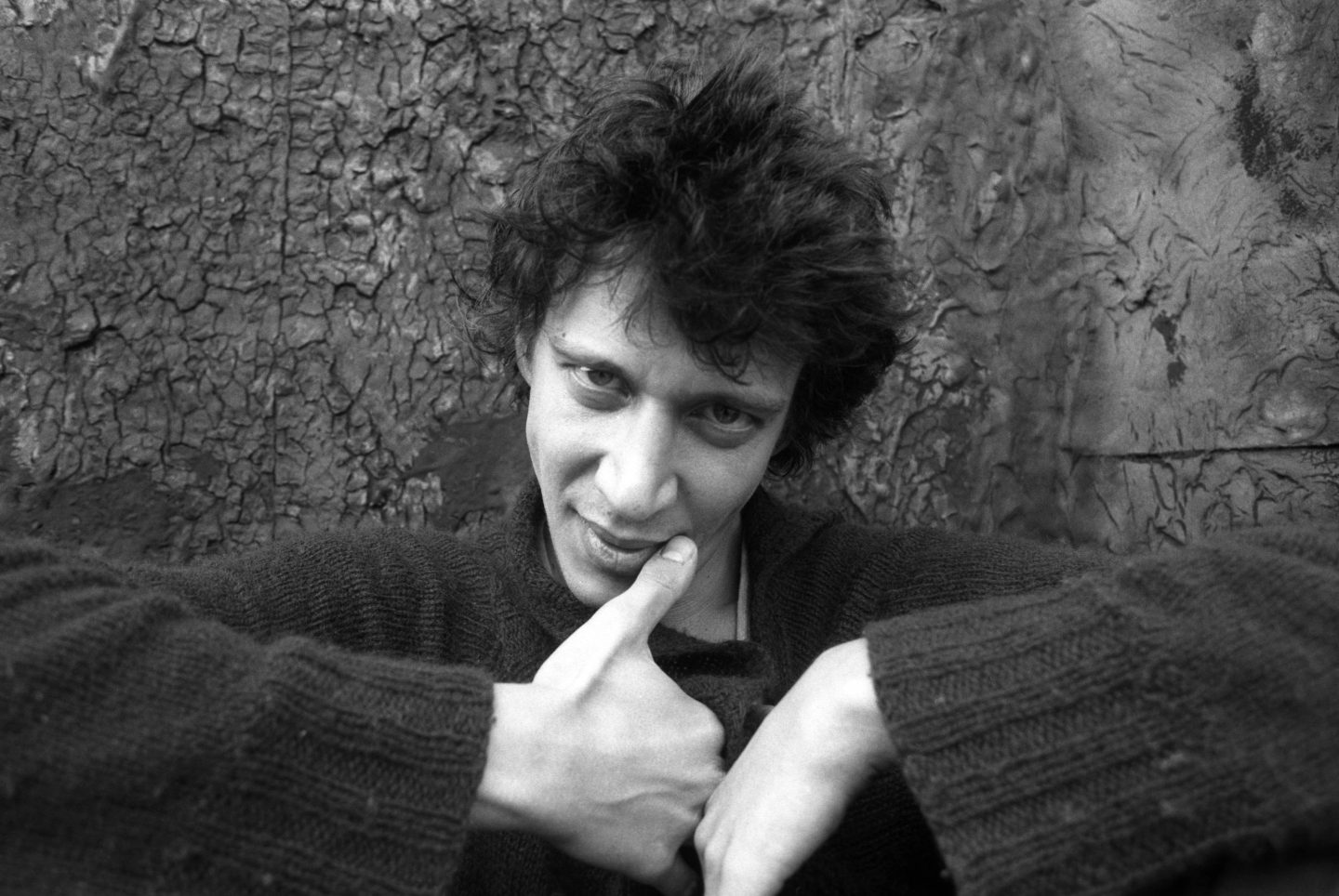
There once was a generation that called itself “blank” and “vacant,” that seethed with anger and contempt for an economy that delivered stagnancy and inflation instead of growth and prosperity: the punk generation of the late 1970s. Nobody sneered at authority and received wisdom more than Johnny Rotten.
But Richard Hell, the long-time East Villager who sang of a “Blank Generation,” was explicit that his lyrics were about possibilities — the blank as a space to write on, a refusal of the previous generation’s definitions rather than a refusal of meaning itself. The punk blank was a provocation that demanded a response. Defensive foreclosure is a termination of the exchange.
Kenzie, a Gen Z corrections officer, wrote to Fortune about navigating “a world that makes all the old solutions feel like a carrot being dangled in front of our faces.” She noted that her profession is one of the least forgiving environments for disengagement — team cohesion in a corrections facility is not a corporate talking point but a physical necessity.
But paradoxically, the jadedness of the world is exactly why finding a sense of belonging matters so much, she argued: “When I felt like I was truly a part of something and mattered to my team, that we were making a difference in our workplace and world, I worked much harder. I found reasons to keep pushing on in the hard times because I knew someone had my back.”
What Kenzie describes — the discovery that belonging generates effort, that trust compounds, that earnest investment in an institution can be returned — is precisely what defensive foreclosure costs. Not in some abstract sense, but concretely: the mentorship that stops when the mentor reads incuriosity as contempt, the promotion that goes elsewhere when the manager senses the employee has already mentally checked out, or even the patron at the coffee shop who would rather not be stared back at when making their regular order.
Here is the cruel irony the data reveal: the economic conditions that produced this psychology are slowly beginning to shift. Gen Z’s homeownership rate is already tracking ahead of Millennials at the same age — buying smaller homes in lower-cost metros, adapting, finding ways in. The $84 trillion Great Wealth Transfer is underway. The starter economy, however broken, is not permanently sealed.
Returning to Blanchflower and Bryson’s troubling findings, the data show the onset of despair among young workers in 2010, meaning that the psychology of foreclosure has been hardening for 15 years, across conditions both terrible and improved, through booms and contractions alike. It is no longer purely a response to circumstances, but a lens.
The door is beginning to open, but the generation that was trained not to approach it stands at a distance, arms folded, having already foreclosed their future options.
Kaelyn put it better than any researcher has. “We gave up on this game before we even really understood what it was,” she wrote. “Because it was dead well before we arrived.”
The economy foreclosed on Gen Z first. The risk now is that Gen Z finishes the job and forecloses on itself.