• Home
  • Latest
  • Fortune 500
  • Finance
  • Tech
  • Leadership
  • Lifestyle
  • Rankings
  • Multimedia

Trendingnow

1

Even as Elon Musk calls philanthropy ‘very hard,’ everyday Americans gave a record $617 billion—despite feeling the squeeze over the cost of living

2

Egg companies made $1.22 billion in profit off a $6 carton — now they’re buying their way out of a price-fixing case with 53 million donated eggs

3

Meet the Zillennials: The luckiest micro-generation in the workforce, born between 1993 and 1998

1

Even as Elon Musk calls philanthropy ‘very hard,’ everyday Americans gave a record $617 billion—despite feeling the squeeze over the cost of living

2

Egg companies made $1.22 billion in profit off a $6 carton — now they’re buying their way out of a price-fixing case with 53 million donated eggs

3

Meet the Zillennials: The luckiest micro-generation in the workforce, born between 1993 and 1998
CommentaryMalaria

Malaria isn’t just a health crisis — it’s an economic imperative

By
Martin Edlund
Martin Edlund
and
Florizelle Liser
Florizelle Liser
Down Arrow Button Icon
By
Martin Edlund
Martin Edlund
and
Florizelle Liser
Florizelle Liser
Down Arrow Button Icon
November 7, 2025, 9:05 AM ET
Martin Edlund is CEO of Malaria No More. Florizelle Liser is President and CEO of the Corporate Council on Africa.
malaria no more
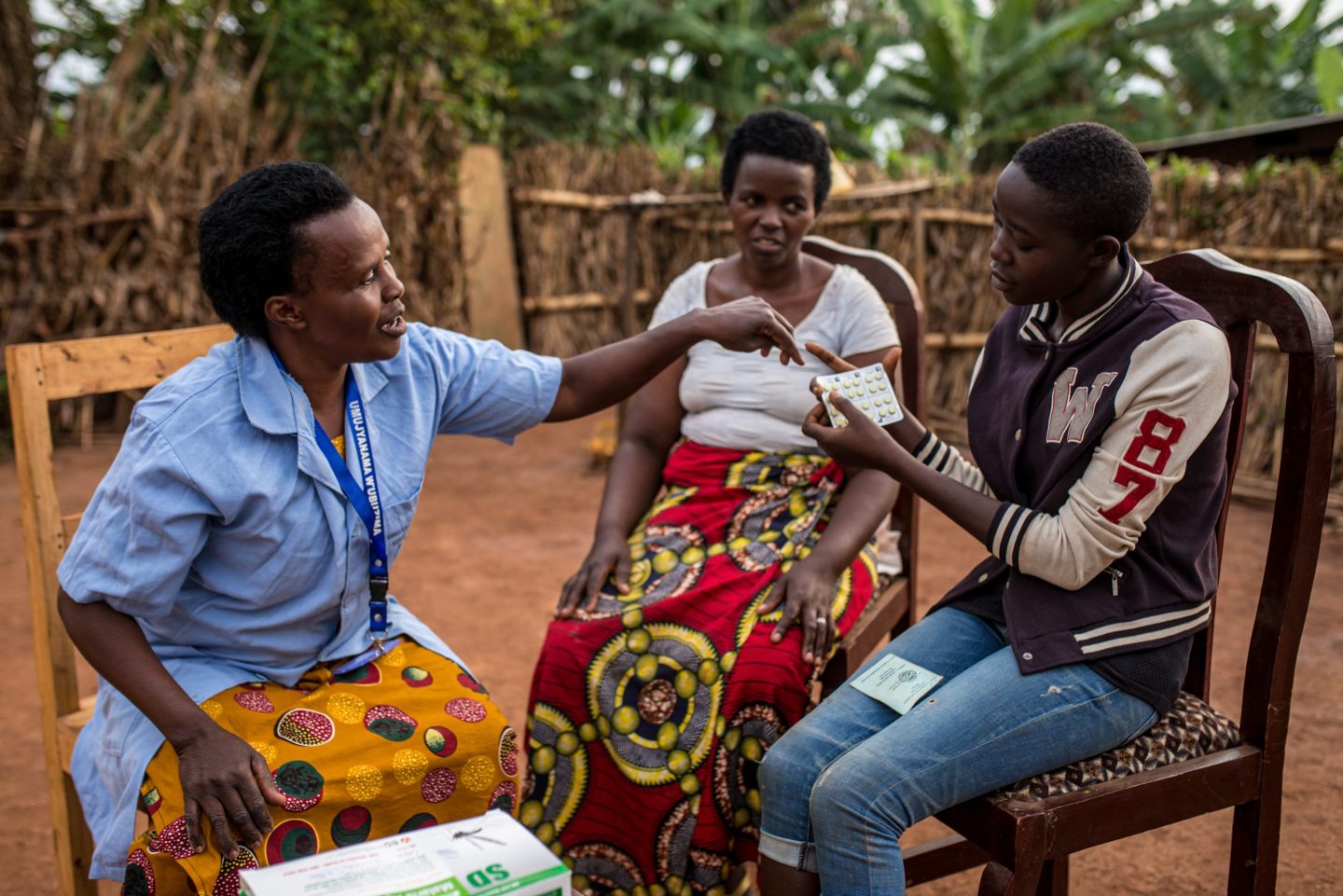
Malaria can't be ignored.courtesy of Malaria No More
Add Fortune on Google for similar content.

Most Americans will never experience malaria. That is a privilege. Even though malaria ranks among the most debilitating and deadly diseases globally, few Americans today have encountered it firsthand or know someone who has.

Recommended Video

Distance can lull us into thinking malaria is someone else’s problem. But it isn’t. Its ripple effects are felt far beyond individual lives — across economies, markets, and global security. Recent analysis underscores why this matters, and why the United States must remain invested in this fight. 

Today, Africa accounts for roughly 94% of all malaria cases — some 246 million people a year. Malaria’s disruption isn’t just measured in cases or deaths; it’s measured in corporate revenues and GDP drag. More than three quarters of sub-Saharan African businesses say malaria impacts their operations, and nearly 40% call the impact serious. Sick workers miss days or weeks of work, return less productive, and erode company performance. Talent drains away. Healthcare costs spike. Public funds shift from infrastructure and innovation to managing malaria outbreaks. Collectively, malaria costs the continent an estimated US$12 billion in GDP every year.

These losses don’t stay in Africa. They hit American companies, too. U.S. firms have faced lost production, costly evacuations, and elevated insurance and risk premiums. Chevron once reported 1,000 lost workdays annually in Angola due to malaria. BHP Billiton’s operations in Mozambique logged 6,000 malaria cases in just two years, resulting in $2.7 million in costs and 13 fatalities. For multinationals, malaria is more than a health problem, it affects the bottom line.

But here is the good news: U.S. investment in malaria control pays off. From 2010 to 2023, the U.S. contributed US$15.6 billion, about 37% of total global malaria funding. That investment supported GDP gains worth US$90.3 billion in partner countries. That’s a $5.80 return on every $1 spent. Few investment portfolios can match that. Malaria control programs have a strong record of success in ending endemic infection rates in Asia and the Middle East (as well as the U.S., where malaria control sparked the creation of the CDC). And as African economies grow healthier and more dynamic, they unlock new demand, including as much as US$1.5 billion in additional U.S. exports by 2030.

This isn’t charity. It’s smart economics. Africa today represents roughly $3 trillion in combined consumer and business spending. By 2030, Brookings projects that will more than double to $6.7 trillion and exceed $16 trillion by 2050 as Africa’s population doubles. Already one of the largest consumer markets and sources of labor in the world, Africa will be home to one in four people globally by 2050 and will represent the youngest populations globally, making the African market a critical part of American companies’ long-term commercial strategies. Healthier populations are more productive, more stable, and more investable. That’s good for African nations, good for American companies, and good for the global economy. Strong health systems also serve as a first line of defense against pandemics, reducing risk across global supply chains.

The State Department’s new America First Global Health Strategy makes this point explicit, prioritizing market access and urging greater use of U.S.-led corporate and research innovations to tackle global health challenges and achieve the strongest possible outcomes.

The case is clear: U.S. engagement has been good for business, but the work isn’t finished. Pulling back now would risk a resurgence of disease that would weaken America’s health security while undercutting economic opportunities for U.S. companies. 

Malaria is one of humanity’s oldest and deadliest killers, but with sustained U.S. leadership, we can end it for good. That means doing three things, now.

First, lock in predictable financing. Multi-year commitments from donor governments, full replenishments of the Global Fund and Gavi, and new private-sector investment will keep lifesaving programs running and protect decades of progress.

Second, double down on what works. Long-lasting insecticide-treated nets, indoor spraying, testing, treatment, and seasonal prevention have already saved millions of lives. Expanding these proven tools to every community will drive malaria to historic lows.

Third, unleash innovation. The first malaria vaccines mark a turning point, but they’re only the beginning. Better diagnostics, new drugs, spatial repellents, mosquito technologies, and data innovations – many pioneered by American companies – could finish the job.

The path is clear. With strong, sustained U.S. funding and focus, we can save more lives, strengthen economies, and protect global stability — all while advancing American innovation and influence.

Ending malaria isn’t just the right thing to do, it’s one of the savviest investments America can make.

The opinions expressed in Fortune.com commentary pieces are solely the views of their authors and do not necessarily reflect the opinions and beliefs of Fortune.

About the Authors
By Martin Edlund
See full bioRight Arrow Button Icon
By Florizelle Liser
See full bioRight Arrow Button Icon
Add Fortune on Google for similar content.

Latest in Commentary

Finance
Lorem ipsum dolor sit amet, consectetur adipiscing elit, sed do eiusmod tempor incididunt ut labore et dolore magna aliqua. Ut enim ad minim veniam
By Fortune Editors
October 20, 2025
Finance
Lorem ipsum dolor sit amet, consectetur adipiscing elit, sed do eiusmod tempor incididunt ut labore et dolore magna aliqua. Ut enim ad minim veniam
By Fortune Editors
October 20, 2025
Finance
Lorem ipsum dolor sit amet, consectetur adipiscing elit, sed do eiusmod tempor incididunt ut labore et dolore magna aliqua. Ut enim ad minim veniam
By Fortune Editors
October 20, 2025
Finance
Lorem ipsum dolor sit amet, consectetur adipiscing elit, sed do eiusmod tempor incididunt ut labore et dolore magna aliqua. Ut enim ad minim veniam
By Fortune Editors
October 20, 2025
Finance
Lorem ipsum dolor sit amet, consectetur adipiscing elit, sed do eiusmod tempor incididunt ut labore et dolore magna aliqua. Ut enim ad minim veniam
By Fortune Editors
October 20, 2025
Finance
Lorem ipsum dolor sit amet, consectetur adipiscing elit, sed do eiusmod tempor incididunt ut labore et dolore magna aliqua. Ut enim ad minim veniam
By Fortune Editors
October 20, 2025

Most Popular

Finance
Lorem ipsum dolor sit amet, consectetur adipiscing elit, sed do eiusmod tempor incididunt ut labore et dolore magna aliqua. Ut enim ad minim veniam
By Fortune Editors
October 20, 2025
Finance
Lorem ipsum dolor sit amet, consectetur adipiscing elit, sed do eiusmod tempor incididunt ut labore et dolore magna aliqua. Ut enim ad minim veniam
By Fortune Editors
October 20, 2025
Finance
Lorem ipsum dolor sit amet, consectetur adipiscing elit, sed do eiusmod tempor incididunt ut labore et dolore magna aliqua. Ut enim ad minim veniam
By Fortune Editors
October 20, 2025
Finance
Lorem ipsum dolor sit amet, consectetur adipiscing elit, sed do eiusmod tempor incididunt ut labore et dolore magna aliqua. Ut enim ad minim veniam
By Fortune Editors
October 20, 2025
Finance
Lorem ipsum dolor sit amet, consectetur adipiscing elit, sed do eiusmod tempor incididunt ut labore et dolore magna aliqua. Ut enim ad minim veniam
By Fortune Editors
October 20, 2025
Finance
Lorem ipsum dolor sit amet, consectetur adipiscing elit, sed do eiusmod tempor incididunt ut labore et dolore magna aliqua. Ut enim ad minim veniam
By Fortune Editors
October 20, 2025
Fortune Secondary Logo
Rankings
  • 100 Best Companies
  • Fortune 500
  • Global 500
  • Fortune 500 Europe
  • Most Powerful Women
  • World's Most Admired Companies
  • See All Rankings
  • Lists Calendar
Sections
  • Finance
  • Fortune Crypto
  • Features
  • Leadership
  • Health
  • Commentary
  • Success
  • Retail
  • Mpw
  • Tech
  • Lifestyle
  • CEO Initiative
  • Asia
  • Politics
  • Conferences
  • Europe
  • Newsletters
  • Personal Finance
  • Environment
  • Magazine
  • Education
Customer Support
  • Frequently Asked Questions
  • Customer Service Portal
  • Privacy Policy
  • Terms Of Use
  • Single Issues For Purchase
  • International Print
Commercial Services
  • Advertising
  • Fortune Brand Studio
  • Fortune Analytics
  • Fortune Conferences
  • Business Development
  • Group Subscriptions
About Us
  • About Us
  • Press Center
  • Work At Fortune
  • Terms And Conditions
  • Site Map
  • About Us
  • Press Center
  • Work At Fortune
  • Terms And Conditions
  • Site Map
  • Facebook icon
  • Twitter icon
  • LinkedIn icon
  • Instagram icon
  • Pinterest icon

Latest in Commentary

k
Commentary250 Years of Innovation
Media leadership unity in defying Trump’s assault on free speech: standing tall against historic comparisons
By Jeffrey Sonnenfeld, Jeff Bewkes, Kay Koplovitz, Tom Glocer and Marvin KalbJuly 4, 2026
18 hours ago
ds
CommentarySoftware
I argued with the father of open source for 2 years. Now the AI fight is the same — only bigger
By David SiegelJuly 3, 2026
2 days ago
ashok
Commentary250 Years of Innovation
The greatest startup in history: What we can learn from America’s founders at today’s AI frontier
By Ashok N. SrivastavaJuly 3, 2026
2 days ago
2
Commentary250 Years of Innovation
America’s secret weapon isn’t just innovation — It’s the freedom to fail
By Keith KrachJuly 3, 2026
2 days ago
rn
CommentaryCryptocurrency
Former Iran director at NSC: Crypto legislation is a ticket to sanctions evasion
By Richard NephewJuly 2, 2026
3 days ago
m
Commentary250 Years of Innovation
McKinsey chairs: Building a more resilient industrial base may require $2 trillion in investment
By Eric Kutcher and Shubham SinghalJuly 2, 2026
3 days ago

Most Popular

Even as Elon Musk calls philanthropy ‘very hard,’ everyday Americans gave a record $617 billion—despite feeling the squeeze over the cost of living
Success
Even as Elon Musk calls philanthropy ‘very hard,’ everyday Americans gave a record $617 billion—despite feeling the squeeze over the cost of living
By Preston ForeJuly 4, 2026
22 hours ago
Egg companies made $1.22 billion in profit off a $6 carton — now they’re buying their way out of a price-fixing case with 53 million donated eggs
Law
Egg companies made $1.22 billion in profit off a $6 carton — now they’re buying their way out of a price-fixing case with 53 million donated eggs
By Wyatte Grantham-Philips and The Associated PressJuly 2, 2026
2 days ago
Meet the Zillennials: The luckiest micro-generation in the workforce, born between 1993 and 1998
AI
Meet the Zillennials: The luckiest micro-generation in the workforce, born between 1993 and 1998
By Nick LichtenbergJuly 3, 2026
2 days ago
Economists have found an answer to slowing cognitive decline: Avoid retiring early, study finds
Economy
Economists have found an answer to slowing cognitive decline: Avoid retiring early, study finds
By Sasha RogelbergJuly 2, 2026
3 days ago
$25 billion CEO says one-hour interviews are a waste of time—he puts candidates through six hours of tests and wants them to order wine at lunch
Success
$25 billion CEO says one-hour interviews are a waste of time—he puts candidates through six hours of tests and wants them to order wine at lunch
By Orianna Rosa RoyleJuly 3, 2026
2 days ago
Three dads started selling hats from a garage with $750—now they’ve sold $35 million worth, partnered with Gary Vee, and grown a community of fathers
Success
Three dads started selling hats from a garage with $750—now they’ve sold $35 million worth, partnered with Gary Vee, and grown a community of fathers
By Preston ForeJuly 4, 2026
19 hours ago

© 2026 Fortune Media IP Limited. All Rights Reserved. Use of this site constitutes acceptance of our Terms of Use and Privacy Policy | CA Notice at Collection and Privacy Notice | Do Not Sell/Share My Personal Information
FORTUNE is a trademark of Fortune Media IP Limited, registered in the U.S. and other countries. FORTUNE may receive compensation for some links to products and services on this website. Offers may be subject to change without notice.