• Home
  • Latest
  • Fortune 500
  • Finance
  • Tech
  • Leadership
  • Lifestyle
  • Rankings
  • Multimedia

Trendingnow

1

Egg companies made $1.22 billion in profit off a $6 carton — now they’re buying their way out of a price-fixing case with 53 million donated eggs

2

Meet the Zillennials: The luckiest micro-generation in the workforce, born between 1993 and 1998

3

Economists have found an answer to slowing cognitive decline: Avoid retiring early, study finds

1

Egg companies made $1.22 billion in profit off a $6 carton — now they’re buying their way out of a price-fixing case with 53 million donated eggs

2

Meet the Zillennials: The luckiest micro-generation in the workforce, born between 1993 and 1998

3

Economists have found an answer to slowing cognitive decline: Avoid retiring early, study finds
CommentaryEducation

Gen Z is on the fence about AI in the classroom. That’s a good thing

By
Sophia Romee
Sophia Romee
Down Arrow Button Icon
By
Sophia Romee
Sophia Romee
Down Arrow Button Icon
December 18, 2025, 9:05 AM ET
Sophia Romee is the General Manager of the GenAI Studio at the College Board
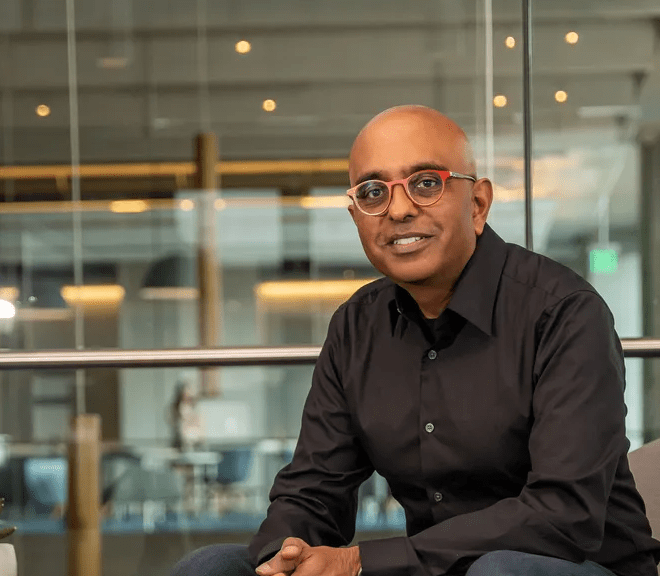
Sophia Romee is the General Manager of the GenAI Studio at the College Board.courtesy of the College Board
Add Fortune on Google for similar content.

High school students are growing up in the age of generative AI, where typing a few words can produce essays, images, and code that once took hours of effort. Educators fear that misuse of this technology could dull the very cognitive muscles that school is designed to strengthen. But new research suggests something more complicated—and hopeful. 

Recommended Video

According to newly released research, two-thirds of high schoolers agree or strongly agree that using AI too much could make them overly dependent on the technology or less intelligent. This data reinforces how many students feel about AI: they are curious – and cautious. For all the handwringing about an “AI-fueled decline in learning,” teenagers may actually understand the stakes better than adults think. What they want are more guardrails to help them use AI responsibly and fairly, and that’s where schools need to catch up, quick. 

AI use is growing faster than school policies

Between January and May of this year, the percentage of high school students who reported using generative AI tools for schoolwork increased from 79% to 84%, according to College Board’s research. Most students say they use AI for tasks that can complement learning when used thoughtfully, like brainstorming, finding research sources, or polishing their writing.

But too often, students are setting their own rules for AI usage. Nearly one in five district leaders report having no formal AI policies, while more than a quarter let individual teachers decide how to handle it in their classrooms. That patchwork approach has left many educators struggling to keep pace with their students. Leaving AI usage up to teachers’ discretion can make sense, but alarmingly more than 90% of high school principals surveyed said they worry about teacher preparedness regarding AI in education. 

School and district administrators recognize the problem. The vast majority (93%) agree that it’s valuable for students to learn how to use AI tools, 89% of principals surveyed are concerned about AI’s impact on essential learning skills, and 100% are concerned about student academic integrity. The problem is that education systems move slowly, while AI evolves overnight. 

“Teachers will have to be at the forefront of how students use it,” said Gonzalo R. Laverde, a high school teacher at Broward County Public Schools. “We must provide students guardrails, because no student wants to cheat or be dishonest; they want to be seen as intelligent, and they want to be proud of what they produce.”

Educators need guidance, not more AI tools 

For many teachers, AI has created more questions than answers. How do you assess learning when a chatbot can generate perfect prose? How do you teach writing when AI can already write? And perhaps most importantly, what learning still matters most in an AI-powered world? 

Operating within a patchwork of policies without coordinated support, teachers and students nationwide are left to navigate the AI gray area on their own, increasing the risk of misuse, overreliance, and inequitable access to technology. 

Using generative AI to strengthen critical thinking 

AI is here, and more students are using it every day. Here are three principles that can help set healthy boundaries and guide how students and adults alike use it to strengthen critical thinking, not side-step it: 

  1. Know when not to use AI. If everyone in a debate uses the same chatbot to build arguments, the conversation stalls. Students trying to solve a problem or form an opinion should always struggle with ideas themselves before turning to AI. 
  2. Use AI as a thought partner, not the final product. The future of work might demand AI literacy, but not at the cost of future-proof skills like critical thinking and communication. Leverage AI to ask probing questions and challenge your thinking, not replace it.
  3. Learn out loud and together. No one has the playbook on AI yet. Teachers, students, and parents should experiment openly, share what works, and stay transparent about how they’re using AI. 

The most critical skill for the AI era: Discernment

Generative AI can simulate reasoning, but it can’t exercise discernment. That’s the defining line between intelligence and imitation, and it’s one that high schoolers seem to recognize. Despite headlines warning that “AI is destroying a generation of students,” the reality is more nuanced.  

High school students are testing the boundaries of generative AI with open eyes. They understand its benefits and its pitfalls. What they need are adults—teachers, policymakers, and parents—willing to meet them where they are and define clear parameters for how and when they use AI for learning. 

If we fail to reinforce students’ instinct for discernment, we risk dulling the very critical thinking skills AI can’t replicate. But if we nurture it, we might just see the opposite: A generation that learns not only to use AI, but to think beyond it.

The opinions expressed in Fortune.com commentary pieces are solely the views of their authors and do not necessarily reflect the opinions and beliefs of Fortune.

About the Author
By Sophia Romee
See full bioRight Arrow Button Icon
Add Fortune on Google for similar content.

Latest in Commentary

Finance
Lorem ipsum dolor sit amet, consectetur adipiscing elit, sed do eiusmod tempor incididunt ut labore et dolore magna aliqua. Ut enim ad minim veniam
By Fortune Editors
October 20, 2025
Finance
Lorem ipsum dolor sit amet, consectetur adipiscing elit, sed do eiusmod tempor incididunt ut labore et dolore magna aliqua. Ut enim ad minim veniam
By Fortune Editors
October 20, 2025
Finance
Lorem ipsum dolor sit amet, consectetur adipiscing elit, sed do eiusmod tempor incididunt ut labore et dolore magna aliqua. Ut enim ad minim veniam
By Fortune Editors
October 20, 2025
Finance
Lorem ipsum dolor sit amet, consectetur adipiscing elit, sed do eiusmod tempor incididunt ut labore et dolore magna aliqua. Ut enim ad minim veniam
By Fortune Editors
October 20, 2025
Finance
Lorem ipsum dolor sit amet, consectetur adipiscing elit, sed do eiusmod tempor incididunt ut labore et dolore magna aliqua. Ut enim ad minim veniam
By Fortune Editors
October 20, 2025
Finance
Lorem ipsum dolor sit amet, consectetur adipiscing elit, sed do eiusmod tempor incididunt ut labore et dolore magna aliqua. Ut enim ad minim veniam
By Fortune Editors
October 20, 2025

Most Popular

Finance
Lorem ipsum dolor sit amet, consectetur adipiscing elit, sed do eiusmod tempor incididunt ut labore et dolore magna aliqua. Ut enim ad minim veniam
By Fortune Editors
October 20, 2025
Finance
Lorem ipsum dolor sit amet, consectetur adipiscing elit, sed do eiusmod tempor incididunt ut labore et dolore magna aliqua. Ut enim ad minim veniam
By Fortune Editors
October 20, 2025
Finance
Lorem ipsum dolor sit amet, consectetur adipiscing elit, sed do eiusmod tempor incididunt ut labore et dolore magna aliqua. Ut enim ad minim veniam
By Fortune Editors
October 20, 2025
Finance
Lorem ipsum dolor sit amet, consectetur adipiscing elit, sed do eiusmod tempor incididunt ut labore et dolore magna aliqua. Ut enim ad minim veniam
By Fortune Editors
October 20, 2025
Finance
Lorem ipsum dolor sit amet, consectetur adipiscing elit, sed do eiusmod tempor incididunt ut labore et dolore magna aliqua. Ut enim ad minim veniam
By Fortune Editors
October 20, 2025
Finance
Lorem ipsum dolor sit amet, consectetur adipiscing elit, sed do eiusmod tempor incididunt ut labore et dolore magna aliqua. Ut enim ad minim veniam
By Fortune Editors
October 20, 2025
Fortune Secondary Logo
Rankings
  • 100 Best Companies
  • Fortune 500
  • Global 500
  • Fortune 500 Europe
  • Most Powerful Women
  • World's Most Admired Companies
  • See All Rankings
  • Lists Calendar
Sections
  • Finance
  • Fortune Crypto
  • Features
  • Leadership
  • Health
  • Commentary
  • Success
  • Retail
  • Mpw
  • Tech
  • Lifestyle
  • CEO Initiative
  • Asia
  • Politics
  • Conferences
  • Europe
  • Newsletters
  • Personal Finance
  • Environment
  • Magazine
  • Education
Customer Support
  • Frequently Asked Questions
  • Customer Service Portal
  • Privacy Policy
  • Terms Of Use
  • Single Issues For Purchase
  • International Print
Commercial Services
  • Advertising
  • Fortune Brand Studio
  • Fortune Analytics
  • Fortune Conferences
  • Business Development
  • Group Subscriptions
About Us
  • About Us
  • Press Center
  • Work At Fortune
  • Terms And Conditions
  • Site Map
  • About Us
  • Press Center
  • Work At Fortune
  • Terms And Conditions
  • Site Map
  • Facebook icon
  • Twitter icon
  • LinkedIn icon
  • Instagram icon
  • Pinterest icon

Sophia Romee is the General Manager of the GenAI Studio at the College Board, an incubator accelerating responsible AI experimentation and literacy for educators, students, and employees. Named a Leading Woman in AI by ASU+GSV, she founded the Studio to co-create a future where humans drive generative AI transformation within the educator sector to solve critical challenges in education. Previously, Sophia led research at the Network for Teaching Entrepreneurship, converting evidence-based research into a nationally recognized credential, and co-founded Radical Reset, a social enterprise focused on intentional rest and reflection. She began her career advising NYU’s Dean of Undergraduate College at the business school and later taught data storytelling as an adjunct professor.


Latest in Commentary

ds
CommentarySoftware
I argued with the father of open source for 2 years. Now the AI fight is the same — only bigger
By David SiegelJuly 3, 2026
8 hours ago
ashok
Commentary250 Years of Innovation
The greatest startup in history: What we can learn from America’s founders at today’s AI frontier
By Ashok N. SrivastavaJuly 3, 2026
8 hours ago
2
Commentary250 Years of Innovation
America’s secret weapon isn’t just innovation — It’s the freedom to fail
By Keith KrachJuly 3, 2026
10 hours ago
rn
CommentaryCryptocurrency
Former Iran director at NSC: Crypto legislation is a ticket to sanctions evasion
By Richard NephewJuly 2, 2026
1 day ago
m
Commentary250 Years of Innovation
McKinsey chairs: Building a more resilient industrial base may require $2 trillion in investment
By Eric Kutcher and Shubham SinghalJuly 2, 2026
1 day ago
em
Commentary250 Years of Innovation
America’s 250th birthday has Elon Musk and a record IPO. Its 15th had Alexander Hamilton — and a stock market bubble
By Owen LamontJuly 2, 2026
1 day ago

Most Popular

Egg companies made $1.22 billion in profit off a $6 carton — now they’re buying their way out of a price-fixing case with 53 million donated eggs
Law
Egg companies made $1.22 billion in profit off a $6 carton — now they’re buying their way out of a price-fixing case with 53 million donated eggs
By Wyatte Grantham-Philips and The Associated PressJuly 2, 2026
1 day ago
Meet the Zillennials: The luckiest micro-generation in the workforce, born between 1993 and 1998
AI
Meet the Zillennials: The luckiest micro-generation in the workforce, born between 1993 and 1998
By Nick LichtenbergJuly 3, 2026
14 hours ago
Economists have found an answer to slowing cognitive decline: Avoid retiring early, study finds
Economy
Economists have found an answer to slowing cognitive decline: Avoid retiring early, study finds
By Sasha RogelbergJuly 2, 2026
1 day ago
On Wall Street, analysts increasingly don’t believe the U.S. government’s 'misleading' job numbers
Economy
On Wall Street, analysts increasingly don’t believe the U.S. government’s 'misleading' job numbers
By Jim EdwardsJuly 3, 2026
9 hours ago
Mark Zuckerberg feeds his cows macadamia nuts and beer to create the 'highest-quality beef in the world' on his $300 million estate in Hawaii
Success
Mark Zuckerberg feeds his cows macadamia nuts and beer to create the 'highest-quality beef in the world' on his $300 million estate in Hawaii
By Sasha RogelbergJuly 2, 2026
1 day ago
Current price of oil as of July 2, 2026
Personal Finance
Current price of oil as of July 2, 2026
By Joseph HostetlerJuly 2, 2026
1 day ago

© 2026 Fortune Media IP Limited. All Rights Reserved. Use of this site constitutes acceptance of our Terms of Use and Privacy Policy | CA Notice at Collection and Privacy Notice | Do Not Sell/Share My Personal Information
FORTUNE is a trademark of Fortune Media IP Limited, registered in the U.S. and other countries. FORTUNE may receive compensation for some links to products and services on this website. Offers may be subject to change without notice.