Mornin’. Lots of good stuff in the latest AI Index Report from the Stanford Institute for Human-Centered Artificial Intelligence.
Highlights? AI capability is accelerating faster than our ability to police its safety or educate people to use it. China and the U.S. are rough equals on AI model excellence, but the U.S. has 10X the data centers. Frontier models are still “jagged” with superhuman strength in one area (math!) and pitiful performance in another (telling time!). And my favorite: Industry produced over 90% of notable frontier models in 2025, a sign of capitalism if there ever was one.
With all of that said, just 1 in 4 regular folks trust AI to positively impact their jobs—a massive delta from the 3 in 4 experts who believe the same. And that’s the operative word, because while “I believe in hope, I believe in believe” might work for tech’s Ted Lassos, it’s clearly insufficient for the rest of the world.
Today’s tech news below. —Andrew Nusca
Want to send thoughts or suggestions to Fortune Tech? Drop a line here.
Amazon buys satellite operator Globalstar for $11.6 billion
Who says Starlink can have all the fun?
In a bid to prevent Elon Musk’s satellite internet interest from running away with the category, Amazon on Tuesday announced that it would acquire satellite operator Globalstar for a reported $11.6 billion.
The plan is to add so-called direct-to-device services to Amazon’s Leo (for Low Earth Orbit) service and make it possible for smartphone users to keep their voice-text-data services operational when they roam beyond the reach of terrestrial cellular networks.
That makes for some interesting bedfellows, by the way. Apple’s emergency satellite service is currently provided by Globalstar; this deal would put Amazon on iPhones and the like.
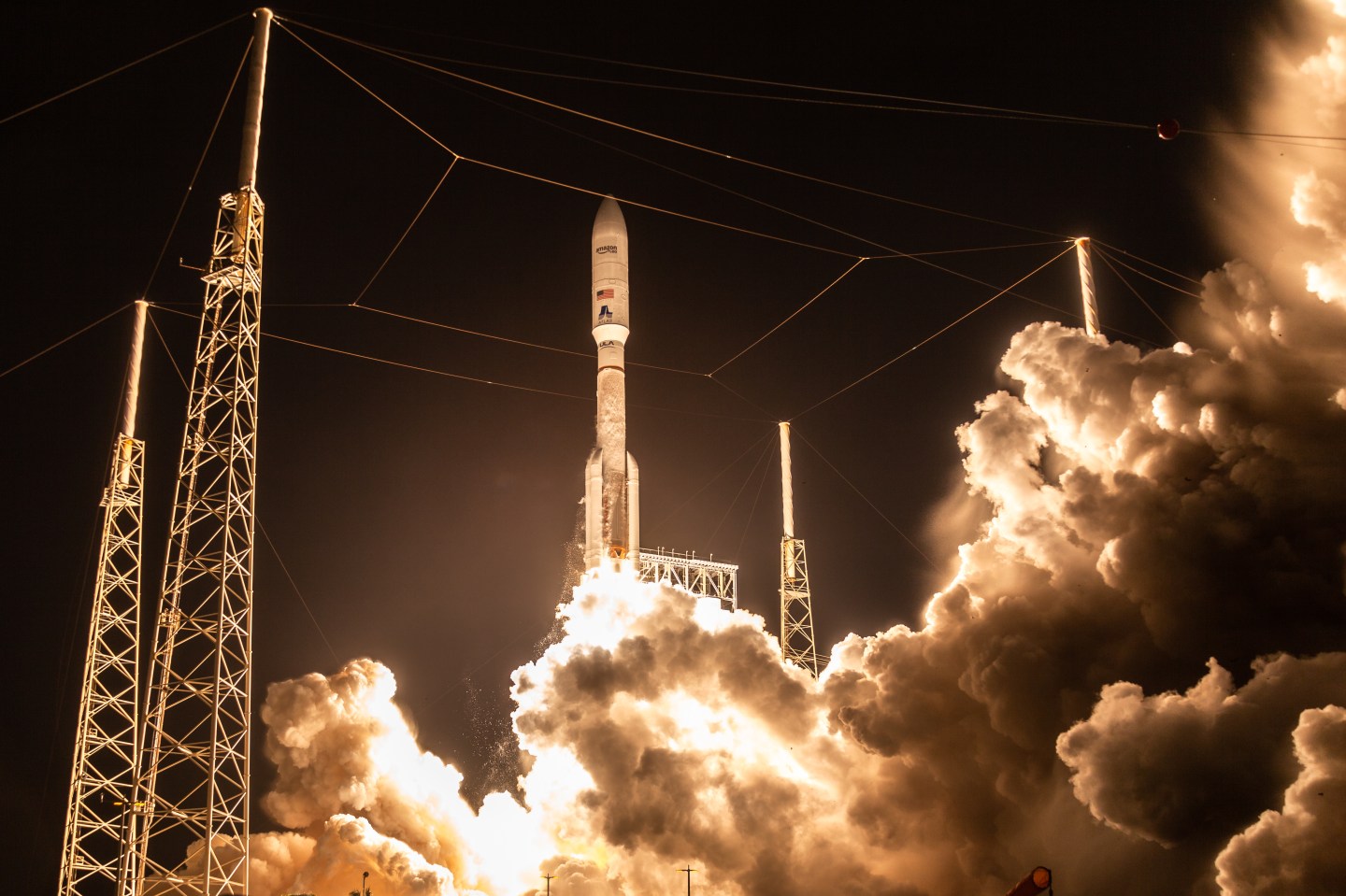
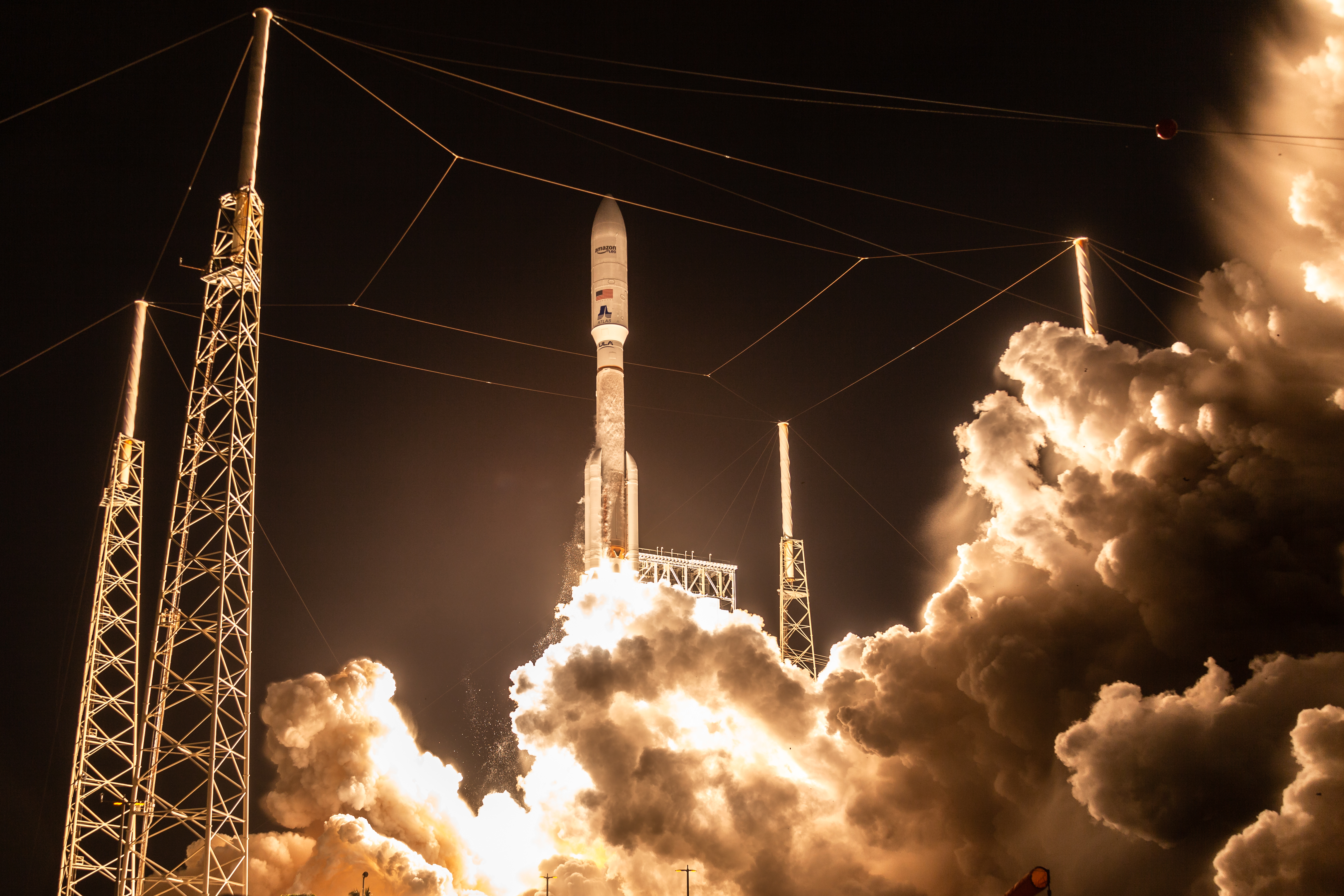
Still, Amazon has a lot of ground (ha!) to make up. Starlink, which is owned by SpaceX, said last month that it had 10,000 satellites in orbit; Amazon, in contrast, counts more than 200—plus another two dozen with Globalstar. It hopes to deploy 3,200 satellites by 2029.
The hurdle to that, of course, is rocket launches. (There’s a reason Starlink is run by Musk’s SpaceX.) The obvious assist here is Jeff Bezos’ Blue Origin, which is working on a reusable heavy-lift rocket that would more than carry satellites. But it’s not yet launching at the frequency to match Amazon’s starry plans. —AN
Meta and Broadcom partner on home-grown chips
Another day, another home-grown AI chip.
Meta and Broadcom on Tuesday announced that they would deepen their existing partnership to develop the social media giant’s custom MTIAs, for “Meta Training and Inference Accelerators.”
The pair will now co-develop multiple generations of the chips and commit to an initial deployment of 1 gigawatt with “multiple gigawatts in 2027 and beyond,” Broadcom CEO Hock Tan said on a call with investors.
Meta entered the custom silicon fray in 2023 following similar efforts by Google (TPUs, 2015) and Amazon (Graviton et al, 2018) to diversify their needs away from Nvidia and AMD. Meta announced four new versions of its MTIAs last month; unlike its Big Tech peers, Meta will reserve its custom chips exclusively for its own use, rather than rent them to cloud computing customers.
Reactions to the news were more positive for Broadcom than Meta. While the latter’s stock remained flat, Broadcom’s saw a 3% jump—more momentum for the Silicon Valley chipmaker that also makes Google’s custom chips. —AN
Global smartphone shipments decline for the first time since 2023
This global memory chip shortage? It’s turning out to be a drag, man, on both profits as well as gadget sales.
In its latest market update, researcher IDC says global smartphone shipments in the first quarter of the year fell 4.1% from the same period a year ago, the first decline since 2023.
Like the plot of any Hangover flick, blame memory. There’s not enough going around to support today’s device sales and what’s available is dear (U.K. definition) indeed, leading to reduced shipments, higher prices, and cost-cutting at every turn.
It’s only going to get uglier as war in Iran and U.S.-China trade tensions continue. “We expect the first quarter slowdown to be a mild precursor for what lies ahead in 2026 as the supply constraints around memory and price increases further dampen the market growth,” IDC notes.
Two phonemakers were able to see Q1 growth; Samsung shipments grew 3.6% and Apple shipments grew 3.3%. But it’s not much of a lesson for the rest. Both companies offer upmarket products that are slightly more insulated from pricing pain. As Jimmy Eat World once sang: “Nevermind, these are horrid times.” —AN
More tech
—Three tech firms control 90% of social media ad dollars. Their names rhyme with feta, frugal, and pickpock.
—Perplexity-Snap deal falls apart. Hanging in the balance: $400 million and Snap’s chatbot.
—Maine takes on data centers. A bill to block data centers that draw more than 20 megawatts of power.
—Uber’s use of AI coding tools has already maxed out its annual AI budget.
—FCC exempts Netgear from router import ban, clearing its consumer routers, cable modems, and cable gateways.
—Credo to acquire DustPhotonics for $1.3 billion. A cash-and-stock deal bringing together a U.S. data center connector and an Israeli photonic chip startup.
—Kraken confidentially files for U.S. IPO. The crypto exchange was last valued at $13.3 billion.