• Home
  • Latest
  • Fortune 500
  • Finance
  • Tech
  • Leadership
  • Lifestyle
  • Rankings
  • Multimedia
Commentarynational debt

America’s national debt is heading to 175% of GDP. Here’s why no president—including Trump—has the will to stop it

By
Steve H. Hanke
Steve H. Hanke
and
David M. Walker
David M. Walker
Down Arrow Button Icon
By
Steve H. Hanke
Steve H. Hanke
and
David M. Walker
David M. Walker
Down Arrow Button Icon
April 22, 2026, 6:30 AM ET
trump
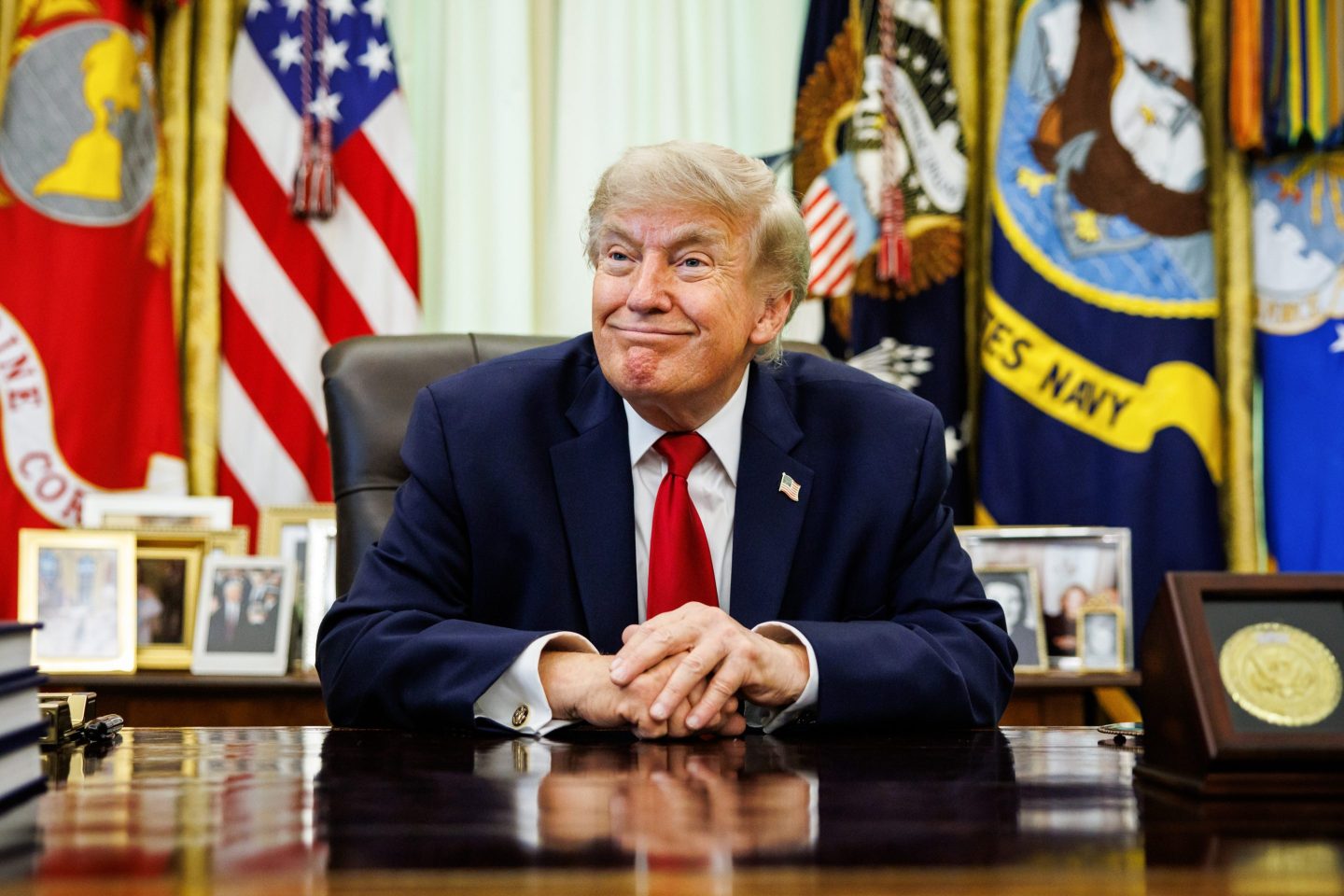
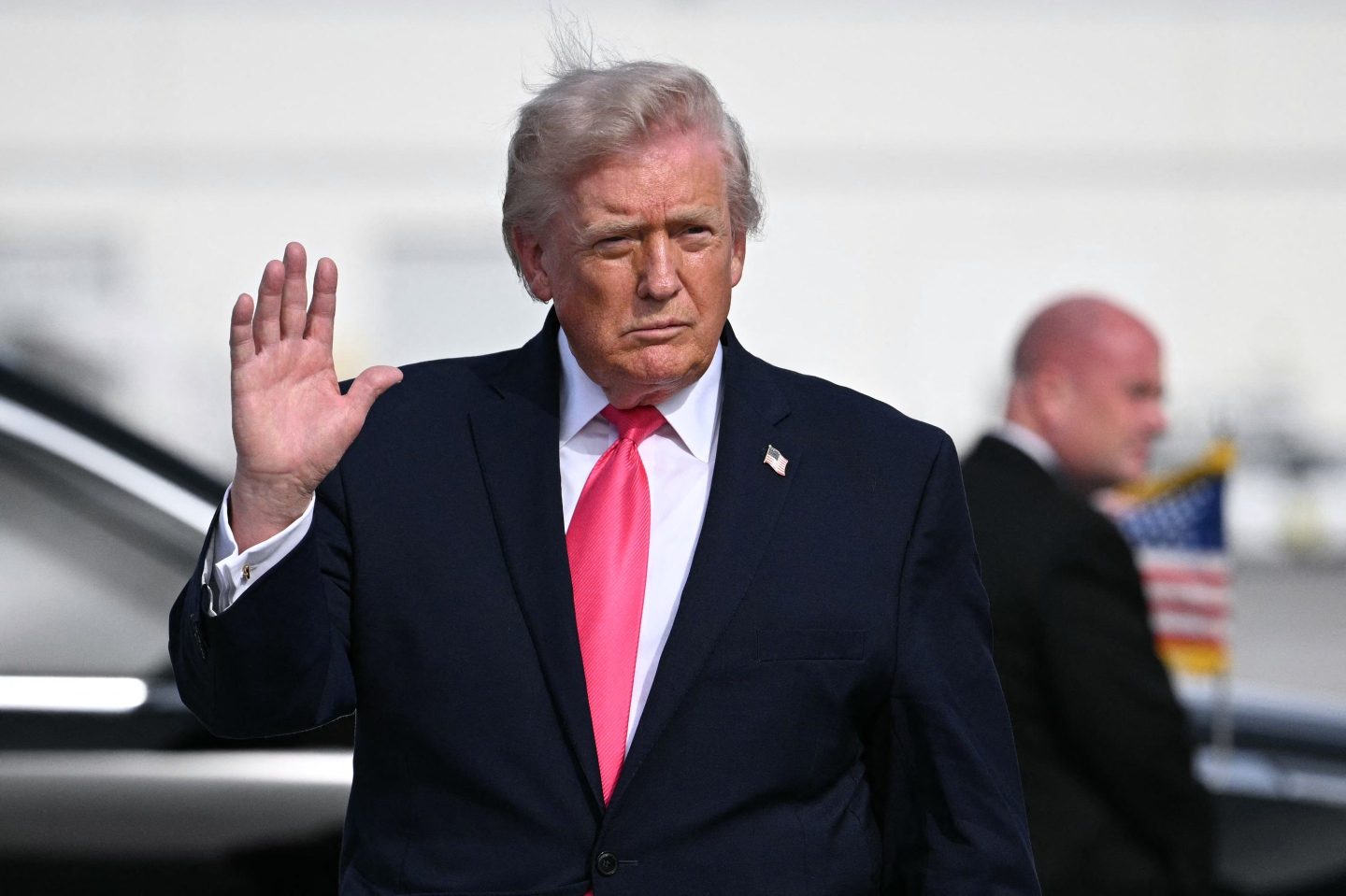
President Donald Trump waves after stepping off Air Force One upon arrival at Harry Reid International Airport Las Vegas, Nevada, on April 16, 2026. Jim WATSON / AFP via Getty Images

On April 3, 2026, President Trump released his proposed Fiscal 2027 Budget. It was two months late. Strikingly, Trump proposed to increase defense spending by over 40% and cut non-defense discretionary spending by about 10%. Yet, even after slashing everything from environmental protection and scientific research to housing and small-business support, government spending will surge, the deficit will balloon, and the ratio of debt held by the public to GDP will climb to peacetime highs and remain above 100%.

Recommended Video

Overall, the Trump administration’s proposed budget is an extension of what has become, particularly during the last three administrations, fiscal folly. Indeed, tax policy has become shambolic and spending discipline is non-existent. The numbers make clear that no relief is in sight.

The Congressional Budget Office (CBO) projects where we are and where we are likely to be headed, with government metrics expressed as percentages of the total value of goods and services produced (GDP).

Before viewing the CBO’s metrics, it is worth stressing that we don’t want to engage in quibbles about the veracity of the CBO’s metrics and forecasts. As it turns out, the CBO’s macro forecasts tend to be more accurate than the Administration’s budget forecasts and the private Blue-Chip consensus, and at least as accurate as the Survey of Professional Forecasters. 
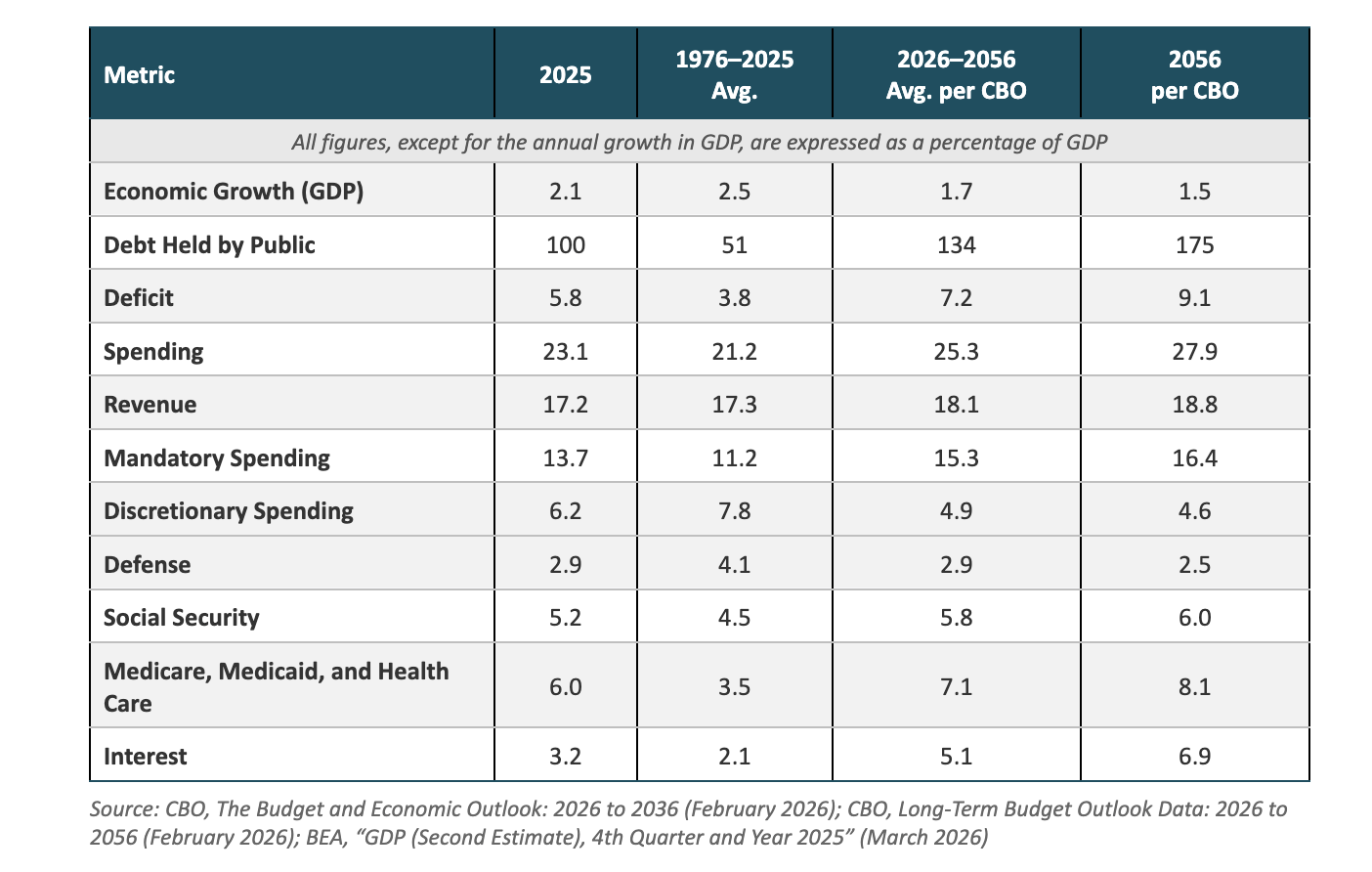
The metrics shed light on what is Uncle Sam’s fiscal folly:

  • Economic growth is projected to slow and to fall well below its 1976–2025 average.
  • The federal government is expected to continue growing more rapidly than the private sector.
  • Current federal revenues are about the same as they have been during the past 50 years, and are projected to grow only moderately.
  • Federal deficits are significantly higher than during the past 50 years, and are projected to increase significantly in the future.
  • Mandatory spending has grown dramatically, from 6% of GDP in 1946, to 13.7% today, and is projected to increase significantly in the future.
  • Discretionary spending has declined significantly, from 18.2% of GDP in 1946, to 6.2% today, and is expected to continue to decline. Notably, all of the express and enumerated federal government responsibilities envisioned by our nation’s founders fall into the discretionary spending category.
  • Defense spending has declined from a 1976–2025 average of 4.1% of GDP to 2.9% today, and is expected to continue to decline over time. The trajectory of defense spending will no doubt be amended, at least in the short-term, to reflect Trump’s proposal for a dramatic increase in defense expenditures.
  • Social Security spending has increased from its average over the past 50 years, and is expected to continue to increase.
  • Medicare, Medicaid, and other federal health care spending has increased dramatically from its average during the past 50 years, and is expected to increase significantly in the future.
  • Net interest has increased significantly over the past 50 years, and is expected to increase dramatically in the future. Interestingly, interest expense is the federal government’s fastest growing expense and one for which taxpayers receive nothing.

While all the trends that accompany the fiscal folly are edifying, there is one underlying feature that stands out: the yawning gap between government spending and revenues and the resulting fiscal deficits. Deficit finance, which is nothing more than a Houdini-esque act, creates a “fiscal illusion” that obscures the true cost and consequences of the government’s propensity to spend. Those deficits exist because they are a politician’s dream of spending now and taxing later.

A significant chunk of today’s government expenditures are financed by putting future generations in bondage and saddling them with the costs. This is irresponsible, inequitable, and immoral. Fiscal deficits are nothing more than deferred taxes that will be paid by those who aren’t even voting today, as well as many who are yet to be born.

It’s time to put an end to the fiscal folly by amending the U.S. Constitution to include a fiscal responsibility requirement. The American Republic was initially informed by Adam Smith’s principle of fiscal responsibility: Government should not spend without imposing taxes. Let’s put that principle in writing.

The opinions expressed in Fortune.com commentary pieces are solely the views of their authors and do not necessarily reflect the opinions and beliefs of Fortune.


Join us at the Fortune Workplace Innovation Summit May 19–20, 2026, in Atlanta. The next era of workplace innovation is here—and the old playbook is being rewritten. At this exclusive, high-energy event, the world’s most innovative leaders will convene to explore how AI, humanity, and strategy converge to redefine, again, the future of work. Register now.
About the Authors
Steve H. Hanke
By Steve H. Hanke
Twitter icon
See full bioRight Arrow Button Icon
By David M. Walker
See full bioRight Arrow Button Icon

Latest in Commentary

Finance
Lorem ipsum dolor sit amet, consectetur adipiscing elit, sed do eiusmod tempor incididunt ut labore et dolore magna aliqua. Ut enim ad minim veniam
By Fortune Editors
October 20, 2025
Finance
Lorem ipsum dolor sit amet, consectetur adipiscing elit, sed do eiusmod tempor incididunt ut labore et dolore magna aliqua. Ut enim ad minim veniam
By Fortune Editors
October 20, 2025
Finance
Lorem ipsum dolor sit amet, consectetur adipiscing elit, sed do eiusmod tempor incididunt ut labore et dolore magna aliqua. Ut enim ad minim veniam
By Fortune Editors
October 20, 2025
Finance
Lorem ipsum dolor sit amet, consectetur adipiscing elit, sed do eiusmod tempor incididunt ut labore et dolore magna aliqua. Ut enim ad minim veniam
By Fortune Editors
October 20, 2025
Finance
Lorem ipsum dolor sit amet, consectetur adipiscing elit, sed do eiusmod tempor incididunt ut labore et dolore magna aliqua. Ut enim ad minim veniam
By Fortune Editors
October 20, 2025
Finance
Lorem ipsum dolor sit amet, consectetur adipiscing elit, sed do eiusmod tempor incididunt ut labore et dolore magna aliqua. Ut enim ad minim veniam
By Fortune Editors
October 20, 2025

Most Popular

Finance
Lorem ipsum dolor sit amet, consectetur adipiscing elit, sed do eiusmod tempor incididunt ut labore et dolore magna aliqua. Ut enim ad minim veniam
By Fortune Editors
October 20, 2025
Finance
Lorem ipsum dolor sit amet, consectetur adipiscing elit, sed do eiusmod tempor incididunt ut labore et dolore magna aliqua. Ut enim ad minim veniam
By Fortune Editors
October 20, 2025
Finance
Lorem ipsum dolor sit amet, consectetur adipiscing elit, sed do eiusmod tempor incididunt ut labore et dolore magna aliqua. Ut enim ad minim veniam
By Fortune Editors
October 20, 2025
Finance
Lorem ipsum dolor sit amet, consectetur adipiscing elit, sed do eiusmod tempor incididunt ut labore et dolore magna aliqua. Ut enim ad minim veniam
By Fortune Editors
October 20, 2025
Finance
Lorem ipsum dolor sit amet, consectetur adipiscing elit, sed do eiusmod tempor incididunt ut labore et dolore magna aliqua. Ut enim ad minim veniam
By Fortune Editors
October 20, 2025
Finance
Lorem ipsum dolor sit amet, consectetur adipiscing elit, sed do eiusmod tempor incididunt ut labore et dolore magna aliqua. Ut enim ad minim veniam
By Fortune Editors
October 20, 2025
Fortune Secondary Logo
Rankings
  • 100 Best Companies
  • Fortune 500
  • Global 500
  • Fortune 500 Europe
  • Most Powerful Women
  • World's Most Admired Companies
  • See All Rankings
  • Lists Calendar
Sections
  • Finance
  • Fortune Crypto
  • Features
  • Leadership
  • Health
  • Commentary
  • Success
  • Retail
  • Mpw
  • Tech
  • Lifestyle
  • CEO Initiative
  • Asia
  • Politics
  • Conferences
  • Europe
  • Newsletters
  • Personal Finance
  • Environment
  • Magazine
  • Education
Customer Support
  • Frequently Asked Questions
  • Customer Service Portal
  • Privacy Policy
  • Terms Of Use
  • Single Issues For Purchase
  • International Print
Commercial Services
  • Advertising
  • Fortune Brand Studio
  • Fortune Analytics
  • Fortune Conferences
  • Business Development
  • Group Subscriptions
About Us
  • About Us
  • Lists Calendar
  • Press Center
  • Work At Fortune
  • Terms And Conditions
  • Site Map
  • About Us
  • Lists Calendar
  • Press Center
  • Work At Fortune
  • Terms And Conditions
  • Site Map
  • Facebook icon
  • Twitter icon
  • LinkedIn icon
  • Instagram icon
  • Pinterest icon

Steve Hanke is a professor of applied economics at Johns Hopkins University and a board member of the Federal Fiscal Sustainability Foundation. He is the co-editor, with Barry W. Poulson and John Merrifield, of Public Debt Sustainability: International Perspectives. David M. Walker is the former U.S. Comptroller General and FFSF chairman.


Latest in Commentary

Kemba Walden served as Acting National Cyber Director of the United States and is President of the Paladin Global Institute.
CommentaryHacking
Former national cyber director: Anthropic’s ‘Mythos’ AI can hack nearly anything and we aren’t ready
By Tristan Bove and Kemba WaldenApril 23, 2026
39 minutes ago
frank
CommentaryVisa
Visa CMO: AI agents are your new customers — here’s how to sell to them
By Frank Cooper IIIApril 22, 2026
16 hours ago
shlomit
Commentarycyber
The Mythos meeting focused on the wrong AI risk to banks. Here’s the one nobody is talking about
By Shlomit WagmanApril 22, 2026
18 hours ago
one piece
CommentaryPersonal Finance
Gen Z is doing (almost) everything right with money—and still getting burned
By Beth KoblinerApril 22, 2026
23 hours ago
beard
CommentaryEducation
Yale asked the right question. Now the rest of higher education owes an answer
By Steve BeardApril 22, 2026
24 hours ago
trump
Commentarynational debt
America’s national debt is heading to 175% of GDP. Here’s why no president—including Trump—has the will to stop it
By Steve H. Hanke and David M. WalkerApril 22, 2026
1 day ago

Most Popular

‘Something sinister’: What we know about the FBI probe into dead and missing scientists linked to space and military industries
Economy
‘Something sinister’: What we know about the FBI probe into dead and missing scientists linked to space and military industries
By Jim EdwardsApril 22, 2026
1 day ago
The tables have turned: Florida and Texas are the biggest losers in the housing market as Ohio emerges a surprise winner
Real Estate
The tables have turned: Florida and Texas are the biggest losers in the housing market as Ohio emerges a surprise winner
By Sydney LakeApril 21, 2026
2 days ago
'Something sinister could be happening': FBI looks into dead or missing nuclear and space defense scientists tied to NASA, Blue Origin, and SpaceX
Politics
'Something sinister could be happening': FBI looks into dead or missing nuclear and space defense scientists tied to NASA, Blue Origin, and SpaceX
By Catherina GioinoApril 21, 2026
2 days ago
John Ternus, the man stepping into Tim Cook and Steve Jobs' shoes, is a 25-year Apple veteran with zero LinkedIn posts
C-Suite
John Ternus, the man stepping into Tim Cook and Steve Jobs' shoes, is a 25-year Apple veteran with zero LinkedIn posts
By Kelvin Chan and The Associated PressApril 21, 2026
2 days ago
Palantir published a mini manifesto calling some cultures ‘harmful’ and ‘middling’ and said Silicon Valley has ‘a moral debt’ to the U.S.
AI
Palantir published a mini manifesto calling some cultures ‘harmful’ and ‘middling’ and said Silicon Valley has ‘a moral debt’ to the U.S.
By Marco Quiroz-GutierrezApril 22, 2026
1 day ago
$166 billion in tariff refunds just became available, but small businesses may already be at a disadvantage
Law
$166 billion in tariff refunds just became available, but small businesses may already be at a disadvantage
By Sasha RogelbergApril 20, 2026
3 days ago

© 2026 Fortune Media IP Limited. All Rights Reserved. Use of this site constitutes acceptance of our Terms of Use and Privacy Policy | CA Notice at Collection and Privacy Notice | Do Not Sell/Share My Personal Information
FORTUNE is a trademark of Fortune Media IP Limited, registered in the U.S. and other countries. FORTUNE may receive compensation for some links to products and services on this website. Offers may be subject to change without notice.