The past two years have been nothing short of extraordinary when it comes to the surge in investor confidence in China’s AI sector. Startups like Moonshot AI and giants like Alibaba are now part of the global AI conversation; no discussion of AI, even in the U.S., is complete without some reference to the high-quality, open-source models China puts out.
It’s clear what locations are shaping China’s AI landscape: Shenzhen, Hangzhou and Beijing, for example. But what about Hong Kong, the most international and open city on Chinese soil? What is its role in China’s AI revolution? Must it play second fiddle to cities on the mainland, or can it influence and enrich the national, and global, AI ecosystem?
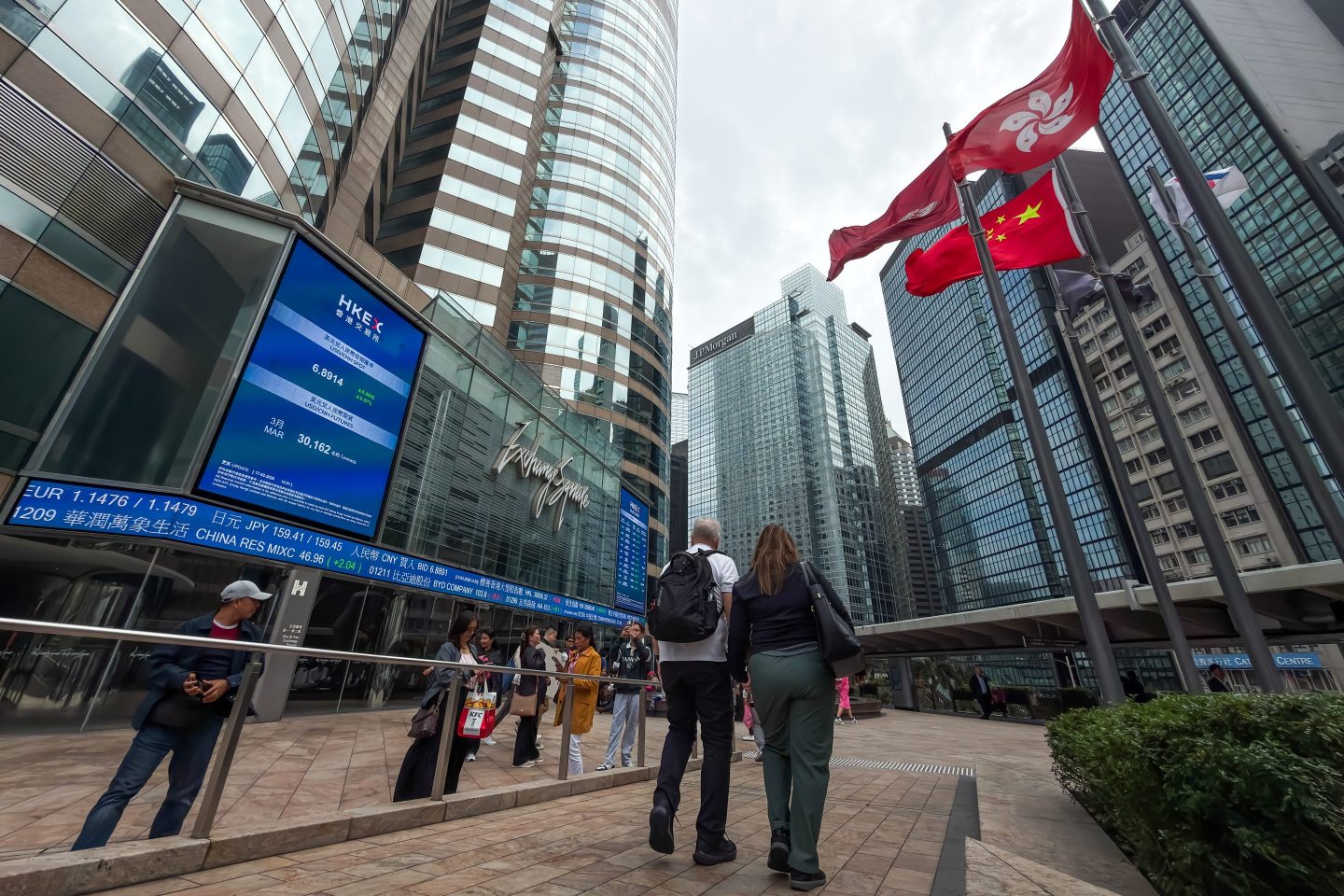
Hong Kong, of course, already has a role as a financing hub. The city topped the global IPO charts last year, for the first time in six years, after raising a whopping $34.3 billion in funds. Hong Kong could leverage this lead to help develop AI for the financial sector, particularly in the Asian context.
But there’s more to Hong Kong than just finance and venture capital. It’s clear that the city can be the international headquarters for leading Asian AI companies. Late last year, Alibaba and Ant bought 13 of the 24 floors of a Causeway Bay office tower, positioning Hong Kong as their base for international expansion. AI startups throughout the rest of Asia, and especially ASEAN and Central Asia, could also consider Hong Kong as their launchpad for global expansion.
The city can generate substantial value from cultivating AI-adjacent industries, such as risk and insurance advisory services for Chinese founders who hope to navigate complex regulatory and policy environments abroad, or who need legal and compliance support in tapping Hong Kong’s robust patent law system.
Private sector players will also find Hong Kong easier to operate in than mainland China when it comes to crafting the best corporate practices on AI adoption, diffusion, and integration. The city’s connections to both mainland China and the rest of Asia can facilitate these transfers of knowledge and policy insights.
Hong Kong can proactively court high-skilled labor through tax breaks, subsidies, and accelerated residency schemes. These moves will be particularly timely as global talent, business and capital reassess where they want to establish themselves in the wake of ongoing geopolitical turmoil in the Middle East and parts of the West.
The city must also work alongside the rest of the Greater Bay Area. Whilst the Yangtze River Delta has become the nexus of full-stack, frontier generative AI models, Shenzhen is racing ahead as the powerhouse of China’s embodied AI and hardware efforts.
Here’s how Hong Kong can contribute to AI innovation.
First, it can research how AI enhances the quality of professional services, with immediately actionable insights and clear norms that can then spread across the region. Industries like management consultancy, investment banking, and accounting have long been the city’s fortes, and so lessons learned in Hong Kong will be seen as credible both at home and across the region.
Second, it could help set legal and contractual precedents for business disputes involving AI. That would require training and up-skilling a whole array of professionals in Hong Kong. But that should be easy for a city that boasts five of the world’s top 100 universities, three of which rank in the top 30 for AI specifically.
The city should also lean into its advantage in upstream research to persuade regional tech giants to set up their R&D headquarters in Hong Kong, and specifically in the much-touted Northern Metropolis.
Third, it should apply AI to both intergenerational and global challenges. The government-run Research Grants Council should solicit and match private donations in funding interdisciplinary and applied research on thorny issues like how AI should be used in financial regulation or in caring for an increasingly elderly population. That latter point is especially relevant for Hong Kong, which has some of the world’s longest lifespans and lowest birth rates.
Research labs in both the U.S. and mainland China may neglect these issues as they speed toward making their models faster, more powerful, and more efficient.
Hong Kong, instead, shouldn’t try to compete in that arms race. Instead, it needs to fill a niche by exploring how AI will be used in navigating real-world cases and solving real-world problems.
Finally, the city can play a vital role in being a place where AI researchers, founders, and other experts can come together to discuss this new technology—including the opportunities and challenges it presents to the wider world.
Hong Kong is, by far, China’s best location to host inclusive global conversations on AI ethics and public policymaking. In fact, the city should consider establishing its own annual summit on AI ethics and global governance—and make a concerted effort to feature under-represented voices, like those from the so-called rest of world.
AI threatens to widen the gap between the Global North and the Global South and amplify disagreements between East and West. That’s an environment where a city like Hong Kong thrives, by helping to bridge gaps across political and cultural divides.
Hong Kong needs to do more than just raise money. It needs to build bridges.
The opinions expressed in Fortune.com commentary pieces are solely the views of their authors and do not necessarily reflect the opinions and beliefs of Fortune.