Good morning. As expected, the ongoing Altman v. Musk trial is turning out to be the gift that keeps on giving—that is, if the kind of gift you prefer getting is a look into the private conversations between tech luminaries.
OpenAI president Greg Brockman testified Tuesday that Elon Musk called the company’s first large language model, GPT-1, “stupid” and said “kids on the internet” could do a better job.
“He knows rockets, he knows electric cars, and I believe he did not—and does not—know AI,” Brockman said of the current xAI CEO, adding: “I did not believe he would spend enough time to get good at it.”
Kind of like Musk’s gaming habits, it seems. More tech news below. —Andrew Nusca
Want to send thoughts or suggestions to Fortune Tech? Drop a line here.
Coinbase lays off 14% of staff in favor of ‘player-coaches’
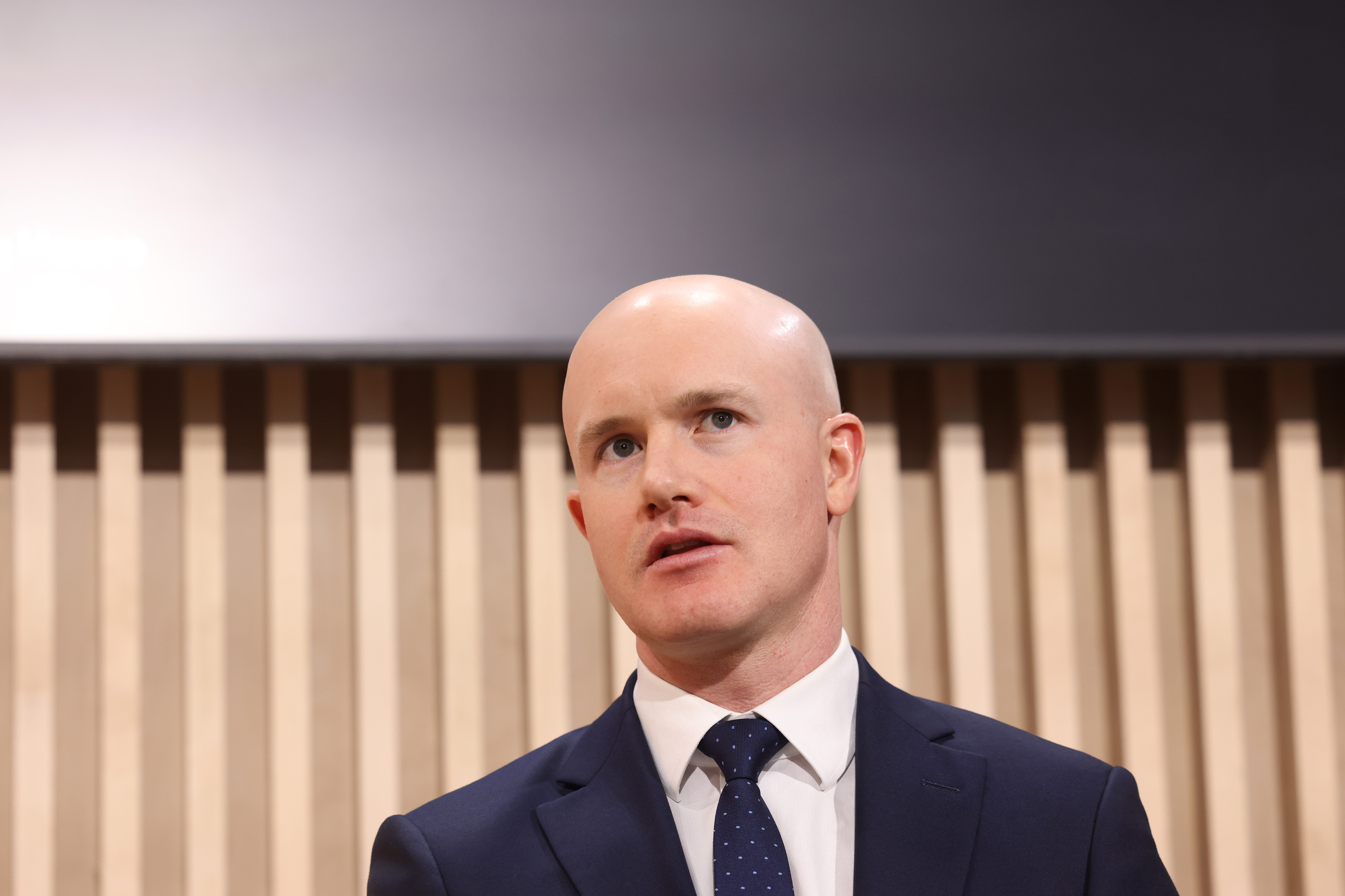
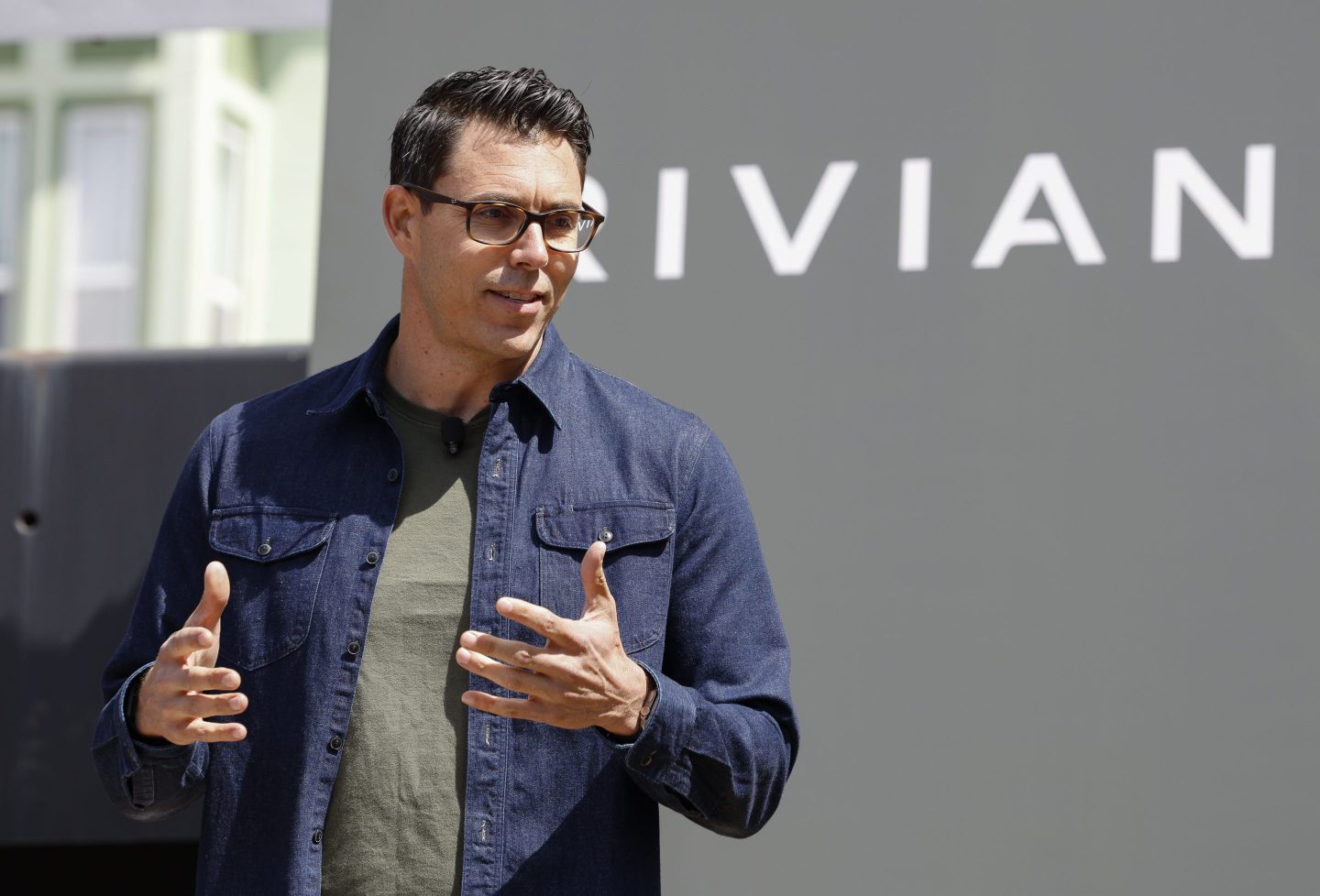
Coinbase CEO Brian Armstrong is adapting the company for the AI age, cutting 14% of employees and reimagining its org chart to bring the company back to its startup roots.
Armstrong said the layoffs, which may affect about 700 employees, are partly due to a crypto downturn.
Yet the main motivator is making the company’s leadership structure flatter, enabling its employees to work fast, with AI at the forefront.
In practice, this means cutting what Armstrong dubs “pure managers,” opting instead for “player-coaches” who oversee team members but are also strong individual contributors.
The company is also planning to leverage its most AI-savvy employees by creating “AI-native pods,” which could even include one-person teams directing agents that encompass the responsibilities of engineers, designers, and product managers.
“We are not just reducing headcount and cutting costs, we’re fundamentally changing how we operate: rebuilding Coinbase as an intelligence, with humans around the edge aligning it,” Armstrong wrote in a social media post.
As Coinbase flattens its org chart, it is also increasing its employee-to-manager ratio, with each leader responsible for 15 or more reports.
This follows the recent “megamanager” trend sweeping corporate America, where managers now oversee an average of 12.1 employees, up from 10.9 in 2024, according to Gallup. Meta may be the starkest example, with its new applied engineering team sporting a 50-to-1 employee-to-manager ratio. —Marco Quiroz-Gutierrez
Dario Amodei shifts the ‘AI white-collar bloodbath’ narrative
For most of last year, Dario Amodei was one of Silicon Valley’s most prominent doomsayers on AI and employment. The Anthropic CEO said publicly and repeatedly that AI could eliminate half of entry-level, white-collar knowledge work within years.
So it was notable, sitting onstage in Lower Manhattan alongside JPMorgan Chase CEO Jamie Dimon on Tuesday, when Amodei reached for a very different intellectual framework.
“If you automate 90% of the job,” he said, recalling recent arguments by University of Chicago economist Alex Imas and Apollo Global Management’s Torsten Slok, “then everyone does the 10% of the job. And the 10% kind of expands to be 100% of what people do and kind of 10Xs their productivity.”
Amodei invoked two competing laws of physics-meets-economics to describe what AI might do to human labor.
The first was the Jevons Paradox—the 19th-century observation that efficiency gains expand demand rather than contract it, suggesting AI will ultimately create more work than it destroys.
The second was Amdahl’s Law, a principle from computer science holding that the speed of a system is limited by its slowest component—implying that even if AI automates most of a job, the remaining human bottleneck becomes the binding constraint.
But it was Dimon who put the argument in the clearest terms. “The capitalist society is very good at recreating jobs and recreating things,” he said. “And life is better. Not always if that town loses a factory, but in general better.” —Nick Lichtenberg
Supermicro CEO: ‘No one’ else was involved in alleged smuggling scheme
Supermicro CEO Charles Liang spoke out during the computer server maker’s third quarter earnings call on Tuesday to deliver a message.
“No one” at the company besides three indicted employees—including co-founder Yih-Shyan “Wally” Liaw—were involved, he said, in what prosecutors have called an elaborate scheme to smuggle servers to China in violation of U.S. export controls.
Supermicro shares rose 18% in after-hours trading.
The earnings call was the company’s first since Liaw and two other defendants were indicted in a criminal investigation.
In March, the U.S. Department of Justice charged Liaw and two other workers with illegally routing servers with Nvidia GPUs to China.
Federal prosecutors accused Liaw of concealing the scheme from auditors and the company, while successfully fooling inspectors attempting to verify export compliance with a warehouse he allegedly organized and filled with thousands of fake servers. The scheme allegedly involved $2.5 billion in server hardware and highly coveted Nvidia GPUs.
Liang and Supermicro were not named in the indictment. Liaw has pleaded not guilty and is free on a $5 million bond. —Amanda Gerut
More tech
—Apple settles for $250 million to resolve a class-action lawsuit alleging false advertising in 2024 about a “personalized” Siri voice assistant.
—AMD shares jump 7% after the chipmaker posts Q1 revenue (and a Q2 revenue forecast) that handily beats Wall Street estimates.
—Google, Microsoft, and xAI join OpenAI and Anthropic in granting the U.S. government pre-release access to their AI models.
—Daemon Tools, the popular disk app, has been compromised with malicious updates, Kaspersky says.
—ChatGPT’s default model gets an update. OpenAI’s GPT-5.5 Instant promises (what else?) smarter, more accurate responses.
—$200 billion of Anthropic cloud and chips spending reportedly represents 40% of the “revenue backlog” Google mentioned last week.
—Microsoft’s Xbox unit shakes up leadership under CEO Asha Sharma.