
Good morning. On Fortune’s radar today:
- AI’s rampant token fraud problem.
- Markets: Stocks fall as shooting resumes in the Gulf.
- The ceasefire is still in effect, Trump says.
- Wall Street’s new “NACHO trade.”
- Oil begins to run out in June, J.P. Morgan warns.
- The surprisingly good news about unemployment.
- The economics of being unhappy.
Quick note: Subscribe to the forthcoming Fortune Gulf Brief. Every Tuesday, this new newsletter will deliver clear-eyed, authoritative intelligence on the deals, decisions, policies, and power shifts shaping one of the world’s most consequential regions, written for the people who need to act on it. Sign up here.
THE MARKETS
Gulf flares up, stocks cool down
- S&P 500 futures were up 0.5% this morning. The index fell 0.38% yesterday.
- In Europe, the Stoxx 600 was down 0.67% in early trading and the U.K.’s FTSE 100 was down 0.24% before lunch.
- Asia: South Korea’s KOSPI rose 0.11%. Japan’s Nikkei 225 was down 0.19%. India’s Nifty 50 was down 0.39%. China’s CSI 300 was down 0.58%.
- Brent crude was $100 this morning, up from a low of $96 the day before.
- Bitcoin slipped to $80K.
Why the stock market has done so well despite the international chaos
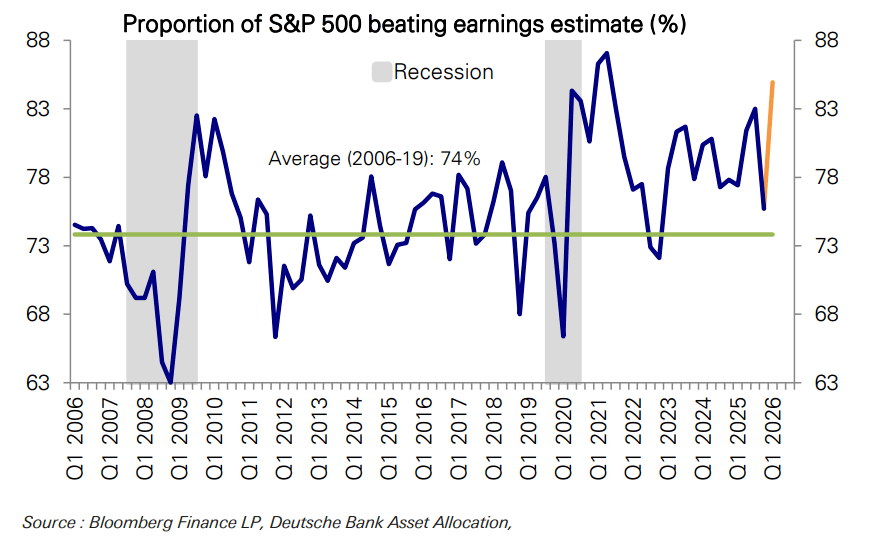
As this chart from Deutsche Bank shows, corporate America just reported one heck of an earnings season. Something like 85% of companies beat expectations, way above the historic average. (Not all companies have reported yet.) “This represents arguably the strongest earnings growth in two decades,” Jim Reid and his colleagues Binky Chadha and Parag Thatte say.
ONE BIG THING
One in six AI signups is a thief
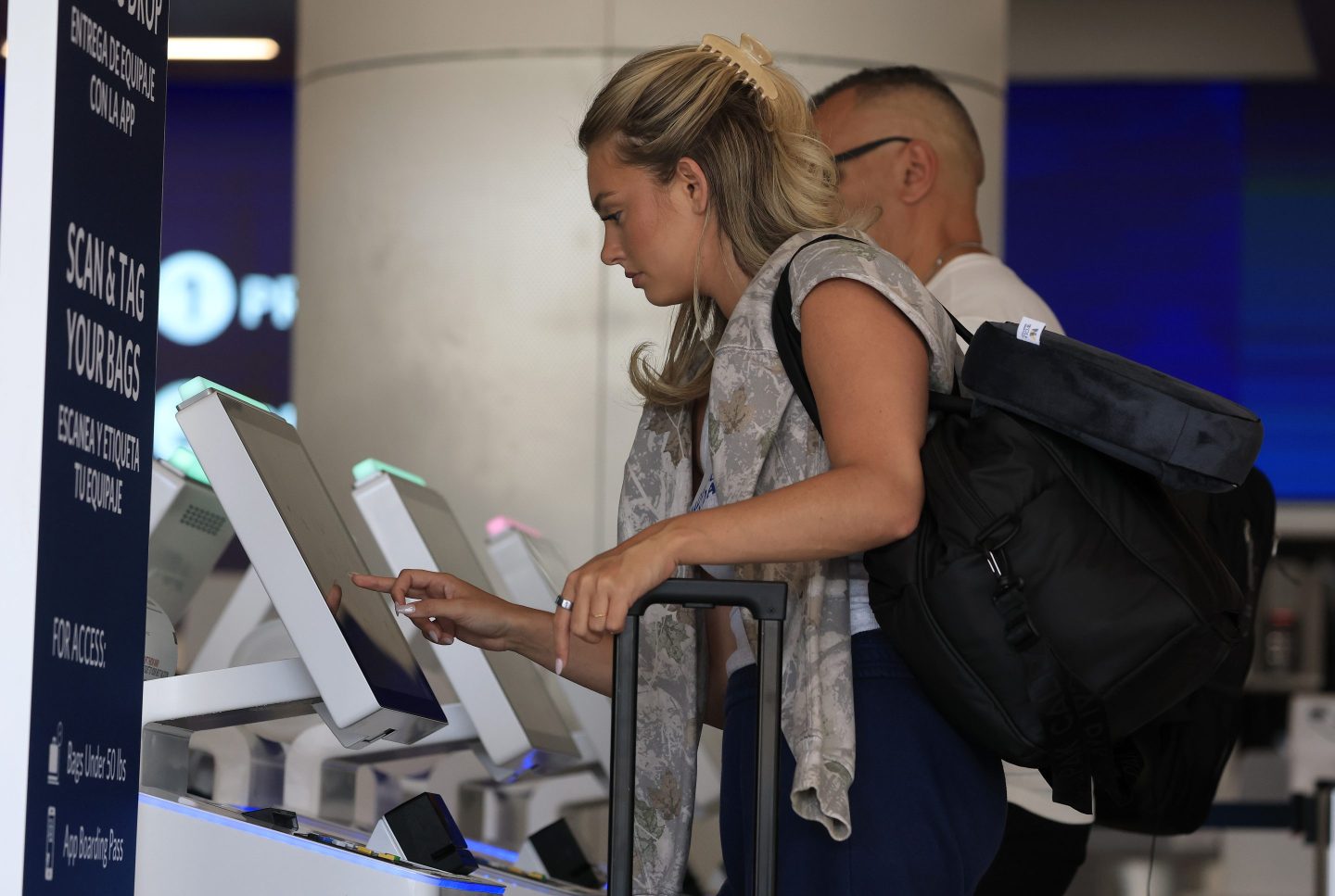
Criminals are defrauding AI firms by signing up for new accounts in order to steal tokens used to buy computing power, according to Stripe CEO Patrick Collison. Token thieves now account for one in every six new customer signups, he says. Thieves steal the tokens to resell them or use them for criminal ventures. “Token pilfering” is so widespread it’s becoming too expensive for some AI startups to offer free trials to prospective customers.
“I think token theft is the most under-discussed topic in AI,” Emily Sands, Stripe’s Head of Data and AI, told Fortune’s Jeff John Roberts. “One of the things that’s really scary about that is that these attackers can burn inference costs, can rack up massive usage bills that they never intend to pay, and they can do that very, very quickly because they are consuming tokens at machine speed.”
The crooks’ AI agents burn through the tokens in minutes. Unlike at traditional software companies, where an anti-fraud manager would investigate suspicious transactions, the crime takes place too fast for the company to intervene. They sign up for multiple accounts at multiple companies to use the tokens for purposes unrelated to what the firms are offering, or to resell them. In every case, they disappear after burning through the tokens—a scam that Sands likened to people who “dine and dash” at restaurants.
- Anthropic’s SpaceX compute deal comes as AI data center backlash grows—fueled by both real grievances and conspiracy theories - Sharon Goldman
- Elon Musk called Anthropic ‘evil’ 3 months ago. Now he’s taking $4 billion to become its data landlord - Eva Roytburg
- Indosat CEO Vikram Sinha is building an AI for Indonesia’s local languages. Can he make a business case for sovereignty? - Nicholas Gordon
IRAN
Despite all the firing, the ceasefire officially remains in effect
Iran fired upon three U.S. warships in the Strait of Hormuz yesterday, according to the BBC, and the U.S. targeted an Iranian tanker and another ship, according to Iran. In addition, the UAE said it successfully fended off a drone and missile attack from Iran.
The ceasefire officially remains in effect, President Trump said, while threatening further strikes on Truth Social: “We’ll knock them out a lot harder, and a lot more violently, in the future, if they don’t get their Deal signed, FAST!”
Wall Street bets on NACHO trade
Wall Street, however, is seriously considering the idea that the Strait will remain closed for months to come. They are calling it the NACHO trade—“Not A Chance Hormuz Opens”—and it involves assuming that insurers will not cover ships in the Strait, that oil prices will continue to remain high, fueling inflation, and that therefore the Fed will not be in a position to cut interest rates anytime soon.
Oil will dwindle to “operational stress levels” in June, J.P. Morgan says
Right now, the world is using up its strategic oil reserves, its stocks from private storage, and the oil that has arrived on tankers that escaped the Gulf before it was blockaded. But that oil is running out. So the question becomes, when do the real shortages kick in? An alarming note from J.P. Morgan says “commercial inventories are on track to approach operational stress levels by early June.”
After that, all the available stored oil will be gone and companies and governments will then only be able to rely on new supply or by draining oil from facilities that need to maintain minimum volumes to remain operational. That prospect risks damaging the infrastructure needed to supply the oil in the first place—and it is currently expected to arrive in September if the Strait is not reopened.
- Europe’s jet fuel supplies should fall below the key 23-day shortage threshold in June, so plan your travel accordingly - Jordan Blum
So who is going to get hurt the most?
Here are the top industries ranked by oil as a percentage of operating expenses:
- Water transport - 40%
- Air transport - 25%
- Chemicals - 20%
- Postal & courier services - 20%
- Rubber & plastic products - 20%
Data from RBC Capital Markets’ Peter Schaffrik and team.
MORE FROM FORTUNE
$96 billion giant ServiceNow doesn’t see a ‘SaaSpocalypse.’ It sees the ‘hard lift, heavy lifting’ phase just beginning - Nick Lichtenberg
Ford CEO says his Gen Z son is choosing hands-on work: ‘He feels like that’s more fulfilling than doing summer school at some fancy college’ - Nick Lichtenberg
Tapestry thinks it’s cracked the code of ‘expressive luxury’ for Gen Z: a ‘Goldilocks’ combo of aspirational and approachable - Nick Lichtenberg
California farmers must destroy 420,000 peach trees after Del Monte closes its canneries and cancels more than $550 million in long-term contracts - Sasha Rogelberg
CHART OF THE DAY
The layoffs that aren't coming
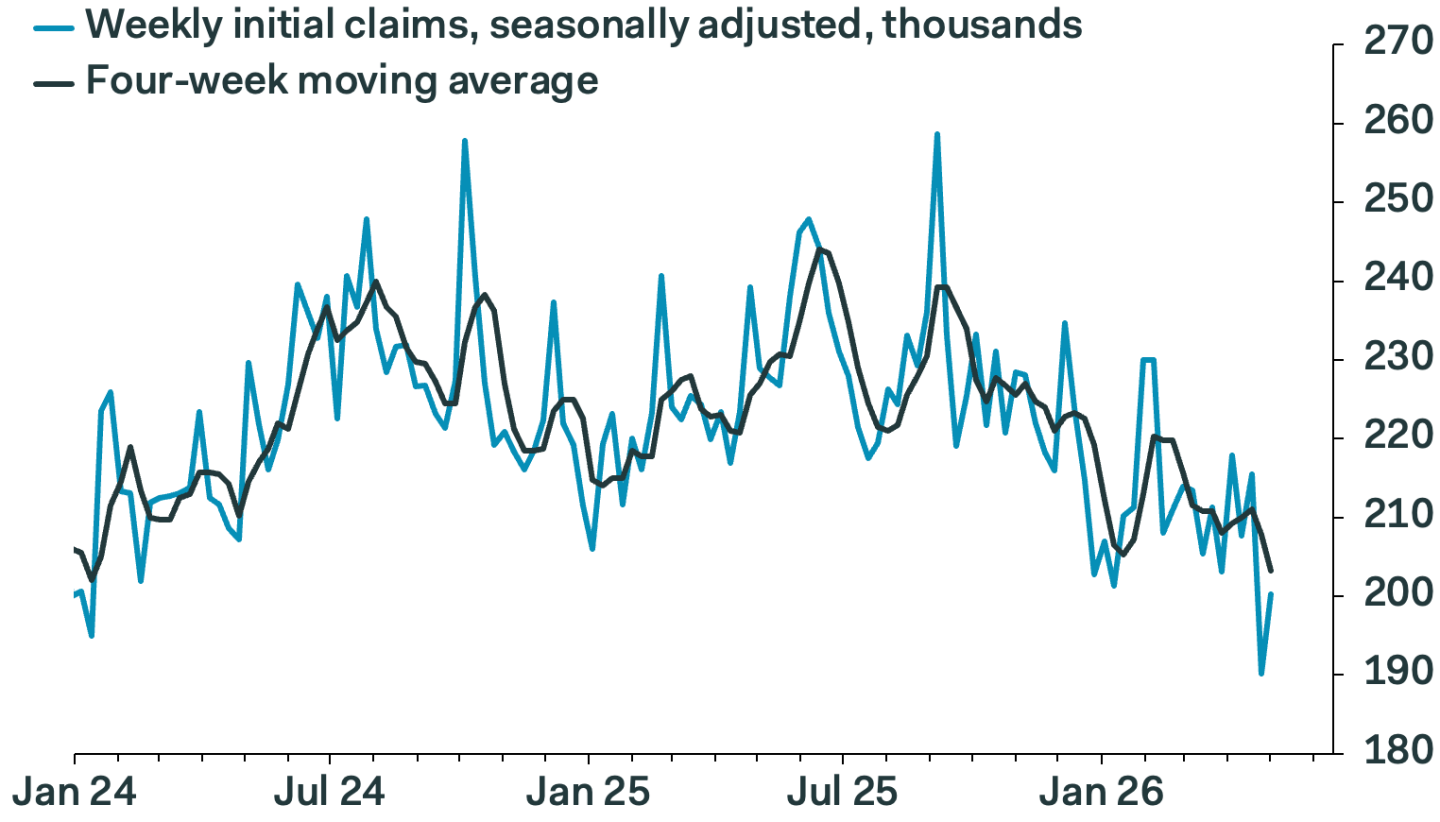
Initial jobless claims in the U.S. came in at 200,000 for the week ending May 2, up from 190,000 the previous week, but slightly below the expectations of analysts. The unemployment rate—which the U.S. Bureau for Labor Statistics will update today—is therefore likely to remain low, per Oliver Allen of Pantheon Macroeconomics. Companies may be nervous about hiring due to the uncertainty of war and the added costs of rising oil prices. But they aren’t soothing themselves with layoffs, the stats seem to be saying.
“The big picture remains that initial claims are very subdued, with the trend grinding even lower over the past few months. … Continuing claims also have been drifting lower recently, implying, at face value, little if any upward pressure on the unemployment rate,” he said.
NUMBER OF THE DAY
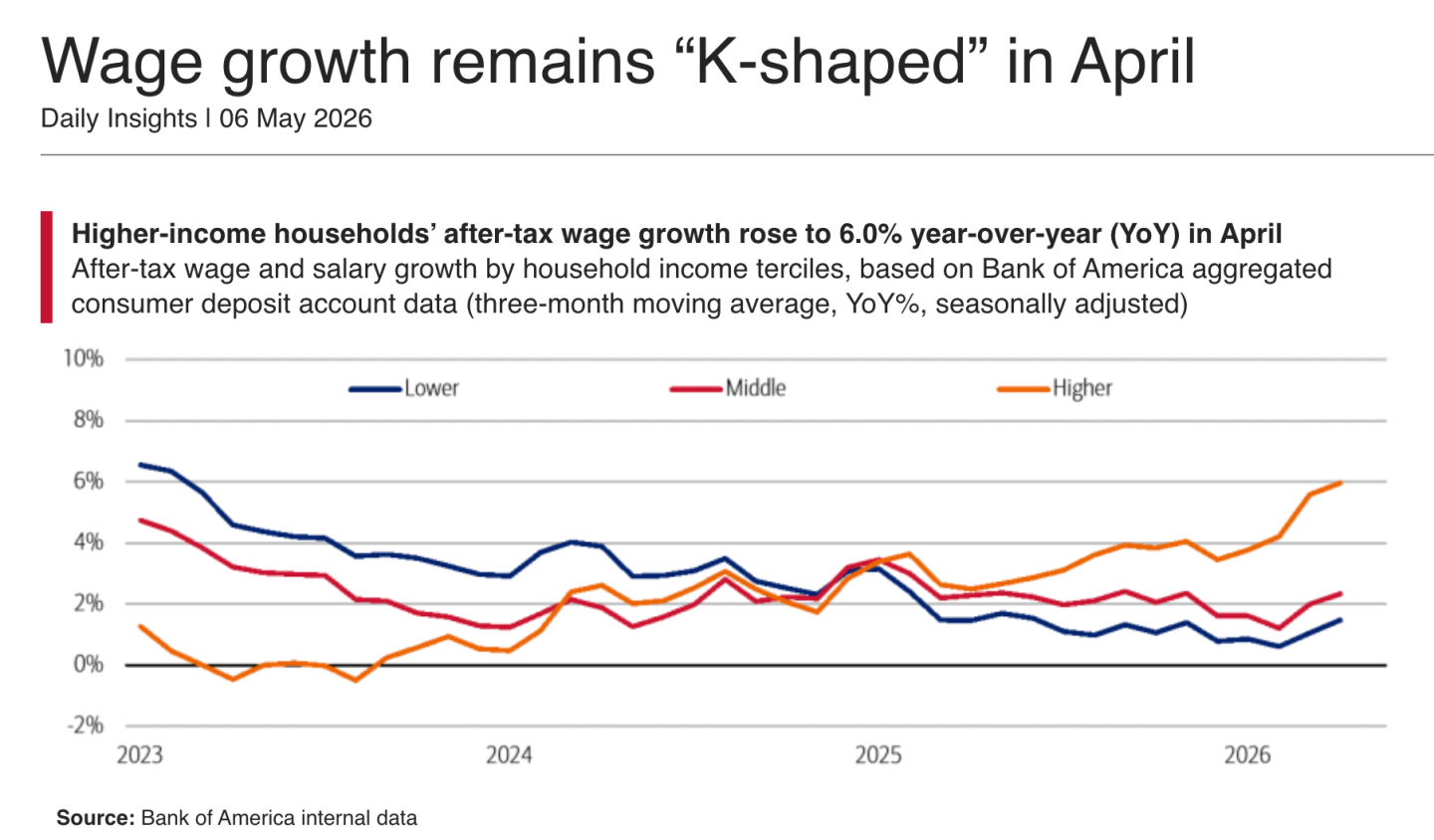
6%
That’s the average annual growth in after-tax wages gained by higher-income households, according to Bank of America’s Liz Everett Krisberg and David Tinsley. “That’s the fastest growth we’ve seen since August 2021,” they said in a note sent to Fortune.
Unfortunately, wage growth was only 2.3% for middle-income households and 1.5% for the lower-income bracket. That’s “the widest gap we’ve recorded since our data series began in 2015,” they said.
THE FRONT PAGES TODAY
Elon Musk Summoned to France to Face Criminal Charges - WSJ
Billionaire James Packer among backers lined up for OnlyFans deal - FT
Trade court strikes down Trump 10% universal tariffs - Axios
Trump Gives EU Until July 4 to Ink Deal, Extending Deadline - Bloomberg
PM Starmer says he's 'not going to walk away' as UK local election results show Labour losses - BBC
ONE MORE THING
Why a booming economy feels so bad
EY-Parthenon Chief Economist Gregory Daco sent a surprisingly philosophical email to clients yesterday, titled “Why economic strength isn’t making us happier.”
“Strong productivity growth has historically gone hand in hand with rising real wages, higher incomes, and improved living standards. Today, however, the economy is expanding at roughly a 2.0% pace, productivity growth is historically strong, and the unemployment rate is hovering around a historically low 4%. Yet we are not happy. Consumer and business confidence are subdued at best,” it said.
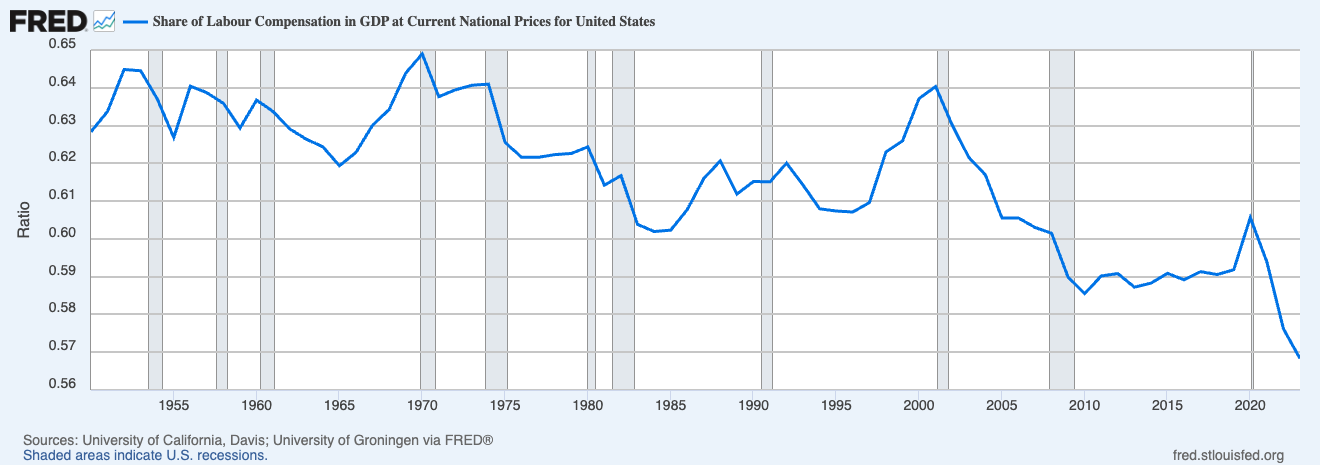
The problem is the increasingly poor deal that the economy delivers to workers, he argues. The share of dollars in the economy that is paid to employees “fell to 54.1% in the first quarter of 2026 – its lowest level on record, going back to 1947. That is down from 56% before the pandemic and above 62% in the early 2000s,” he said in the note. (The chart below from the St. Louis Fed shows the same thing.)
Corporate profits as a share of GDP, by contrast, reached a record high of 13.8% in 2025, he points out.