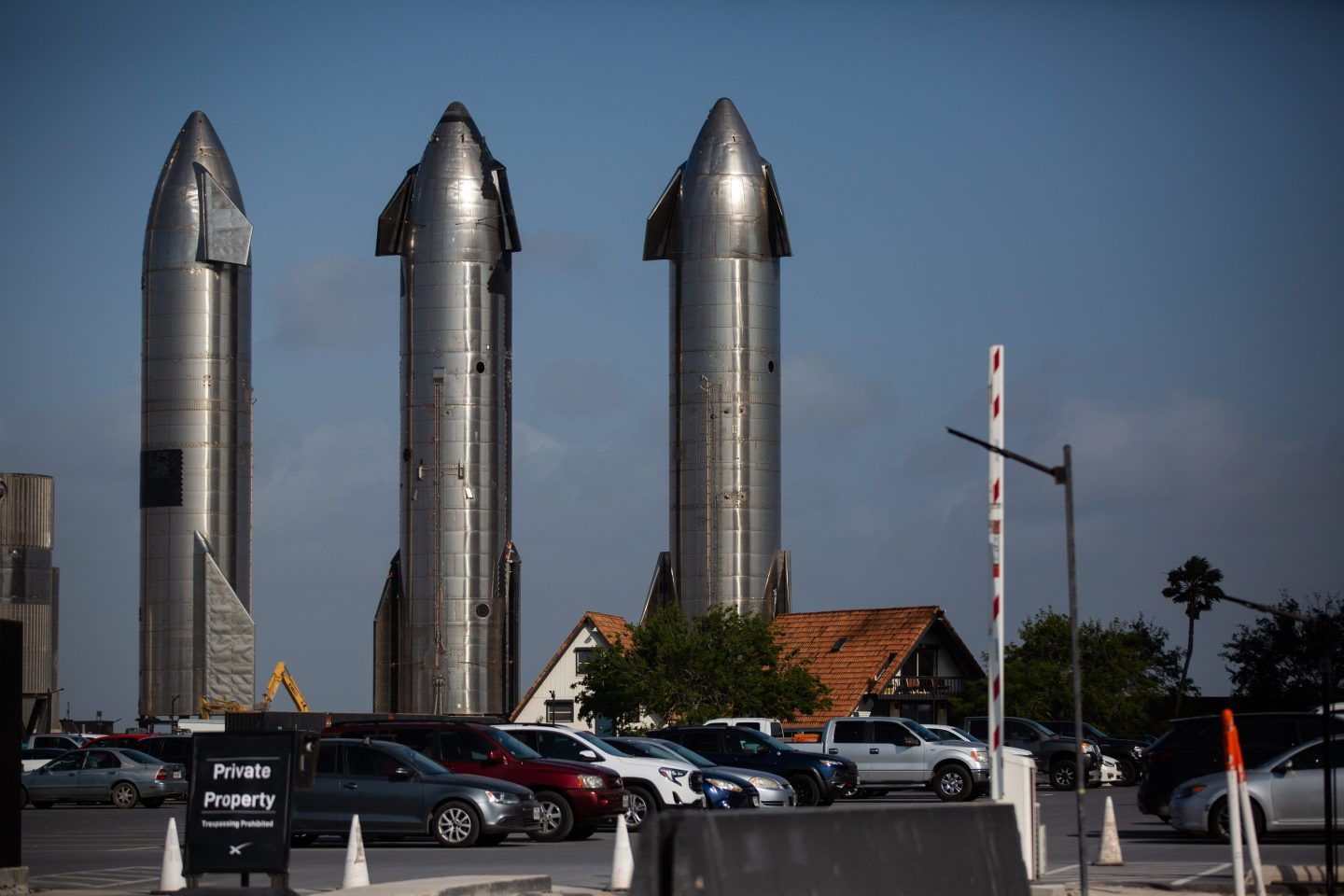
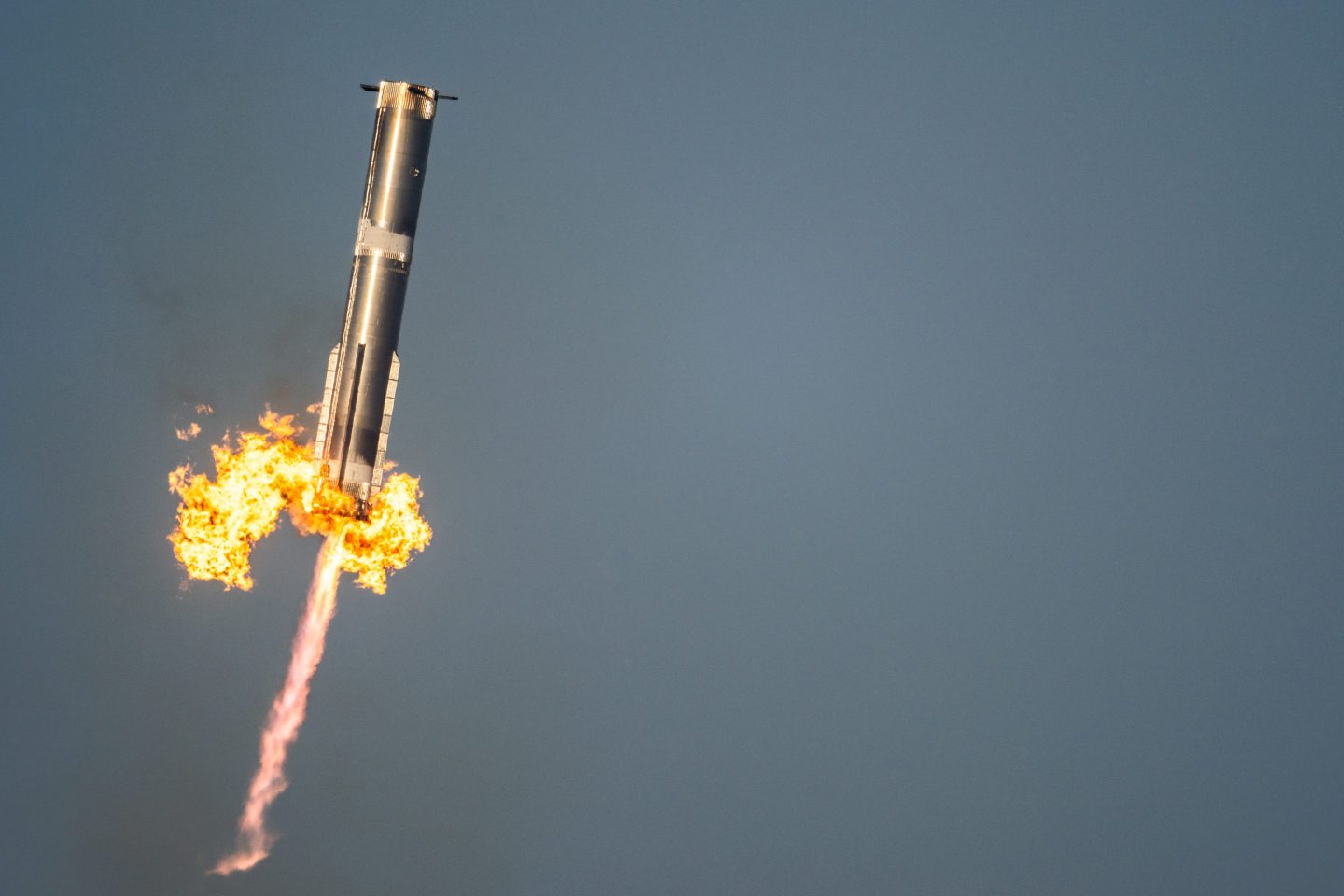
A day ahead of the spectacle of SpaceX’s IPO, the much-anticipated trillion-plus valuation of the company—a Frankensteined creature of Elon Musk’s dreams and realities—is emerging as an investor Rorschach test. Some will see cosmic potential, while others will see science-fiction red flags.
But for one group of investors—those who purchased SpaceX stock on the overheated and shadowy market for “secondary” shares, the company’s listing day will initiate a nerve-wracking moment of truth. For those anxious investors, here’s what will happen: SpaceX will go public, the lockup period will end, and they’ll find out whether they hit the jackpot, were taken in by a scam, or something in between.
The line between the public and private equities has been blurring over the last 20 years, and nowhere has this been more true than in the secondaries market—the parallel and sometimes-fraud-riddled financial market where investors buy, sell, and effectively gamble for shares of the world’s sexiest private companies.
Given the mammoth size of the U.S. venture secondaries market—an elephant-sized black box that, in 2025, was estimated at somewhere between $62.5 billion and $120.9 billion—it’s not a question of whether fraud will be uncovered when SpaceX IPOs; it’s a question of how much fraud will be uncovered.
These transactions have happened in the dark for years, with accelerating velocity through the AI boom. But this summer of white-hot IPOs—SpaceX, OpenAI, and Anthropic—could be the crucial moment where the lights flicker on.
The Wild West of secondaries
It’s no secret that companies are staying private longer. The average venture-backed unicorn now remains private for ten years at minimum, and there are about half as many public companies today as there were in 1996. It has both gotten easier to stay private as more capital from VCs and other investors has become available, and being public—with the scrutiny that entails—is increasingly seen as cumbersome.
As companies have stayed private longer, they’ve also gotten bigger and more sought after: OpenAI—according to private market investors—is worth a cool $852 billion, while five-year-old Anthropic was just valued at a staggering $965 billion. Between SpaceX, OpenAI, and Anthropic, private capital has fueled the rise of three companies that, at least on paper, are worth more all together than France’s GDP. (OpenAI and Anthropic have both confidentially filed to go public, which does not guarantee a timeline or that an IPO will happen at all.)
These much-longer-than-anticipated holding periods have left many VCs illiquid, their funds tied up for years before they can realize their gains on the public markets. (Consider: SpaceX first raised venture funding in 2002, the year Nickelback’s How You Remind Me topped the Billboard 100.) As the superstars of their portfolios have gotten historically huge, and captured the public imagination, VCs have been getting squeezed as their own investors, called limited partners, have started to say “show me the money.”
Add in: Startup employees who’ve been accumulating vested private stock at high-flying companies for years, and are impatient for the life-changing cash that in the 1990s or 2000s would have come from a traditional IPO—but that IPO doesn’t necessarily materialize.
Of course, there are plenty of investors eager to hand over vast sums for those coveted shares. Enter the venture secondaries market: If you’re a doctor, lawyer, dentist, entrepreneur, or other high-net-worth individual and you happen to want shares of SpaceX, Anthropic, or OpenAI, there’s a way. And that way is the rabid, private-message-run, Wild West of secondaries. That’s the market that the SpaceX IPO is set to start blowing the lid clean off.
The Ozempic of the private markets
Secondaries are the Ozempic of the private markets. They’re awkward to discuss, but in tech investing circles, it sometimes feels like everyone’s in on them.
Until the 2010s, selling secondary shares of private companies was deeply frowned upon by pretty much everyone—the investing community and companies—but over time, the practice became increasingly common.
Investors and employees, generally speaking, are the original sellers, often transacting through tender offers. And it has become clear that, for the buzziest companies, the world of people who want to own that private stock is extensive. They’re all seeking bragging rights, and alpha (the risk-adjusted surplus return on an investment above an asset class’s benchmarks) that’s been historically locked into the private markets, the province of a select few.
In the middle, between these buyers and sellers, exists a world of pre-IPO brokers and platforms, of wildly varying credentials and trustworthiness. For example: Industry Ventures, a firm bought by Goldman Sachs in October, is considered serious and credible. That unlicensed broker on Twitter with cryptic access to SpaceX shares? Not so much.
A substantial portion of secondary sales happen through entities called “special purpose vehicles,” or SPVs—financial instruments that first found popularity when touted by the 1980s junk bond maestro Michael Milken. SPVs have been exceptionally helpful tools of capital in the AI boom, as they’re one-deal vehicles that investors can use to deploy millions or billions into coveted cash-guzzlers like OpenAI, Anthropic, and Musk’s xAI. Fortune has reached out to SpaceX, OpenAI, and Anthropic for comment, and will update this story with any responses.
Now, the problem: SPVs regularly go two or three layers down, abstracting the buyer away from the original owner of the shares. And let’s be real: Many SPV investors have no idea who the first layer of shares is even owned by.
To use a more tangible analogy: It’s like buying a Picasso from a gallery that bought it from a dealer who bought it from a guy who says he knows the family of the owner—and the proof of authenticity is a PDF sent in an email. But you wire $50 million for that Picasso anyway.
For the companies themselves, there’s frequently zero visibility into the SPVs that are buying and selling their shares. Because an SPV isn’t exactly like buying a share one-to-one, it’s more like joining a consortium of investors buying a set of shares, similar to the pooled structure of mutual fund.
“In special purpose vehicles, people are just trading units, not trading shares,” said Glen Anderson, cofounder and CEO of Rainmaker Securities. “The actual cap table entity doesn’t change. It often doesn’t require company approval.”
‘That’s still fraud”
“How many people think that they have bought into SpaceX, but they’re actually just funding some dude’s coke habit in Miami? The number is not zero,” said Anduril cofounder Matt Grimm, when we spoke a few months ago.
Anduril—one of the most sought-after companies in the secondaries market and the hardest to find shares of—has been especially vocal in expressing concerns around secondaries scammers.
“I have profanity-laden terms I’d use for them, but I describe them as wildcats,” said Grimm. “There are wildcat secondaries sellers, who are out there slinging around share prices that are completely unreasonable and unjustified, preying on desperate, potentially naive or potentially deceived retail investors… It creates this very broad market problem. And my real concern is it’s going to dissuade retail-type investors from investing into companies like this, because they feel like they’re being scammed. And in some cases, they literally are being scammed.”
Indeed, there will be outright fraud, sellers who lied about the terms of a deal, or their access to shares in the first place—as in the case of Giovanni Pennetta, who was charged by federal prosecutors with using a slideshow pitch to fraudulently sell millions in non-existent Anduril shares, and was caught trying to flee at New York’s JFK Airport.
But there are nuances here, and fraud-adjacent ambiguities: forward sale agreements that could get voided (“pay now, get shares at IPO” contracts aren’t uncommon); or fee structures on SPVs that are famously predatory, leaving investors who didn’t read the fine print with less SpaceX than they thought.
“That’s still fraud, because I think that you know you’re misrepresenting to an investor what their economic outlook is,” said Samir Kaji, CEO and cofounder of private markets platform Allocate. “You’re not telling them exactly what they bought into, with the total flow of economics across many, many layers of SPVs… It’ll be really interesting when SpaceX does go public to unearth how many synthetic shareholders of SpaceX were there before it went public, because of all these SPVs out there.”
There are whispers that the SEC is looking at this market, but any regulation will come slowly, and in an era where white-collar-crime prosecution numbers are dramatically down, federal enforcement will likely be scattered.
So, as the “Hot IPO Summer” unfolds, prepare for a great unwinding in the private markets. A world of people will find out that they don’t own what they thought they did. A wave of litigation will likely ensue. And that will be just the beginning.