Good morning. How should we rebuild society for an intelligent age? Top execs at Fortune Brainstorm Tech in Aspen weren’t in agreement on the solutions—but the problems were crystal clear.
There’s too much fear, founded or not, about AI for many U.S. workers to try it with an open mind. (Perhaps CEOs should consider pacts to not issue layoffs, à la China, if they seek more AI adoption.) Education—from parents’ responsibility to grade school to university—should eschew teaching to the tools and focus instead on enduring human skills like curiosity, problem solving, and resilience. And we must be wary of exacerbating inequality by failing to let the financial benefits of the business of AI flow to everyone.
The big problems with AI, it turns out, are the big problems with society. Perhaps AI can help with that?
More from Brainstorm Tech, plus the news, below. —Andrew Nusca
P.S. It’s here: the inaugural Fortune Crypto 100. In the tradition of the Fortune 500, our editorial team has ranked the most influential companies and protocols in the digital asset ecosystem from crypto-native pioneers like Coinbase and Uniswap to Wall Street giants like JPMorgan and BlackRock. See who made the list, and who came out on top in all 10 categories here.
Want to send thoughts or suggestions to Fortune Tech? Drop a line here.
The space economy’s next frontier is in ground infrastructure
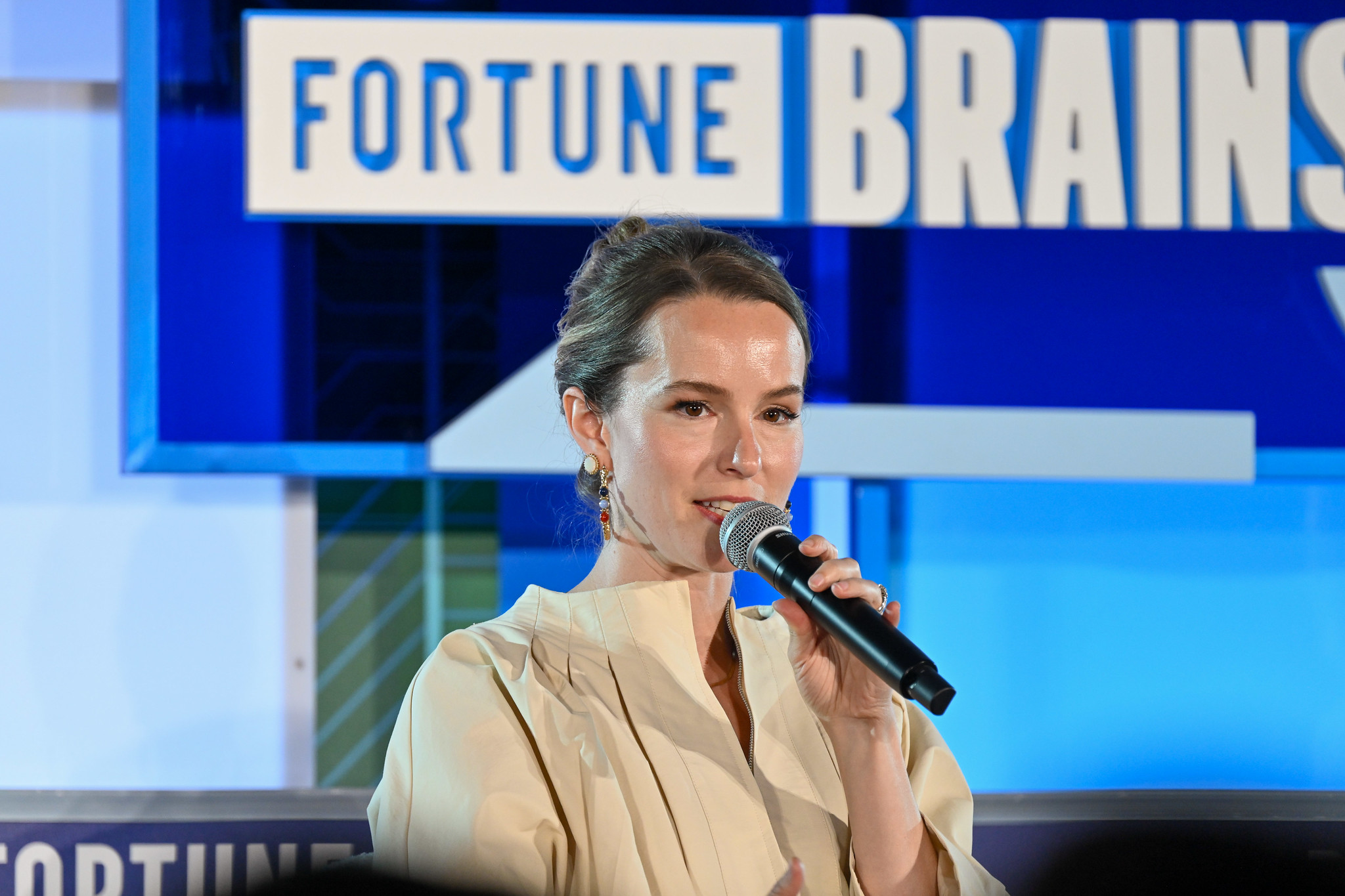
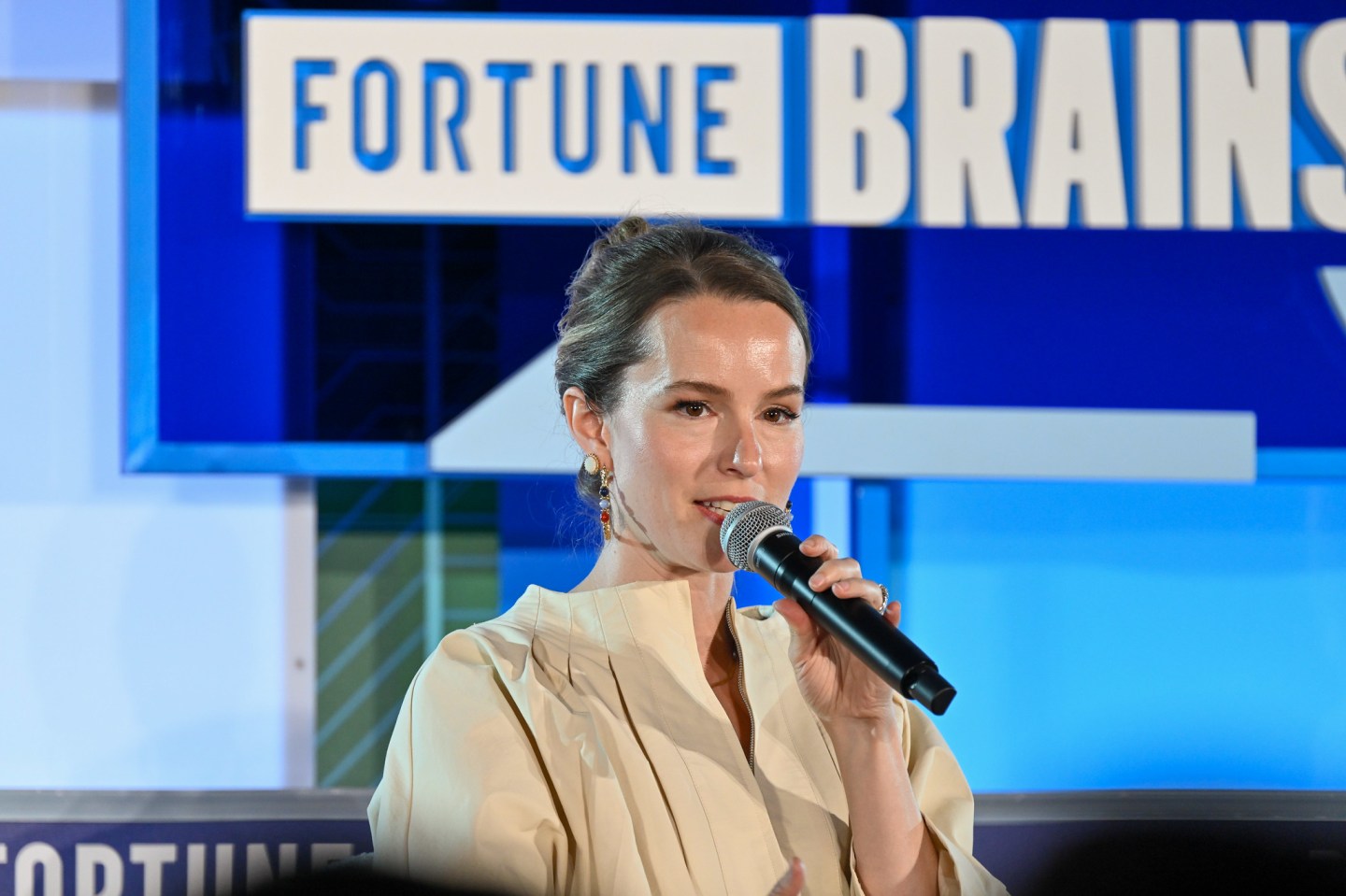
In the last six years, a surge of satellites in orbit has triggered what Northwood Space chief executive Bridgit Mendler called the “infrastructure building era” of space.
Speaking at the Fortune Brainstorm Tech conference in Aspen, Colorado on Tuesday, Mendler emphasized how massive leaps in launch capacity and spacecraft manufacturing are supercharging the space economy.
Satellites have evolved from isolated scientific missions into large constellations of thousands. And they all require the type of network routing Northwood builds, she said.
Northwood is focused on the ground segment, which Mendler described as the networking system linking Earth and space. Without this infrastructure, she argued, a satellite would be a “really expensive hump of metal up in space.”
“For a long time, the space economy has existed, but it’s been pretty niche,” Mendler said. “The economics are switching. You can see that that is leading to adoption and market share from major parts of the economy like telecom.”
Mendler’s philosophy is that space networking should be a shared resource, akin to how cloud infrastructure supports tech startups. By providing this shared layer, Northwood aims to drastically shorten the timeline for new space ventures. What took industry leaders like SpaceX 20 years to build could soon be achieved in five, she said.
“Data is the way that you gather value from the space economy,” she said. “So, the more throughput you can get through space, the space economy directly grows.” —Sebastian Herrera
U.S. science funding cuts risk falling behind global rivals
Washington pulled tens of billions from national health funding just as healthcare and biotech hit its ChatGPT moment. At Fortune Brainstorm Tech in Aspen this week, the people building AI drug discovery said (more or less) that the U.S. government picked the worst possible moment to blink.
“Falling below the scientific intelligence of one’s adversary at a corporate level, at a sovereign level, is almost like an unimaginable competitive disadvantage,” said Geoffrey von Maltzahn, co-founder and CEO of Lila Sciences, at the conference on Tuesday.
Nvidia’s Kimberly Powell, vice president of healthcare, was more direct: “If we defund now, while the rest of the world leans in—which Europe is leaning in, which a lot of the Asian countries are leaning in—we will be left behind.”
The duo made the case that the scientific method and agentic AI are, structurally, the same thing: pose a question, gather context, observe, reason, act. The implication being that the moment to pour resources in is now, not later.
Lila Sciences has raised $550 million to build what it calls scientific superintelligence—AI systems running the scientific method around the clock across materials, chemistry, and life sciences.
Lila’s agents recently identified catalysts for splitting water into hydrogen and oxygen that outperform the precious metals the industry currently relies on. A third of those suggestions, he noted, made no sense to his Caltech-trained team at first. They’re now the highest-performing catalysts on record.
“I think to many people this Claude Code-esque moment—when a new intelligence gets injected into science and changes it forever thereafter—may not feel imminent,” Von Maltzahn said. “But it is right around the corner.” —Lily Mae Lazarus
Three things Anthropic looks for in a good hire
As one of the hottest employers of the AI wave, Anthropic has applicants streaming in for six-figure roles. Now, the architect behind its Claude Code, Boris Cherny, just revealed three ways to stand out when applying at the tech giant.
“Number one, we like generalists, because they have context across more than just engineering,” Cherny recently said onstage at Fortune’s Brainstorm Tech conference. “We love people that have context across engineering and design, engineering and product, data science and design.”
While Anthropic is on the hunt for talent that are jack-of-all-trades, it’s also on the lookout for applicants consumed by their own intellect.
Cherny said his second hiring rule is picking candidates with a “low ego,” joining a chorus of CEOs turning away applicants for being too big for their britches. And the AI creator adds that curating a hard-working team of humble employees fosters trusted collaboration among all coworkers.
“Ego just gets in the way of stuff,” Cherny continues. “You want to be okay and safe shipping an idea that might turn out to be bad. It’s not your fault, it’s okay to be wrong.”
The Claude Code architect adds one last requirement to his hiring line-up: being able to admit failure, and move on. The characteristic feeds back into that “low ego” archetype of talent that embraces criticism from others—especially clients.
“The third thing is we love empiricists. So people that are learning from the data, and that are anchored to reality,” the AI leader said. “Like, ‘I have a brilliant idea, but then I talk to a customer and they told me that I’m wrong. I’m probably wrong.’ And, ‘I should probably throw out that idea and try something else. And that’s okay.’” —Emma Burleigh
More tech
—Microsoft’s Xbox division is reportedly planning major layoffs.
—Google’s DiffusionGemma AI model promises faster text generation via text diffusion.
—U.S. FBI seizes 13 domains allegedly tied to fake consulting firms operating on behalf of suspected Chinese agents.
—OpenAI may dramatically lower its token price in anticipation of similar moves at Anthropic.
—Amazon lands a $17.5 billion loan from Citigroup and other banks for—what else?—AI infrastructure investments.
—Anthropic adjusts policies for its new Fable model after AI researchers complain that its guardrails are too strict.
—Canada introduces legislation to ban social media for children under 16.
Fortune AIQ: From Pilot to Profit

The following case studies cover the transition from AI experimentation to measurable business impact. Explore all of Fortune AIQ, and read the latest collection of stories below:
—Why dbt Labs CEO views AI efficiency and creativity as the same thing
—Omnisend offers quarterly raises for employees who use AI to drive business impact
—AI is supercharging cyberattacks—and most companies aren’t ready
—How Lumen’s ‘maniacal focus’ on KPIs drove measurable AI impact
—AI agents are flattening corporate hierarchies. Here’s how to develop a new playbook