Good morning. It’s starting to feel like Apple is a semiconductor company that just happens to make devices and software.
The iPhone maker will reportedly skip higher-end “Pro,” “Max,” and “Ultra” variants of its forthcoming, Arm-based, TSMC-made M6 chip in a bid to fast-track the subsequent generation, M7.
At work: Rising component prices, global supply constraints, and rapid advancements in that oh-so-hot area of on-device AI processing—never mind the broader pressures Apple feels to get Siri and its Apple Intelligence suite cooking again.
It’s an AI-eat-AI world, after all. Have a wonderful weekend. —Andrew Nusca
Want to send thoughts or suggestions to Fortune Tech? Drop a line here.
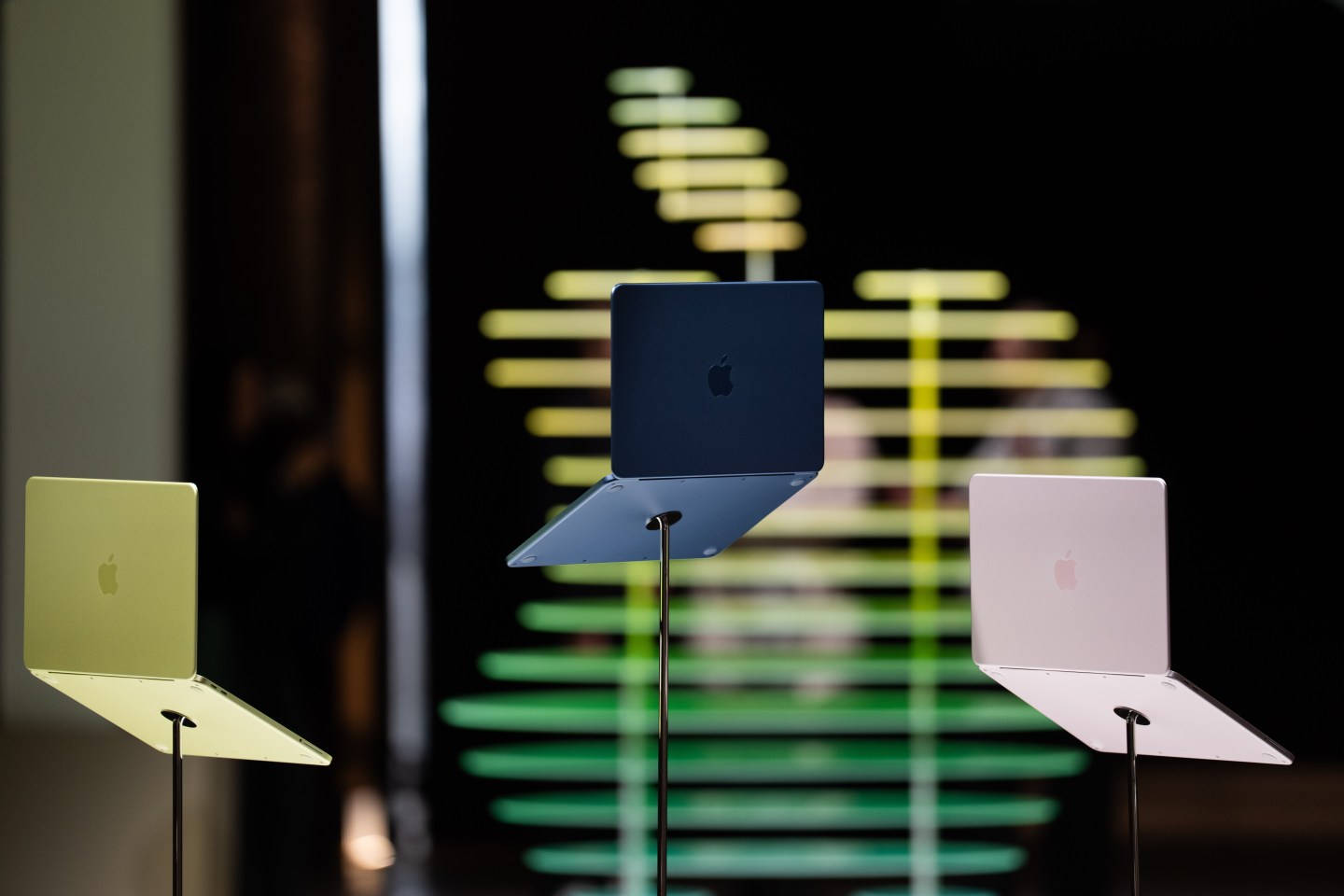
Apple raises prices by up to 25%
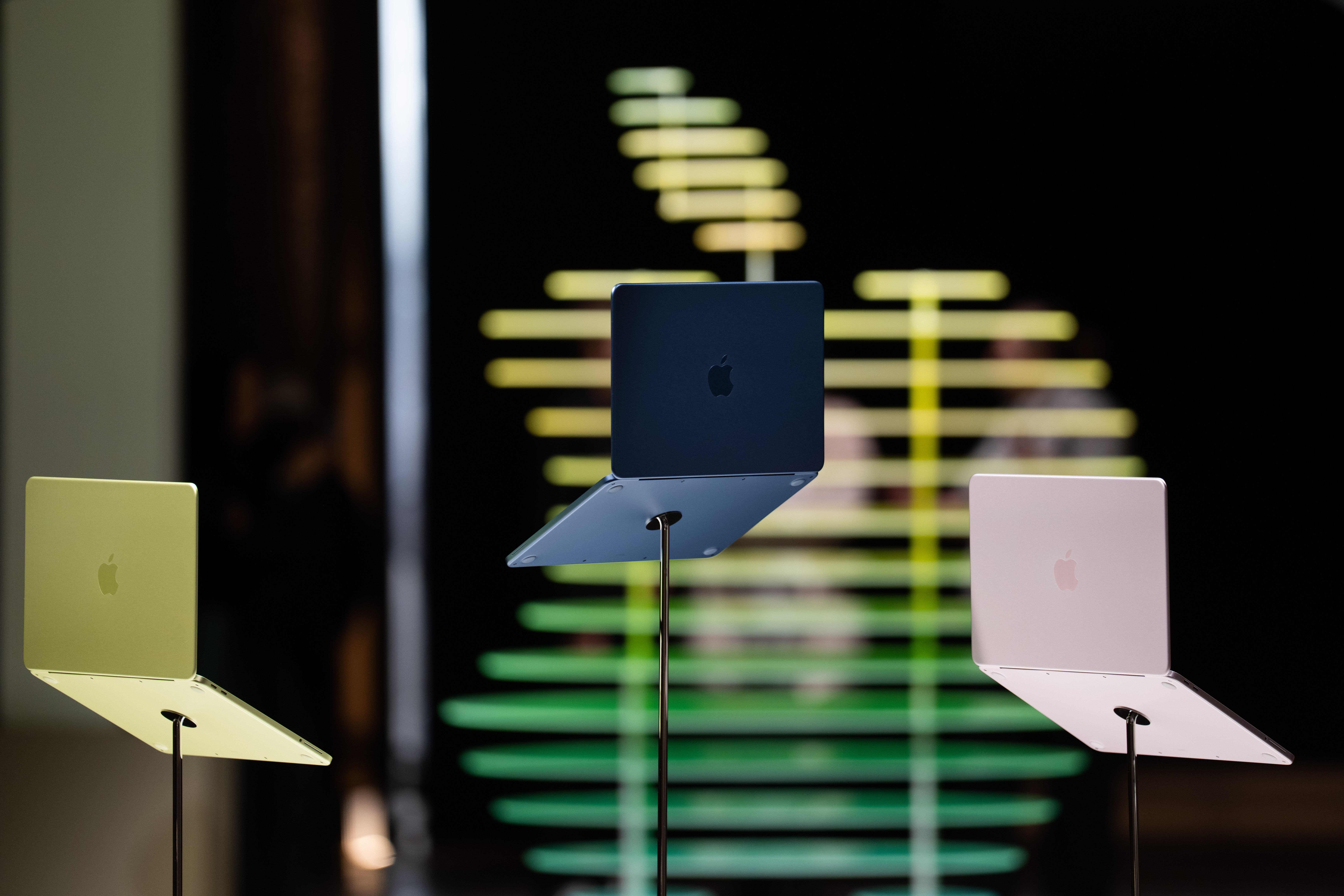
Speaking of Apple: The iPhone-maker announced higher prices for an array of its products a week after CEO Tim Cook warned it would happen.
The changes are effective immediately, though retail partners have been slower to refresh prices. Mac prices rose 15% to 20%, iPad prices rose 15% to 25%, but prices for iPhones—which generate half the company’s annual revenue—remain unchanged. (Never say never, though.)
The reason? Rising costs for memory (DRAM) and storage (NAND) chips. The cost of these two has quadrupled over the last year as AI hyperscalers buy up every piece of hardware in a bid to meet their own demand.
“We have now reached a point where we need to begin raising prices. We have never seen a component price increase this much, this quickly,” the company said in a statement. “We have shielded our customers from these increases so far, but we have now reached a point where we need to begin raising prices on a number of products.”
Apple’s loss is its suppliers’ gain. Just one day prior, Idaho memory-maker Micron reported extraordinary quarterly profit margins above 80%—tangible proof that pricing power has, for now, moved down the supply chain.
And: If you’re thinking, “this too shall pass,” think again. Experts estimate the global memory shortage will last at least through 2027; the most bearish, which includes the chairman of South Korean memory giant SK Hynix, predict it will run through 2030.
With global inflation at about twice its 2% consensus target, that means customers should say goodbye to the $599 MacBook. Alas. —AN
Sony's Bungie lays off a ‘significant number’ of staffers
The fragging continues in the beleaguered gaming industry.
Sony Interactive Entertainment on Thursday said it would dramatically reduce the workforce of the Bellevue, Wash., gaming studio Bungie, which originated Microsoft’s Halo franchise and is currently best known for its Destiny series.
“We have made the decision to reduce Bungie’s workforce, affecting a significant number of employees, including most of the Destiny team and some Marathon team members,” wrote Studio Business Group CEO Hermen Hulst in a memo. “There are also reductions across SIE teams that support Bungie’s operations. Those impacted at Bungie and within SIE are being informed today.”
Hulst added that Sony explored “multiple alternatives” before deciding to make cuts, “necessary to align the studio’s resources with its current priorities and long-term goals.”
Destiny is believed to be the second-best-selling first-person shooter franchise behind Microsoft-owned Activision’s Call of Duty, according to the NPD Group. Marathon’s latest entry meanwhile sold more than a million copies at $40, according to various reports.
But Sony said in recent earnings calls that the titles’ sales and user engagement failed to reach internal goals as the broader gaming industry has decelerated.
Indeed, both franchises have financially underwhelmed. As so-called AAA titles, the games cost hundreds of millions of dollars for Bungie to develop, ultimately translating to losses for its parent company. Sony acquired Bungie in 2022, at the height of the post-pandemic gaming market, for $3.6 billion; as of May, it has recorded impairment losses totaling $765 million on the studio. —AN
IBM’s 0.7nm process could carry chipmaking into the next decade
Tech insiders know that there’s more than one AI arms race in the running. There is of course the LLM benchmark battle that steals every headline when a new model comes out. But hardware has its own competition, too.
IBM on Thursday said it has developed a technological process to produce computer chips smaller than one nanometer—0.7 nanometers, in fact, which allows it to pack almost 100 billion transistors onto a surface the size of a fingernail.
That’s a big leap if you’re in the business of making silicon. Today’s most advanced commercial offerings are mass-manufactured with a two-nanometer process. Prototypes made using a one-nanometer process have been announced, but they’re not slated for production until 2030.
“With our new nanostack architecture, we’re not just making smaller transistors, we’re reinventing how chips are built to deliver dramatically more power and energy efficiency,” said IBM Research director Jay Gambetta in a statement. All good things if you’re in the business of AI.
Anyone who remembers the clock-speed wars of the 1990s knows: In the chip industry, it’s all about pushing Moore’s Law along its path before the competition does. (Unless you’re Nvidia CEO Jensen Huang: “Moore’s Law’s dead,” he said in 2022. “And the ability for Moore’s Law to deliver twice the performance at the same cost, or at the same performance, half the cost, every year and a half, is over.” Womp womp.)
This latest breakthrough is good news for IBM, boosting its stock a few percentage points in a year when its shares are down 11% to date. It’s also good news for the companies that it hopes will use its new technology. Though IBM sold its money-losing chip fabrication business to GlobalFoundries in 2015, it still makes money licensing its chip tech to foundries like Samsung and Rapidus of Japan. —AN
More tech
—Alibaba shares continue falling in the wake of Anthropic’s accusations that it copied its AI IP.
—Anthropic hires Steve Jarrett, the chief AI officer of French telco Orange, to help it adapt to markets in Europe and Africa.
—A consortium of Big Tech companies launches Raise Us, a nonprofit to help U.S. workers adapt to AI.
—Meta plows ahead in replacing human content and ad reviewers with AI.
—Microsoft Xbox console prices rise by $100 to $150, the third increase since last year.
—Netherlands to U.S.: Please don’t issue export controls that would harm ASML's ability to sell chip equipment to China.
—Japan’s most valuable company, Kioxia, will offer American depositary shares next year as demand rises for memory chips.
—Meta hires away three Virtue AI founders and others from the AI security startup.
—Yet another Tolkien-inspired tech startup, the AI lab Mirendil, fundraises at a billion-dollar valuation.