Good morning, unless you’re a SpaceX shareholder.
The company’s stock closed under $150 yesterday, its first day in the Nasdaq 100, for the first time since its June 12 IPO, possibly imperiling Elon Musk’s title as the world’s first trillionaire.
Who cares, right? Still, there are takeaways even if SPCX isn’t in your portfolio.
First: Like most big AI bets, investors are still nervous about the company’s trajectory, even if Tesla, a long speculated merger target, isn’t part of that picture. Second: If the company’s stock stays down, so does the potential wealth of the employees holding equity and its impact on the communities in which they live.
And third: If you’re in the business of calling the top of the AI boom, you could do worse than SpaceX shares, which are down more than 30% from their June 16 peak amid market pressures on every Magnificent 7 tech company. (Suddenly those Anthropic and OpenAI IPOs don’t seem so imminent!)
More news follows. Have a productive day. —Andrew Nusca
Want to send thoughts or suggestions to Fortune Tech? Drop a line here.
China mulls limiting foreign access to advanced AI models
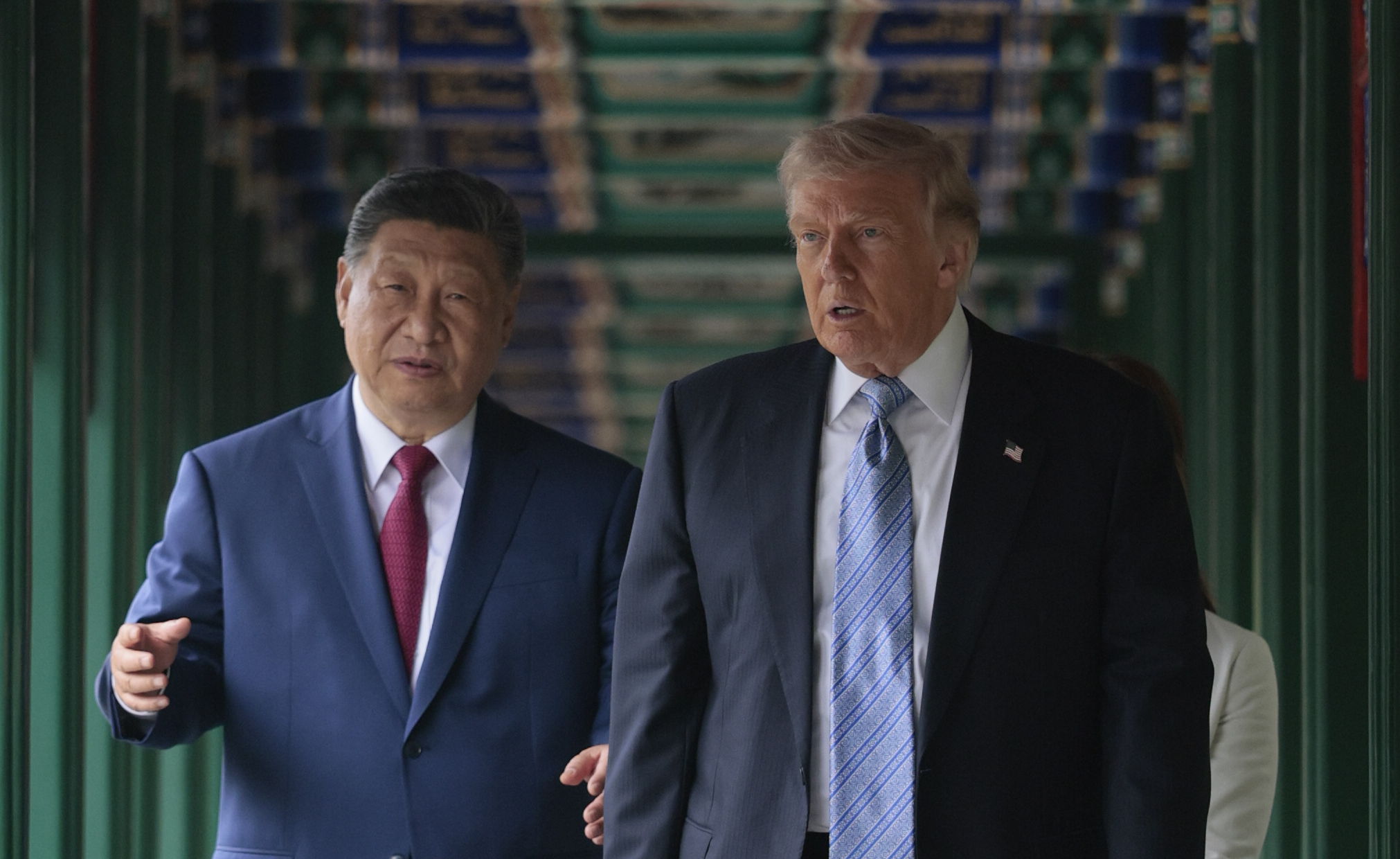
Top Chinese tech companies including Alibaba, ByteDance, and X.ai reportedly met with Chinese officials about the government’s proposal to restrict overseas access to China’s most advanced AI models—including those not yet publicly released.
The meetings were led by China's Ministry of Commerce, according to Reuters, and those present discussed limiting both closed-source and open-source models. Penalties for leaking or stealing such technology would potentially be a national security offense. Those convened also discussed restrictions on who can fund domestic AI startups, according to the report.
“Any decision by Beijing to limit access to those products could ripple across AI markets as costs for many businesses would likely increase,” Reuters notes.
This is only the latest in a long line of tit-for-tat trade restrictions between China and the U.S. With competitive sensibilities flaring, both nations have instituted myriad export controls on AI-related goods that would otherwise be destined for their geopolitical rival. Both governments also maintain blacklists of companies based or owned by the other.
Until this year, the restrictions have largely been on semiconductors and other physical goods; now the constraints are moving into the realm of software. What remains to be seen: Whether any of it will actually matter as the global AI arms race continues. —AN
Meta launches Muse Image, Video generative AI models
Speaking of AI models: Meta’s Superintelligence Labs, led by Alexandr Wang, has launched a pair of its own.
The first, called Muse Image and accessible today, is an image generation model that can create realistic images for users on Instagram and WhatsApp.
“It follows instructions faithfully, edits with precision, composes from multiple references, and draws on Instagram for social context,” the company wrote in a blog post. “It also brings agentic tool use capabilities and integrates with Muse Spark,” Meta’s SL-built large language model.
The second, Muse Video, is an AI video generator—but it’s only in “preview,” slated for availability in the Meta AI app in the coming months.
“It offers competitive performance in prompt adherence, visual fidelity, and temporal consistency,” the company wrote. “We’re investing in areas with current performance gaps, such as audio-video synchronization and physically accurate fast motion.”
Both models arrive on the scene with plenty of rapidly developing competition from Adobe, Google, and OpenAI, among many others. But the Muse models’ true potential is in Meta’s distribution, thanks to the 3.58 billion daily active users it counts across its properties. —AN
In a bid to cut costs, Microsoft reportedly drops Anthropic, OpenAI in favor of its own models
It was inevitable: As tech’s largest corporations built their own AI chips and AI models to stand out from the pack and cut down on costs, they’d ditch the third-party products on which they’d spent a pretty penny.
That reality is now apparently happening at Microsoft.
Fresh off news of yet another round of layoffs, the folks in Redmond are reportedly looking at all that Anthropic and OpenAI integration in Excel and Outlook and thinking, well, why not use the homegrown stuff that’s free?
In the old days, there might not have been parity in terms of capability. But things have changed, according to Bloomberg.
“Tens of thousands of AI prompts in the widely used spreadsheet and email applications are now being completed each week with Microsoft’s internally built MAI models,” according to the report. It later adds: “While still accounting for a small share of overall AI usage, the move shows Microsoft is making progress in its efforts to build competitive artificial intelligence models at a lower cost.”
It’s also a sound strategic move in the long term. For example, as OpenAI’s largest investor, Microsoft has enjoyed favored (read: discounted) access to its models. But the terms of their relationship have changed, and will continue to change, as the younger company plows toward an IPO—positioning Microsoft for a substantial bill if it doesn’t make alternate plans.
Or as Beyoncé, that Great Oracle of AI, once said: “I don't like to gamble, but if there's one thing I'm willing to bet on, it's myself.” —AN
More tech
—Google Pixel event set for August 12. Expected: Pixel 11 phones and Pixel Watch 5.
—Four U.S. states seek $1.4 trillion from Meta over claims it designed Facebook and Instagram to addict youth.
—Kraken reportedly seeks a full banking license in Lithuania, and therefore, Europe.
—Netflix inks short-form programming deals with BuzzFeed, Condé Nast, Hearst, Penske, People and Wonder’s Tastemade.
—China smartphone sales fall as brands raise prices to offset memory costs.
—The debut of a jointly developed Cursor-SpaceX AI model is reportedly imminent.
—Autonomous “killer robots” should be “banned by international law,” UN Secretary-General António Guterres says.